As contemporary life increasingly measures, optimizes, and predicts every rhythm of our days, a fundamental question emerges regarding our relationship with the world around us. Are we truly overwhelmed by spectacle, or are we quietly starved of it? This inquiry formed the cornerstone of SPECTATOR AND SPECTACLE, a multidisciplinary chapter curated by Sofia Lekka Angelopoulou on designboom and presented in partnership with SolidNature. Over several weeks, the editorial series explored how architecture, art, fashion, and design can recover a sense of wonder in a disenchanted world.
Tracing a path from the radical underground nightclubs of the 1960s to cinematic illusions, wearable architectures, and sculptural mirrors, the chapter investigated how spectacle can challenge human perception. Repeatedly, the series revealed that spectacle is not simply a passive image to observe from a distance. Instead, it functions as a transformative experience capable of unsettling our habits, shifting our behavior, and ultimately dissolving the rigid boundary between those who watch and those who perform.
The conversation unfolded through a series of guest contributions, critical essays, and in-depth encounters with practitioners who are actively rethinking what it means to construct an experience. Contributors such as John Leo Gillen reflected on the disappearing architecture of the nightclub and the urgent need for moments that resist mechanical reproduction. Meanwhile, Ĺukasz Twarkowski blurred the boundaries separating theater, cinema, and live digital images, and Dennis Vanderbroeck examined how spatial design can deliberately engineer the conditions necessary for collective human experiences. Photographers David Altrath and François Prost approached the phenomenon from contrasting angles—one focusing on the intimate experience of built space, the other capturing the glittering facades that promise extraordinary nocturnal escapades. Taken together, these perspectives underscored a central realization: true spectacle is defined less by what sits in front of us and more by what happens inside us when we encounter it.
The Crowd as an Integral Part of Architecture
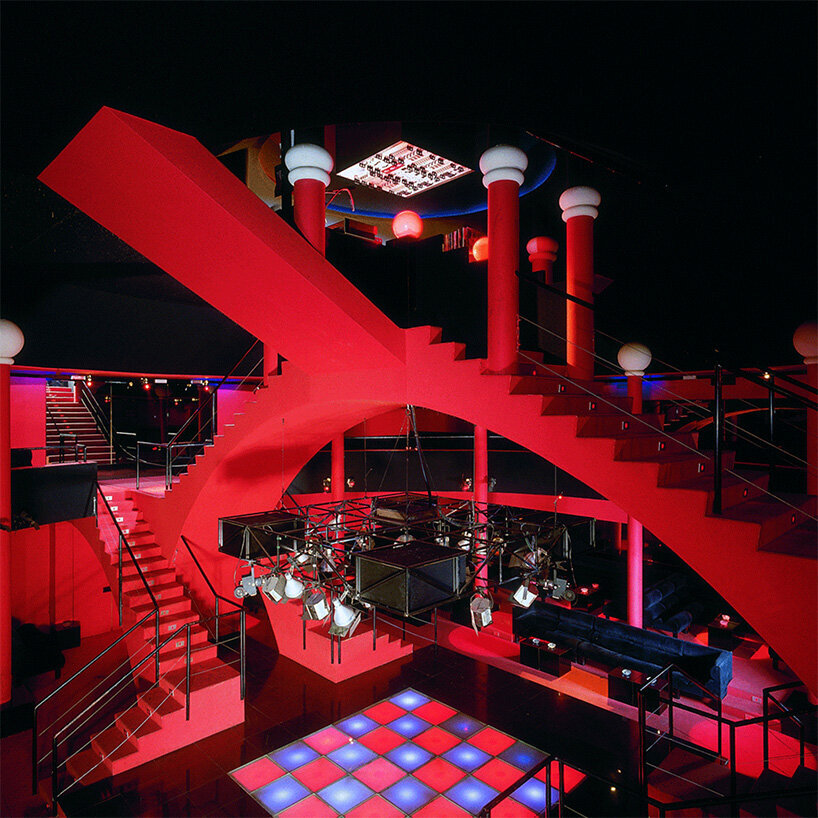
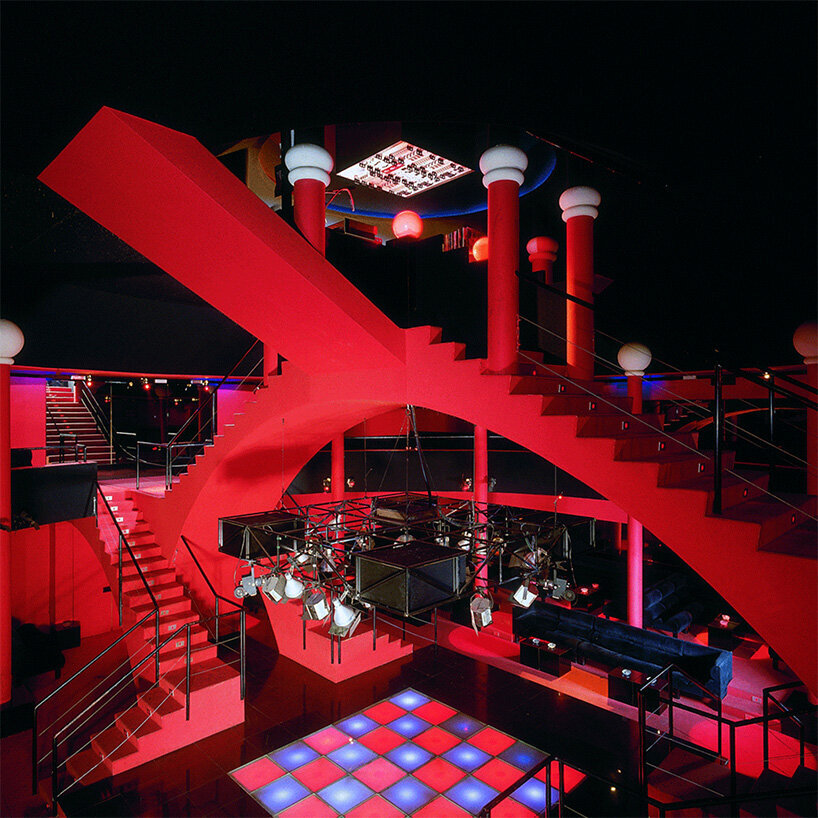
Few spatial typologies illustrate the complex interplay between spectator and spectacle quite like the nightclub. Looking back at the rich history of nightlife architecture—ranging from the radical Italian discotheques of the 1960s to New York’s iconic Studio 54 and the industrial concrete bunkers of Berlin—the series highlighted how these environments have historically served as vital laboratories for collective human behavior.
At Florence’s legendary Space Electronic, architecture, vivid projections, music, and performance converged into a singular experimental apparatus. In Manchester, the industrial cavern of The Haçienda provided an raw interior that its occupants could continuously transform simply through their collective presence and movement. Berlin’s Berghain later introduced another critical layer to this dynamic by strictly prohibiting photography within its walls, thereby protecting an ephemeral experience that cannot easily be commodified, packaged, or consumed from afar. These spaces serve as enduring reminders that while architecture can establish the physical preconditions for spectacle, the people occupying the space ultimately determine its outcome.
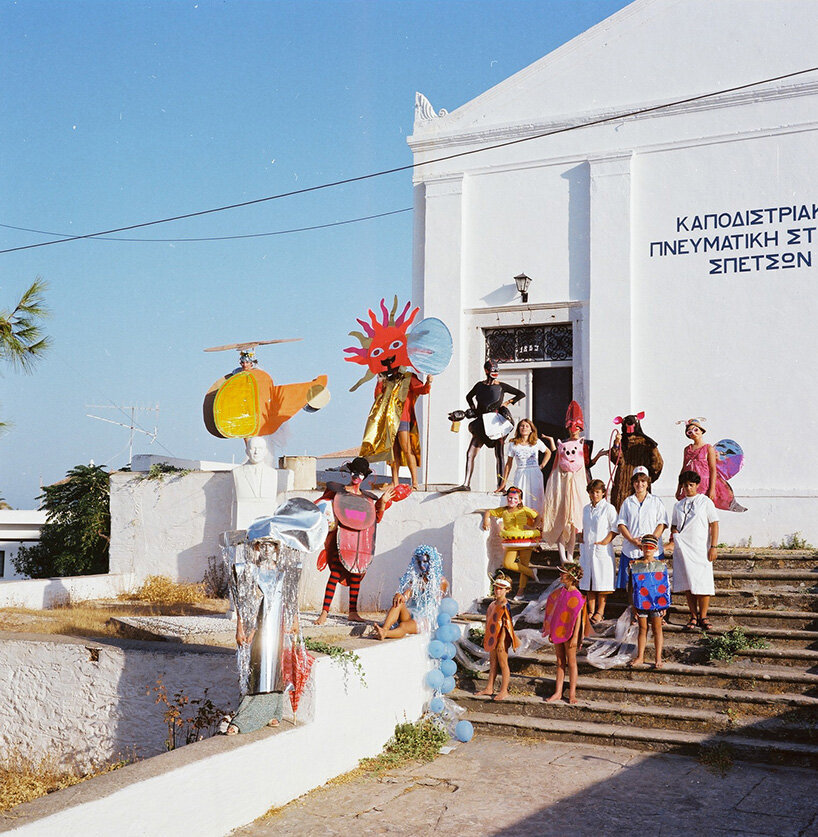
A parallel understanding of collective performance emerged in a conversation with Leda Papaconstantinou, whose group, the Spetses Players, transformed a Greek island into an experimental theatrical stage throughout the 1970s. Rejecting fixed scripts and conventional proscenium stages, the collective built performances directly around local oral histories, pressing social realities, and the island’s existing architecture. Local harbors, traditional houses, and even functioning discotheques were repurposed as temporary stages, while elaborate costumes and eccentric characters invited audiences into unfamiliar, imaginative worlds. As these performances unfolded, the line between spectator and actor frequently dissolved; audiences would often join the performers in spontaneous singing and dancing. Ultimately, the boundary between art and everyday life melted away, proving that the true value of the event lay in the temporary community formed around it.
Challenging Reality Through Cinematic and Visual Illusion
Spectacle also possesses the capacity to disrupt the safe distance we typically maintain between fiction and the concrete world we inhabit. In Alejandro G. Iñárritu’s film Digger, production design transcends mere backdrop to become a vital narrative instrument. Crafted by designers Dennis Gassner and Richard Johnson, the film’s environments shift fluidly between elaborate domestic interiors, overt theatrical scenery, and exposed artifices, intentionally making the mechanics of illusion-making part of the story itself. As the boundaries between performance and reality erode, the viewer’s position shifts from comfortable detachment to unsettling proximity. The sets measure the psychological distance between the audience and the unfolding catastrophe until passive observation becomes nearly impossible.
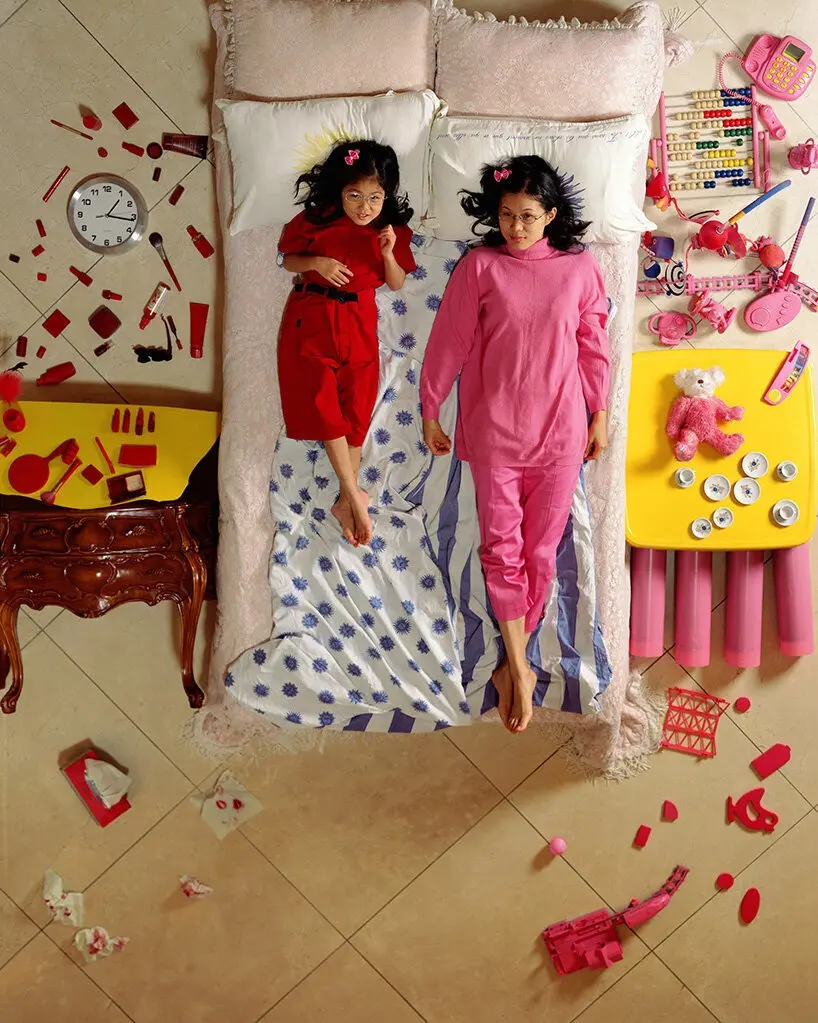
In a strikingly different manner, Yeondoo Jung’s photographic series Wonderland demonstrated how the meticulous construction of an image can expose unexpected truths about contemporary society. The South Korean artist collected 1,200 drawings created by young children, selecting 17 to recreate as meticulously staged physical photographs. Utilizing teenage models, handcrafted costumes, custom props, and diverse locations across Seoul, Jung brought impossible proportions, floating figures, and dreamlike landscapes into physical reality without ironing out the eccentric logic of the original childhood sketches.
Beneath their playful, whimsical surface, these photographs offered sharp observations on pressing real-world issues, ranging from rapid urban development to systemic social inequality. Viewed today, in an era where similar fantastical scenes can be generated instantly via artificial intelligence, Jung’s laborious, analogue process offers a vital counter-perspective on spectacle. The true wonder resides not merely in the polished final image, but in the extensive human effort, negotiation, and material reality required to make imagination visible.
The Body as Both Medium and Spectacle
Throughout the explorations of the chapter, the human body repeatedly emerged as something far more active than a passive observer. At London’s Tate Modern, a collaboration featuring HOMME PLISSÉ ISSEY MIYAKE transformed Henri Matisse’s iconic cutout The Snail into a dynamic choreography of pleated garments, kinetic movement, and direct audience interaction. Inside the museum’s circular South Tank, professional dancers animated the colorful geometric language of Matisse’s painting, while individual museum visitors were gradually drawn into improvised performances through subtle eye contact and physical proximity.
In this setting, the audience was no longer positioned outside the artwork; instead, they were fully integrated into its evolving composition. As the pleated garments eventually settled back onto the floor to reconstruct Matisse’s original visual arrangement, the performance brilliantly demonstrated how an artwork can oscillate between static representation and lived, bodily experience. For a brief moment, the human body itself had become the primary medium through which the image existed.
For designer and artist Lucy McRae, the body likewise serves as the foundational starting point for speculating on alternative futures. Moving fluidly between sculpture, film, fashion, and speculative technology, McRae approaches clothing and wearable objects as forms of "invisible architecture" capable of altering how individuals perceive themselves and connect with others. Her works interrogate what happens when technological innovation becomes indistinguishable from physical sensation, and how human identity might be shaped through what we wear. Rather than framing the future as a distant spectacle meant to be watched from afar, McRae constructs immersive scenarios that invite audiences to inhabit them directly, suggesting that profound cultural transformations can begin with the subtle shifts in how our bodies relate to the surrounding world.
Finding Wonder in Restraint and the Everyday
Crucially, the series underscored the reality that a compelling spectacle does not always necessitate an extravagant setting or a theatrical performance. Frequently, an everyday object is enough to disrupt our familiar, desensitized modes of looking. French designer Jean-Baptiste Fastrez explored this phenomenon through his sculptural mirrors for Moustache, adapting the familiar form of an inflatable boat into a glossy ceramic frame and transforming standard mirror fittings into oversized chrome spheres. Both objects play with the inherent paradox of the mirror—an artifact with a robust physical presence whose visual identity depends entirely on its surroundings. Their polished surfaces reflect, warp, and incorporate the spaces and people around them, forcing the viewer to become an unavoidable component of the composition. By challenging the traditional separation between utility and ornament, Fastrez suggests that decoration can be just as integral to an object’s purpose as its practical function, locating the spectacle squarely within the act of observation.
This quieter, more restrained interpretation of spectacle also characterized designboom’s conversation with Lausanne-based studio Panter&Tourron. In their work for prestigious brands such as Balenciaga and Hermès, designers Stefano Panterotto and Alexis Tourron question traditional luxury codes. Eschewing overt extravagance, precious raw materials, or loud displays of status, the studio prioritizes material intelligence, craftsmanship, performance, and the conceptual narratives underpinning each object. Their minimalist designs demonstrate that restraint can command just as much attention as excess, challenging the assumption that visibility requires volume.
Ultimately, these diverse threads converge around a singular conclusion: wonder cannot be reliably manufactured through sheer scale, novelty, or visual saturation. True wonder frequently arises from entering a physical space that alters our behavior, recognizing authentic reality within a carefully constructed illusion, seeing ourselves reflected in an unexpected form, or encountering the familiar as though for the very first time. As the chapter demonstrated, the ultimate challenge facing contemporary creators is not to make the world louder or more spectacular, but to actively recover our human capacity to be surprised by it.