In the heart of China’s Fujian province, where misty mountains meet centuries of spiritual tradition, a forgotten piece of modern infrastructure has been thoughtfully reborn. RESP Studio has completed the renovation of the Qing Shui Meditation Retreat Center, breathing new life into a decommissioned and long-abandoned bus station. Set within the core scenic area of the thousand-year-old Qingshuiyan Ancestral Hall in Anxi, Quanzhou, the project bridges the gap between industrial-era utilitarianism and deep-rooted cultural heritage, creating a tranquil sanctuary designed to harmonize with its dramatic natural surroundings.
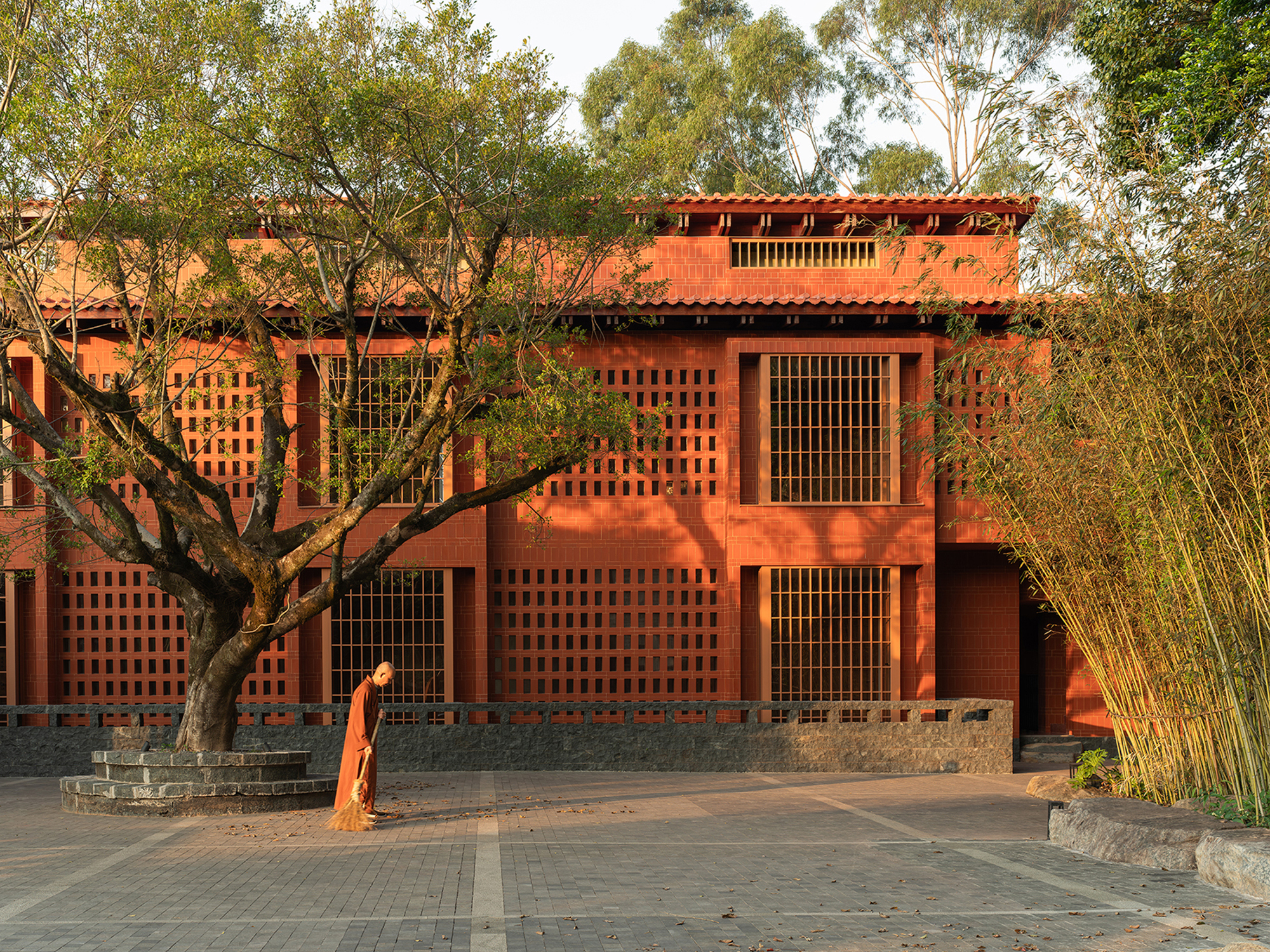
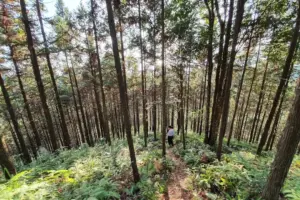
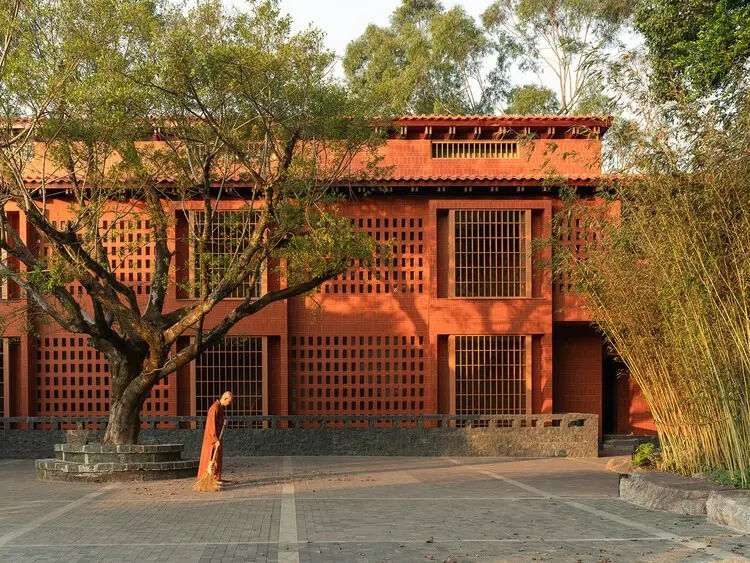
The site of the new retreat center carries layers of historical and cultural significance. Anchored by a majestic, moss-draped ancient banyan tree at the center of an open square framed by dense forest, the location features a unique natural and historic context defined by native rock formations and ancient mossy paths. Originally constructed during the Northern Song Dynasty, the nearby Qingshuiyan Ancestral Hall sits at the northern foot of Penglai Mountain, a landscape perennially shrouded in mist and mystery. As a vital folk belief center for communities across Fujian, Taiwan, and Southeast Asia—drawing over 100 million believers worldwide—the ancestral hall profoundly shaped the core ethos of the architectural intervention. RESP Studio’s design approach was guided by a deep respect for this heritage, prioritizing a philosophy of harmony with both the natural environment and local historical traditions.
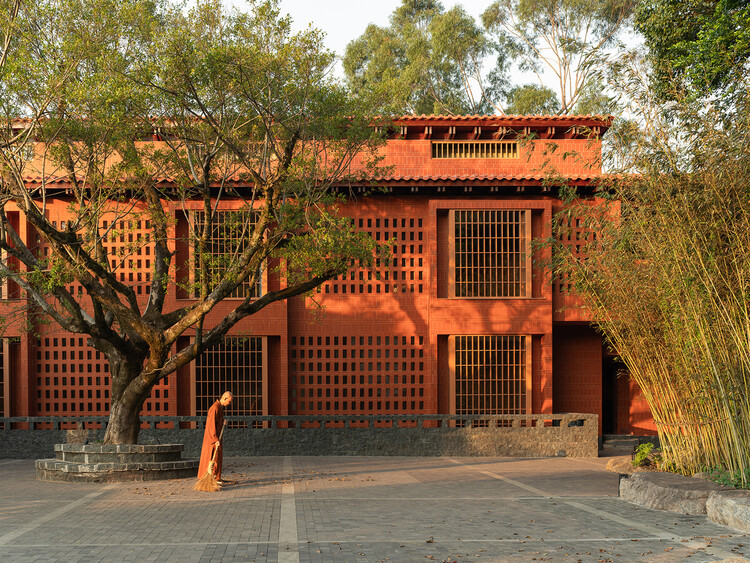
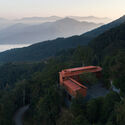
The project addresses a practical need for supporting facilities within the sprawling and highly visited cultural site. Following the functional relocation of transportation routes in the area, the old bus station building had fallen into disuse, leaving a dilapidated two-story structure sitting idle amidst an otherwise pristine landscape of ancient trees and rugged stone formations. Rather than demolishing the structure and introducing an entirely alien intervention, the architects chose an in-situ renovation strategy. This approach preserved the memory of the site while upgrading the built infrastructure to accommodate modern visitor needs.
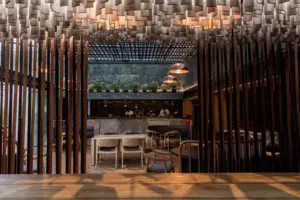
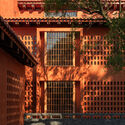
The newly transformed facility integrates a thoughtfully curated mix of tea houses, vegetarian restaurants, and quiet rest areas, functioning as a vital complementary amenity for pilgrims, tourists, and visitors to the ancestral hall. By repurposing the existing framework, RESP Studio managed to retain the structural footprint of the former station while completely altering its atmospheric quality. The heavy, utilitarian concrete and brick elements of the past have been reinterpreted through sensitive architectural detailing, allowing light, air, and the surrounding greenery to permeate the interior spaces.
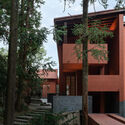
Throughout the design process, the relationship between the built structure and the landscape remained paramount. The presence of the ancient banyan tree continues to serve as the emotional and spatial anchor of the complex, organizing the circulation and providing a natural focal point for the newly integrated public and semi-public spaces. Native rock formations and historic pathways have been carefully preserved, ensuring that visitors navigating the tea houses and dining areas remain constantly connected to the topography of Penglai Mountain. The integration of local materials and traditional building textures further roots the architecture in its specific geographical and cultural context, establishing a seamless dialogue between the historic ancestral hall and its modern supporting facilities.
The completion of the Qing Shui Meditation Retreat Center highlights a growing architectural trend toward adaptive reuse in culturally sensitive and historic landscapes across China. By transforming a defunct symbol of industrial transit into a contemplative space for rest, reflection, and culinary experience, RESP Studio has demonstrated how modern design can honor the past without mimicking it. The project stands as a testament to the potential of mindful architecture, offering a peaceful haven where visitors can pause, reflect, and absorb the enduring spiritual atmosphere of Penglai Mountain.