The beauty of the Native artist’s forms seduces the eye, but a profound visual history of destruction remains deeply embedded into every single element. Two years ago, standing inside the Baltimore Museum of Art, I encountered the infamous 1892 archival image of two men standing atop an immense, chilling hill of buffalo skulls. That historical photograph, still profoundly shocking after well over a century of continuous public circulation, was covered by a small, thoughtful wall-mounted curtain designed by Yurok artist Stormi Turner. Her subtle intervention gave the archival document the solemn depth of tragedy that it so rightly warranted.
Part of the expansive Preoccupied: Indigenizing the Museum exhibition, Turner’s gesture was a vital way of acknowledging the profound care that such historical crimes demand. It mirrored how sensitive human remains and traumatic artifacts are increasingly handled in modern museums today—often accompanied by thoughtful content warnings, placed behind secure doors that visitors must deliberately open, or hidden beneath protective covers that must be actively removed to witness. Turner’s textile intervention also served as a respectful way to honor an animal that countless Native American groups and communities lived alongside in a sustainable, symbiotic relationship for millennia.
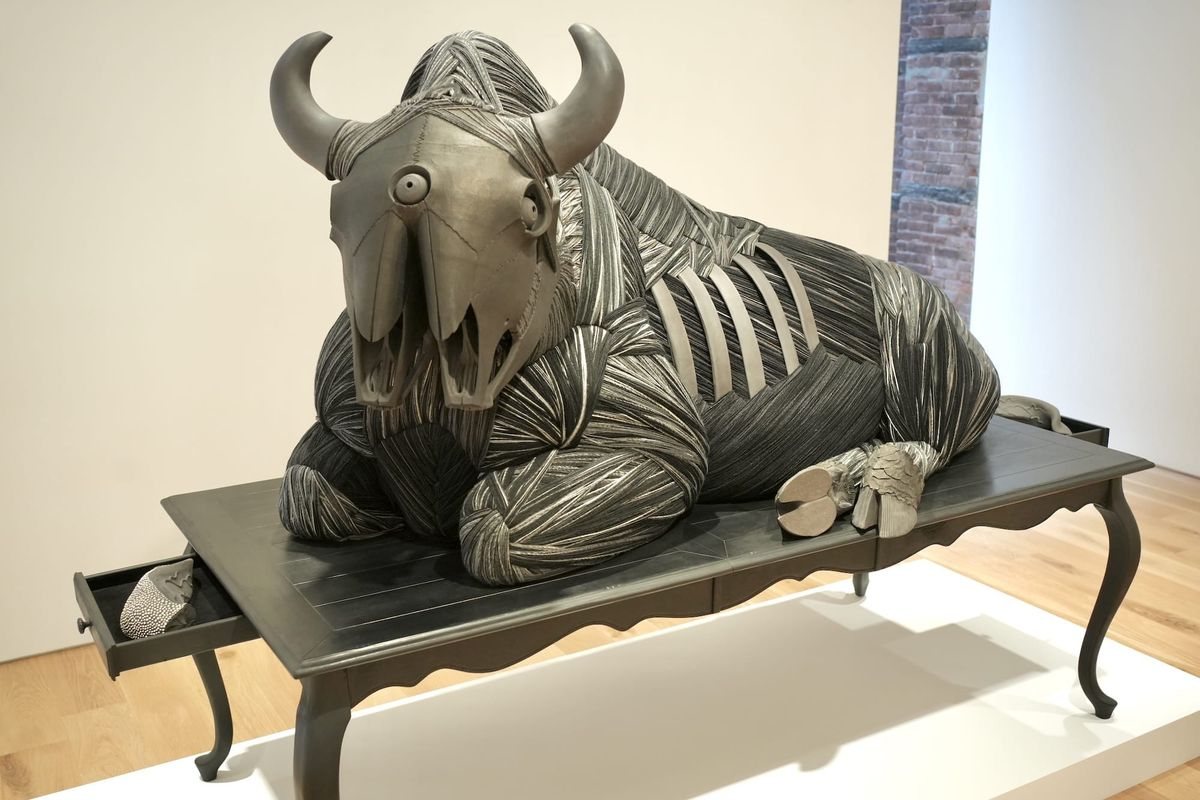
That haunting image rushed back into my mind recently as I walked through the doors of Garth Greenan Gallery in Soho to experience Cannupa Hanska Luger’s compelling new exhibition, American Traditional. In this striking body of work, Luger temporarily sets aside the participatory, ceramics-heavy sculptural projects for which he has long been celebrated, arriving instead at something far more declarative. The new collection represents a powerful, tightly controlled synthesis of carved wood, deep ink, and archival interrogation that stands as his strongest and most resonant artistic statement to date.
To understand the immense weight of Luger’s latest works, one must confront the staggering history of the North American bison, frequently referred to as the buffalo. In Mari Sandoz’s foundational historical study, The Buffalo Hunters: The Story of the Hide Men, first published in 1954, the author explains that North American bison were once far more numerous than humans across the continent. Sandoz noted that there was apparently no disease native to the entire continent that ever threatened the massive herds in any significant number. That charmed, undisturbed existence for the largest land animal on Turtle Island was abruptly and violently interrupted by the eventual arrival of European settlers. Equipped with horses, firearms, and expanding railroads, these newcomers quickly transformed the systematic slaughter of the species into an industrialized, highly efficient commercial activity.

Luger, who was born on the Standing Rock Reservation and is an enrolled citizen of the Three Affiliated Tribes of the Fort Berthold Reservation, possesses deep ancestral roots stretching across the Great Plains. Because of this heritage, he intimately understands the devastating history of destruction that tore the bison away from the indigenous tribes of the region. As Sandoz observed in her writing, the buffalo was almost the absolute sole subsistence of the Plains Indian, serving as the foundation for their shelter, clothing, food, and vital fuel.
Yet, modern scholarship pushes this understanding far beyond early historical accounts. Cree scholar Tasha Hubbard expands profoundly upon Sandoz’s foundational observations, arguing that for Plains nations, the buffalo were never merely animals; they were recognized as kin and considered part of the First Peoples rather than a separate, exploitable species. Consequently, Hubbard frames the systematic eradication of the bison not just as ecological devastation, but as a deliberate genocide carried out by proxy—a catastrophic second major wave of trauma inflicted upon Plains Indigenous peoples following the devastation of epidemic diseases introduced by colonizers.
The architects of this slaughter understood its genocidal mechanics explicitly at the time. Hubbard highlights the chilling advice offered by Colonel Richard Irving Dodge to hide hunters, who famously summarized the strategic objective with the grim maxim that every dead buffalo meant a gone Indian. General Philip Sheridan demonstrated a similar, calculated foresight long before historians fully documented the campaign. In 1875, when the Texas legislature proposed a legislative bill designed to protect the dwindling bison herds from total collapse, buffalo hunter John R. Cook recorded Sheridan’s fierce and revealing objection to the measure. Sheridan argued that the hide hunters had done far more to permanently settle the vexed "Indian question" than the entire regular United States military apparatus had managed to accomplish over the preceding thirty years. In an explicit endorsement of extermination as a tool of geopolitical subjugation, Sheridan reportedly urged lawmakers to keep sending the hunters powder and lead, maintaining that for the sake of a lasting peace, the slaughter should continue until every last buffalo was eradicated.
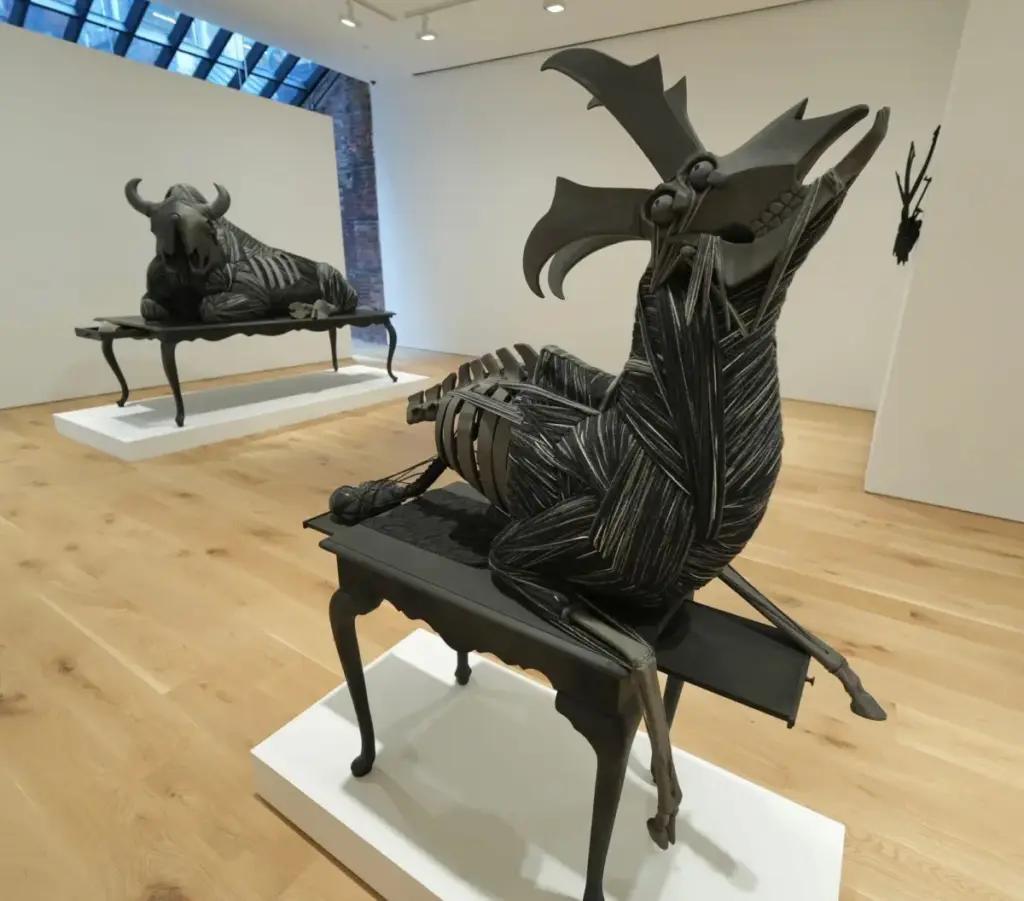
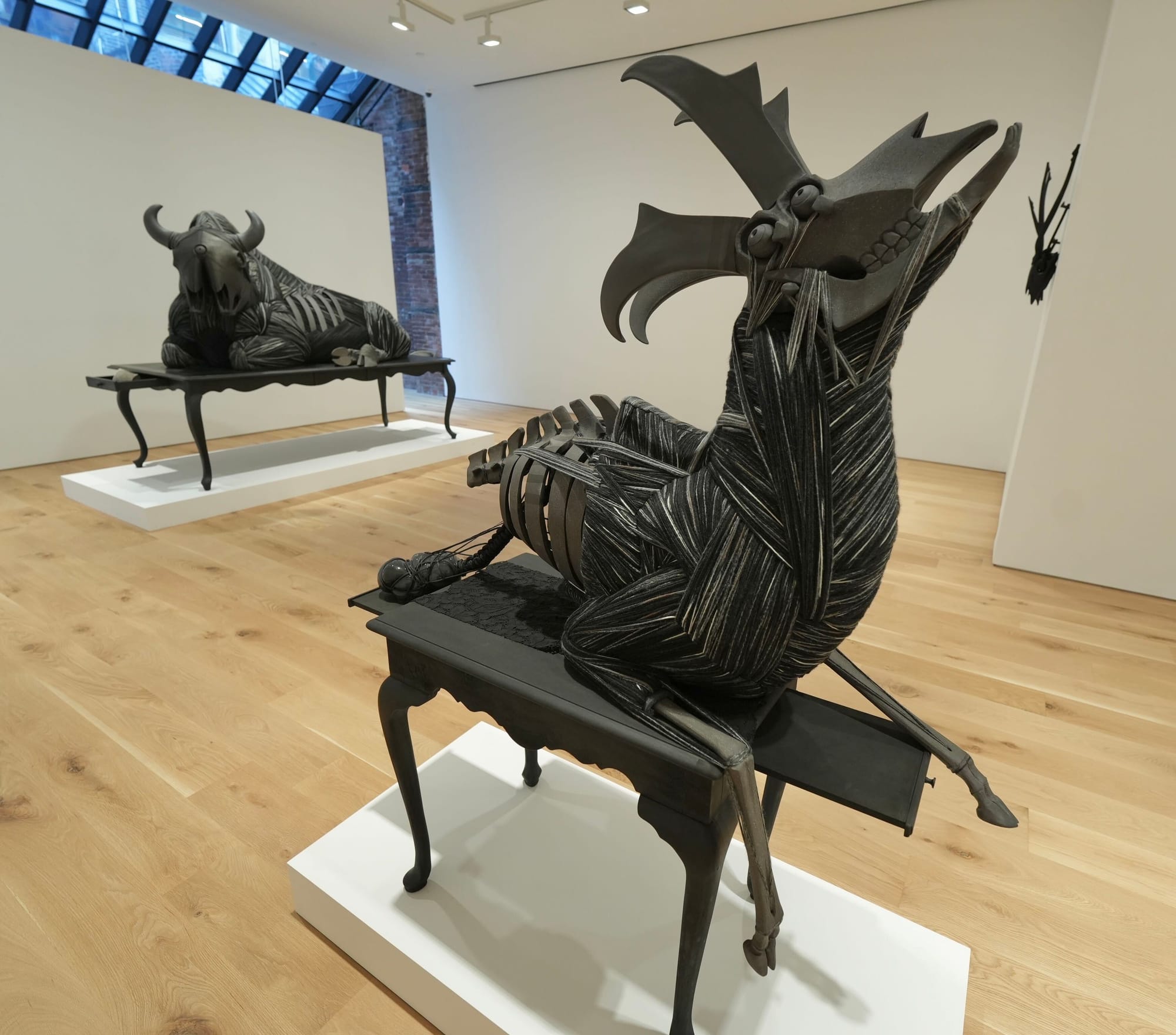
Within the gallery space in Soho, Luger confronts this dark history through evocative, material-driven metaphors. In works like Requiem, the artist places a stark, black abstracted bison silhouette directly atop a heavily darkened rendering of a 19th-century American wood dining table, linking domestic colonial comfort with industrial-scale ecological and human devastation. Throughout American Traditional, Luger weaves together historical archives, charred wood, and dense layers of ink to construct a visual narrative that refuses to let viewers look away from the foundational violence of the American frontier. By marrying the seduction of exquisite craftsmanship with the unyielding gravity of historical truth, Luger transforms the gallery into a space of mourning, memory, and undeniable reckoning.