In an era increasingly dominated by digital messaging, quick texts, and automated holiday greetings, educators, parents, and craft enthusiasts are finding renewed value in teaching children the art of tactile communication. A charming new paper craft initiative is currently making waves in family households and classrooms alike, offering a creative, engaging way to introduce children to the lost art of handmade correspondence. Centered around an adorable, interactive monkey card, this simple yet effective project combines basic paper-cutting techniques with imaginative play, encouraging young minds to think thoughtfully about friends, family, and the joy of giving.

Monkeys have long held a universal appeal for young children. Whether through the excitement of visiting primates at local zoological parks or the comfort of a cherished plush toy, children naturally gravitate toward these playful animals. Capitalizing on this enduring fascination, the newly popularized paper monkey card transforms a familiar favorite into a meaningful developmental exercise. Beyond the simple joy of arts and crafts, educators and parenting advocates emphasize that handmade cards foster empathy and interpersonal connection, encouraging children to shift their focus outward and consider the feelings of others.

Proponents of traditional correspondence argue that teaching children the habit of sending physical cards for birthdays, seasonal holidays, and gestures of gratitude instills a lifelong appreciation for personal relationships. In a modern context where handwritten notes have become a rarity, a child-crafted card adds an unmatched layer of sincerity. By building the card from scratch, young crafters invest their own time and energy into the gesture, transforming ordinary construction paper into a personalized token of affection that recipients are likely to cherish for years.

The project itself is designed to be accessible, requiring only basic materials that are commonly found in classrooms and household craft drawers. Standard construction paper or thicker cardstock serves as the primary medium, ensuring the finished product possesses the structural integrity required for a greeting card. While lightweight copy paper can be utilized with the help of a basic page laminator to enhance durability, crafters have also begun experimenting with alternative materials like foam paper to extend the lifespan of the keepsake.

Logistically, the monkey card is adaptable to standard mailing practices, though participants note a few practical considerations for those wishing to send their creations through postal services. Because of the playful three-dimensional elements and layered paper construction, the finished cards occasionally require oversized envelopes, such as standard manila options, along with appropriate postage to account for any additional weight. For particularly enthusiastic paper crafters, creating custom envelopes from decorative scrapbook paper offers an additional creative outlet.

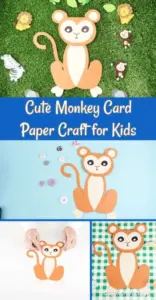
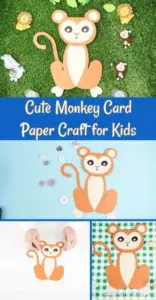
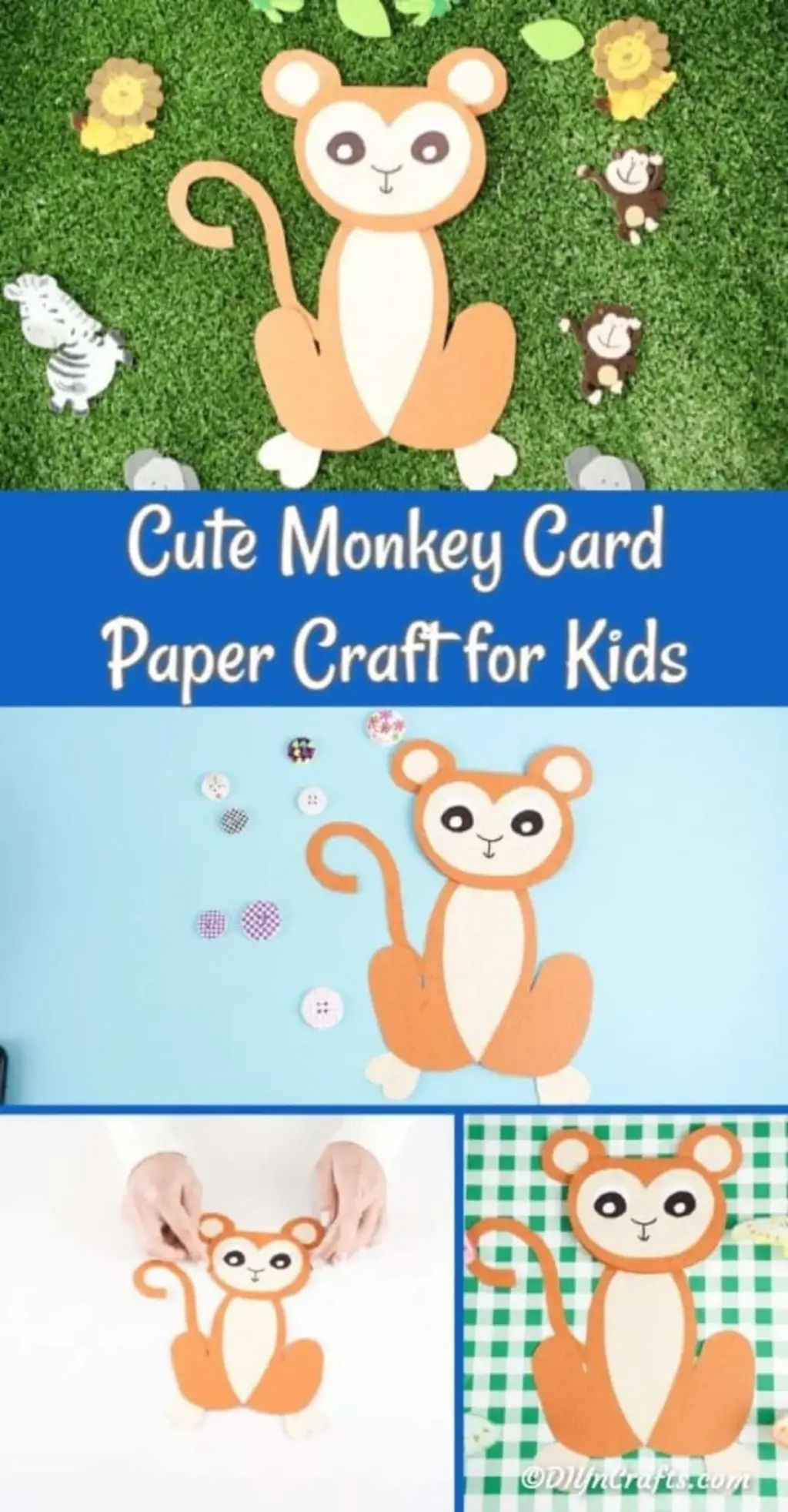
The assembly process is intentionally straightforward, designed to be executed in roughly fifteen minutes with minimal adult supervision. The project begins with a folded piece of orange paper, strategically cut to form a double-sided circular base that opens dynamically like a traditional greeting card. From there, young crafters trace and attach rounded ears featuring contrasting cream-colored inner accents, establishing the distinctive silhouette of the animal. A carefully proportioned face, complete with hand-drawn eyes, a nose, and a cheerful mouth rendered in black marker, brings the character to life near the top of the folded structure.

To complete the figure, an elongated orange body featuring a contrasting belly oval is affixed beneath the head, finished with a playful tail attached to the reverse side. The interior of the folding head doubles as a blank canvas, allowing children to pen their own personalized messages before sharing the finished piece with recipients.

For participants who prefer structured assistance over freehand drawing, the crafting community has embraced various adaptations, including physical stencils, coloring book templates, and digital cutting machines paired with vector graphics files. These technological aids allow children to focus on the assembly and personalization stages of the project without frustration.

Ultimately, the monkey card project represents a broader movement toward mindful, hands-on activities that bridge the gap between creative play and social development. By keeping material costs minimal and preparation times short, the initiative provides an accessible entry point for families seeking to incorporate more meaningful, offline traditions into their daily routines.