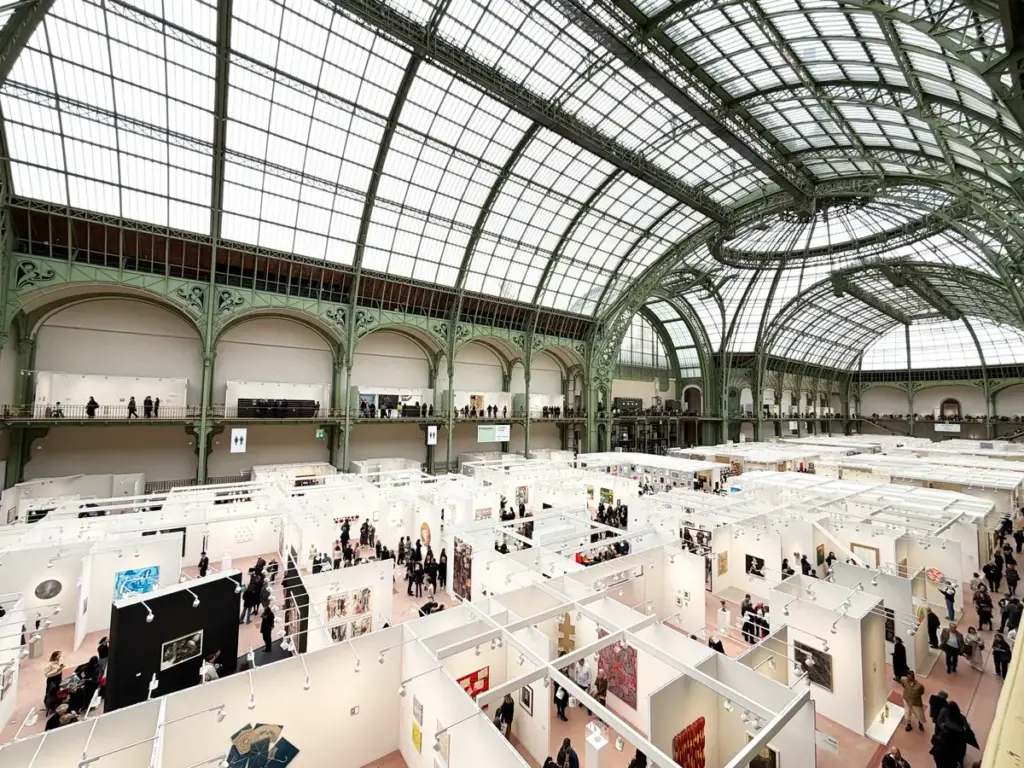
PARIS — As Art Basel Paris opens its doors for its highly anticipated 2026 edition, the atmosphere inside the historic Grand Palais is one of undeniable maturity and financial gravity. Spanning approximately 200 meticulously curated booths, the Swiss-owned franchise has firmly established its roots in the French capital, evolving from an ambitious newcomer into a powerhouse of the international art market. As the fair has matured, participating galleries have increasingly chosen to bring their most prestigious, top-tier inventory, transforming the bustling exhibition floors less into a space for raw discovery and more into a high-stakes marketplace where six-, seven-, and even eight-figure transactions are routinely negotiated.

The commercial momentum was palpable early during the exclusive Avant-Première VVIP preview on Tuesday afternoon. Exhibiting galleries reported a robust wave of initial acquisitions, a strong start that many dealers capitalized on and expanded significantly by the close of business on Wednesday. Major blue-chip galleries showcased museum-grade masterpieces, attracting an elite global contingent of collectors, curators, and institutional directors eager to secure significant works by modern and contemporary masters. Among the prominent names drawing intense collector interest and early sales were market heavyweights such as Gerhard Richter and Georg Baselitz, whose works underscored the prevailing appetite for established blue-chip names that anchor high-end collections worldwide.

Yet, despite the undeniable gravitational pull of the market darlings stationed prominently on the ground floor, veteran fairgoers and astute collectors quickly learned that navigating the historic venue requires looking beyond the immediate visual fanfare. Those who ventured upstairs discovered some of the most compelling, thoughtful, and daring presentations of the entire week. The upper levels of the Grand Palais often provided a welcome respite from the high-pressure deal-making below, offering quieter spaces to engage deeply with ambitious solo projects and nuanced group presentations. Furthermore, for visitors seeking a moment to pause between viewing monumental paintings and intricate sculptures, simply looking upward offered a breathtaking architectural reward: the restored, light-flooded splendor of the Grand Palais’s iconic green-painted, steel-and-glass ceiling, which arched magnificently over the contemporary creations below.

The setting itself remains a central character in the narrative of Art Basel Paris. The Grand Palais, following its extensive and painstaking renovations, provides a neoclassical grandeur and architectural transparency that few other art fair venues in the world can rival. Natural sunlight pours through the massive glass vaults, casting a dynamic illumination across the temporary booth structures that shift character as the Parisian autumn afternoon transitions into evening. This architectural synergy between 19th-century engineering and cutting-edge 21st-century contemporary art has become a defining signature of the Paris iteration, setting it apart from its sister fairs in Basel, Miami Beach, and Hong Kong.

As the fair continues its run through October 25, the early successes recorded during the VIP preview days point to a resilient, albeit increasingly selective, high-end art market. While economic headwinds and shifting geopolitical landscapes have influenced collector behavior across the globe in recent years, the concentration of wealth and institutional ambition focused on Paris this week suggests that demand for the absolute pinnacle of historical and contemporary artistic production remains remarkably robust. Galleries representing the upper echelon of the global art trade have found that Paris is not merely a European outpost, but a crucial epicenter where the transatlantic and international collector bases converge with decisive purchasing power.

For the international press, curators, and cultural tourists flooding the grand aisles beneath the glass vault, the fair offers a comprehensive snapshot of where the global art market stands at the end of 2026. It is a landscape defined by exceptional curation, formidable financial stakes, and a deepening integration into the cultural fabric of Paris. Whether browsing the sprawling downstairs corridors lined with blue-chip masterworks or seeking out visionary installations in the elevated galleries, attendees are participating in a ritual that cements the French capital’s status as a vibrant, indispensable capital for the global contemporary art community through the weekend’s final closing bell.