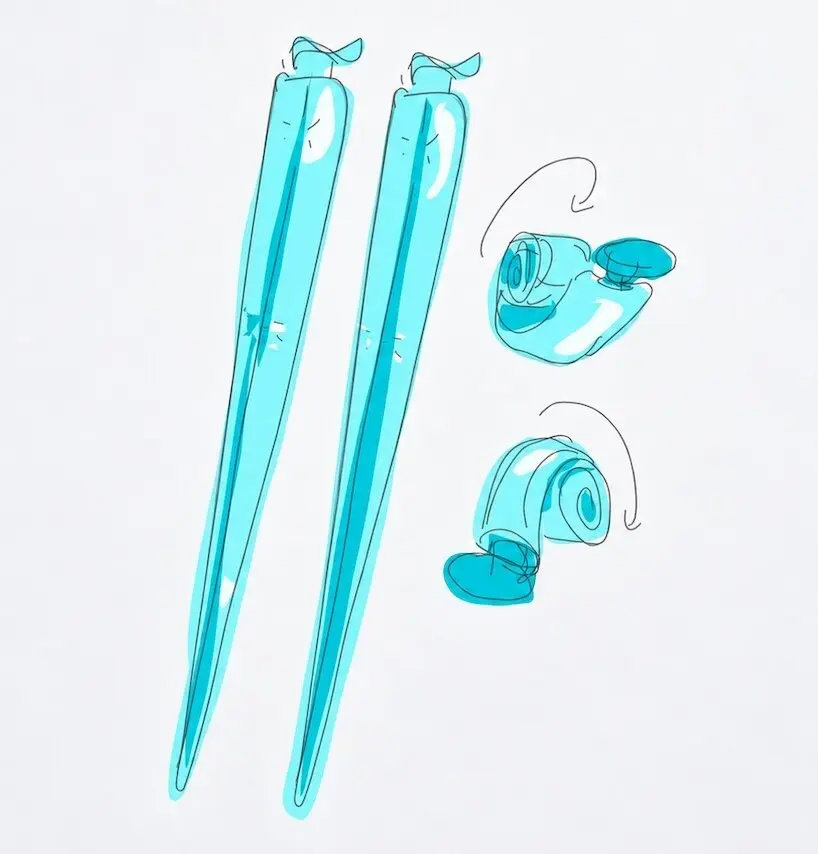
Some design concepts originate from a pressing architectural challenge, a technological breakthrough, or an urgent environmental necessity. Others, however, begin with a much more whimsical premise—such as the sudden, unexpected realization that you are completely without chopsticks when dinner arrives. This playful scenario is precisely what inspired designer Liam de la Bedoyere to conceptualize "Popsticks," an eccentric and innovative project that transforms conventional dining utensils into pocket-sized, inflatable accessories.
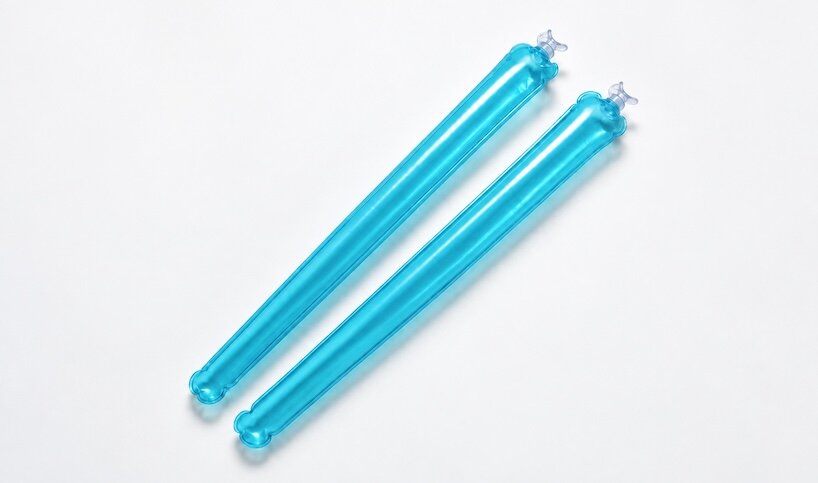
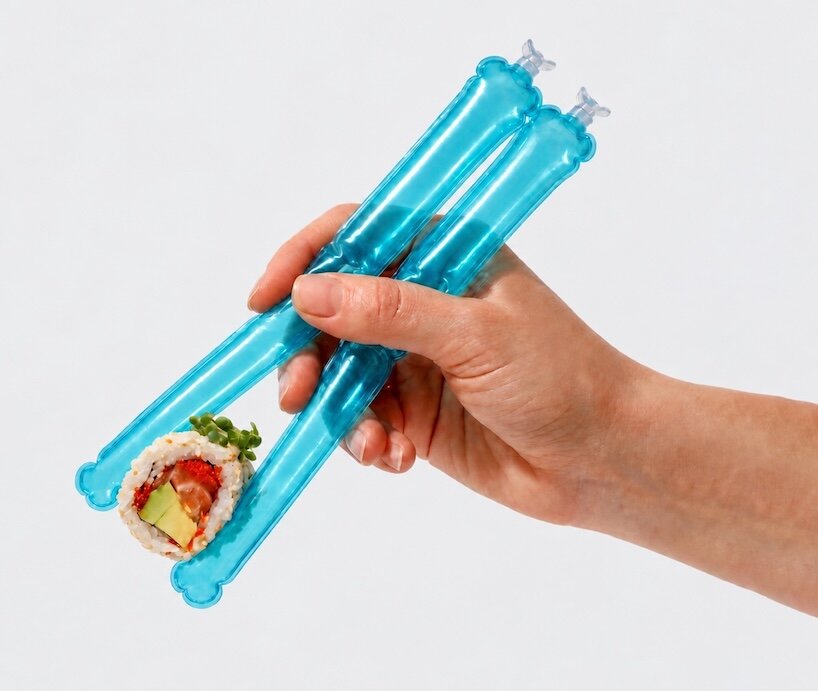
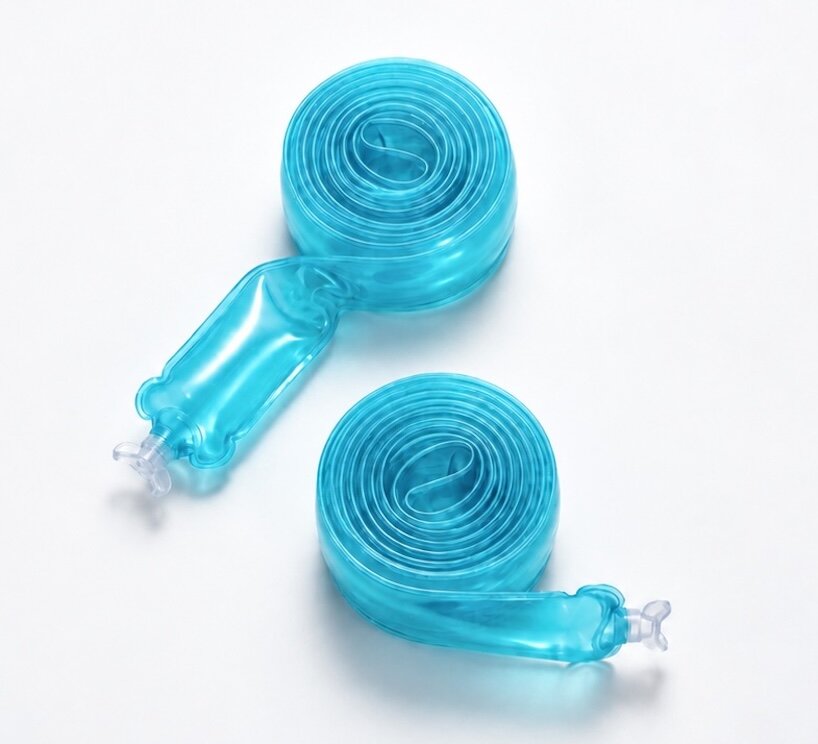
Rather than relying on mechanical hinges, folding joints, or modular pieces that snap together and risk loss, Popsticks takes an entirely different material approach by utilizing air to achieve its structural form. Created as part of a broader creative challenge, the concept addresses an entirely improbable culinary emergency with maximum visual charm. Each individual chopstick can be rolled tightly into a compact, spiral shape when completely deflated, allowing it to be easily slipped into a pocket, bag, or coat lining between meals. When the time comes to eat, a quick inflation turns the flat, pliable material into a fully functional utensil, making the act of preparing for dinner an interactive part of the overall dining experience.
Visually, the concept draws heavily from the distinct aesthetic of 1990s inflatable furniture, pool toys, and novelty accessories. The translucent blue forms closely resemble miniature versions of the inflatable chairs, loungers, and beach items that defined a specific era of playful, youthful design. By applying this nostalgic material language to something as rigid, traditional, and commonplace as a pair of chopsticks, de la Bedoyere challenges our assumptions about how everyday tableware should look, feel, and behave. The result is an object that occupies a fascinating space between a functional culinary accessory and a nostalgic design novelty, where softness and flexibility replace the traditional stiffness of bamboo, wood, or metal.
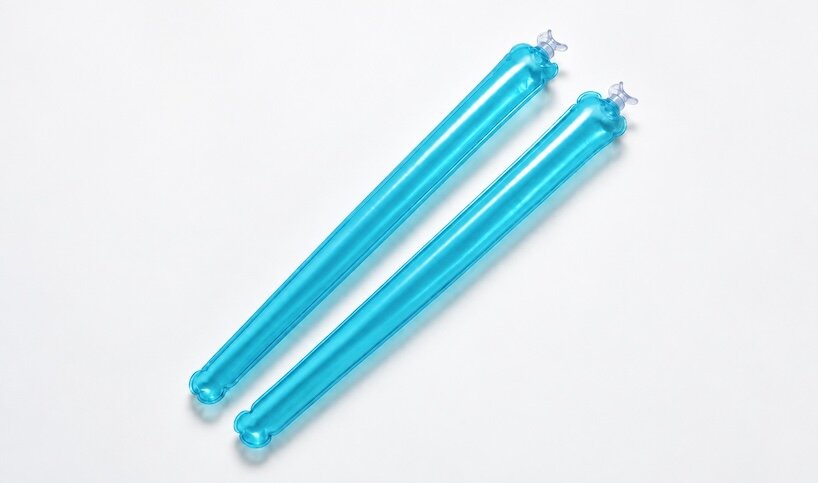
The origins of Popsticks can be traced back to Productober, an Instagram-based creative challenge that regularly invites designers from around the world to respond to diverse, open-ended design prompts. When faced with the specific theme of "Inflatable," de la Bedoyere decided to push his response far beyond a standard two-dimensional sketch. Instead, he chose to fully visualize the proposal in a three-dimensional space, exploring how an ordinary dining utensil might be radically reconsidered through a material behavior usually reserved for temporary leisure items and childhood toys.
While computer-aided design tools and rendering software like CAD and KeyShot are regular components of de la Bedoyere’s professional workflow at Bored Eye Design, capturing the exact look and feel of 1990s translucent plastics required a specialized approach. To achieve the specific aesthetic of those nostalgic objects, the designer utilized Vizcom, an AI-assisted design tool that helped translate the vision into convincing, high-fidelity visuals. These renderings showcase the chopsticks in both their neatly rolled-up storage states and their fully inflated operational forms, highlighting the whimsical transformation that occurs right before a meal.
As it turns out, designing solutions for highly improbable, humorous scenarios is a recurring theme within de la Bedoyere’s creative portfolio. Reflecting on his past work, the designer notes that Popsticks is actually far from his first foray into emergency-themed novelty products. Approximately a decade prior, he gained attention for creating the "Emergency Moustache," another lighthearted project that leaned heavily into tongue-in-cheek preparedness. For de la Bedoyere, these projects serve as a continuous exercise in questioning the status quo, treating minor everyday inconveniences as fertile ground for experimentation regarding how familiar objects travel, function, and interact with human habits.
At present, Popsticks remains strictly in the realm of conceptual design rather than transitioning into a commercially manufactured product available on store shelves. Because the project exists as a conceptual exploration, several practical questions regarding long-term material durability, food safety standards, structural rigidity, and everyday usability naturally remain unaddressed. However, the true value of the project lies far beyond solving a widespread culinary crisis. Its primary appeal is rooted in its ability to playfully disrupt the rigid expectations and conventions that govern ordinary table settings.
By proposing a pair of utensils that spend the majority of their lifespan neatly rolled up in a pocket and only take on their recognizable form when actively needed, the designer offers an entertaining alternative to standard cutlery. Whether or not inflatable tableware ever finds its way into mainstream dining culture or establishes itself as a genuine dinner essential, Liam de la Bedoyere has successfully demonstrated that even the most mundane daily routines can be infused with humor, nostalgia, and a healthy dose of imaginative design thinking.