The international arts landscape is experiencing a period of significant transition, marked by high-profile executive departures, grassroots cultural preservation efforts, legal battles over public monuments, and important reappraisals of under-recognized artists. From institutional shifts in the American Midwest to community-led campaigns in Scotland and major market developments across Europe and the United States, the art community continues to navigate complex economic, social, and political pressures.
The Headlines
Musical Chairs at the Indianapolis Museum of Art
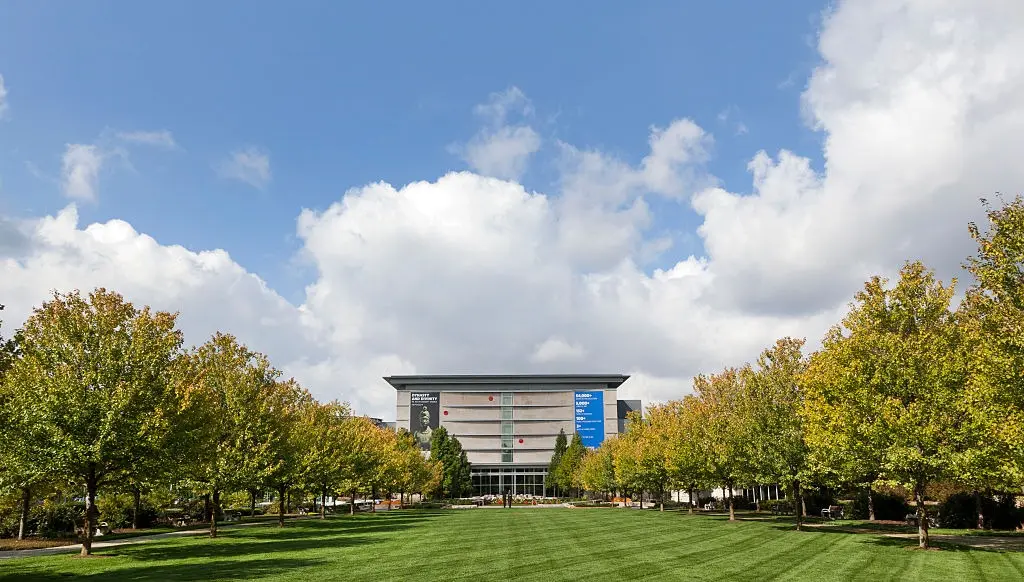
After steering the institution through three years of dynamic growth and community engagement, Belinda Tate is stepping down from her post as executive director of the Indianapolis Museum of Art, according to reports from Mirror Indy. During her tenure, Tate earned a strong reputation for centering women and artists of color within the museum’s core programming, championing exhibitions that successfully bridged contemporary culture with traditional museum spaces.
Among her most notable achievements were forward-thinking exhibitions such as “Future Now: Virtual Sneakers to Cutting-Edge Kicks” and “The Message is the Medium.” Perhaps her most famous coup during her time at the helm was securing the involvement of music icon Alicia Keys to bring her private collection to Indianapolis. That major collaboration resulted in the widely acclaimed exhibition “Giants: Art from the Dean Collection of Kasseem ‘Swizz Beatz’ Dean and Alicia Keys,” which drew significant critical praise and boosted visitor numbers.
Reflecting on her departure and the trajectory of the institution under her watch, Tate expressed optimism for the future in a statement released by the museum. “I am proud of the role I have played in advancing the Indianapolis Museum of Art and helping position it for its next chapter,” she noted, leaving behind a legacy of inclusivity and cultural relevance that will guide the museum’s leadership search moving forward.
Saving Glasgow’s Art Scene
Across the Atlantic, Glasgow’s fiercely independent arts community finds itself in a state of deep upheaval following a compounding series of crises. According to The Art Newspaper, local artists, curators, and cultural workers are in an uproar after enduring catastrophic setbacks, most notably two devastating fires at the historic Glasgow School of Art and the abrupt shuttering of the city’s Centre for Contemporary Arts (CCA) earlier this year.
In response to these existential threats to the local creative ecosystem, organizers and advocates have mobilized rapidly. A passionate “Save Our CCA” campaign has been launched alongside a parallel effort to rescue Trongate 103: Centre for the Arts and Creativity. The latter facility, which houses seven distinct arts organizations, faces an immediate and devastating crisis in the form of a proposed 400 percent rent increase on their building—a financial hurdle that threatens to wipe out the tenants entirely.
Prominent local figures have spoken out about the gravity of the situation. Renowned artist Mark Leckey lamented the potential loss of the CCA, describing it as the core and the heart from which the city’s broader artistic ecosystem has long been sustained. Leckey pointed to Glasgow’s historical reputation as an ideal haven for artists, characterized by an interdependent ecology and economy that genuinely worked. Despite the passionate outcry, the ultimate fate of both institutions remains uncertain. Compounding the distress among local advocates, the CCA’s institutional archive has recently been put up for sale—a prospect that a spokesperson for the Save Our CCA campaign starkly condemned as sickening.
The Digest
Legal and administrative battles continue to intersect with public space and cultural heritage in the United States. On Thursday, the elected board in Arlington County, Virginia, took formal legal action by filing a lawsuit against President Trump’s controversial planned triumphal arch. According to the county board, the federal project moved forward in violation of federal laws because it failed to properly review or account for the infrastructural and environmental impact the massive monument would have on the surrounding community, as reported by The Washington Post.
Meanwhile, the European commercial art market is grappling with structural questions. Vienna is currently witnessing what industry observers have termed a "gallery exodus." Four prominent dealers have offered varying reasons for the flight of commercial spaces from the Austrian capital, yet they converge on a single, vital conclusion: for any local art market to truly thrive, it requires robust, foundational support across the entire ecosystem. Whether sustained by institutional programming, an active base of private collectors, or reliable government subsidies, galleries cannot survive in isolation, according to insights published in Monopol Magazine.
In France, the vulnerabilities of private collections have been laid bare following a brazen theft. Thieves successfully bypassed security measures by systematically disconnecting video cameras and disabling an alarm system before absconding with a high-value artwork from a private French museum. The stolen piece is a giant bronze book cover titled “Livre de l’Apocalypse,” which was originally designed by Salvador Dalí, as reported by BFM TV-RMC.
On the technological and corporate front, Microsoft is leaning into art history for its latest software release. The tech giant is debuting a new, free digital typeface designed to mimic the distinct handwriting of Renaissance master Michelangelo. Fittingly dubbed “Michelangelus,” the font brings a touch of historical artistry to everyday digital correspondence and design work, according to reports from dpa.
In the high-end auction world, exceptional gemstones continue to command staggering sums. Christie’s has announced it will offer a rare 24-carat emerald-cut diamond known as the “Bulgari Pink” during its upcoming Geneva auction on November 10. Industry experts project that the exquisite piece of jewelry could fetch up to $18 million under the hammer, as detailed by Forbes.
The Kicker
For generations, the phrase “Caps for sale! 50 cents a cap!” has been instantly recognizable to millions of readers as the charming refrain from the beloved 1938 children’s book written and illustrated by Esphyr Slobodkina. However, while Slobodkina secured an enduring place in literary history with her classic tale of a peddler and mischievous monkeys, her broader artistic output—spanning abstract paintings, intricate mixed-media collages utilizing fabrics of her own design, and sculptures constructed from found objects—has remained far less known to the general public.
That imbalance is now the focus of a major exhibition in New York City that aims to reintroduce Slobodkina as a versatile, boundary-pushing modernist, according to The New York Times. Hosted at the Rosenberg & Co gallery, the exhibition is titled “Esphyr Slobodkina: An Unbound Creativity.” The show explores the breadth of her artistic expression and highlights her singular sense of freedom as she moved effortlessly across various genres and mediums throughout her career.
“She didn’t shy away from new development,” gallery director Kadie Ross observed of the artist’s fearless approach to creation. By bringing her lesser-known abstract works and experimental designs into the spotlight, the exhibition provides a timely opportunity to view a familiar creator through an entirely new lens, cementing her legacy well beyond the pages of children’s literature.