As the autumn season transitions into the colder depths of winter, homeowners are often left wondering how to maintain curb appeal and welcoming entryways when traditional annuals fade. Addressing this seasonal challenge, garden designers Ellen Goldfarb and Tracy Buttrick of the landscape service What’s Blooming have shared an inspiring final round of winter container arrangements. Following a brief technical delay that temporarily postponed the publication of the Garden Photo of the Day (GPOD) feature, these striking seasonal displays offer a masterclass in combining structural elements, evergreens, and textural accents to keep outdoor spaces vibrant through the coldest months of the year.
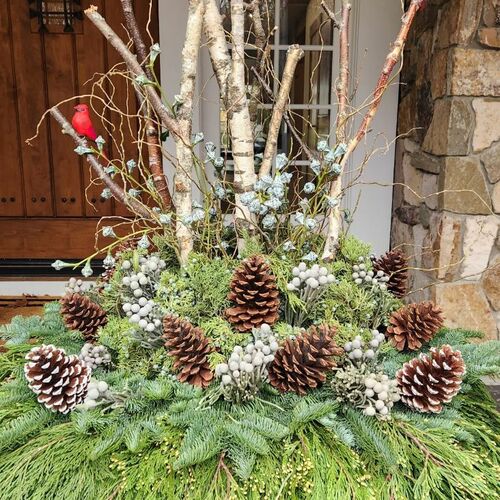
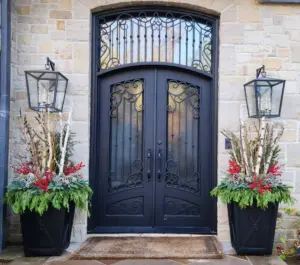
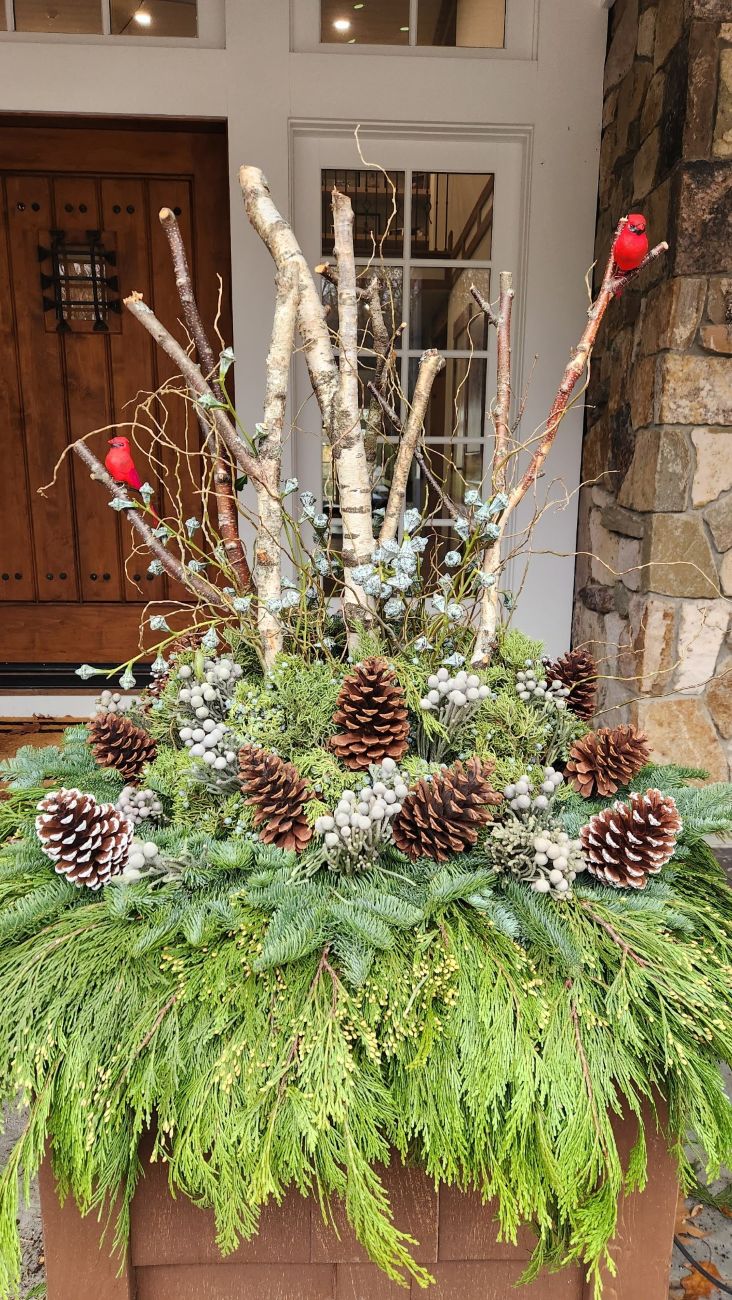
The featured designs, installed across various residential properties in New Jersey, highlight how versatile and durable winter containers can be when crafted with the right selection of cold-hardy flora and organic materials. In Tenafly, New Jersey, a pair of cedar-shake square pots flank the steps of a rustic porch, creating a symmetrical and inviting entryway. Because these particular containers are sheltered beneath the roofline, the designers were able to incorporate charming decorative elements such as artificial cardinals without risking weather-related damage or disintegration.
To achieve a strong sense of height and architectural presence, Goldfarb and Buttrick utilized birch logs alongside short stems of curly willow and generous quantities of silver bell eucalyptus. The foundational greenery of the Tenafly arrangement relies on a hardy mix of desert juniper (Juniperus osteosperma, Zones 3–9), noble fir (Abies procera, Zones 5–6), and incense cedar (Calocedrus decurrens, Zones 5–8). To finish off the look, the designers added a combination of frosted and brown pine cones alongside small, textural bunches of silver brunia, creating a layered, multi-dimensional display that bridges the gap between natural woodland aesthetics and polished residential landscaping.
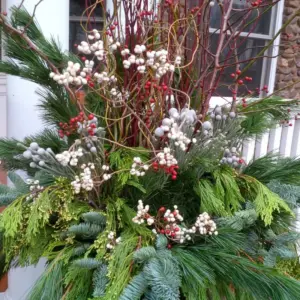
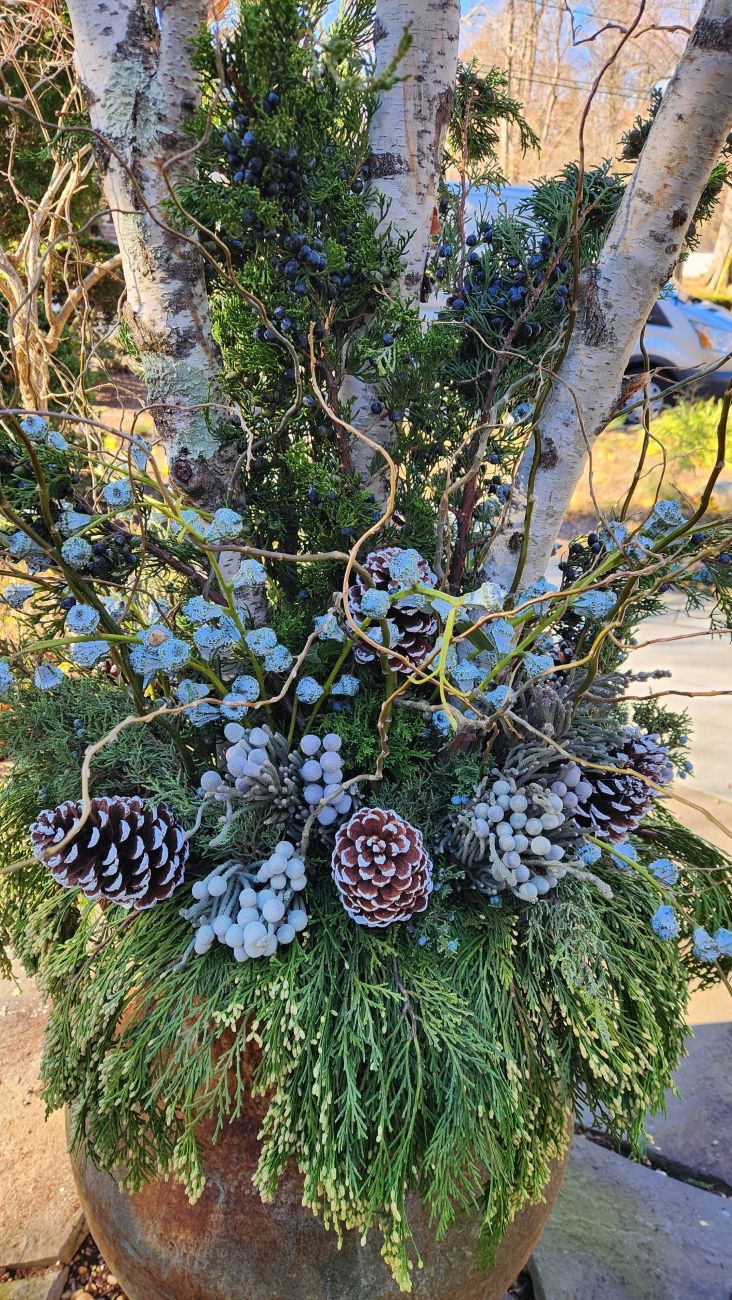
Moving to Allendale, New Jersey, another standout installation demonstrates the effectiveness of a tall, stand-alone pot positioned prominently in front of a home. Because this container can be viewed from all sides, the composition required careful attention to balance and 360-degree visual appeal. To capture attention and anchor the design, the designers incorporated tall birch logs paired with long stems of heavily berried Chinese juniper (Juniperus chinensis, Zones 4–9). This was further fleshed out with silver bell eucalyptus, delicate curly willow branches, frosted pine cones, clusters of silver brunia, and rich branches of incense cedar, ensuring the pot looks lush and full from every possible viewing angle.
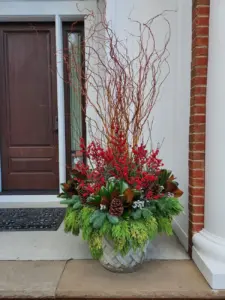
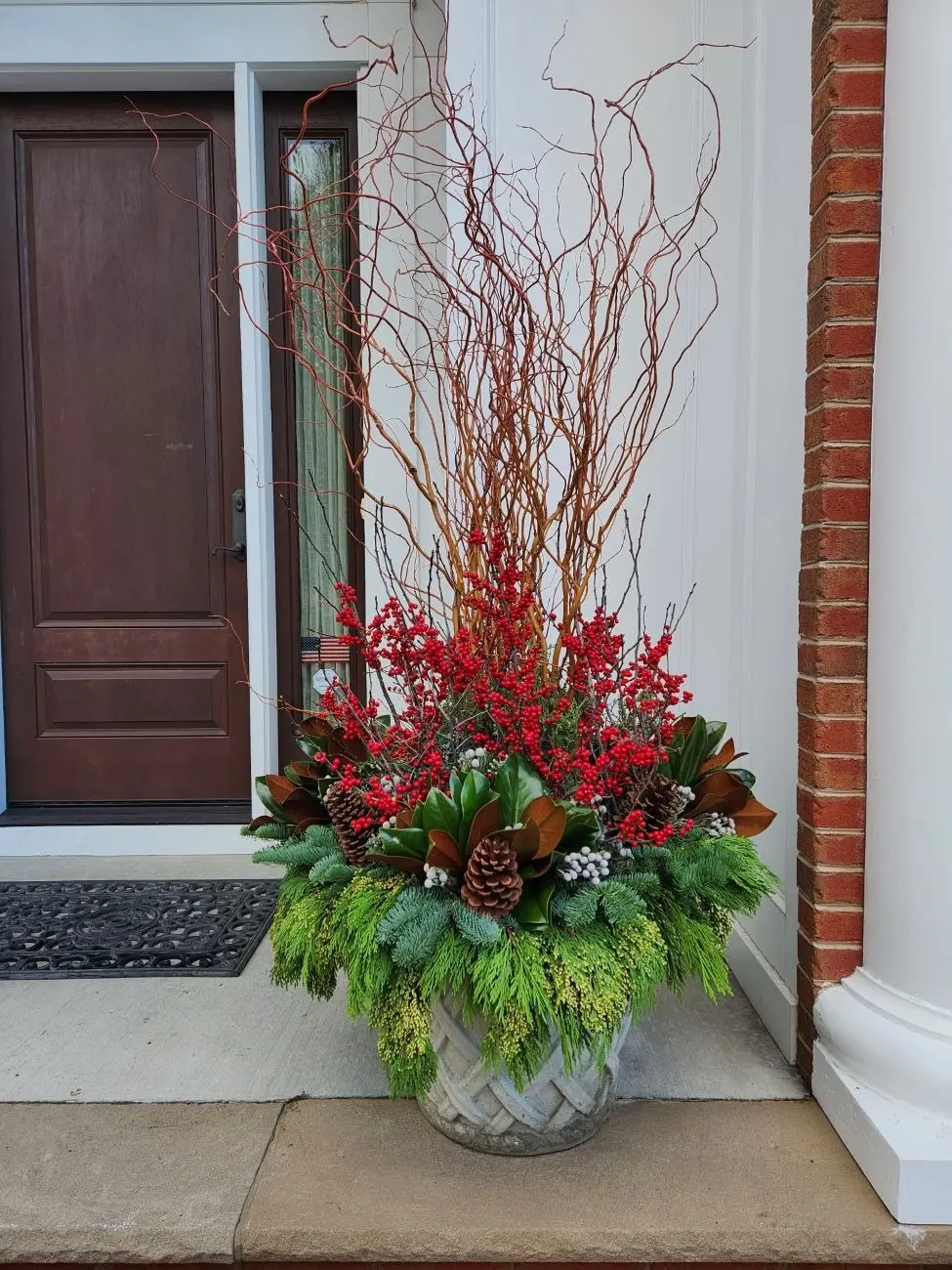
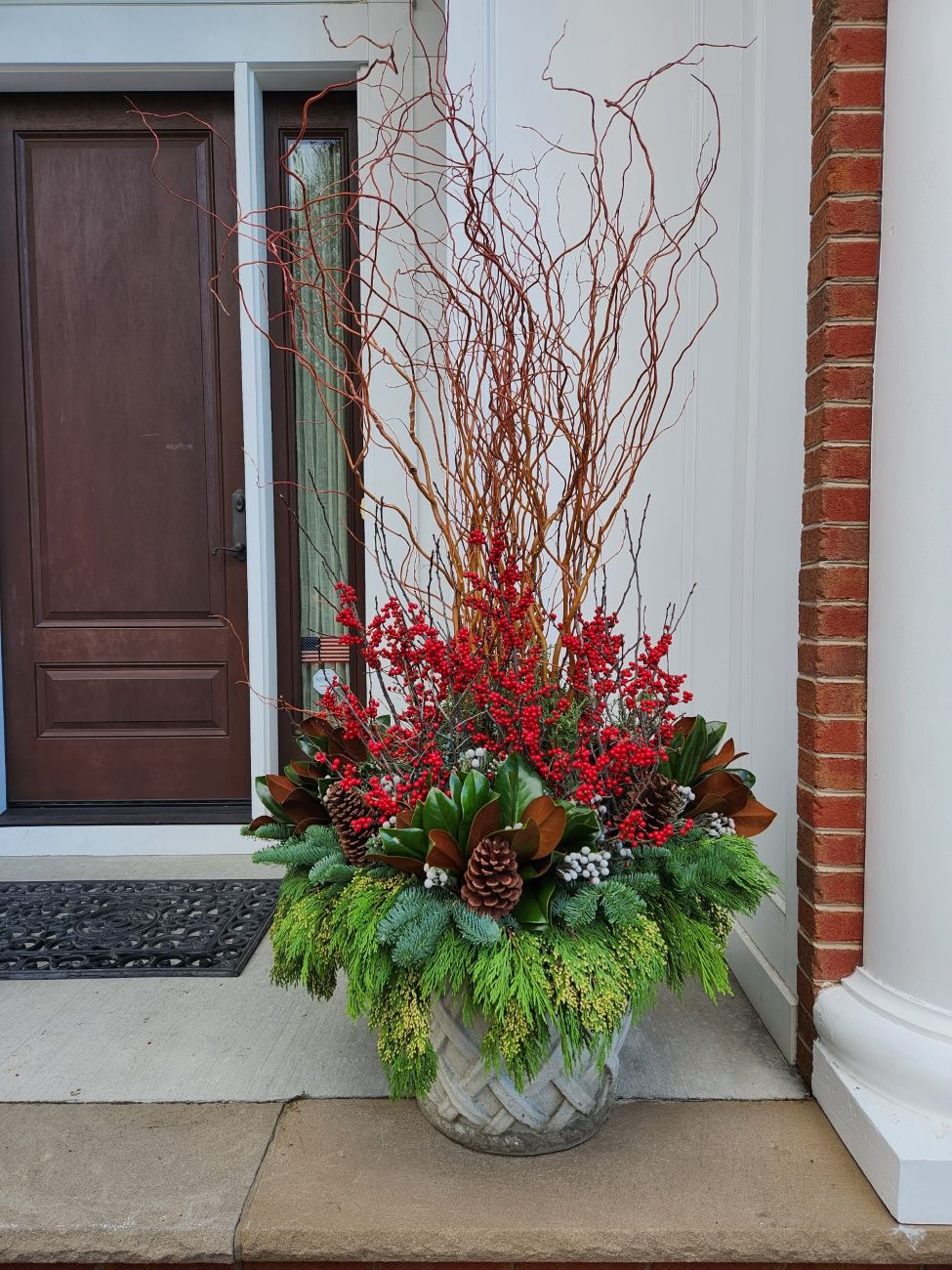
In Saddle River, New Jersey, another residential project leaned heavily into a homeowner’s distinct preference for vibrant color. The owner expressed a deep fondness for red winterberries (Ilex verticillata, Zones 3–9), prompting the designers to incorporate them in abundance throughout the arrangement. With ample vertical space to work with, tall curly willow was introduced, providing a dramatic contrast against the white architectural background of the home.
This Saddle River design also features tucked-in stems of tall Chinese juniper, striking rosettes of magnolia leaves, and natural brown pine cones. The textural variety is rounded out with additional silver brunia clusters, touches of noble fir, and a dense collar of incense cedar arranged neatly around the rim of the container. When viewed alongside its matching partner at the front entrance, the pair of planters creates a cohesive, high-impact seasonal statement that elevates the entire facade of the home.
These professional container arrangements illustrate how cold-weather gardening does not have to mean barren entryways or neglected porches. By blending structural wood elements, long-lasting evergreens, and colorful accents like berries and artificial wildlife where shelter permits, gardeners can maintain a dynamic and visually engaging landscape year-round.
For gardeners looking to tackle similar large-scale pruning, branch harvesting, or container preparation tasks, specialized equipment can prove invaluable. Professional gardening resources frequently recommend heavy-duty tools such as telescoping long-reach pruners for clean cuts at a distance, cordless telescoping pole chain saws for overhead maintenance, and variable-speed cordless reciprocating saws equipped with wood and metal-cutting blades to easily process fallen branches or harvest thick woody stems for winter displays.
The creative work shared by Goldfarb and Buttrick serves as a reminder of the endless possibilities available to enthusiasts seeking to experiment with new materials and plant combinations in their own seasonal displays. As the gardening community looks forward to the transitions of spring and summer, submissions for the Garden Photo of the Day continue to highlight the dedication, creativity, and passion of growers across the region.