As the vibrant heat of summer officially gives way to crisp autumn temperatures across the Midwest, gardeners are confronted with the reality that the primary growing season is winding down. However, the transition into cooler weather does not mean the end of visual interest and dynamic color in the outdoor landscape. For seasoned horticulturists and casual garden enthusiasts alike, the changing of the seasons offers a fresh creative opportunity, particularly through the use of strategic seasonal container gardening.
Few professionals master this autumnal transition quite like Howard, a Chicago-based container designer who has dedicated nearly four decades to crafting seasonal floral and botanical displays. Having previously shared his expertise on spring container creations and intricate Halloween displays, Howard is now showcasing a brand-new collection of fall containers developed for a residential project in Glencoe, Illinois, situated in USDA Hardiness Zone 6a. These latest installations offer a masterclass in how planters can elevate a landscape as the natural environment prepares for winter dormancy.
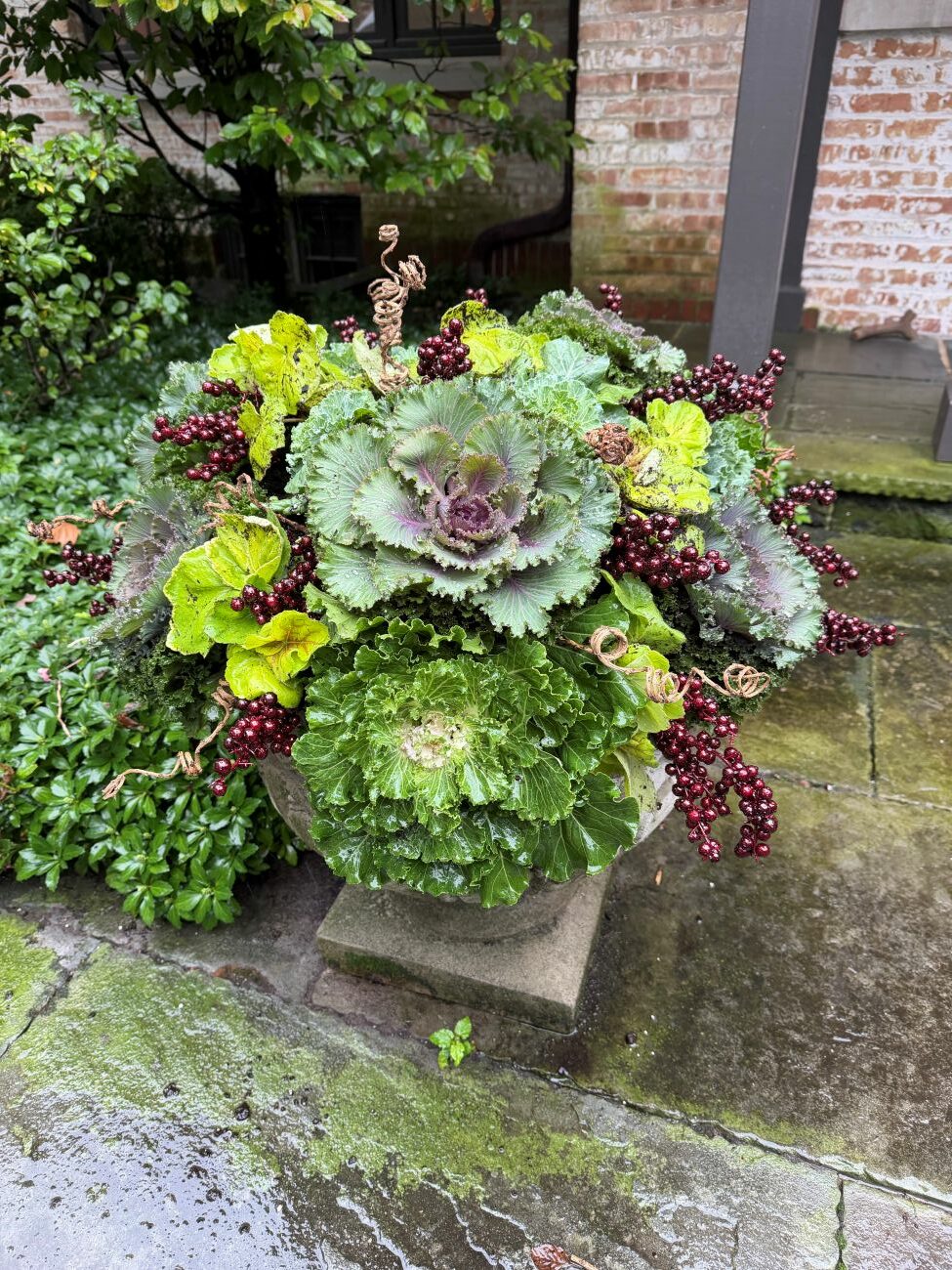
The centerpiece of many arrangements in this Glencoe project relies heavily on the robust textures of ornamental cabbage and kale, scientifically classified as Brassica oleracea cultivars. These resilient annuals provide the foundational bulk for several large arrangements, offering ruffled foliage that thrives in cooler temperatures. Yet, design elements extend well beyond traditional foliage. In a striking large fall urn, clusters of deep burgundy berries emerge as a defining visual highlight. Paired with twisting woody stems that introduce a whimsical, architectural element, these components tie the entire composition together against the backdrop of changing autumn leaves.
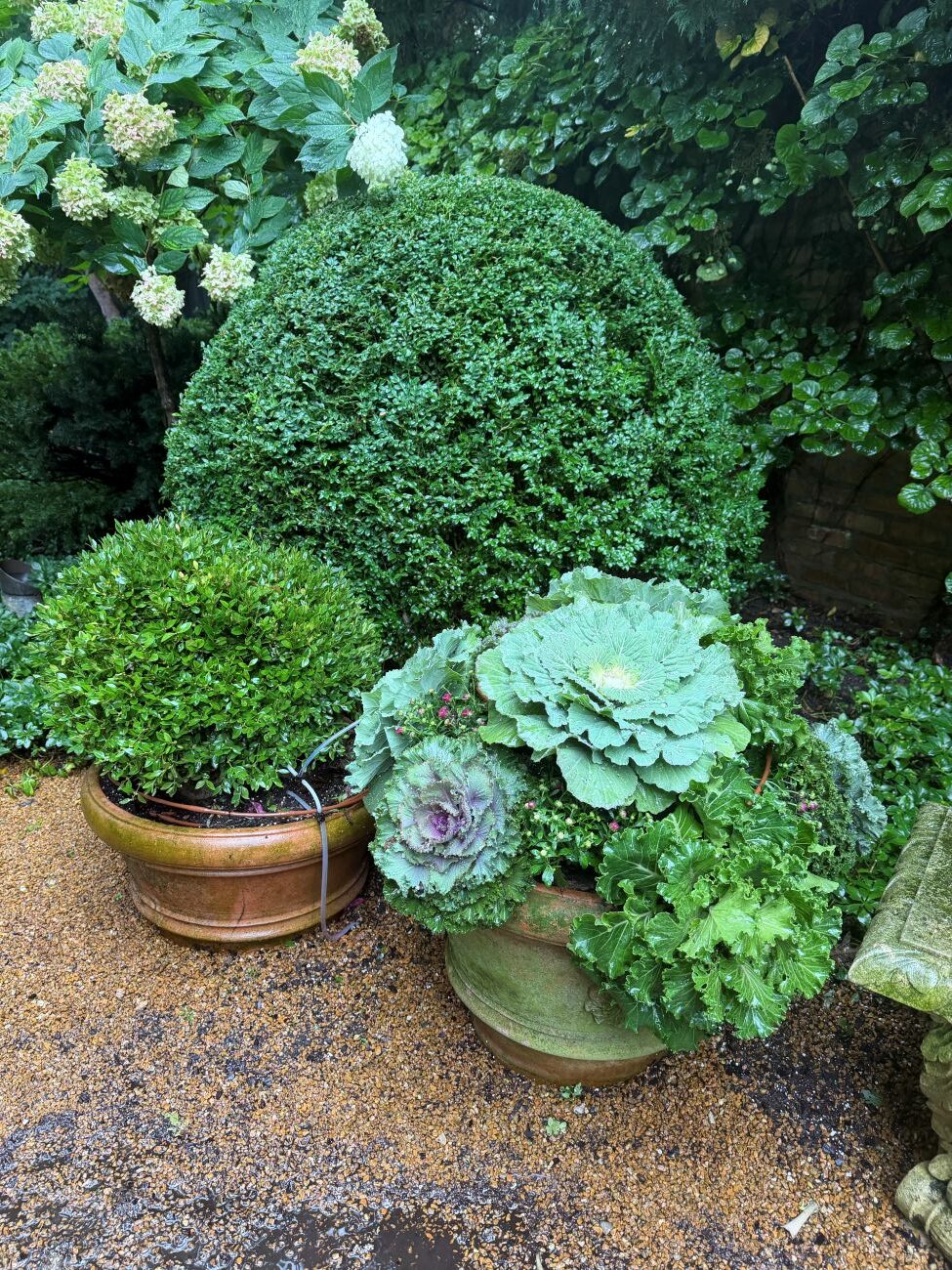
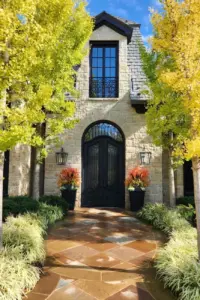
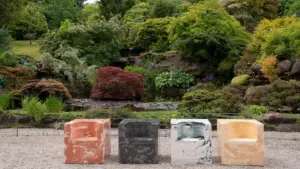
Contextual placement plays an equally vital role in Howard’s design philosophy. At the Glencoe site, earthy terracotta and weathered containers are deliberately positioned to harmonize with the underlying stonework. Nearby clipped boxwoods, formally identified as Buxus sempervirens and thriving in Zones 5 through 8, provide a structured, evergreen contrast that makes the intricate patterns and ruffled textures of the ornamental cabbage and kale stand out dramatically. This deliberate pairing demonstrates how containers can actively complement the broader surrounding landscape architecture, elevating even the smallest corners of a residential property into sophisticated focal points.
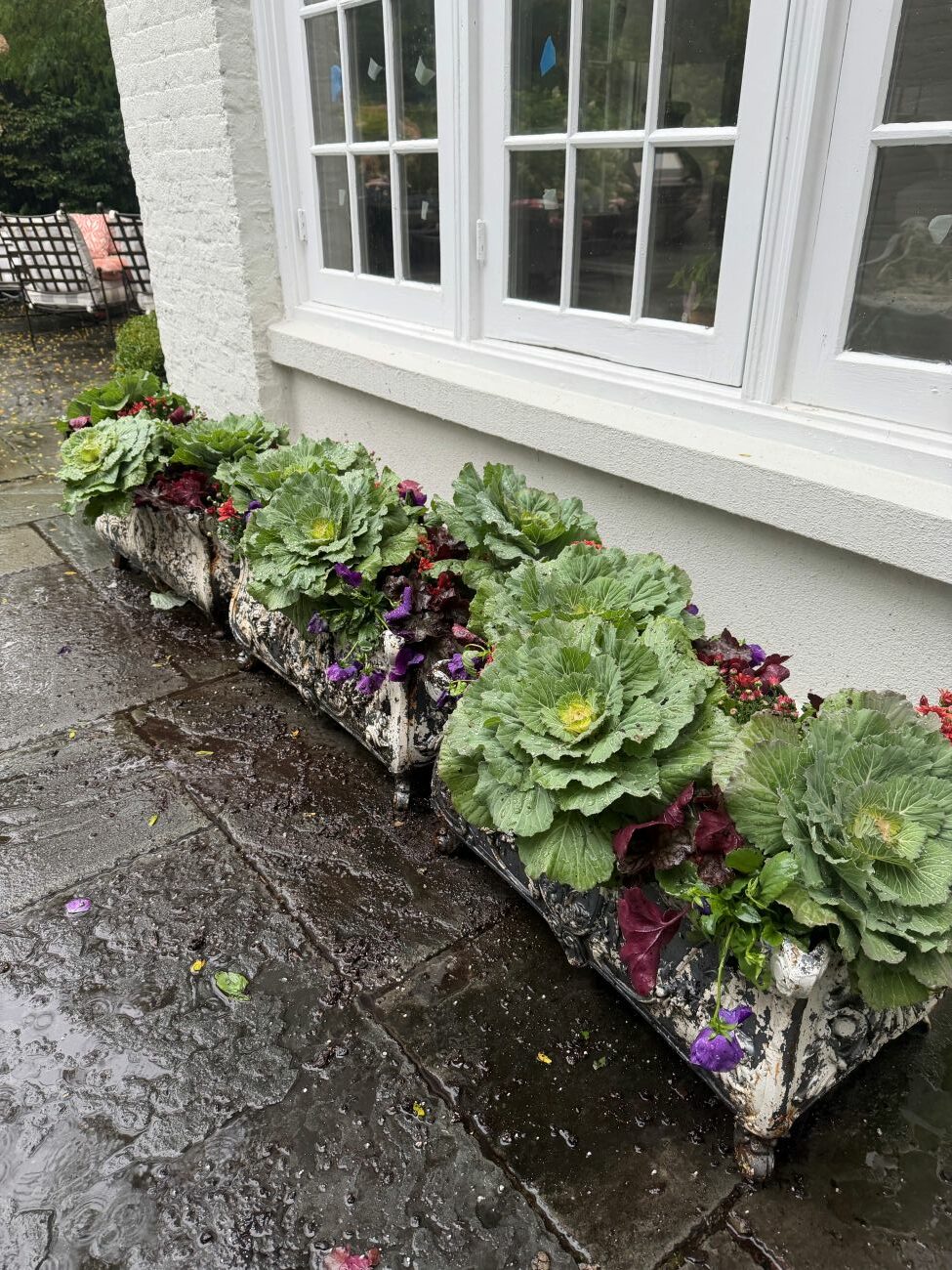
Further showcasing his eye for composition, another installation utilizes a series of weathered rectangular containers grouped tightly together. At first glance, the arrangement creates the visual illusion of a single, continuous planter box. By clustering these containers rather than dispersing them haphazardly across the patio, the design maximizes its visual impact. The recurring presence of ornamental cabbage and kale, accompanied by subtle accents of purple and burgundy through pansies and berries, highlights a core design principle: repeating specific colors and plant varieties can unify a series of distinct arrangements without resulting in monotonous uniformity.
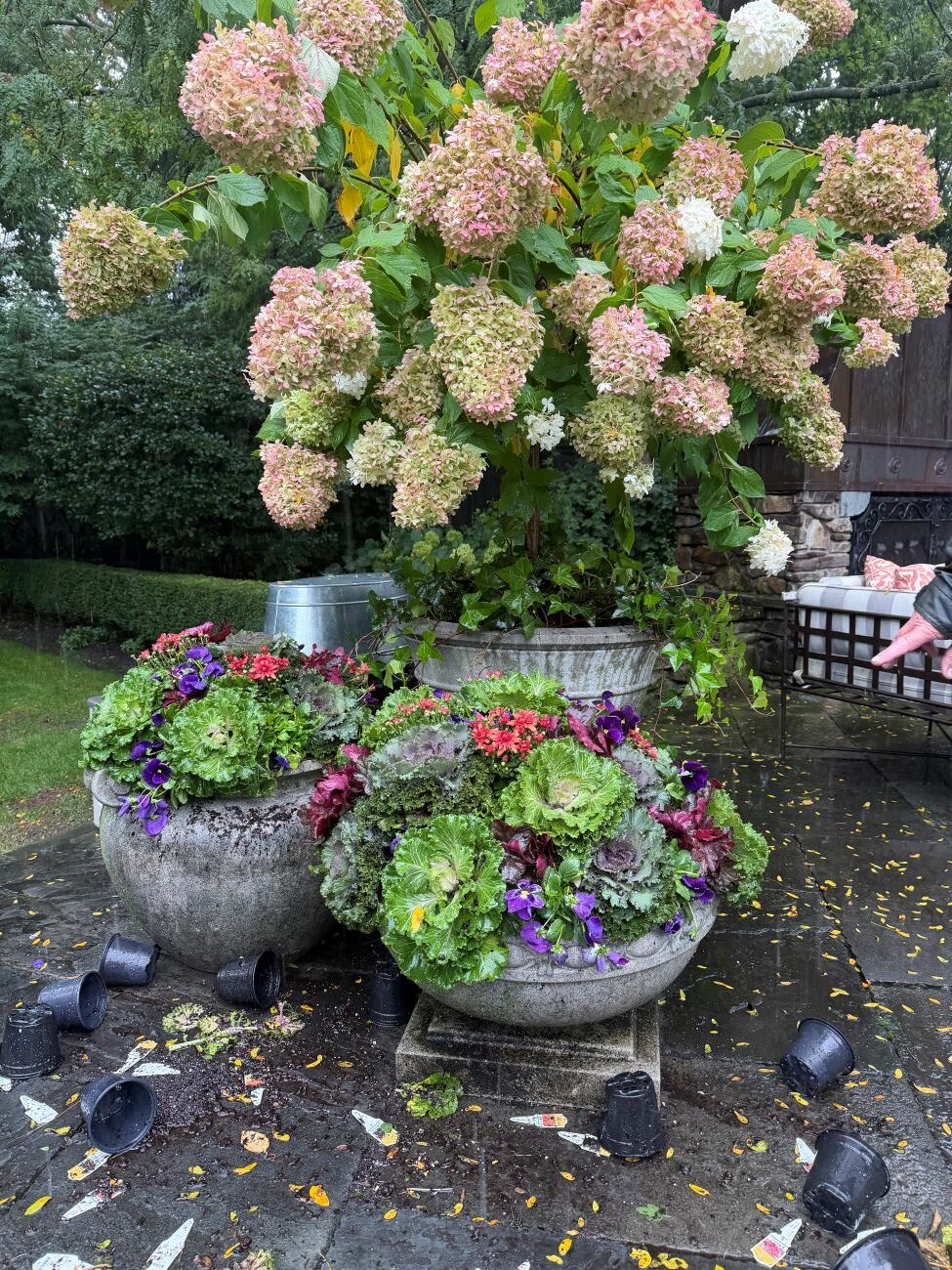
The creative process, however, is not without its messy realities. Photographs capturing the behind-the-scenes installation process reveal pots and plant tags scattered across the ground during assembly—a relatable scene for any gardener familiar with the hands-on labor required to achieve polished results. The temporary chaos of soil and stray foliage ultimately gives way to meticulously balanced designs that welcome visitors with warmth and elegance.
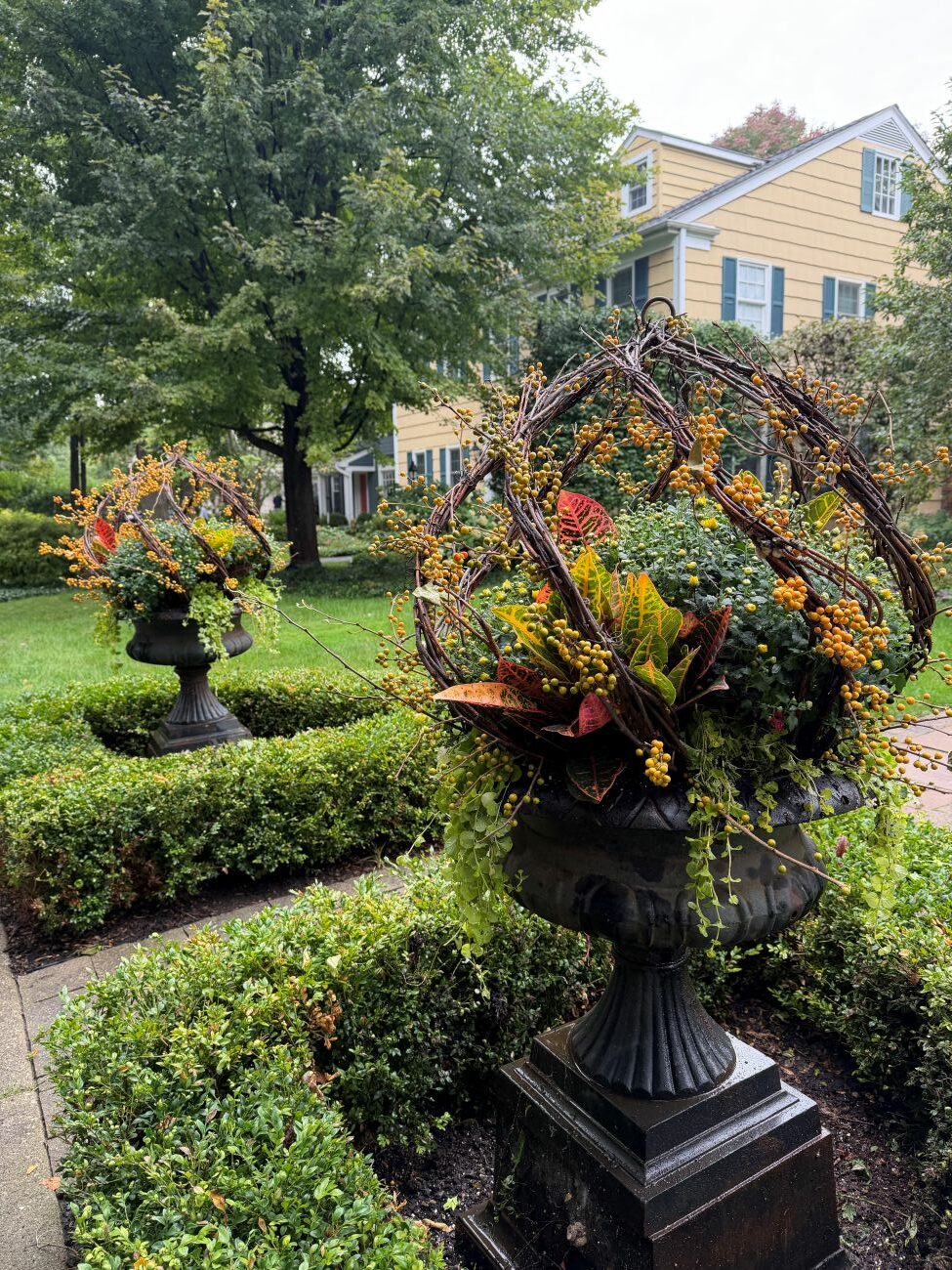
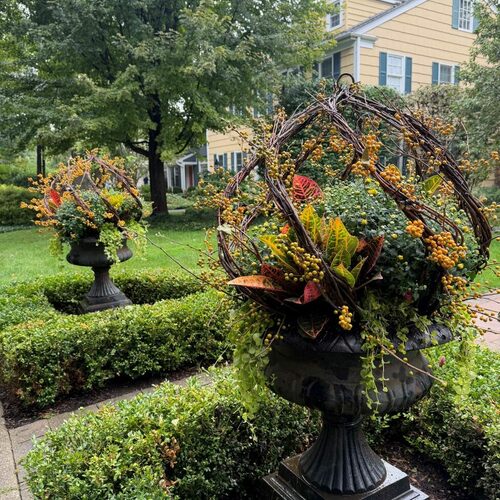
At a neighboring residence on the exact same rainy day, Howard executed another standout autumn display featuring colorful croton foliage, golden berries, and arching decorative branches. The sculptural quality of the twisting woody vines, combined with dangling golden berries and vibrant tropical-leaning leaves, creates an unforgettable greeting for anyone approaching the front entrance. Such installations prove that container gardening in the colder months is not merely a fallback option when garden beds fade, but a distinct art form capable of celebrating the unique character of the autumn season.