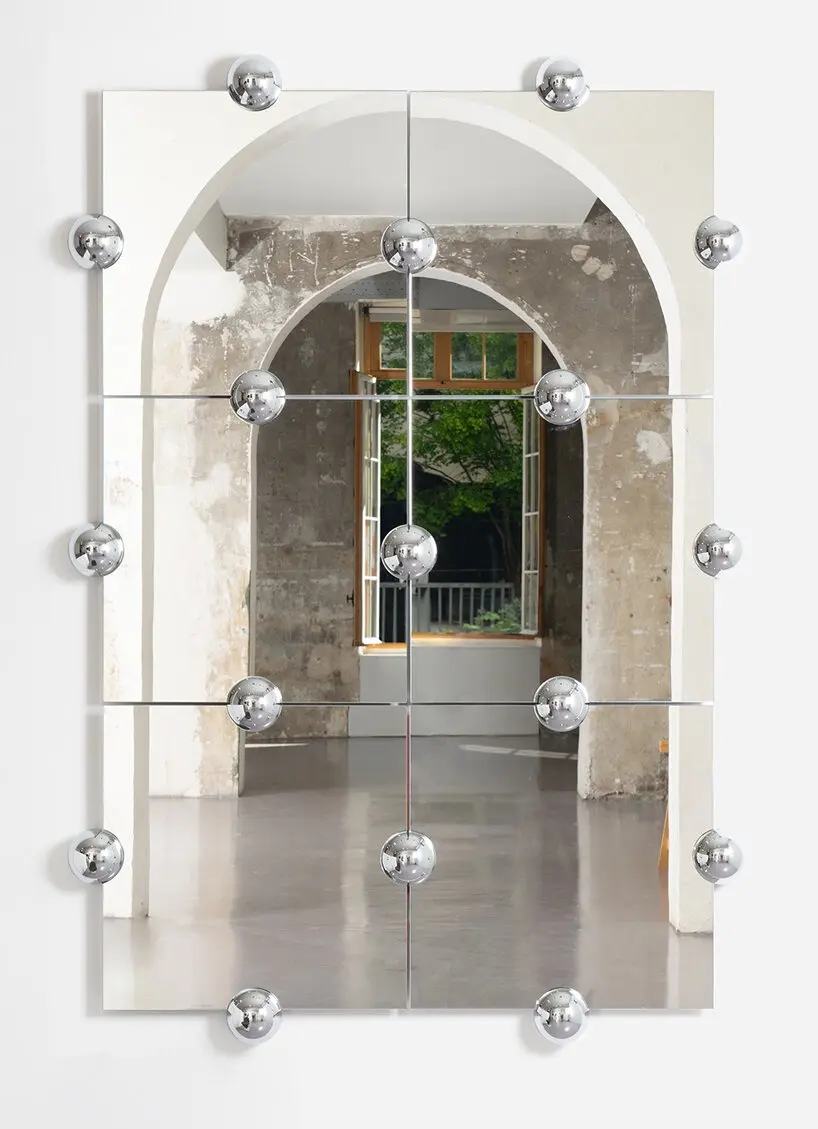
For over a decade, French designer Jean-Baptiste Fastrez has dedicated a significant portion of his creative practice to rethinking one of the most fundamental objects in domestic architecture: the mirror. Eschewing conventional approaches to framing and glass-cutting, Fastrez has spent years treating the reflective surface not merely as a utilitarian household item, but as a fertile ground for sculptural exploration.
Reflecting on his enduring fascination with the medium, Fastrez notes the unique philosophical tension at the heart of his work. "I like the paradox of an object that has such a strong physical presence, yet whose image is almost entirely made up of whatever surrounds it," the designer observes. This dual nature—balancing a heavy, tangible frame against a surface that dematerializes into an echo of its environment—has guided his recent collaborations with the Paris-based design company Moustache, yielding two distinct yet conceptually linked collections: Zodiac and Sphera.
The Mirror as Utopia and Heterotopia
To understand Fastrez’s fascination, it helps to look at the unique cultural and spatial history of the mirror itself. In a widely cited 1967 lecture, philosopher Michel Foucault described the mirror as a utopia—a placeless place where a viewer sees themselves where they are not, opening up an unreal, virtual space behind the glass. Foucault also classified it as a heterotopia, noting that the mirror physically exists in reality and exerts a counteraction on the space and body occupying it.
Unlike almost any other object in a domestic interior, which exists simply to be looked at, a mirror actively hands the room back to its occupant, folding the viewer inside the architecture. This profound duality has long attracted creative experiments, forcing designers to negotiate the delicate boundary between an object’s physical form and the optical illusions it creates.
For Fastrez, this pushes the mirror into a category all its own. He considers it one of the few domestic objects that offers creators the ultimate freedom to navigate the ambiguous territory sitting precisely between industrial design and pure sculpture.
Sculptural Deceptions: The Zodiac and Sphera Collections
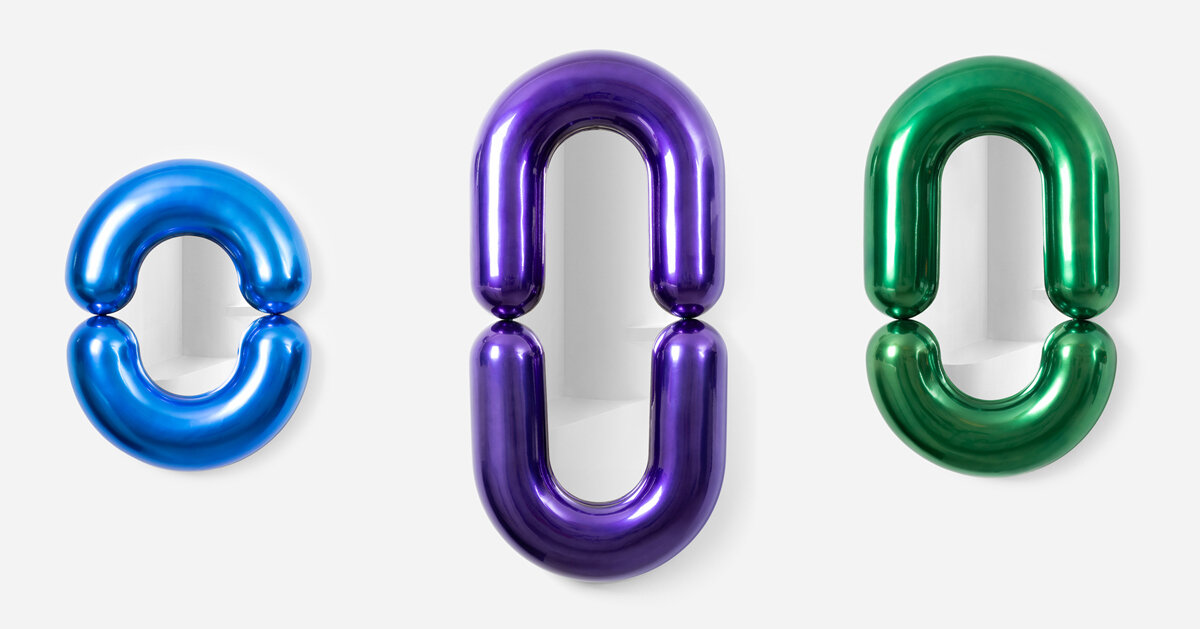
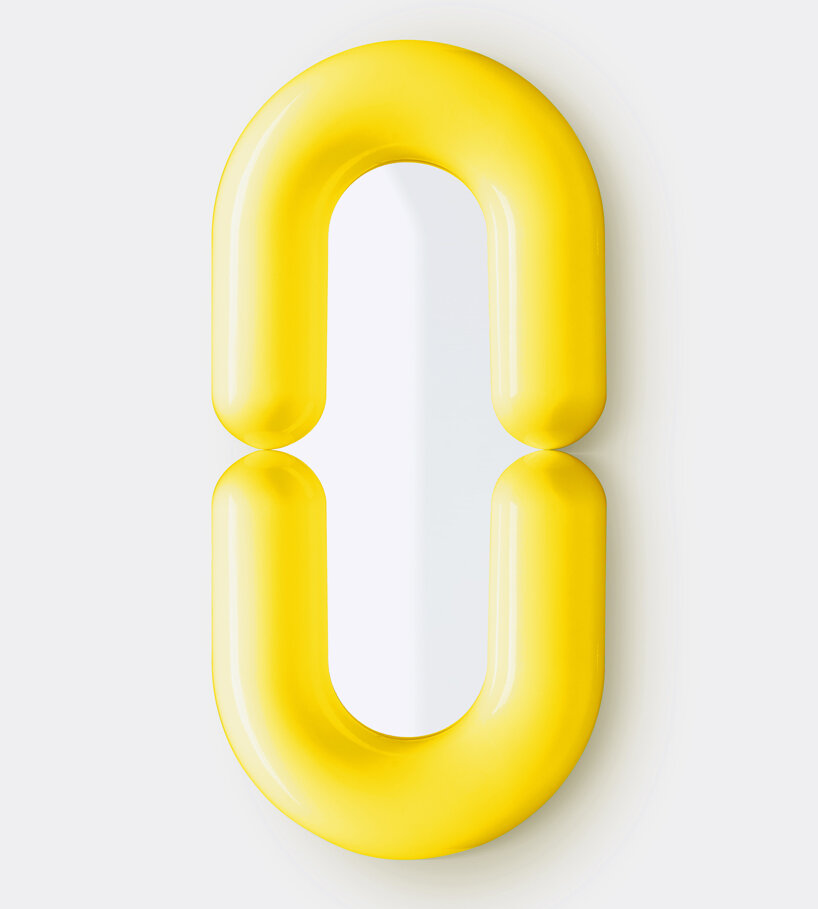
Both of the recent projects developed by Fastrez for Moustache originate from pre-existing, everyday forms, transforming familiar industrial archetypes into uncanny artistic statements. The Zodiac mirror borrows its voluminous silhouette directly from the inflatable watercraft of the same name. However, what visually registers to the viewer as a soft, inflated rubber tube is, in reality, meticulously crafted, high-gloss ceramic.
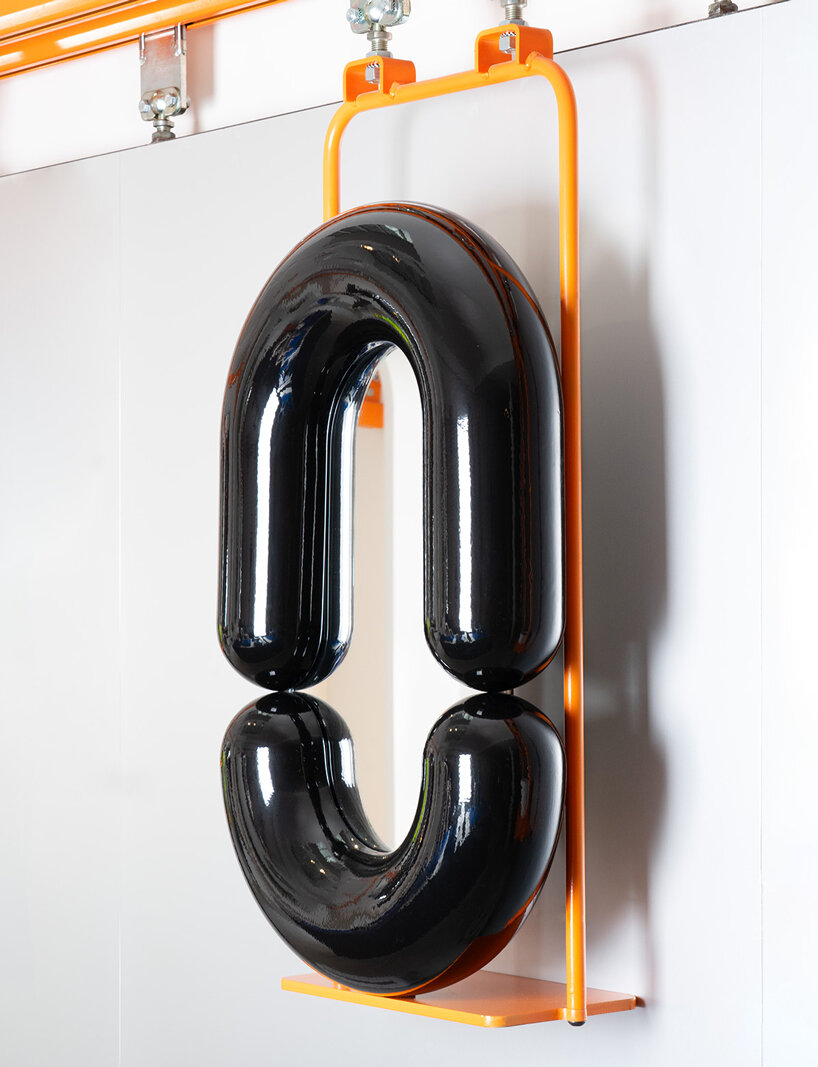
"With Zodiac, I was interested in the idea of the ready-made, or rather the fake ready-made," Fastrez explains. "I wanted to create objects that looked as though they had been made by repurposing something else."
The initial concept was driven by a surreal narrative: an inflatable boat somehow ending up mounted on a wall and miraculously transformed into a mirror. By forcing a collision between entirely disparate categories of objects, Fastrez generates narratives that are at once visually striking, open-ended, and subtly mysterious. The ceramic frame acts as half a ring, built from two molded sections, where the physical frame terminates and the optical reflection seamlessly takes over, creating the illusion of floating, continuous tubular volumes.
The Sphera collection, meanwhile, stems from an entirely different source of inspiration encountered during a pilgrimage through architectural history. Fastrez traces the genesis of the series to a specific visit to the preserved home of Italian designer Carlo Mollino in Turin.
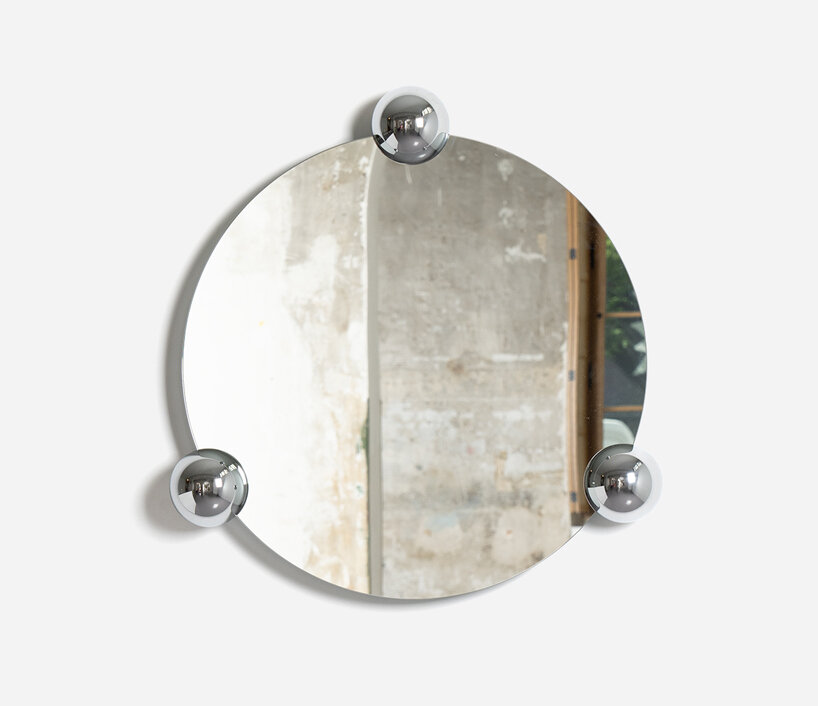
"I remember very clearly that the idea came to me while visiting Carlo Mollino’s house in Turin," Fastrez recalls. "Some of the walls in his preserved apartment are covered with mirrors made up of several sections, held together by small chrome fittings. I found this fascinating, before realising that the system was actually nothing particularly unusual."
Far from being a rare Mollino invention, the modest metal fixture was widespread throughout the twentieth century, appearing everywhere from sophisticated, high-end architectural interiors to ordinary residential bathrooms and student bedrooms. Recognizing the universal utility of the anonymous hardware, Fastrez saw an opportunity to isolate a frame with no intrinsic shape of its own. Rather than discarding the mechanism, he chose to radically amplify its scale. By transforming the small structural clips into oversized, gleaming chrome spheres that clamp flat sheets of mirror directly to the wall, he turned a forgotten piece of utilitarian hardware into the central aesthetic driver of the design.
Glass as Structure and the Reimagining of Ornament
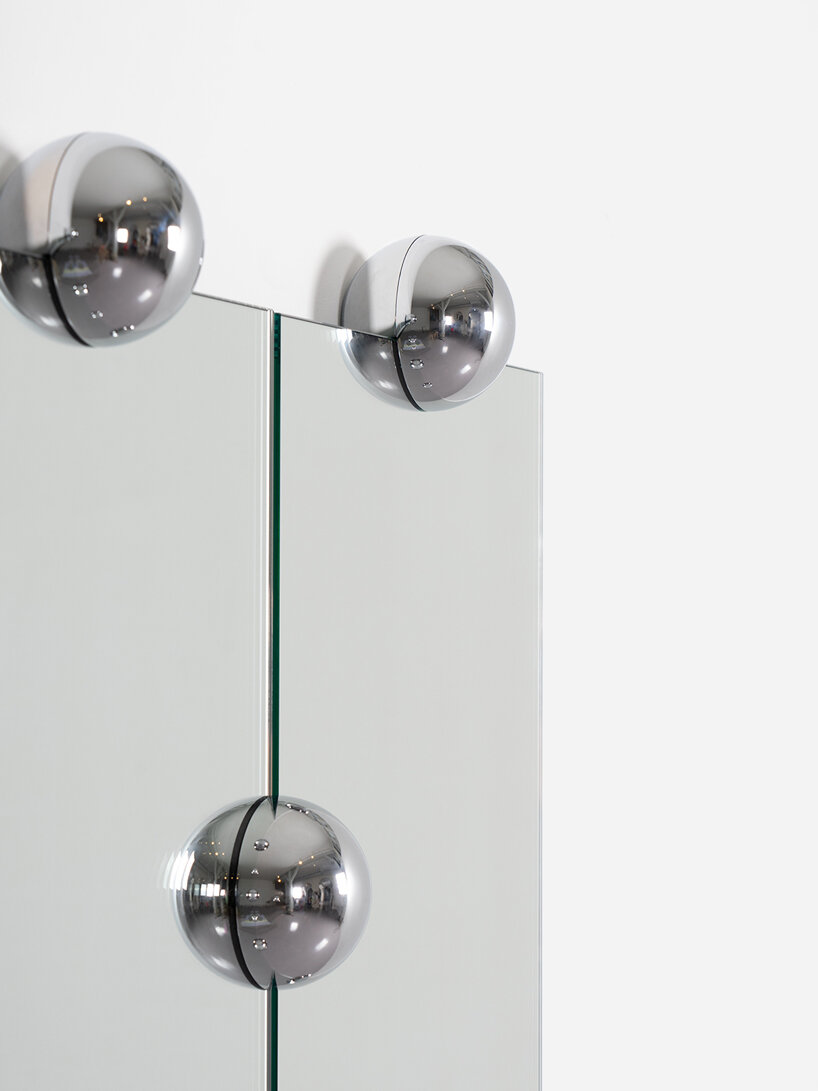
What anchors Fastrez’s long-term exploration is the inherent structural minimalism of the mirror itself. Because a mirror hung on a wall bears no physical weight and resists no heavy loads, it bypasses the rigorous structural calculations required for furniture like chairs or tables. Its singular geometric mandate is simply to remain flat. This constraint liberates the designer, leaving an expansive margin to experiment with narrative and form.
In both Zodiac and Sphera, Fastrez achieves a subtle inversion of traditional design logic: the glass functions as an essential part of the object’s construction rather than just an inert surface. In Zodiac, the reflection completes the ceramic geometry, making the optical illusion a foundational element of the build. In Sphera, the entire visual composition relies on the interplay between the rigid mirror pane, the faithfully mirrored surroundings, and the distorted reflections rippling across the massive chrome spheres.
This approach speaks directly to Fastrez’s broader philosophy regarding ornament and utility. For decades, modern design doctrine has cast a suspicious eye toward ornamentation, following the functionalist traditions of the late nineteenth and early twentieth centuries. Fastrez challenges this restrictive viewpoint head-on.
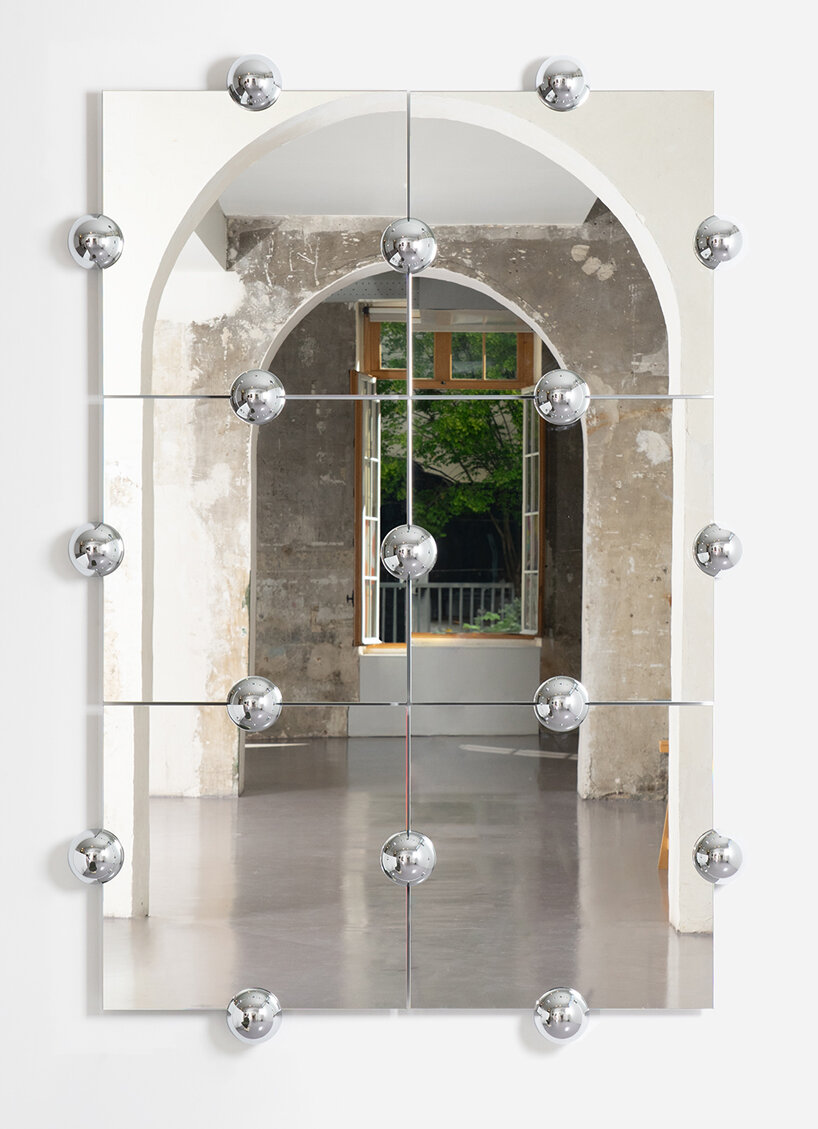
"I’m very interested in the idea of taking something as ordinary as a piece of hardware and reworking it until it becomes the strongest aesthetic feature of a project," he says. Ornament, in his view, should not be applied as a superficial afterthought; rather, it should emerge organically out of the construction logic and functional mechanics of the object itself.
Furthermore, Fastrez argues that contemporary definitions of utility are often far too narrow. While a mirror’s primary task may be reflection, its capacity to define the character of a room, anchor a space within a specific historical style, or establish a psychological narrative is equally vital.
"If we accept ornament as a function in its own right," Fastrez concludes, "Zodiac and Sphera are, in their own way, functionalist objects whose form also follows their ornamental function." Through these pieces, the once-modest wall mirror transcends its traditional boundaries, acting simultaneously as a piece of functional hardware, a sculptural intervention, and an active participant in the architecture of the room.