London has not experienced an October like this in years, though the recent Frieze Week marquee sales painted a nuanced picture of a market defined by both massive consolidation and selective hesitation. The combined turnover at the evening sales held by the "Big Three"—Christie’s, Sotheby’s, and Phillips—surged 63.4 percent compared to the same period last year, marking the strongest autumn auction performance of the 2020s. Yet, behind this impressive headline figure lies a market heavily tilted in favor of one player: Christie’s.
Christie’s dominated the week, capturing nearly four out of every five pounds spent. Its two evening sales on October 14, strategically anchored by the prestigious Peter Simon collection and a high-profile restituted Kandinsky, generated a staggering £218.6 million ($287.5 million). In contrast, when Sotheby’s took the rostrum on New Bond Street the following evening, the results were significantly more modest, totaling less than a quarter of the sum achieved by its rival just 24 hours prior.
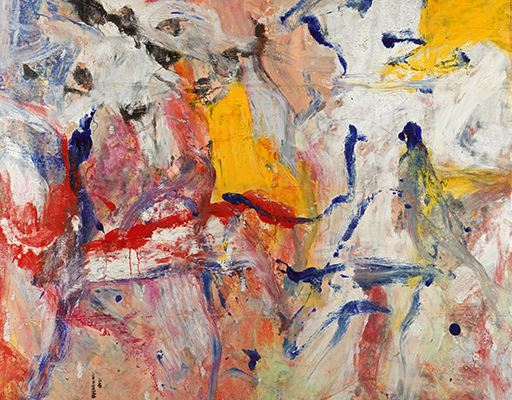
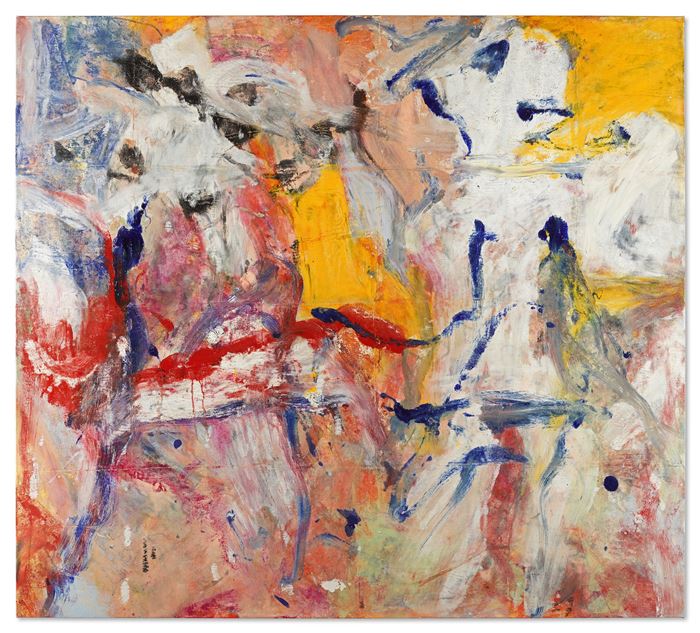
The standout lot of the week was Willem de Kooning’s Untitled (1977), which hammered down for £9.8 million ($12.9 million), including fees. This result set a new auction record for the artist in Europe. However, in the grand context of the week’s high-stakes bidding, the price was considered modest. To put the market’s internal disparity into perspective, Kandinsky’s Das bunte Leben (1907), sold by Christie’s the night before, fetched more than three times the price of the de Kooning. While Sotheby’s managed to lean on blue-chip staples—including works by Gerhard Richter, Mark Rothko, and David Hockney—the auction house faced challenges, with several younger, highly touted names in the catalogue failing to find buyers.
1977: The Miraculous Year of Willem de Kooning
Sotheby’s Contemporary Evening Auction on October 15, 2026, featured 37 lots with a collective presale estimate ranging from £41.7 million to £58.6 million ($55.2 million to $77.7 million). By the time the final gavel fell, the sale had realized a total of £46.0 million ($61.0 million). The proceedings were hampered by the withdrawal of several significant works, including pieces by Damien Hirst, Anselm Kiefer, and Leon Kossoff. Of the 34 remaining lots, 28 sold, resulting in a respectable sell-through rate of 82.4 percent. However, at the hammer, the sale reached only £36.9 million ($48.9 million), falling below the low estimate even after adjusting for the late-stage withdrawals.
The performance reflected a slight contraction, with turnover slipping 3.3 percent from October of the previous year, when Sotheby’s achieved a higher total from seven fewer lots. The house now finds itself closer to its 2024 low of £37.6 million ($49.1 million) than the robust £85.7 million ($98.7 million) it realized during the October 2022 season.
The de Kooning piece undoubtedly carried the evening. Tom Eddison, co-head of contemporary art at Sotheby’s London, opened bidding on the guaranteed canvas at £7 million ($9.3 million). The final price of £8.2 million ($10.9 million) sat squarely within the £8 million to £12 million estimate range. The sale was particularly poignant as it coincided with the Rijksmuseum’s major retrospective, Willem de Kooning at work, in Amsterdam. The work’s success also highlighted its rapid appreciation in value, selling for two and a half times the price it achieved at Sotheby’s New York in 2015. Art critic David Sylvester famously dubbed 1977 the "annus mirabilis" of de Kooning’s career, and the market clearly remains receptive to works from this pivotal period, even if this specific result marked the house’s lowest-priced Frieze Week "top lot" since 2023.
Records on iPad and Paper
Beneath the headline-grabbing de Kooning, the market showed a distinct preference for established, "blue-chip" names. Gerhard Richter’s Abstraktes Bild (1992), a work previously featured at Documenta IX and last year’s retrospective at the Fondation Louis Vuitton, realized £6.7 million ($8.9 million). This result represented an 86 percent increase over the £3.6 million ($5.7 million) the consignor paid for the work at Christie’s London in 2011.
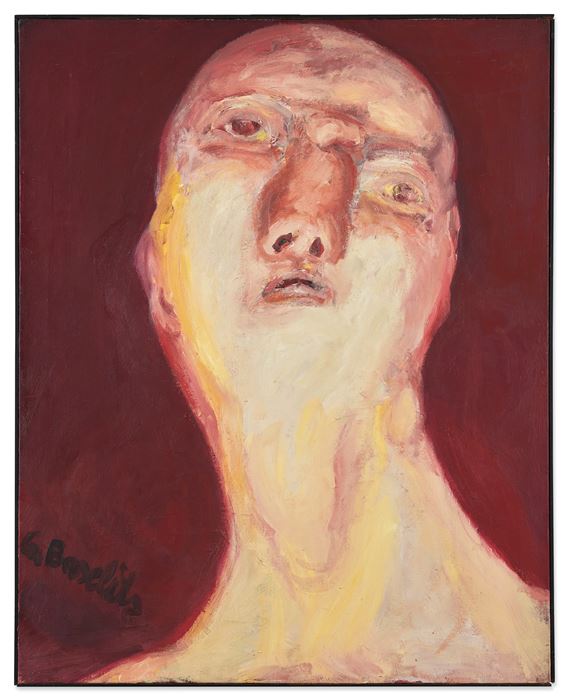
Late works on paper also saw strong interest. A rare Mark Rothko piece, Untitled (1969), attracted an online bidder who secured the work for £3.8 million ($5.0 million)—a significant jump from its 1992 sale price of $264,000 at Christie’s New York. Similarly, David Hockney’s collage Henry Reading (1985) and Georg Baselitz’s P.D. Idol (1964) both exceeded their high estimates, fetching £2.8 million ($3.7 million) and £2.4 million ($3.2 million) respectively.
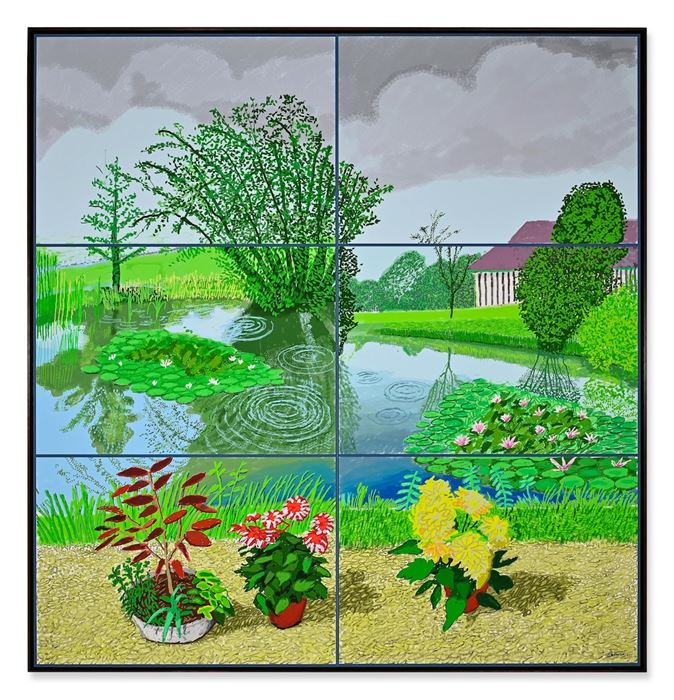
The most spirited bidding, however, occurred further down the catalogue, where collectors appeared eager to diversify into newer mediums. A notable highlight was David Hockney’s 10th – 22nd June 2021, Water Lilies in the Pond with Pots of Flowers, a collection of six iPad paintings printed on two sheets of dibond. Offered in an edition of 25, the work surged to £1.9 million ($2.5 million), nearly triple its high estimate and marking a new record for the artist’s digital-based output. Michael Andrews’ Butterfly Fish (1978), a delicate acrylic on paper, also saw a dramatic surge, climbing from a modest estimate of £80,000–£120,000 to a final price of £704,000 ($933,151), setting a record for a work on paper by the British painter.
Despite these highlights, the sale faltered when it reached the works of younger contemporary artists. Pieces by Lynette Yiadom-Boakye and Jadé Fadojutimi failed to sell, and the Banksy work Grannies (2006), which carried the highest estimate of the unsold group at £1.5 million to £2 million, was left without a buyer, signaling a potential cooling in the secondary market for recently hyped contemporary names.
The broader week did little to shift this narrative. Sotheby’s Modern British & Irish evening sale on October 14 brought in £8.9 million ($11.7 million). Across all five of its sales held between October 14 and 16, the house realized £68.0 million ($90.1 million) in London. This brought the house’s total for Modern and Contemporary art in the city for the year to £598 million ($792.7 million)—the strongest year-to-date performance in over a decade. It is worth noting, however, that nearly half of this annual volume was generated in June, largely driven by the sale of the collection of British businessman Joe Lewis, which was highlighted by Modigliani’s Nu assis au collier (1917-18) selling for £48.2 million ($63.9 million).
Young Artists Assist Rebound at Phillips
While Sotheby’s navigated a mixed auction environment, Phillips experienced a distinct success story with its Modern & Contemporary Art Evening Sale held in Mayfair on October 15. The house reported a 100 percent sell-through rate for its 20 offered lots, achieving a total of £14.8 million ($19.7 million)—a 43.6 percent increase over its performance in October of the previous year.
The sale was led by Gerhard Richter’s Mathis (1983), which fetched £5.8 million ($7.7 million), just shy of its low estimate, followed by a Banksy work, Keep Ou T (2019), which realized £1.6 million ($2.1 million). The true vitality of the Phillips auction, however, was found in the records set by younger, emerging painters. London-based American artist Joseph Yaeger saw his work Once, always (2023) achieve £645,000 ($854,947), more than three times its high estimate. Paris-based Danish artist Eva Helene Pade also saw her market profile rise significantly; her work Yellow Nights (2020) sold for £167,700 ($222,286), far exceeding its initial estimate of £30,000 to £50,000.
As the London auction season concludes, the global art market turns its attention toward Paris. Sotheby’s is scheduled to host La Collection Schlumberger. Le Temps retrouvé on October 22, followed by Surrealism and Its Legacy and Modernités on October 23. These sales will unfold against a backdrop of social volatility in the French capital, and market observers will be watching closely to see how the collector base responds before the industry heads to the high-stakes November marquee sales in New York. The performance in Paris will likely serve as a final indicator of market resilience for the year, confirming whether the momentum seen in London can be sustained in an increasingly uncertain economic and social climate.