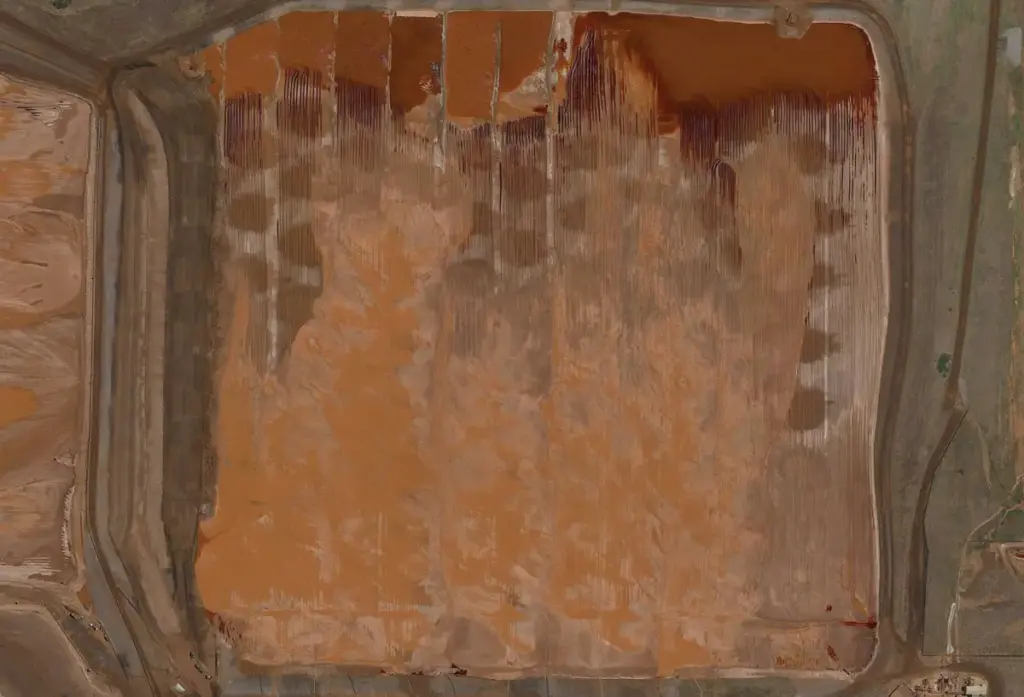
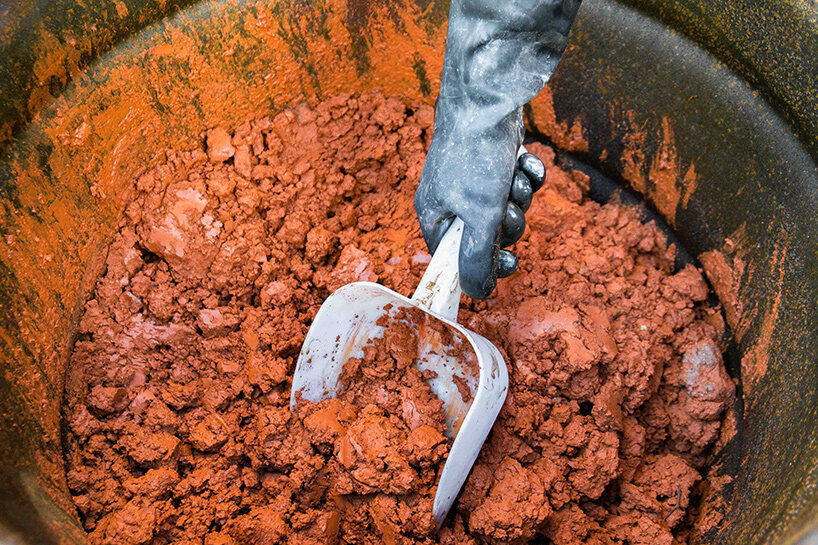
Across the remote outskirts of the world’s major aluminum refineries, an unusual and stark geography dominates the horizon. Enormous deposits of rust-colored earth stretch for miles, forming vast, crimson landscapes so distinct they are easily visible even in satellite imagery. This material is bauxite residue, more commonly known as red mud—a highly alkaline industrial byproduct left behind when valuable alumina is extracted from bauxite ore.
The scale of this accumulation is staggering. More than 150 million metric tons of red mud are generated globally each year, steadily compounding historical stockpiles that are already estimated to exceed four billion tons. The vast majority of this material sits indefinitely in enormous storage facilities and tailing ponds, lingering as a persistent environmental and logistical challenge despite decades of ongoing research into potential alternative uses for the substance.
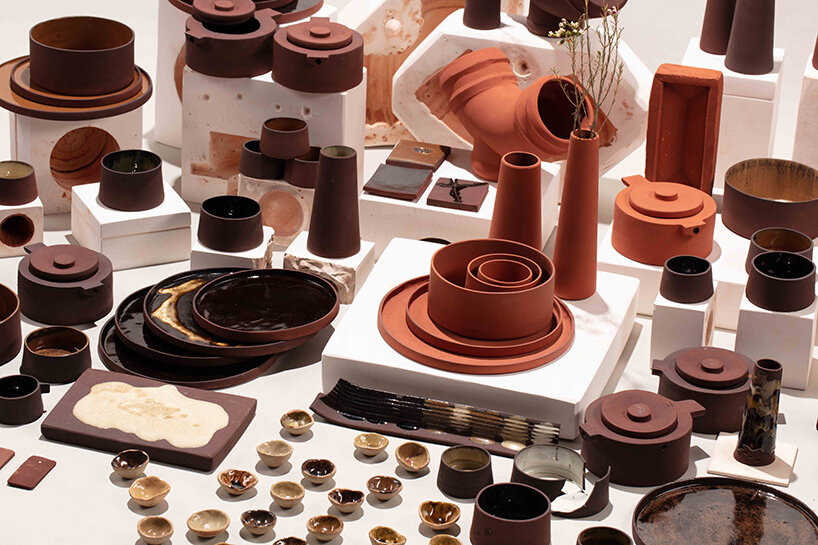
Amid this massive accumulation, Amsterdam-based Studio ThusThat has spent years investigating what might become of this overlooked industrial byproduct. Through an ongoing creative and scientific initiative known as the Red Mud project, the design practice transforms the harsh chemical residue into finely formed ceramic vessels and experimental building components. The work offers a striking and unexpected glimpse of what an industrial liability could eventually become. When fired and finished, the pieces bear a remarkable resemblance to traditional terracotta, featuring deep, earthy colors and slender, elegant forms that seem entirely divorced from the stark industrial landscapes where their raw ingredients originated.
Studio ThusThat Turns Industrial Waste into Ceramics
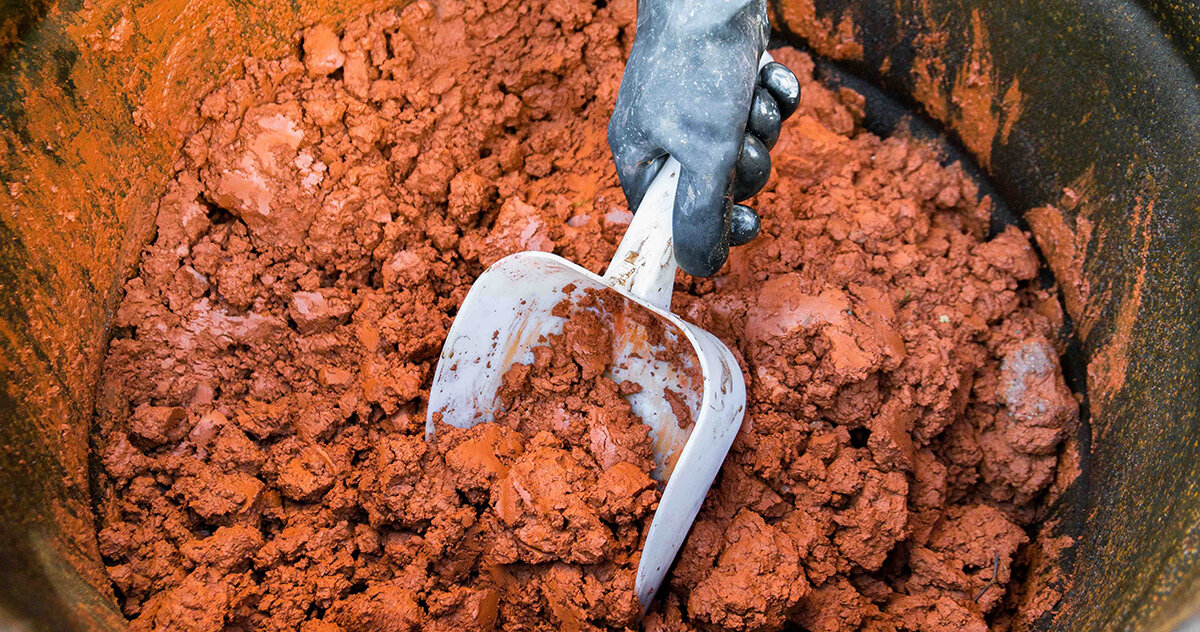
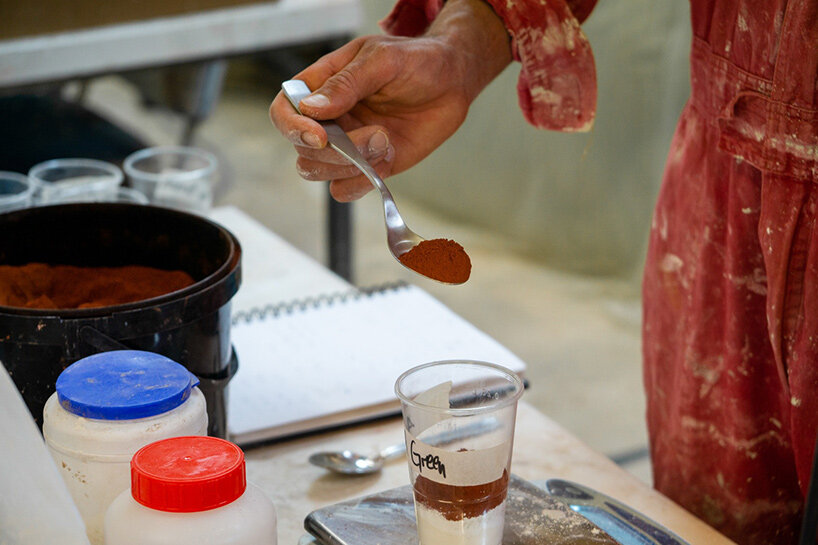
The research first took root in 2019 at London’s prestigious Royal College of Art, later expanding through a close collaboration with materials scientists at KU Leuven in Belgium. The designers at Studio ThusThat began by closely analyzing the residue’s complex mineral composition, paying particular attention to its remarkably high iron oxide content, which gives the mud its signature vivid coloring. By thoroughly processing the raw material and carefully adjusting its chemical composition, the team developed specialized recipes suitable for traditional ceramic forming techniques, including slip casting. Today, the treated red mud is successfully utilized in both the structural ceramic bodies of the objects and their custom glazes, yielding a sophisticated spectrum of warm reddish tones.
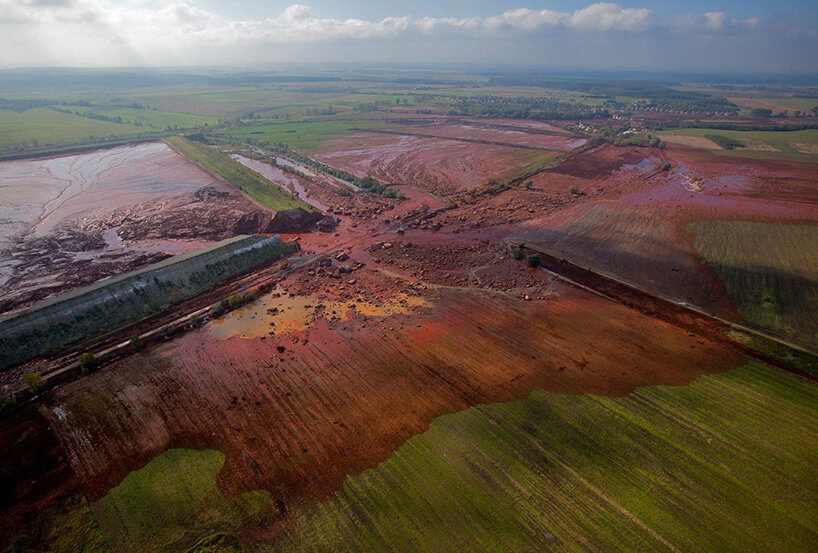
Yet, the apparent simplicity of the finished vessels belies a significantly more complicated and demanding manufacturing process. Raw red mud is intensely alkaline and can harbor hazardous trace substances, meaning it requires rigorous treatment and neutralization before it can be handled safely and incorporated into consumer goods or building materials. Furthermore, the physical and chemical properties of the mud are far from uniform; they vary wildly depending on the geographic origin of the mined bauxite and the specific refining processes used at individual plants. This variability requires that every new batch and source undergoes extensive testing. For Studio ThusThat, this meticulous ceramic collection provides a tangible way to make an unfamiliar, hidden waste stream visible, inviting the public and industry professionals alike to reconsider a substance that has long been dismissed as an intractable burden.
From the Tabletop to the Coastline
Building upon their foundational ceramic work, the designers have recently extended their material research into the realm of architecture through a collaborative partnership with London-based practice Tonkin Liu. Together, the two studios explored how red mud could be scaled up from delicate tabletop vessels into modular ceramic tiles, opening up potential applications ranging from roofing solutions to large-scale coastal regeneration projects.
The proposed architectural units feature thoughtfully shaped surfaces designed to efficiently collect rainwater or accommodate plant growth, suggesting an active role for the material in ecosystems shared by humans and other species alike. Their deliberate modular geometry allows individual components to be seamlessly combined into larger, interlocking assemblies. Along waterfronts and coastlines, these specialized tiles could theoretically support local vegetation and establish small, micro-habitats within heavy infrastructure, though the creators note that the long-term environmental performance of the material still requires rigorous further testing.
At present, these architectural proposals remain strictly experimental. Bringing them into the mainstream construction sector will demand active manufacturing partners and substantial investment in large-scale development. Even so, these concepts point toward an entirely different destination for a material that currently occupies massive swaths of valuable industrial land across the globe.
Can Architecture Absorb the Waste of Extraction?
Despite its promising applications, red mud presents formidable economic and logistical obstacles to widespread commercial reuse. Processing costs remain prohibitively high, and many aluminum refineries are geographically isolated, situated vast distances away from the manufacturing centers and urban markets that might otherwise consume their waste. Transporting such an extraordinarily heavy material across long distances can quickly undermine both its economic viability and its environmental advantages.
Regulatory requirements add yet another layer of complication to the equation. According to figures cited by Studio ThusThat, only a minuscule three percent of total global red mud was being successfully repurposed when the research initiative first began, even though established chemical methods for incorporating the substance into various construction products have existed for years.
The ultimate ambition for the design team is to see these secondary materials adopted widely within the architecture and construction sectors, where the sheer volume of material consumed could make a measurable, meaningful difference in reducing global stockpiles. This goal also highlights a broader, inescapable contradiction inherent in modern green transitions. Aluminum is increasingly vital to the expansion of renewable-energy infrastructure, playing a crucial role in wind turbines, solar panels, and electric vehicles. Yet, the foundational production of this critical metal continues to generate mountains of hazardous residue that must be managed.
Studio ThusThat’s experimental ceramics offer a modest, thoughtful response to this escalating accumulation. Whether processed bauxite residue can ultimately find a permanent, lasting place in mainstream construction will depend heavily on developments that extend far beyond the confines of the design studio, relying instead on the willingness of heavy industry to embrace circular practices at scale.