The international art world has entered a period of significant structural and institutional transformation. From the groundbreaking of a monumental new wing at one of New York’s most storied institutions to the expansion of European museums and the recognition of pioneering contemporary voices, the landscape of global culture is shifting. These developments signal a continued commitment to institutional growth, regional engagement, and the celebration of artistic legacy, even as the market navigates the complexities of an evolving economic climate.
In the Spotlight: Institutional Expansion and Architectural Vision
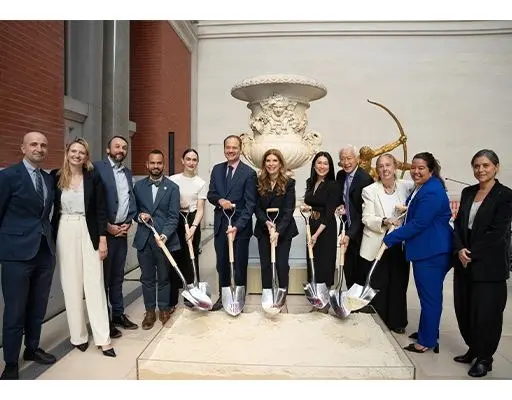
In a highly anticipated development for the global cultural landscape, The Metropolitan Museum of Art in New York has officially broken ground on its new wing dedicated to modern and contemporary art. The ceremony, which saw a wide array of city officials, museum leadership, and architectural visionaries in attendance, marks the beginning of the construction phase for the $550 million project. Designed by the acclaimed Mexican architect Frida Escobedo, the new Tang Wing is intended to redefine how the Met presents 20th and 21st-century works, providing a porous, modern counterpoint to the museum’s historic Beaux-Arts facade.
The groundbreaking event was a star-studded affair, reflecting the significance of the project. Among those in attendance were The Met’s Director and CEO Max Hollein, alongside benefactors Oscar L. Tang and Agnes Hsu-Tang, whose transformative gift made the wing possible. The presence of city representatives, including Assemblymember Keith Powers and Council Member Gale Brewer, underscored the project’s importance not just to the art world, but to the cultural infrastructure of New York City itself. Escobedo’s design has been praised for its sensitivity to the museum’s existing architectural narrative while offering a bold, contemporary vision for the future of the collection.
Across the globe, the reach of modern art is expanding through site-specific interventions. In Qatar, the renowned German artist Gerhard Richter is set to open a permanent pavilion in Doha’s MIA Park. The structure is scheduled for unveiling on the eve of Qatar’s new contemporary art quadrennial, marking a significant milestone for the region’s growing influence in the international art circuit. The pavilion will provide a dedicated space for Richter’s work, emphasizing the country’s commitment to hosting world-class artistic experiences.
Meanwhile, in Europe, the Thyssen-Bornemisza Museum in Madrid has announced a strategic expansion. Due to the high volume of visitors and the resulting overcrowding in its current galleries, the institution is opening a second location just a few blocks from its main building. This expansion is expected to alleviate pressure on the museum’s core site while providing additional room to display its extensive collection, demonstrating a proactive approach to managing the modern challenges of museum logistics and visitor engagement.
The Market: Resilience and Evolving Trends in Tokyo
The commercial side of the art world continues to provide insights into shifting tastes and regional dynamics. The fourth edition of Tokyo Gendai recently concluded, offering a revealing look at the state of the Asian art market. Observers noted that the fair was characterized by a move away from the trend-chasing that has dominated recent years, reflecting instead a more thoughtful, curated approach to acquisition.
The energy at this year’s fair was largely driven by a new generation of Japanese galleries, collectors, and artists. This demographic shift has turned Tokyo Gendai into a crucial nexus for international buyers who are eager to navigate the intricacies of Japan’s unique art ecosystem. By prioritizing long-term value and artistic substance over fleeting market fads, the fair has solidified its reputation as a sophisticated venue that rewards those looking to engage deeply with the local market rather than simply participating in high-velocity speculation.
On View: Records and Retrospectives
Exhibition attendance remains a key barometer for public interest in traditional art forms. London’s National Gallery has reported a historic milestone, as ticket sales for its forthcoming exhibition on the French Impressionist master Pierre-Auguste Renoir have surpassed twenty-two thousand. This figure sets a new box-office record for the prestigious institution, signaling a robust public appetite for master-level historical surveys. The surge in interest highlights the enduring popularity of Impressionism and the continued capacity for traditional museums to attract record-breaking crowds through high-caliber, scholarly programming.
Awards, Appointments, and Professional Recognition
The industry has also taken time to honor excellence in critical discourse and curation. The Dorothea and Leo Rabkin Foundation recently announced the eight recipients of its 2026 Art Journalism Award, reinforcing the importance of rigorous writing and research in the visual arts. By supporting those who document and analyze the artistic landscape, the foundation continues to foster a healthy, informed, and critical community.
Further institutional developments include the Rubin Museum of Himalayan Art’s selection of Bhutanese mixed-media artist Pem Lham as the winner of the 2026 Rubin Museum Himalayan Art Prize. The $30,000 award is a significant recognition of Lham’s contributions to the field, highlighting the importance of supporting artists whose work bridges traditional techniques with contemporary expression.
In the realm of curatorial leadership, the Smithsonian’s National Museum of Asian Art (NMAA) has appointed Ching-Ling Wang as the inaugural Nancy Chang Lee Curator of Chinese Art. Wang’s appointment is seen as a strategic enhancement of the NMAA’s curatorial depth, ensuring that the museum remains at the forefront of scholarship and public engagement regarding one of the world’s most significant artistic traditions.
Remembering Liang Shaoji: A Life of Artistic Symbiosis
The art world is also mourning the loss of a major figure. The Chinese artist Liang Shaoji, renowned for his profound and meditative "collaboration" with silkworms, has died at the age of 81. His passing, which followed an illness, was confirmed by the ShanghART Gallery in Shanghai.
Liang was best known for his multidisciplinary installations, in which he allowed silkworms to weave their threads over various objects and structures, creating ethereal, organic sculptures that bridged the gap between nature and human artifice. His work, which often took years to complete, invited viewers to consider the passage of time, the fragility of existence, and the potential for a symbiotic relationship between humanity and the natural world. His legacy as a pioneer of bio-art and his commitment to a slow, meditative creative process have left an indelible mark on contemporary Chinese art and beyond. As the art world moves forward with new wings, pavilions, and exhibitions, the passing of artists like Liang serves as a reminder of the enduring power of the individual creative vision to reshape our understanding of the world.