The international art landscape is undergoing a significant transformation this week, marked by ambitious architectural expansions in New York and Madrid, record-breaking exhibition milestones in London, and a shifting market focus in Asia. From the groundbreaking of the Metropolitan Museum of Art’s long-awaited contemporary wing to the passing of a visionary Chinese artist, the industry continues to balance the weight of history with the momentum of contemporary innovation.
In the Spotlight: Architectural Milestones and Institutional Expansion
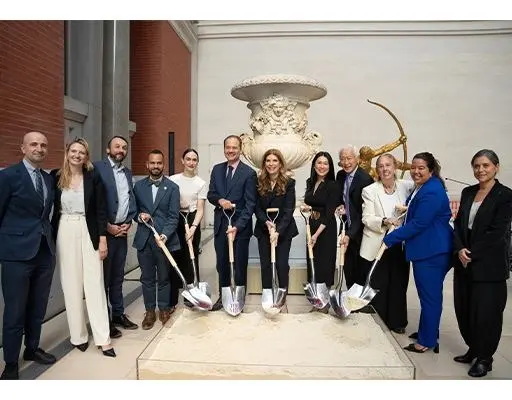
The Metropolitan Museum of Art has officially commenced construction on its transformative new wing dedicated to modern and contemporary art. Designed by the acclaimed Mexican architect Frida Escobedo, the project—widely referred to as the Tang Wing—represents a major leap forward for the institution. The groundbreaking ceremony, which featured a high-profile assembly of civic leaders, museum directors, and benefactors, including Max Hollein, Agnes Hsu-Tang, and Oscar L. Tang, marks the beginning of a $550 million effort to modernize the Met’s physical presence. Escobedo’s design is expected to redefine how the museum integrates 20th- and 21st-century works into its storied collection, providing a porous, light-filled space that promises to shift the visitor experience significantly.
While New York looks to the future of contemporary curation, the Middle East is carving out a permanent space for one of the world’s most influential living artists. Gerhard Richter is set to open a site-specific permanent pavilion at MIA Park in Doha, Qatar. This ambitious undertaking will be unveiled on the eve of the nation’s upcoming contemporary art quadrennial, signaling Qatar’s continued commitment to anchoring major international artistic voices within its borders. The pavilion promises to be a contemplative destination, adding a layer of architectural permanence to Richter’s long-standing global legacy.
Meanwhile, in Europe, the Thyssen-Bornemisza Museum in Madrid has announced plans for a strategic expansion. Facing the pressures of sustained popularity and the resulting overcrowding in its galleries, the institution is moving to establish a second location just a few blocks from its current, historic site. This expansion is viewed as a vital necessity to accommodate the growing number of visitors and to allow for a more spacious, accessible display of its world-class holdings. By dispersing its collection across two sites, the museum aims to alleviate congestion while maintaining the integrity of its curated experience.
The Market: Evolution in Tokyo
Shifting to the commercial sector, the fourth edition of Tokyo Gendai has provided a compelling snapshot of the current art market in Japan. Despite global economic fluctuations and changing collector behaviors, the fair has demonstrated a notable resilience to the "trend-chasing" that often dominates international art fairs. Instead, the energy in Tokyo appears to be driven by a burgeoning generation of Japanese galleries, artists, and collectors who are focusing on long-term value and localized cultural resonance.
For international buyers, the fair has become a crucial nexus, offering a clearer view into the specificities of the Japanese art ecosystem. Observers note that the market’s refusal to follow speculative fads suggests a sophisticated maturation, with collectors prioritizing depth and emerging talent over the ephemeral popularity of global auction darlings. This shift serves as a case study for how regional markets can maintain their distinct character even as they engage with the global art economy.
On View: Record-Breaking Interest in London
In London, the National Gallery has confirmed that public appetite for historical masters remains as strong as ever. Ticket sales for its forthcoming exhibition dedicated to the Impressionist master Pierre-Auguste Renoir have officially surpassed twenty-two thousand, setting a new box-office record for the institution. This surge in early demand highlights the enduring pull of Renoir’s work and reflects the museum’s successful efforts to engage a broad, enthusiastic audience. The record-setting figures are a testament to the continued power of blockbuster monographic exhibitions to drive cultural engagement and institutional attendance.
Awards and Appointments: Recognizing Excellence
The recognition of artistic and critical achievement remains a priority within the industry. The Dorothea and Leo Rabkin Foundation has announced the eight recipients of its 2026 Art Journalism Award. These prizes underscore the vital role of critical writing and investigative reporting in maintaining a healthy, informed art world. By honoring those who document and critique the field, the foundation continues to foster a climate of intellectual rigor.
In the realm of Himalayan art, the Rubin Museum has named Bhutanese mixed-media artist Pem Lham as the winner of the 2026 Rubin Museum Himalayan Art Prize. The $30,000 award is a significant recognition of Lham’s contributions to the field, celebrating her unique approach to traditional themes through a contemporary lens.
Furthermore, the Smithsonian’s National Museum of Asian Art (NMAA) has made a significant institutional appointment, naming Ching-Ling Wang as the inaugural Nancy Chang Lee Curator of Chinese Art. This new position reflects the NMAA’s ongoing commitment to deepening its scholarship and public programming regarding Chinese art history, with Wang bringing a wealth of expertise to one of the most prominent curatorial roles in the field.
Obituary: Remembering Liang Shaoji
The art world is also mourning the loss of a pioneer whose work bridged the gap between nature and human craft. Liang Shaoji, the Chinese artist celebrated for his innovative "collaboration" with silkworms, has died in Shanghai at the age of 81. Known for his profound, multidisciplinary installations—where live silkworms spun cocoons over objects, structures, and environments—Liang explored themes of time, life, and the symbiotic relationship between humanity and the natural world.
His passing, confirmed by his longtime representative, ShanghART Gallery, marks the end of a singular artistic practice that garnered international acclaim for its delicate, meditative, and often haunting beauty. Liang’s influence on contemporary sculpture and conceptual art in China and beyond remains profound, leaving behind a body of work that challenged conventional boundaries between the artist as creator and the natural world as a co-participant.
As the Metropolitan Museum’s new wing begins its rise in New York and the international community continues to honor the legacies of artists like Liang Shaoji, the art world stands at a junction of expansion, preservation, and remembrance. Whether through the physical growth of institutions or the recognition of those who interpret and create, the global art ecosystem continues to evolve in response to the changing demands of its audience and the enduring importance of its heritage.