The global art landscape is currently defined by a tension between historic institutional growth and a shift toward new, localized markets. From the bustling construction sites of New York City to the quiet, meditative pavilions of Qatar and the booming galleries of Tokyo, the art world is undergoing a significant transformation. This week’s developments reflect a broader trend: museums are doubling down on their physical footprints, while the market itself is demonstrating a surprising resilience, favoring long-term cultural engagement over the volatility of trend-chasing.
In the Spotlight: Institutional Expansion and Architectural Ambition
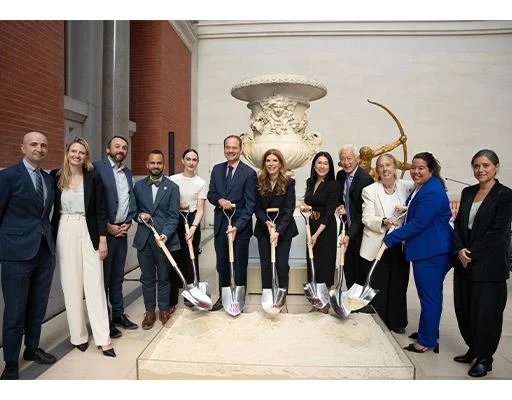
In a landmark moment for New York City’s cultural infrastructure, the Metropolitan Museum of Art has officially broken ground on its long-awaited wing for modern and contemporary art. The project, designed by the celebrated Mexican architect Frida Escobedo, marks a pivotal shift for the institution as it seeks to better integrate its vast, multi-era collections under a single, cohesive narrative.
The ceremonial groundbreaking was a high-profile affair, attended by a coalition of city officials and cultural leaders, including Council Member Virginia Maloney, Assemblymember Keith Powers, State Senator Jose Serrano, and City Council Speaker Julie Menin. The project, known as the Tang Wing, represents a $550 million investment in the future of the Met, signaling the museum’s commitment to remaining the definitive steward of art history, even as it looks toward the future. For Escobedo, the project is a career-defining opportunity to reshape the interior experience of one of the world’s most visited museums. By reimagining how contemporary works are displayed, the Met aims to alleviate the spatial constraints that have long hampered its modern collections, providing a more fluid, accessible, and intellectually stimulating environment for visitors.
While the Met looks toward its future, the international art scene is simultaneously expanding into the Middle East with a focus on permanence. In Doha, the art world is bracing for the unveiling of a site-specific pavilion dedicated to the work of German painter Gerhard Richter. Situated in the scenic MIA Park, the pavilion is set to open on the eve of Qatar’s new contemporary art quadrennial. This move underscores the Gulf region’s strategy of anchoring its burgeoning art scene with works by established global masters. The structure is intended to be a permanent fixture, providing a contemplative space that invites visitors to engage with Richter’s complex, often layered, visual language in an environment specifically designed to complement his aesthetic.
Closer to the historical centers of Europe, the Thyssen-Bornemisza Museum in Madrid has announced a significant expansion. Citing persistent issues with overcrowding and the need for more breathing room for its esteemed collection, the museum is preparing to open a second location just a few blocks from its current, iconic site. This decentralization strategy is becoming increasingly common among major European institutions that find their historic buildings bursting at the seams, unable to adequately showcase their permanent holdings while simultaneously hosting high-traffic temporary exhibitions.
The Market: Tokyo Gendai and the Shift Toward Substance
The commercial art market, often criticized for its susceptibility to fleeting trends, is showing signs of a more disciplined evolution. The fourth edition of the Tokyo Gendai art fair recently concluded, leaving analysts and dealers impressed by its resilience. Rather than catering to speculators looking for the next "hot" artist, the fair has cultivated a unique energy driven by a burgeoning generation of Japanese galleries, collectors, and artists.
Observers note that the fair has become an essential nexus for international buyers seeking to understand the intricacies of the Japanese art ecosystem. This market is distinct in its resistance to the frantic, trend-chasing behavior often seen in London or New York. Instead, the focus in Tokyo remains on long-term relationships and a deep appreciation for craft and conceptual rigor. As the international art world becomes increasingly globalized, Tokyo Gendai serves as a vital bridge, allowing global collectors to tap into a market that values sustainability and institutional pedigree over the short-term cycles of the primary market.
On View: Records and Public Engagement
While contemporary fairs are finding their footing, the enduring appeal of the Old Masters—and specifically the Impressionists—remains unmatched. London’s National Gallery has reported a historic surge in interest for its forthcoming exhibition dedicated to Pierre-Auguste Renoir. Advance ticket sales have already surpassed twenty-two thousand, a staggering figure that sets a new box-office record for the institution.
This overwhelming public response highlights a persistent paradox in the museum world: while institutions work hard to secure the next generation of modern art through new wings and commissions, the public’s appetite for the giants of the 19th century remains insatiable. The success of the Renoir exhibition suggests that, despite the focus on new architecture and global expansion, the foundational pillars of Western art history continue to act as the primary engines for museum attendance and financial stability.
Awards, Appointments, and the Legacy of Art
The professional recognition of those who sustain the art ecosystem continues, with several key announcements highlighting excellence in journalism and curation. The Dorothea and Leo Rabkin Foundation has announced the eight recipients of its 2026 Art Journalism Award. In an era where digital content is often fragmented, the foundation’s commitment to rigorous, long-form visual art criticism remains a vital support system for the industry. By rewarding those who document and interpret the evolving art landscape, the foundation ensures that the conversation surrounding art remains intellectually robust.
In the realm of Asian art, the Smithsonian’s National Museum of Asian Art (NMAA) has made a significant appointment, naming Ching-Ling Wang as the inaugural Nancy Chang Lee Curator of Chinese Art. This position, endowed and focused, is a testament to the Smithsonian’s dedication to specialized scholarship. Wang’s arrival is expected to bolster the museum’s research capabilities and exhibition programs, further cementing the NMAA’s role as a leading global authority on Asian cultural heritage.
Meanwhile, the Rubin Museum of Himalayan Art has recognized the work of Bhutanese artist Pem Lham, awarding her the 2026 Rubin Museum Himalayan Art Prize. The $30,000 award is intended to support the development of Lham’s mixed-media practice, which frequently navigates the intersection of traditional Himalayan motifs and contemporary artistic expression. This award reflects a broader institutional push to amplify voices from the Himalayan region, providing artists with the resources to bridge the gap between regional tradition and the global stage.
The week’s news also brings a somber reflection on the loss of a major creative voice. The art world is mourning the death of Liang Shaoji, the pioneering Chinese artist known for his profound and poetic "collaborations" with silkworms. Liang, who died at 81 in Shanghai following an illness, leaves behind a legacy defined by his multidisciplinary installations. His work—which utilized the delicate, natural cycles of the silkworm to create intricate, ethereal structures—offered a rare, meditative dialogue between humanity and the natural world. ShanghART Gallery, which represented the artist for many years, confirmed his passing, marking the end of a career that challenged the boundaries of bio-art and conceptual sculpture.
As the industry moves forward, the combination of these events paints a picture of an art world that is simultaneously looking back to honor its masters and forward to build the spaces and support systems necessary for the next generation. Whether through the construction of a $550 million wing in New York or the quiet recognition of a single artist’s contribution to the medium of sculpture, the commitment to art as a fundamental component of the human experience remains as strong as ever.