When filmmakers Jamie Courville and her husband, Chris Reynolds, first moved to Gowanus in 2009, they were drawn to the gritty, postindustrial beauty of the area. Just a year before the Gowanus Canal was designated a federal Superfund site and a massive cleanup effort kicked off, the neighborhood felt entirely unique. For artists seeking space, the district offered cheap, expansive, if somewhat rundown apartments in older residential buildings, alongside defunct factories and warehouses that functioned as ideal studios. While neighboring industrial hubs like Williamsburg and Long Island City were rapidly transforming into shinier, more generic versions of their former selves, Gowanus retained a mysterious, untamed atmosphere. As Courville describes it, the neighborhood at the time felt feral, gross, hopeful, and free.
Of course, there was a stark reason why Gowanus remained an affordable haven for artists while surrounding Brooklyn districts gentrified: the noxious, flood-prone canal running directly through it. Choked with sewage, toxic industrial sludge, and a dense array of pathogens, the waterway was famously inhospitable. Yet, as artists like Karen Gibbons—who moved to the neighborhood in the early 1980s and raised three children amid sprawling lofts—discovered, the compromise between real estate realities and the raw charm of the place was hard to resist.
Almost anywhere else, a federal Superfund designation would have sent real-estate investors running. In Gowanus, however, it signaled open season. The federal intervention assured developers that the century-old cesspool, which had long hindered major development schemes, would finally be cleaned up. The commercial shift began shortly thereafter when Whole Foods announced plans to open a massive store featuring a rooftop greenhouse on a bleak corner of Third Avenue and 3rd Street. Trendy businesses quickly followed suit: the outdoor-patio bar Lavender Lake opened in 2011, Dinosaur Bar-B-Q arrived in 2013, and the Royal Palms Shuffleboard Club opened its doors in 2014. Simultaneously, developers who had spent decades quietly buying up land began applying for spot rezonings to construct luxury housing.
Recognizing that the neighborhood was changing whether they liked it or not, then-local Councilmember Brad Lander argued that the community needed to seize control of the process to shape its future. A former community organizer and urban planner, Lander envisioned a thriving, economically diverse neighborhood complete with thousands of new affordable apartments, stabilized artists’ studios, renovated public housing, and a public esplanade along the canal. Rather than following the path of Williamsburg or Hudson Yards, Lander initiated a five-year rezoning process in 2016 designed to permit massive residential growth while securing an unprecedented package of community benefits.
Documenting this historic transition, Courville and Reynolds began filming the neighborhood in 2013 after a redbrick building on Douglas and Third streets was demolished. Over the years, they captured the demolition work, new construction, barges hauling toxic sludge out of the canal, and the intense political rallies leading up to the pivotal 2021 rezoning. Their footage eventually swelled to over 400 hours, culminating in the documentary Gowanus Current. As Courville notes, the neighborhood wasn’t merely gentrified in the traditional sense; rather, the old neighborhood was essentially knocked down and an entirely new one built in its place. Spanning 82 blocks, the Gowanus rezoning has transformed nearly every corner into either an active construction site, a freshly completed rental building, or a lot slated for upcoming development, with projections estimating an addition of 9,000 new housing units by the end of the decade.
While optimists have envisioned Gowanus evolving into a mini-Copenhagen complete with a swimmable canal, skepticism remains deeply rooted among longtime residents and urban observers. New York City transformations are rarely smooth, and Gowanus remains a complex patchwork of brownfields laden with coal tar and chemical solvents. The question of whether it is prudent to dig up, transport, and cap toxic muck while thousands of new residents move in has sparked ongoing debate.
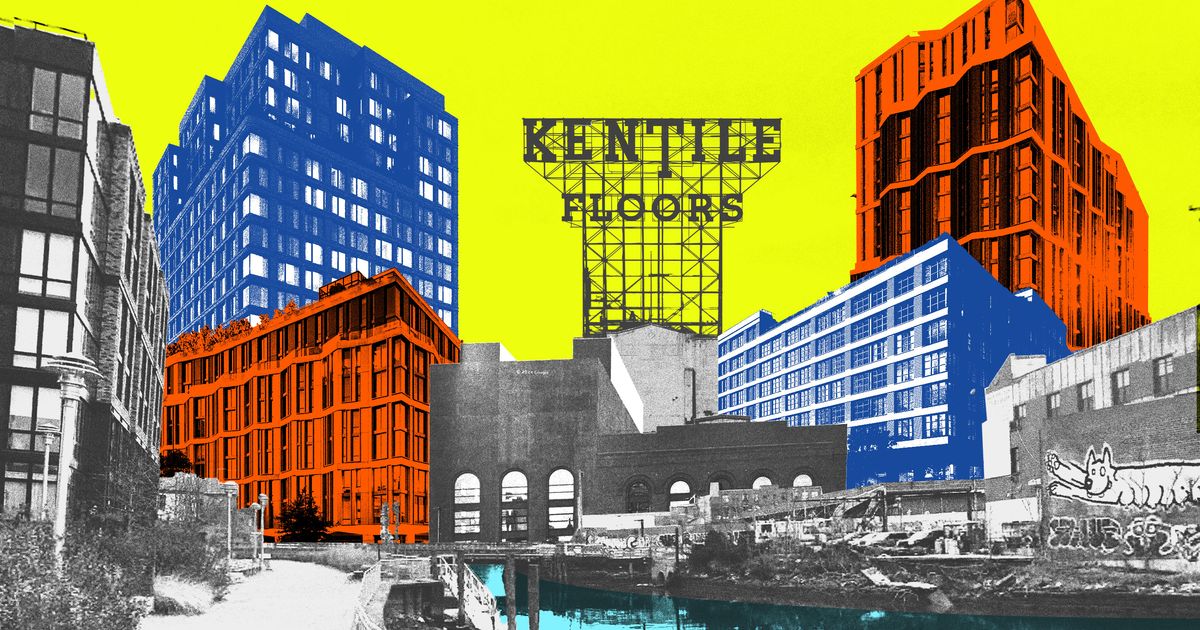
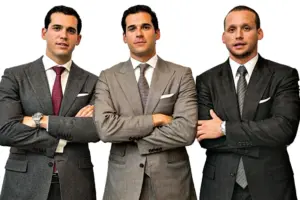
The first residential wave arrived swiftly following the 2021 rezoning. Among them was a luxury rental tower at 544 Carroll Street on the corner of Fourth Avenue, developed by Avery Hall. Brian Ezra, a founding partner of the firm, noted that development was inevitable given the neighborhood’s prime location directly between Park Slope and Carroll Gardens. Aiming high to match the multi-million-dollar condos already lining Fourth Avenue, Avery Hall equipped units with high-end finishes like Bosch appliances and marble countertops, with two-bedroom apartments commanding nearly $8,000 a month and a duplex penthouse hitting the market at an astonishing $25,000 a month.
Andrea Parker, executive director of the Gowanus Canal Conservancy, argues that leaving the neighborhood untouched was never a viable option. Without a comprehensive rezoning, the area would have seen uncoordinated luxury housing and superficial commercial ventures lacking essential infrastructure and public improvements—resembling earlier isolated projects like Lightstone Development’s 360 Bond.
The resulting 2021 rezoning framework was historic in several ways. Alongside a mandatory inclusionary housing requirement stipulating that 25 percent of units in new developments be affordable to households earning between 40 and 80 percent of the area median income, the plan secured $200 million for New York City Housing Authority (NYCHA) repairs. It also incorporated a racial-impact study predicting the neighborhood would become less white, while placing the responsibility of site cleanups squarely on individual developers and original polluters.
However, the timeline of the environmental cleanup has faced severe delays. Dredging and capping have only been completed on the first of three sections of the 1.8-mile canal, and total project costs have escalated from $500 million to $1.5 billion. Combined sewage-overflow tanks meant to prevent raw sewage from entering the waterway are not scheduled for completion until 2029, a seven-year delay that may necessitate re-dredging parts of the canal. Meanwhile, Gowanus Green, a planned 100-percent affordable housing project comprising 957 units on a former manufactured gas plant site, suffered years of delays due to disputes over cleanup standards before the Department of Environmental Conservation recently approved a phased remediation plan that could finally clear the way for construction.
Despite the ongoing reality of a polluted waterway, developers have leaned heavily into nautical branding. Marketing efforts for waterfront and nearby complexes—such as the Domain Companies’ 420 Carroll and Tavros Capital and Charney Companies’ expansive Gowanus Wharf portfolio—frequently highlight proximity to the canal. While early luxury projects like 365 Bond were widely mocked for idealized renderings of residents cavorting by the water, today those esplanades are a reality, drawing dog walkers and strollers to landscaped native plantings along the basin.
Living through the cleanup phase, however, has proven arduous for residents. Complaints regarding terrible odors, headaches, and nausea stemming from coal tar remediation have been common. Federal environmental officials have noted that naphthalene—an active ingredient found in mothballs and present in the canal’s dredged sludge—can trigger such symptoms even at low, safe concentrations. During particularly hot summers, the stench prompted officials to deploy tarps, odor-suppressing foam, and pine- and cinnamon-scented deodorants, though some residents reported the masking agents only worsened the experience.

Beyond the canal itself, the rezoning uncovered century-old hidden pollution. In late 2023, public records obtained by the local activist group Voice of Gowanus revealed that toxic trichloroethylene (TCE) vapors were rising through the basements of several local structures, including the Royal Palms Shuffleboard Club and a public school. State environmental testing detected odorless chemical vapor levels inside the shuffleboard club that significantly exceeded allowable guidelines. Historically used as a dry-cleaning solvent, paint factory degreaser, and oil extraction agent, TCE is a known carcinogen linked to birth defects and Parkinson’s disease.
Because the chemical sinks into the soil and groundwater when improperly disposed of, it can evaporate and seep into building basements through cracks. While the DEC reached out to over 1,600 properties between 2024 and 2025 for voluntary testing, only about 16 percent participated, as property owners are not legally compelled to test or disclose findings unless dangerous vapor levels are officially confirmed. This dynamic has fueled continuous tension between local activists, residents, and regulatory agencies regarding soil vapor intrusion and public safety.
Nevertheless, the influx of new renters continues unabated, driven largely by the severe shortage of housing inventory in adjacent neighborhoods like Park Slope. Renters moving into luxury and amenity-rich buildings often view the environmental and industrial hurdles as manageable tradeoffs for modern apartments equipped with central air, secondary bathrooms, and building amenities. For many long-term Brooklynites priced out of brownstone neighborhoods, these new developments—and the affordable housing lottery units secured through the rezoning—represent the only viable path to remaining in the community.
Efforts to preserve the neighborhood’s unique cultural identity have also taken shape around the arts. Arts Gowanus successfully negotiated with the city to secure more than 100 affordable art studios within new development buildings, featuring sub-market rents and strictly capped annual increases to protect local creators from displacement. Additionally, independent arts and music venues like Public Records and Powerhouse Arts have established a foothold in the neighborhood, ensuring that creative spaces continue to operate alongside the residential towers.
While the physical transformation of Gowanus represents a profound cultural and structural shift from its industrial past, the new landscape continues to settle into its place between Park Slope and Carroll Gardens. As high-end penthouses rent out and newly landscaped esplanades fill with residents, the neighborhood’s decades-long metamorphosis moves steadily forward, balancing the legacy of its industrial roots with the ambitions of modern urban development.