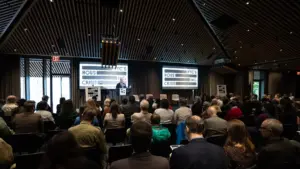
On a Friday morning in late August, a packed auditorium inside the Museum of Modern Art (MoMA) fell into a hush as choreographer, director, and writer Isa Spector stepped onto a red-painted platform. Spector was tasked with an unusual and demanding assignment from the museum: to create “a painting of dance” in just 10 minutes. What followed was a raw, visceral performance that began with physical exertion and ended in art-historical parody.
Spector writhed across the floor, scrambling from the red platform up toward the harsh glare of the fluorescent studio lights. Throughout the movement, the artist called out to a maternal figure whose name shifted dynamically to “MoMA,” and a paternal figure who morphed into “Dada,” spoken with a quick, alliterative tongue. Then, an epiphany struck. Spector knew precisely what to paint.
Seconds later, five performers wearing bright red gloves emerged from backstage and assembled at the center of the platform. Hand in hand, they began twirling in a steady circle, staging a living, breathing parody of Henri Matisse’s modernist masterpiece, Dance (I) (1909), which hangs just a floor above in the museum’s permanent collection galleries.
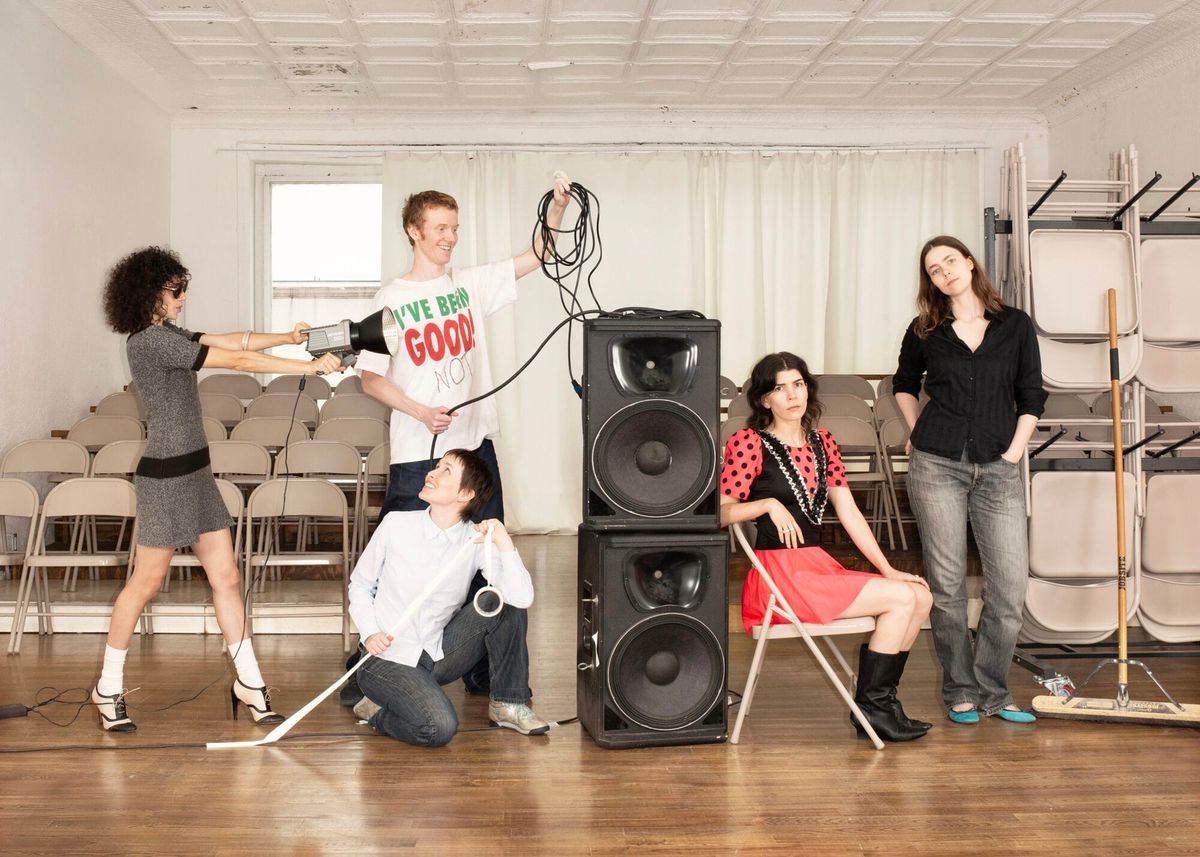
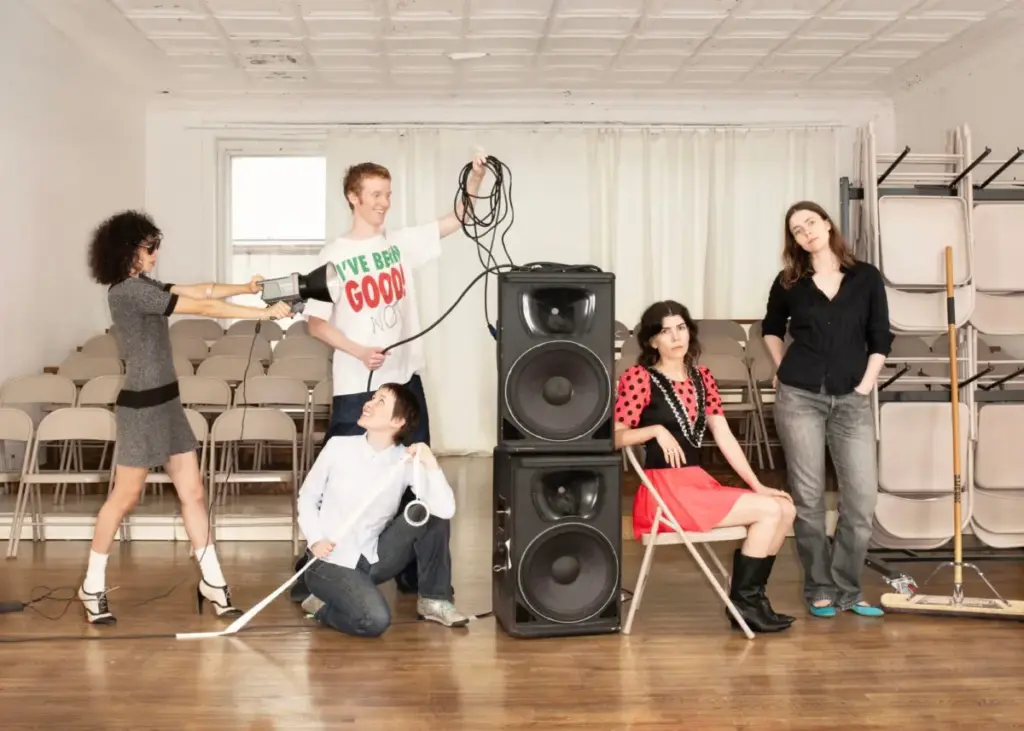
The five subjects of this commissioned “painting”—Sharleen Chidiac, Lili Dekker, Jade Manns, Owen Prum, and Alexa West—are more than just performers; they are the co-founders of Pageant, an influential artist-run performance space based in East Williamsburg, Brooklyn. Their appearance was part of a month-long residency at MoMA during August, which spotlighted the collaborative, boundary-pushing ethos that has made the independent venue a darling of the contemporary art scene.
Titled “MoMAlogue #1,” the performance served as the grand inauguration of Pageant’s intensive, seven-hour performance marathon at the museum. Spector’s piece was the first of 25 distinct 10-minute performances. Together, the marathon served as a sweeping meditation on dance’s complex relationship to its own history, as well as its dialogue with visual art across decades of modernism and postmodernism.
The collaboration between a major institutional titan like MoMA and a scrappy, independent Brooklyn loft space underscores the growing cultural footprint of Pageant. In a contemporary art world increasingly skewed toward slick artifice and commercial safety, Pageant’s unwavering commitment to confronting—rather than escaping—hard conditions through art feels nothing short of a renaissance.
To understand Pageant’s unique approach is to look at the lineage of bodily movement within modern art history. Speaking to Hyperallergic after the Pageant Presents Pageant marathon concluded, artist and choreographer Alexa West reflected on this evolution. “I think the history of dance, coming from a ballet proscenium stage into modernism, then into postmodernism, started with a pictorial form,” West explained in a group interview with the publication. “And it’s slowly been breaking away from that over time.”

That tension between pictorial form, movement, and physical reality forms the heartbeat of Pageant’s programming. Established in 2022, the performance space occupies a third-story loft on Graham Avenue in East Williamsburg. However, the project’s roots stretch back slightly further to a different grassroots venue that Manns and Chidiac operated directly out of their apartment.
When the collective first opened its doors on Graham Avenue, there was no grand corporate blueprint or calculated public relations strategy. According to West, the collective initially operated with “no clear marketing vision” whatsoever. Instead, Pageant was born out of practicality and necessity—a direct solution to the group’s shared, urgent desire to establish a sustainable context for their artistic practices. Emerging into a fractured post-COVID landscape where opportunities to show live work were vanishingly scarce for artists at their stage of career development, they carved out their own territory.
“We didn’t set out with the intention for it to be like an institution,” Sharleen Chidiac added during the group interview, emphasizing the organic nature of the project’s growth. “We just needed a space to work, to show our work, and to show other people’s work.”
That grassroots origin story has retained its integrity even as the collective catches the attention of elite institutions like MoMA. By focusing relentlessly on raw physical presence, spatial experimentation, and interdisciplinary dialogue between dance and the visual arts, Pageant has fostered a community that rejects passive consumption. Instead, the East Williamsburg space demands that both artists and audiences confront the material and physical realities of the present moment head-on. As the crowds at MoMA witnessed firsthand when those five red-gloved figures spun into a living Matisse painting, the energy generated by these independent New York artists is redefining what a performance space can achieve.