The international architecture exhibition produced every two years in Venice is a sprawling, humid, one-stop shopping experience that brings together designers, urban planners, critics, and enthusiasts from across the globe. When done right, it is also exhilarating, offering a rare window into the minds shaping the built environment. Though the strategy of showcasing architecture’s freshest ideas through national pavilions and exhibition galleries has inevitably faced certain drawbacks and logistical hurdles in the Architecture Biennale’s 30-year history, a collection of high-quality submissions helps make this year’s show feel deeply curated and intellectually stimulating. Throughout the sprawling venue, recurring threads of sustainability, adaptive reuse, and traditional building methods—while simultaneously planning for an uncertain and rapidly changing future—give the entire exhibition an underlying coherence that binds disparate national responses into a unified conversation.
This year’s director, Kazuyo Sejima of the acclaimed Japanese architectural firm SANAA, chose a remarkably enigmatic and open-ended theme for the Biennale: "People Meet in Architecture." While this broad mandate initially threatened to alienate audiences and architects accustomed to more rigid technical parameters, its very vagueness ultimately serves as a strength, making almost every project feel tangentially and intriguingly related to the core concept. The theme forces a fundamental reexamination of the discipline: Is Sejima celebrating the profound way architecture provides the physical place for human exchange and social interaction, or is she urging architects to refocus their energies entirely on people, rather than getting bogged down in architecture’s competing priorities of economic development, environmental sustainability, and technological innovation?
The pavilions and exhibitions scattered across the Biennale address these probing questions with varying degrees of directness. Most of the exhibitions housed within the voluminous, brick-walled rooms of the historic Arsenale take a wonderfully loose and experiential interpretation of the theme. For instance, artist Olafur Eliasson’s installation, Your Split Second House, places visitors inside a pitch-black room punctuated by pulsing stroboscopic lights. These sudden bursts of illumination reveal wildly lashing water hoses that emit a violent, chaotic noise, seemingly possessing no pragmatic agenda other than to completely intrigue, disorient, and delight visitors who step into the darkness. Nearby, the innovative German climate-engineering practice Transsolar offers Cloudscapes, an interactive installation where artificially condensed air forms literal clouds that brave visitors can walk directly into by ascending a series of curving ramps, blending atmospheric science with architectural spatial design.
Other responses to Sejima’s mandate take a more introspective approach, encouraging visitors to fundamentally rethink their daily experience of architecture and how they perceive themselves within the built environment. One particularly playful and provocative look into this topic can be found within the Romanian Pavilion. Considering that the population density in urban Bucharest hovers at an astonishing rate of roughly one person per 1,000 square feet, the Romanian team, led by Tudor Vlasceanu, created an all-white rectangle positioned on a striking bias within the gallery space, deliberately matching the precise dimensions of this crowded urban reality. Small circular openings cut into the sides of the construction give casual visitors a voyeuristic view inside the box, while a dedicated door allows one visitor at a time to step inside and experience the stark interior firsthand. The installation bluntly demonstrates the inherent voyeuristic nature of architecture and the way in which buildings stripped of human presence ultimately feel meaningless and sterile. When no one stands inside the ark-like structure, the space looks like a cold void; the moment a person steps within it, the space transforms into something resembling a highbrow peep show, dramatically heightened by the simple, brightly lit, all-white aesthetic.
It seemed that Sejima’s own firm, SANAA, hoped to elicit a similar philosophical reflection on how buildings are fundamentally enlivened by human presence—and vice versa—with their 13-minute film, If Buildings Could Talk…. But whereas the Romanian Pavilion achieves this profound goal with graceful understatement and spatial interaction, the 3D treatment produced by celebrated director Wim Wenders feels a little overwrought, its interpretation of Sejima’s theme a little too explicit and heavy-handed. The film’s running voice-over meticulously explains how SANAA’s iconic Rolex Learning Center in Lausanne, Switzerland, and the people navigating its flowing interiors are mutually nourished by each other’s presence. Meanwhile, the accompanying cinematic footage shows extreme close-ups of people breathing deeply with their eyes closed, laboring the point. Ultimately, buildings should be left to do the talking through their physical form and spatial dynamics.
In stark contrast, the display presented at the Kingdom of Bahrain’s debut pavilion, which deservedly captured the prestigious Golden Lion Award, proved far more effective at capturing the delicate, tangible interchange between people and architecture. Titled Reclaim, the exhibition examines the severe and often devastating consequences of rapid, unchecked urban development on a tiny country that has historically lived off fishing and pearling in the surrounding sea. Installed directly within the exhibition space are three small, weathered wood shacks that once served as traditional fishermen’s shelters along the coast. Flat-screen monitors mounted within the shacks display poignant footage of local fishermen lamenting their profound loss of connection—not only to the sea that sustained their livelihoods for generations, but equally to these humble physical structures that anchored their community life.
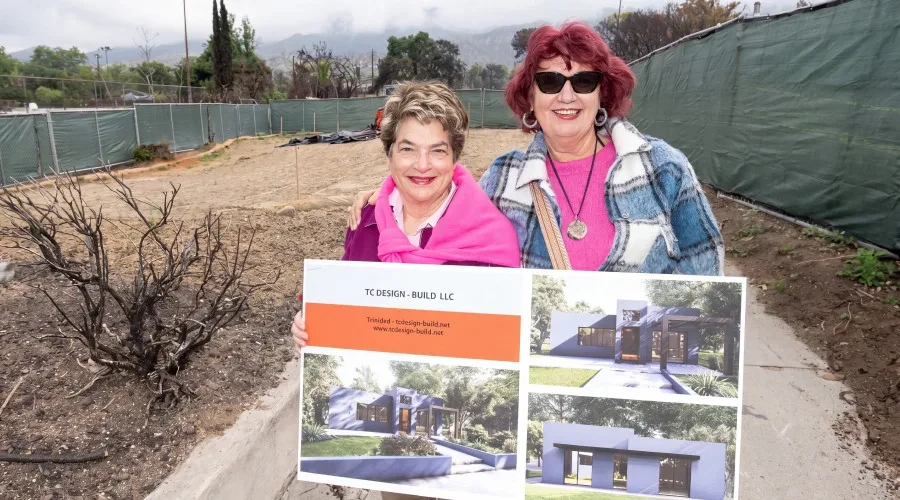
Beyond these socio-cultural examinations, numerous national pavilions sought to reassure visitors that architecture remains the premier tool for ensuring a more sustainable and equitable future, primarily through the creation of better, denser urban communities. The U.S. Pavilion, titled Workshopping, takes a modest and pragmatic look at architecture’s problem-solving capacity at the grassroots level. Innovative practices such as Archeworks, which exhibits an imaginative mobile agricultural project, and cityLAB, which cleverly demonstrates how to make sprawling Los Angeles significantly denser by adding small, functional houses to existing backyards, point out that entrepreneurialism and bold experimentation are critical to the long-term sustainability not only of our cities, but of the architecture profession itself. Michael Shapiro, director of the High Museum of Art in Atlanta and an organizer of the U.S. Pavilion in collaboration with 306090, Inc., chose to also incorporate a historical display chronicling John Portman & Associates’ 40-year-long development of the Peachtree Center in Atlanta. Yet, despite the individual merits of the components, the seven distinct exhibits within the U.S. Pavilion ultimately fail to feel fully integrated or conceptually linked.
Meanwhile, the Dutch Pavilion, titled Vacant NL and curated by Rietveld Landscape, presents a striking visual commentary by suspending a picturesque urban blue-foam model from wires strung across the pavilion’s mezzanine level. The exhibition forcefully highlights the pressing problem of vacant public and cultural buildings throughout the Netherlands, drawing sharp attention to the irony that the Dutch Pavilion itself is utilized for a mere three months out of the entire year. Addressing the underlying intentions of the showcase, Ole Bouman, director of the Netherlands Architecture Institute, which organized the presentation, writes that a truly good building makes something happen far beyond the physical confines of the structure itself.
That philosophical observation applies equally to the Biennale as a whole. This year’s exhibition will undoubtedly extend its broad intellectual influence far beyond the physical boundaries of the Venetian venue, leaving behind the humble yet vital reminder that architecture is only ever as relevant, powerful, or meaningful as the people and their daily activities housed within it.