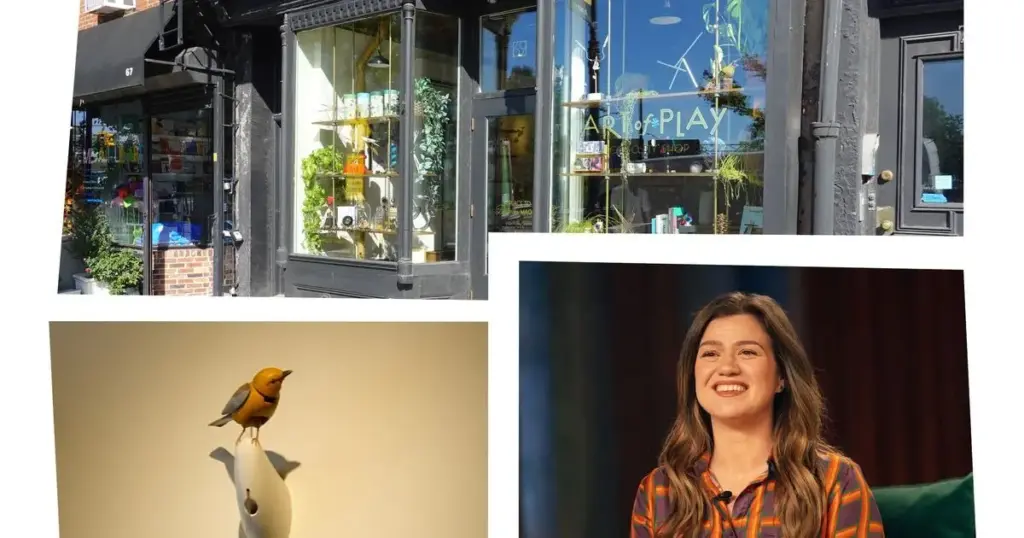
In the span of just a few days, a small, unassuming specialty shop tucked away on Atlantic Avenue found itself thrust into the white-hot glare of national media attention, internet outrage, and a wave of digital harassment. The epicenter of the storm was a pop superstar, a misunderstanding over a piece of fine art, and an ensuing social-media clash that the shop’s owners say has spiraled completely out of control, leaving them fearing for their physical safety.
The controversy began when Kelly Clarkson visited the Brooklyn-based store, known as Art of Play—an establishment that specializes in curated toys, books, and magic-adjacent oddities. According to the singer, she had walked into the shop hoping to make a purchase, only to be brusquely told by a staff member that the item she desired was not for sale. Feeling deeply slighted by the encounter, Clarkson took to X, the platform formerly known as Twitter, sharing a harsh online review with her audience of eight million followers. In her post, she explicitly compared her treatment at the hands of the boutique’s staff to being treated like Julia Roberts’s character in the classic film Pretty Woman, drawing an immediate parallel to the famous scene where a luxury boutique coldly turns away an underdressed shopper.
The post struck a nerve online, quickly garnering thousands of reactions and sparking widespread debate about customer service, entitlement, and retail etiquette.
Art of Play and its representatives quickly responded to the viral tweet via Instagram, attempting to clarify the situation from their perspective. They explained that Clarkson had not merely inquired about buying a standard, off-the-shelf item like a deck of cards, but had instead asked about “Molly”—a unique, one-of-a-kind singing and dancing bird automaton created by artist Bliss Kolb. Crucially, the shop noted that the mechanical bird was permanently attached to the wall and served as a functional piece used in the magic shows performed on-site. Their initial message maintained that the display piece simply wasn’t for sale.
However, the internet’s relentless sleuths quickly tracked down historical photographs of the exact same wall showing a visible price tag attached to the display. This discovery prompted Art of Play to issue a second, more detailed statement that only served to fuel the confusion. The follow-up suggested that staff had attempted to redirect Clarkson either to contact the independent artist directly to commission a similar piece or to purchase a much cheaper, alternative model available through the shop. Amid the escalating online discourse, Clarkson offered her own subsequent response, keeping the controversy alive in the digital sphere.
By Tuesday morning, the situation had escalated from a digital spat to a real-world media circus. Adam Rubin, one of Art of Play’s three co-owners, unlocked the shop’s doors to find a gaggle of reporters and camera crews staked out on the sidewalk, eager to get his side of the story. Sitting down for an interview to address the mounting chaos, Rubin offered a candid, albeit exasperated, account of how a routine retail interaction devolved into a public relations nightmare.
Reflecting on the initial incident, Rubin characterized the entire ordeal as an insane misunderstanding. He noted that while nothing that transpired inside the physical shop justified the way Clarkson scolded their shopkeeper on her way out, he was initially willing to chalk it up to someone simply having a bad day. That perspective shifted dramatically, however, once the multi-platinum recording artist leveraged her massive online platform against the independent business. Calling it "asymmetrical social warfare," Rubin expressed dismay at the vast disparity in reach and power between a global celebrity and a small neighborhood specialty store.
Detailing the actual atmosphere inside the boutique when the interaction took place, Rubin pushed back against any notion that Clarkson had been deliberately targeted or treated with disrespect. He explained that the store was packed with customers at the time, making it a bustling, dynamic environment rather than a quiet, one-on-one boutique setting.
According to Rubin, standard customer service in a busy specialty shop often involves steering interested patrons toward similar items when a particular display piece is unavailable. He used the hypothetical example of showing a customer a different interactive toy suitable for children if a specific item sparks their curiosity. Such recommendations, he argued, have nothing to do with price or condescension; rather, they are simply foundational to how retail workers engage with the public.
Rubin noted that Clarkson was inside the establishment for less than five minutes. He emphasized that had the ensuing tweetstorm never materialized, the shop’s staff would not have even registered the interaction as negative because it was so utterly undramatic. From their perspective, they treated her like a normal person, but that casual, everyday level of customer service apparently fell short of the superstar’s expectations.
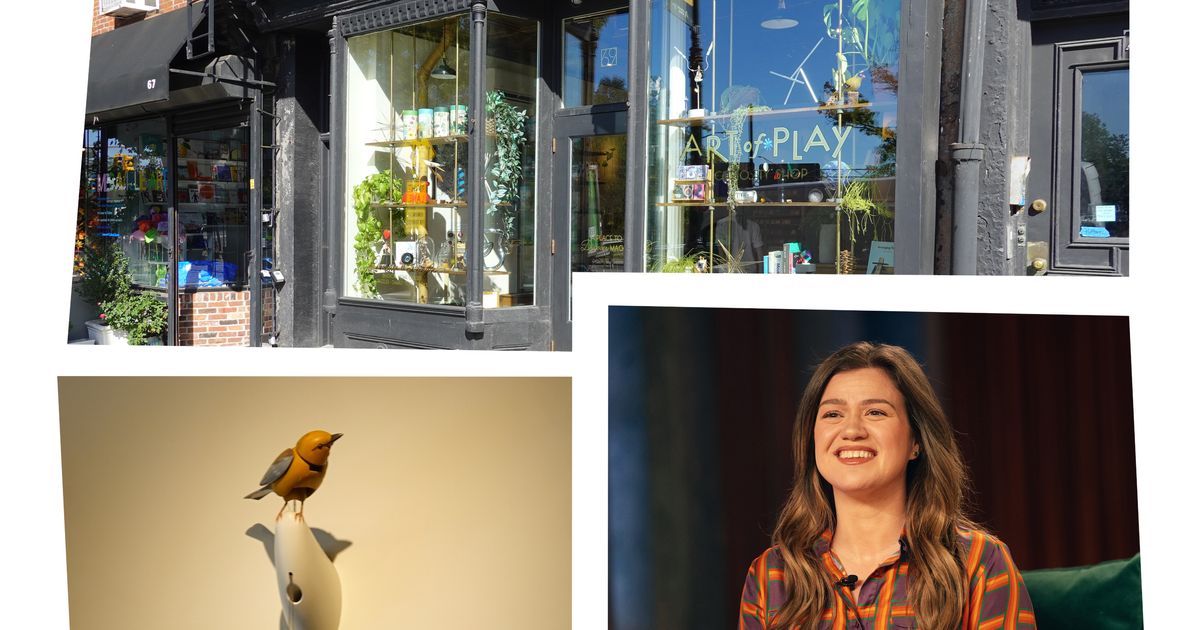
Addressing the central point of contention regarding whether the bird was actually for sale, Rubin shed light on Art of Play’s unique business model. Unlike traditional retailers with massive corporate supply chains, the shop operates as a nontraditional boutique that works directly with independent artisans.
The creator of the mechanical bird, Bliss Kolb, lives remotely in a house in the woods that he built with his own hands. He maintains no presence on social media and operates no warehouse; instead, crafting these intricate mechanical machines is a labor-intensive process that can take years. Rubin explained that only two such automata are known to exist in the entire world, making the shop’s display piece a fine-art sculpture rather than a mass-market commodity sitting on a shelf. While they might reach out to the artist if someone showed genuine, serious interest in commissioning a piece, it was never a standard retail item ready for immediate checkout.
When confronted about the visible price tag spotted by internet investigators, Rubin acknowledged that because curious visitors frequently inquired about the display, a price had eventually been affixed to it. However, he maintained that any actual purchase would require coordinating directly with the creator. In a moment of exasperated hyperbole addressing the frenzy of public attention, Rubin noted that due to sudden popular demand, the shop had jokingly raised the price of the piece to $15 million.
The lighter tone quickly dissipated, however, when the conversation turned to the real-world consequences of the viral controversy. For the people running Art of Play and working behind its counters, the fallout has extended far beyond bruised egos or internet arguments, morphing into a genuine security concern.
Rubin stated bluntly that Kelly Clarkson had inadvertently or knowingly put the business and its staff in danger. While supporters of the shop have occasionally stopped by during closed hours to drop off pastries and cupcakes in solidarity, the digital backlash has manifested as relentless harassment. Anyone expressing admiration, positivity, or sympathy for Art of Play online has reportedly become a target for organized internet trolls.
The nature of the harassment has been swift and multi-pronged. Trolls have flooded the business with phone calls, emails, and coordinated review-bombing campaigns across multiple digital platforms. Rubin described an environment where hostile actors shout and scream outside the storefront, accusing the boutique’s staff of racially profiling Kelly Clarkson—an allegation the owners vehemently reject.
The physical confrontation on the sidewalk grew so intense that local neighbors felt compelled to call the police. When those neighbors began filming the disruptive behavior outside their homes, online followers allegedly doxxed them, publishing their personal information online. Inside the shop, the disruption bled directly into daily operations. Rubin shared that the business had to turn off its phone lines entirely, yet hate speech and violent threats continued to stream in continuously on the point-of-sale iPad screen while cashiers attempted to ring up legitimate customers. The wave of hostility has effectively severed the shop’s ability to communicate with its actual clientele.
Despite the digital storm raging across social media, Rubin noted a stark contrast between online sentiment and the reality on the ground in Brooklyn. Observing the relative calm outside the storefront, he maintained that nobody who has ever visited the specialty shop in person has taken Clarkson’s side in the dispute.
As the interview drew to a close, reporters pressed Rubin on remaining logistical questions—inquiring whether the alternative, lower-priced bird model mentioned by staff was kept in-house as a special order, and whether the business had experienced an influx of actual purchase inquiries as a result of its newfound notoriety.
Declining to elaborate further, Rubin brought the conversation to a swift end, noting that he had said all he needed to say and politely asking the gathered press to leave the premises.