As November arrives, the global art community turns its gaze toward Lagos, Nigeria. This city has firmly established itself as the beating heart of the West African art calendar, a status that is once again reaffirmed by the return of ART X Lagos. Marking its 11th edition from November 5 to 8 at the Federal Palace Hotel, the fair enters a new decade of operations, building upon the momentum of its milestone tenth-anniversary celebrations last year. For collectors, curators, and enthusiasts, this event serves as the primary touchstone for understanding the current trajectory of African contemporary art.
The fair’s structure this year reflects a deliberate focus on the strength of the local ecosystem. The main section features a curated selection of twelve galleries, nine of which are Nigerian, underscoring the resilience and depth of the domestic market. Furthermore, a spotlight section has been introduced to highlight three emerging Nigerian spaces, providing a platform for the next generation of gallerists to engage with an international audience.
The Intersection of History and Contemporary Discourse
Beyond the commercial offerings of the booths, ART X Lagos continues to prioritize institutional-grade intellectual engagement. This year’s ART X Icon exhibition, titled Ladi Kwali: Beyond the Vessel, is curated by Dr. Jareh Das. It offers a profound re-examination of the legendary Gbari potter, Ladi Kwali (1925–1984), whose work bridged the gap between traditional craft and modern fine art. By integrating ceramics with archival material sourced from the National Museum in Lagos, the exhibition provides a necessary historical anchor, reminding attendees of the deep roots from which contemporary West African practice grows.
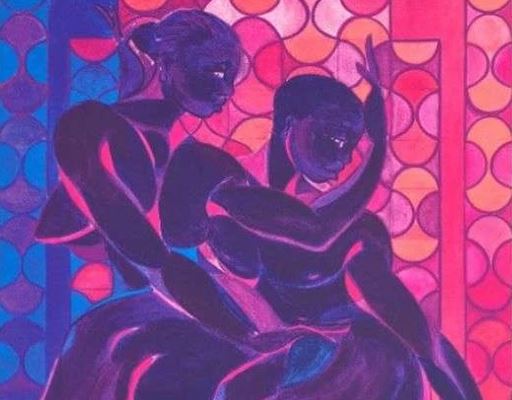
The timing of the fair is strategically significant, landing squarely in the middle of the fifth Lagos Biennial. Titled The Museum of Things Unseen and curated by Folakunle Oshun, the Biennial has been running since October 17 and will conclude on December 18. This overlap creates a rich cultural tapestry in the city, allowing visitors to experience both the high-energy commercial environment of the art fair and the more experimental, research-driven focus of the Biennial. This dual presence mirrors the broader shifts in the African art scene, where global visibility is increasingly paired with a robust commitment to local historical and social discourse. While the 14th edition of the 1-54 Contemporary African Art Fair recently concluded at Somerset House in London, the energy has now definitively shifted back to the continent.
Navigating a Selective Commercial Landscape
The commercial backdrop for this year’s events is characterized by a high degree of selectivity. The broader international market for African art has seen structural changes, most notably the decision by Sotheby’s in April 2025 to dissolve its dedicated African art department. This move has left Bonhams as the primary force among major auction houses maintaining a standalone, focused program for the region.
Recent data from the auction sector suggests a cautious environment. The Bonhams sale held on March 19, 2026, totaled $2.35 million, landing below its low estimate, with a sell-through rate of 66%. However, these aggregate figures mask significant pockets of resilience and individual success. A standout result from that sale was Obiora Udechukwu’s Delicate burden, which commanded $37,600—a figure that significantly outperformed its low estimate of approximately $2,700.
Market observers, including the outlook provided by MoMAA for 2026, suggest a bifurcated market. The "mid-market" tier, specifically works valued between $1,000 and $50,000, is currently viewed as a "strong" and stable entry point for collectors. In contrast, the high-end tier—defined as the $500,000 to $5 million bracket—is characterized as "mixed," reflecting the broader economic volatility affecting blue-chip assets globally. While headline-grabbing records for artists like Njideka Akunyili Crosby and Amoako Boafo continue to hover around the $3.4 million mark, the most accessible and dynamic activity is taking place in the mid-market primary tier, where galleries and emerging artists are building sustainable, long-term relationships with collectors.
Emerging Voices: Five Artists to Watch
The true health of the Lagos art scene is best observed through the practices of its most promising artists, many of whom are finding international representation through a diverse network of galleries.
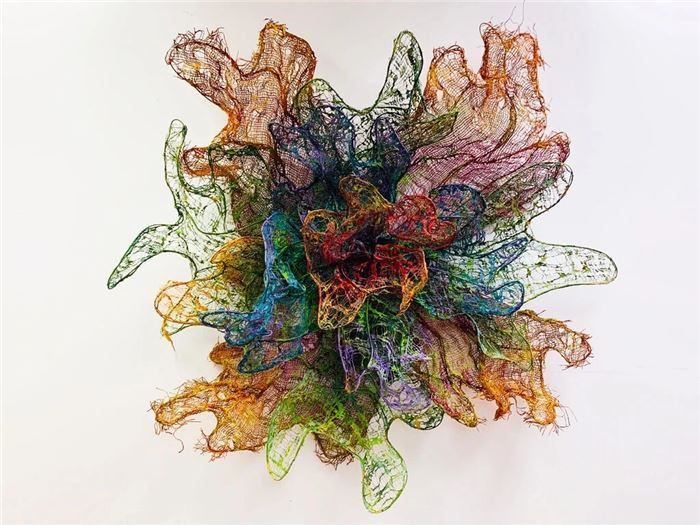
Nnenna Okore (b. 1975) represents a sophisticated approach to material and ecology. Represented by Black Liquid Art in Rome, Okore’s work often involves the complex manipulation of cheesecloth, burlap, jute, and wire. By dyeing, sewing, and twisting these materials, she creates organic forms that evoke the processes of decay and renewal, rooted in her Igbo heritage. Born in Australia and raised in Nsukka, Nigeria, Okore’s global perspective—further informed by her current base in Chicago—has led to significant institutional recognition, including exhibitions at the Stanley Museum of Art and the Newark Museum.
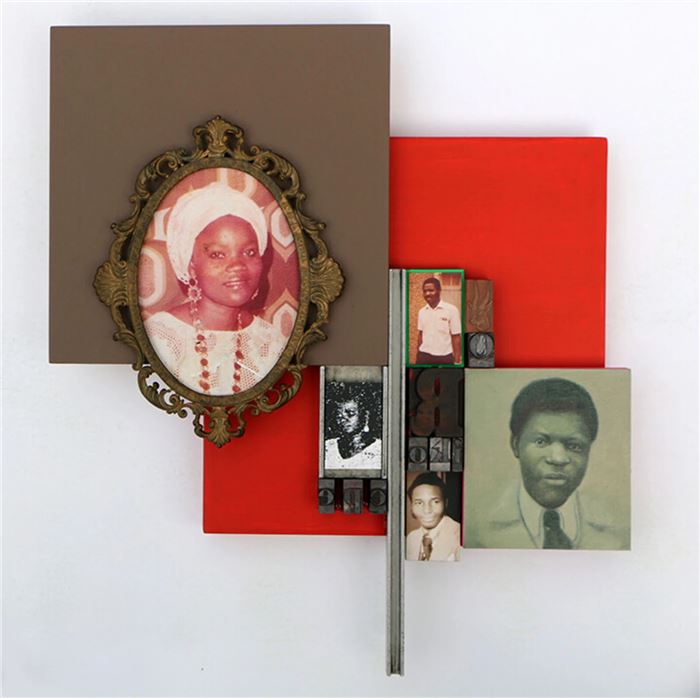
Kelani Abass (b. 1979) offers a different, more archival approach. Based in Lagos, Abass creates works that layer painting, printmaking, and sculpture to investigate the intersections of personal memory and Nigeria’s independence era. His work, such as Scrap of Evidence (Ori ko Epe), utilizes digital prints and found objects to interrogate the historical record. His inclusion in institutional collections like the Princeton University Art Museum underscores the academic interest in his work, while his primary representation through the Dubai-based Efiè Gallery highlights the growing connectivity between the West African and Middle Eastern art markets.
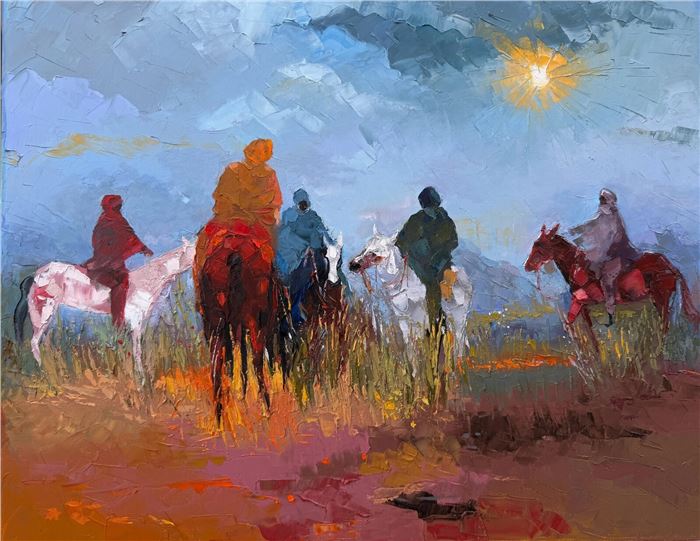
Godfrey Afebuame (b. 1969) brings a tactile, expressionistic quality to the scene. His use of impasto and the palette knife allows him to explore complex themes of peace, sustainability, and the human form. Represented by EAA Gallery, which maintains a unique dual base in Niagara Falls and Lagos, Afebuame exemplifies the globalized nature of the contemporary Nigerian artist. His work serves as a bridge for collectors seeking a connection to the artistic traditions of the Society of Nigerian Artists while navigating a globalized gallery footprint.
Ebuka Pascal Agudiegwu (b. 1997) represents the self-taught, digitally fluent generation. Operating under the umbrella of "Figurative Surrealism," his acrylic and charcoal works delve into Igbo proverbs and the construction of identity. His rapid rise, evidenced by his recent solo exhibition in Abuja and inclusion in international collections like the Collection Montparnasse, highlights the growing demand for young, conceptual painters. His representation by RIANA RAOUNA, a nomadic gallery based in Nicosia, demonstrates how digital-first gallery models are successfully bypassing traditional brick-and-mortar limitations to place works by emerging Nigerian talent into international homes.
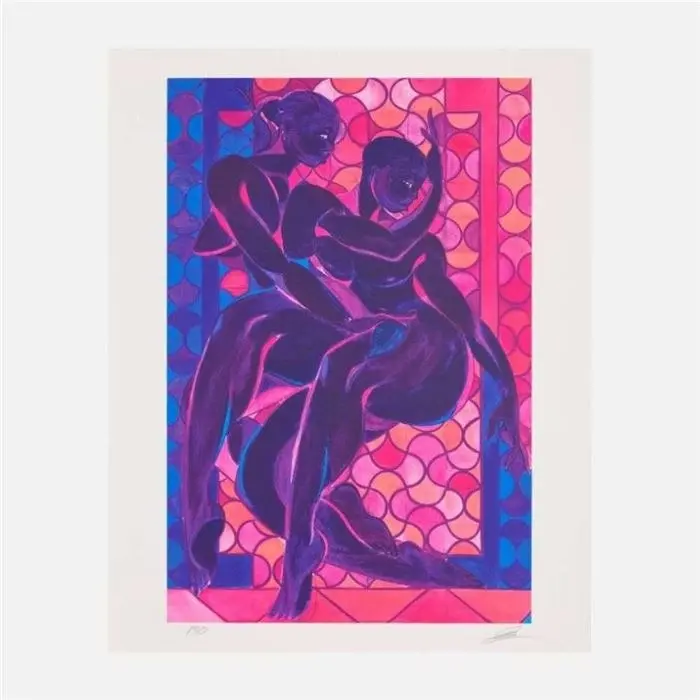
Tunji Adeniyi-Jones (b. 1992) remains a pivotal figure whose practice synthesizes Yoruba heritage with Western art historical movements like Cubism and the decorative aesthetics of Dutch wax-resist fabrics. While his primary market is anchored by the major institutional presence of White Cube, his availability through secondary or edition-focused spaces like Lougher Contemporary in Bristol provides a different, often more accessible, entry point for collectors. His work serves as a reminder that the influence of West African heritage is now a fundamental component of the contemporary global visual language.
A Decentralized Future
The patterns of circulation exhibited by these five artists illustrate a fundamental truth about the current West African market: the center is everywhere. While ART X Lagos will undoubtedly serve as a critical focal point for the next few days, the careers of these artists are being built through a global network of galleries in Rome, Dubai, Niagara Falls, Nicosia, and Bristol.
For the serious collector, this dispersal means that relying solely on auction house performance or fair-week hype is insufficient. The most meaningful engagements—and indeed, the most significant acquisitions—are happening within the day-to-day operations of the galleries themselves. As the Lagos art scene continues to evolve, the most successful participants will be those who look beyond the spectacle of the fair and engage directly with the primary market, where the next decade of West African art history is currently being written. Collectors interested in these artists and others are encouraged to reach out to the representing galleries to discuss available works and gain a clearer understanding of the current market landscape.