Happy Wednesday, gardening enthusiasts! Returning to Minneapolis for the continuation of Claire’s side-yard transformation, today’s focus shifts to the lush, shady garden beds surrounding the property’s patio and gazebo. While yesterday’s installment explored the foundational planning phase—where space utilization took priority over immediate plant selection—this segment dives deep into the botanical palette that brings the shaded sanctuary to life.
For Claire, designing a garden hidden from intense sunlight meant carefully curating colors and textures to prevent the narrow beds from feeling flat or uninspired. She envisioned a calm, sophisticated palette centered around green, blue, silver, and white. Because the planting zones are heavily shaded, the overarching strategy prioritized foliage first and flowers second, utilizing a select group of predominantly white-flowering specimens to illuminate the darker corners of the landscape. Despite the spatial limitations of narrow garden beds, the objective was to create a dense, multi-layered aesthetic that avoids the monotony of a single, simple row of greenery.
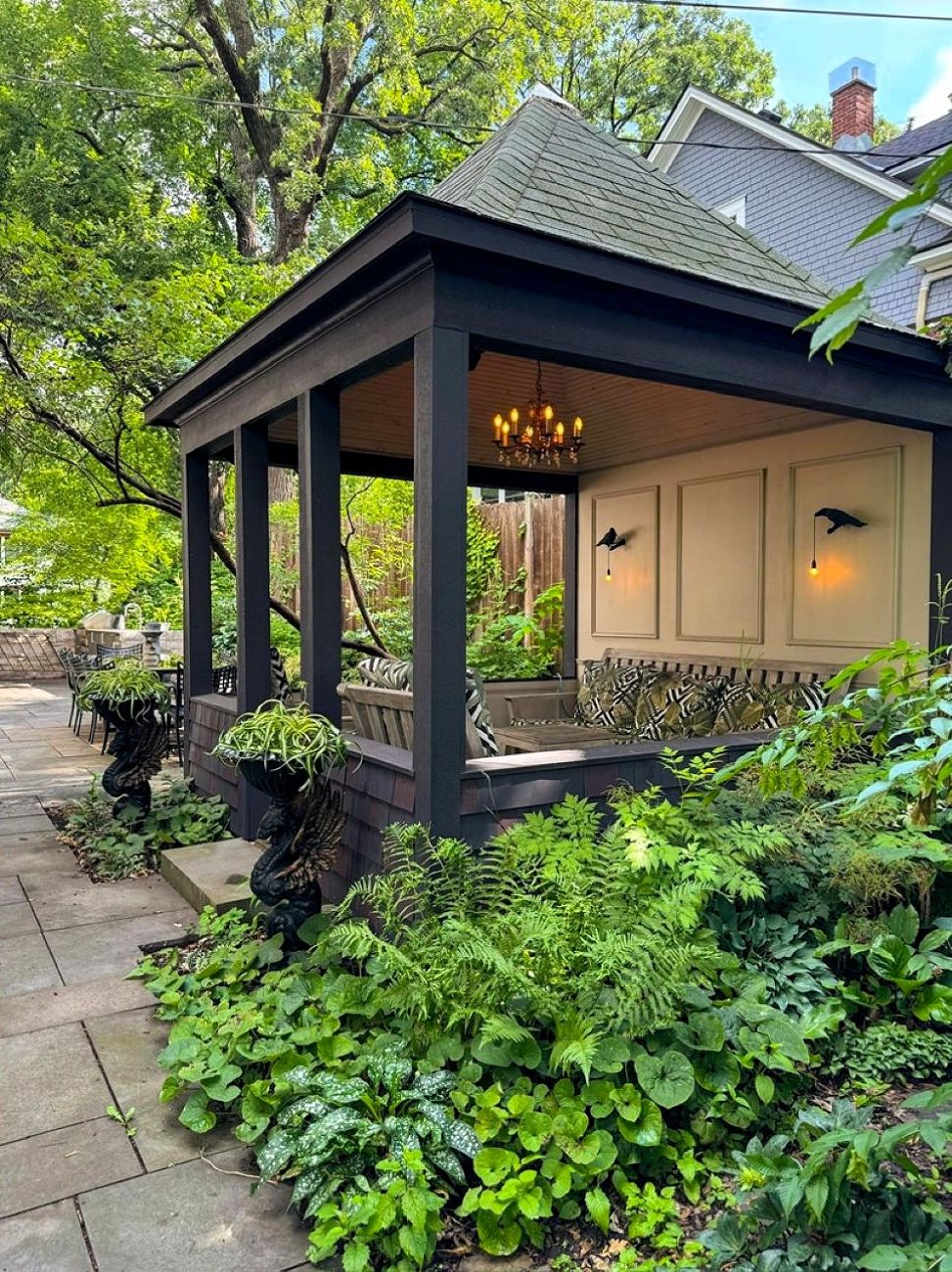
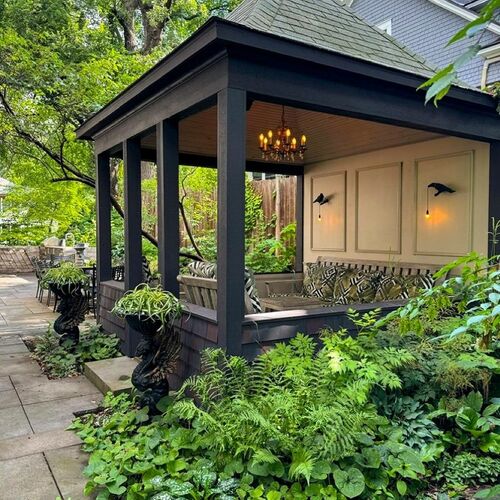
The centerpiece of this design is the finished dark screened gazebo, which feels less like an ordinary backyard structure and more like a tiny, secluded house tucked deep within a private jungle. The dense foliage hugging the perimeter integrates the architecture directly into the landscape, while matching dragon planters filled with vibrant spider plants (Chlorophytum comosum, Zones 9–11) frame the entrance in a manner reminiscent of classic potted arrangements flanking a front door.
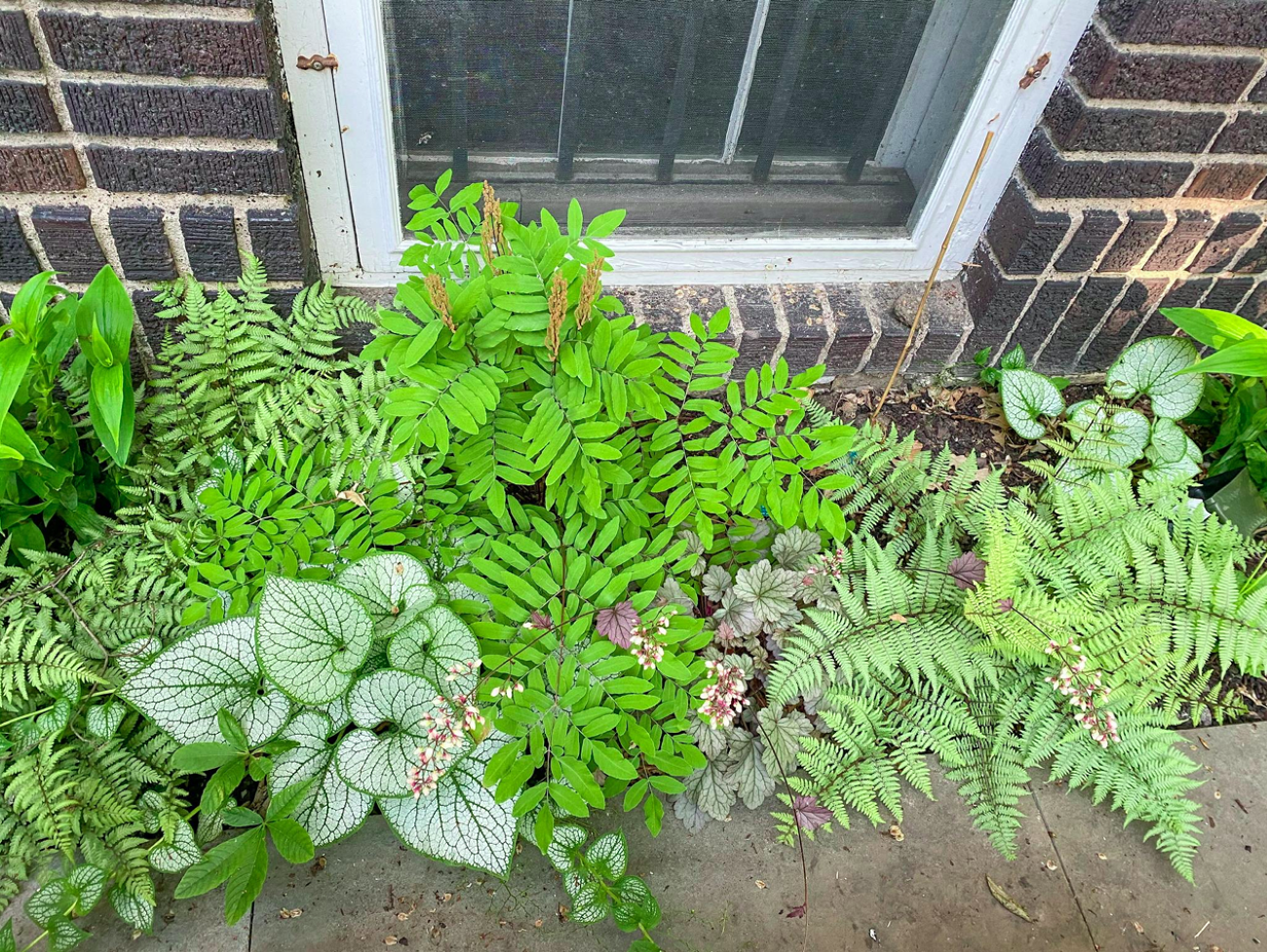
Moving further into the beds along the brick wall, a rich tapestry of shade-tolerant perennials unfolds. The composition features a harmonious mix of hairy toad lily (Tricyrtis hirta, Zones 4–8), ‘Branford Beauty’ fern (Athyrium ‘Branford Beauty’, Zones 3–8), royal fern (Osmunda regalis, Zones 3–9), ‘Silver Heart’ brunnera (Brunnera macrophylla ‘Silver Heart’, Zones 3–8), and heuchera, likely the striking ‘Spellbound’ variety (Zones 4–9). Each plant contributes distinct leaf shapes, silvery sheens, and textural contrasts that catch the ambient light filtering through the overhead canopy.
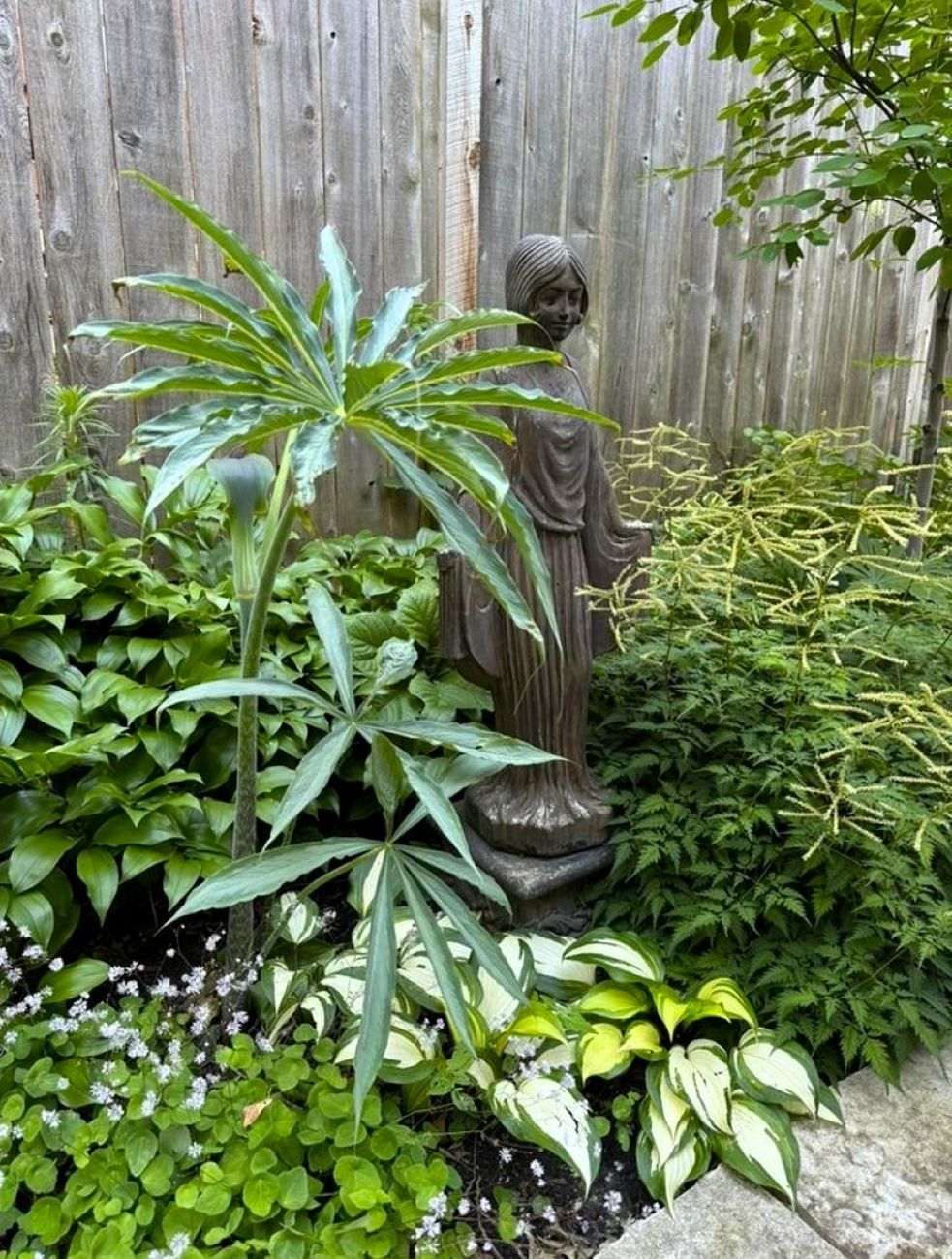
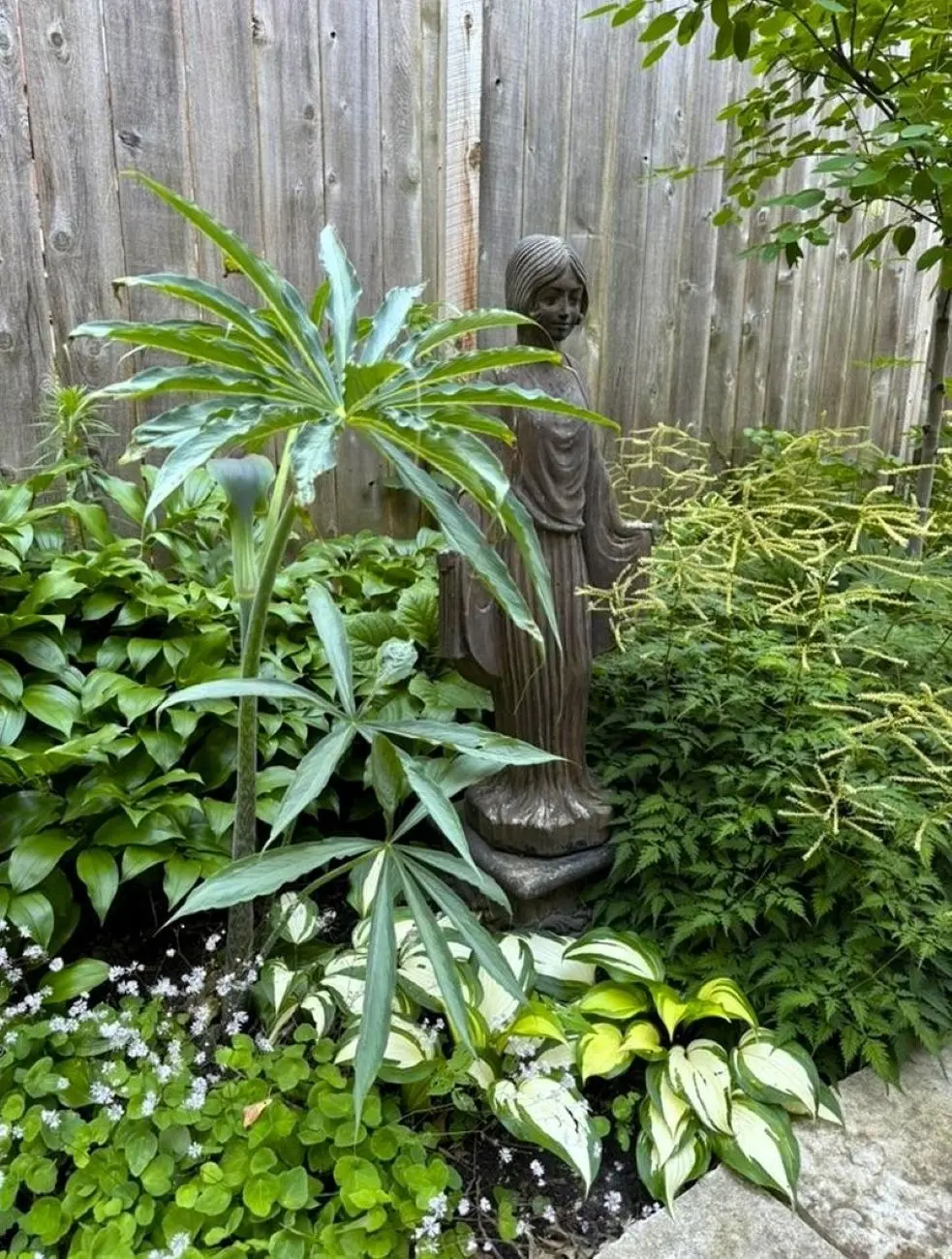
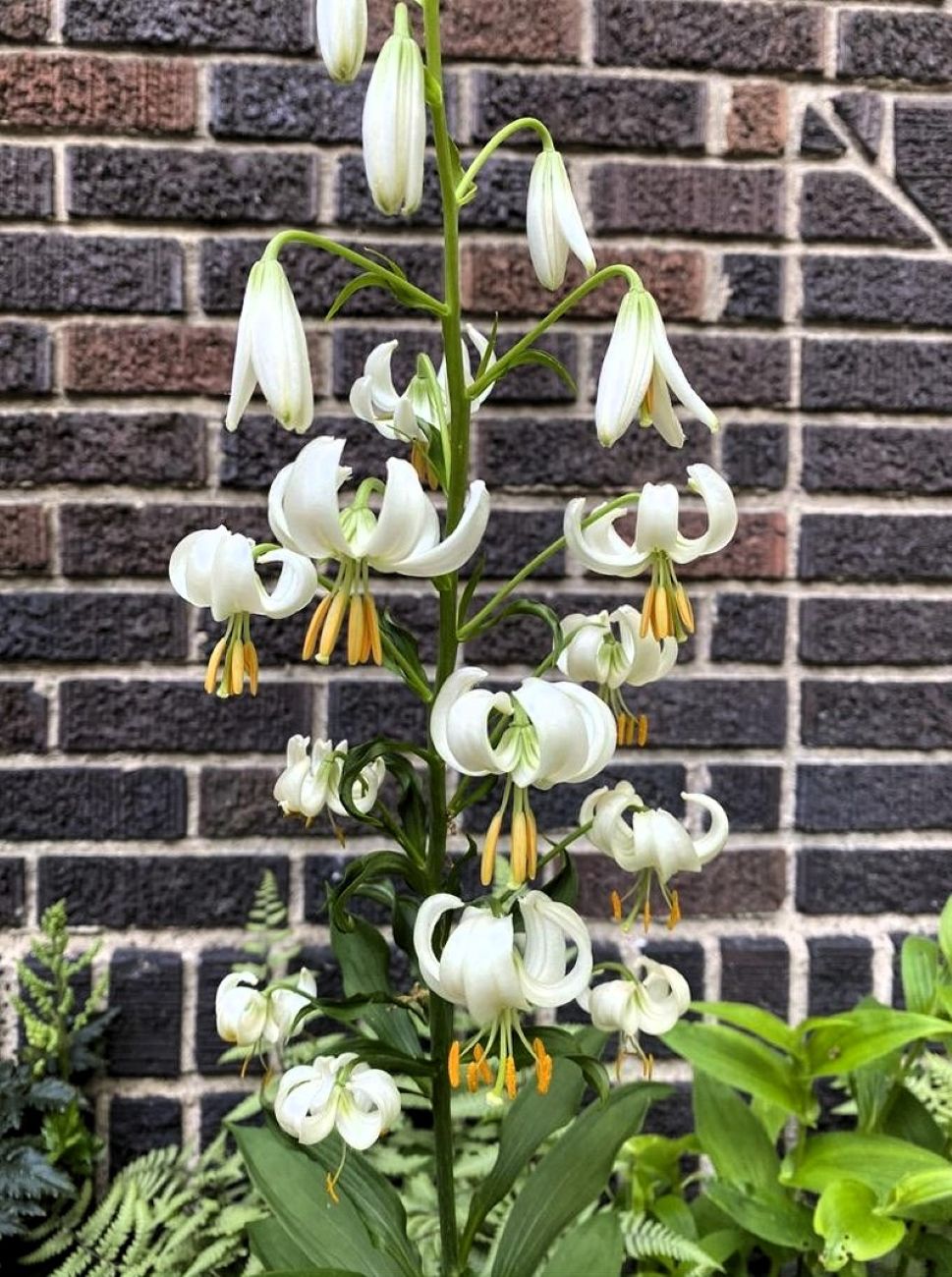
Adjacent to a decorative garden statue, a striking focal point previously stood: the rare Himalayan cobra lily (Arisaema consanguineum ‘The Perfect Wave’, Zones 5–8), a tall, dramatic specimen that has since died, leaving Claire eager to source a replacement. Nearby, the white martagon lily (Lilium martagon ‘Album’, Zones 3–9) provides a breathtaking display during its brief but glorious blooming season, staying true to the garden’s overarching color restrictions.
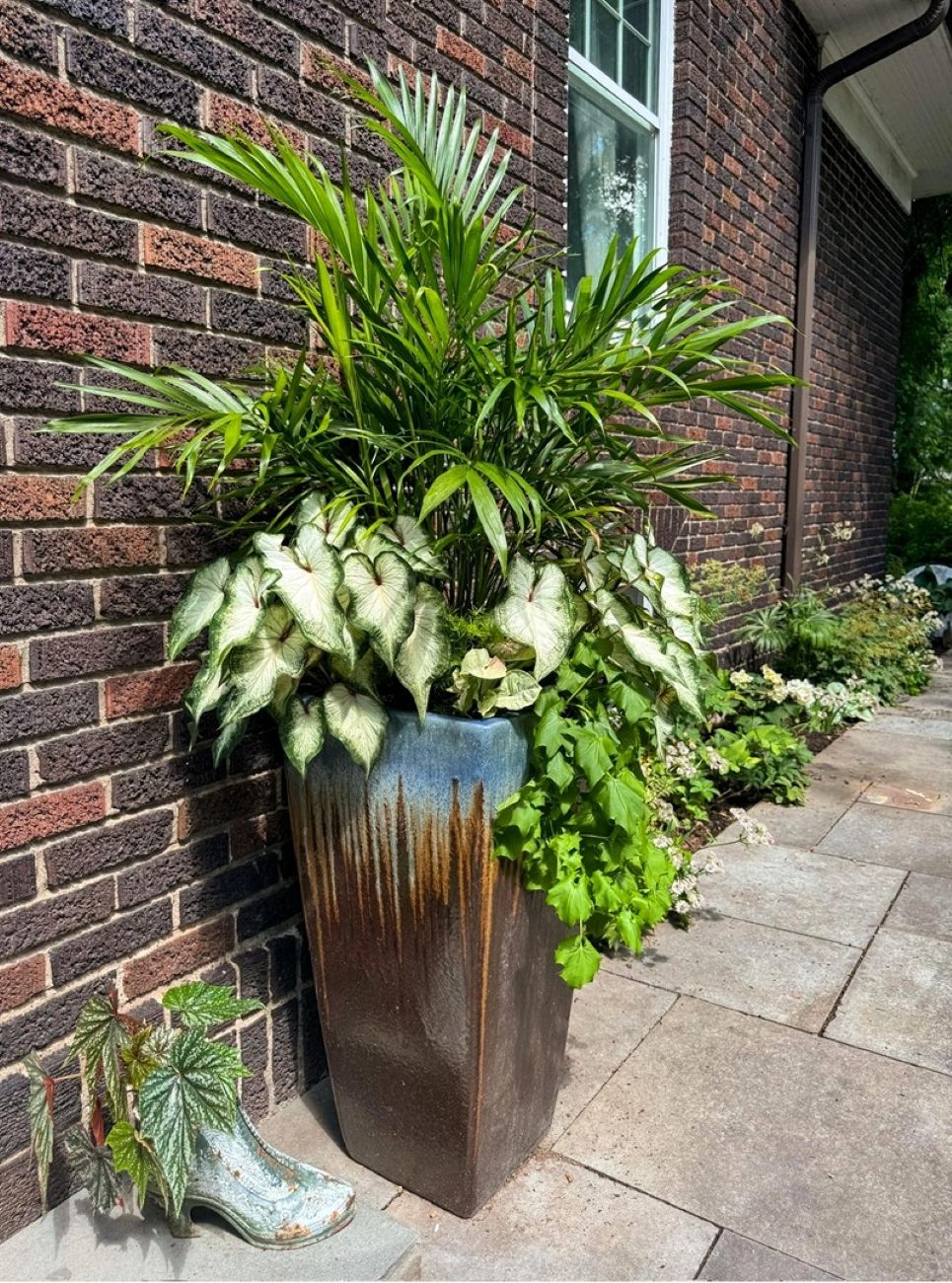
Container plantings throughout the space continue to reinforce the cohesive design language. An Areca palm (Dypsis lutescens, Zones 10–11) paired with ‘White Butterfly’ caladium (Caladium bicolor ‘White Butterfly’, Zones 9–11) bridges the tropical elements with the cool, serene tones of the surrounding perennial beds.
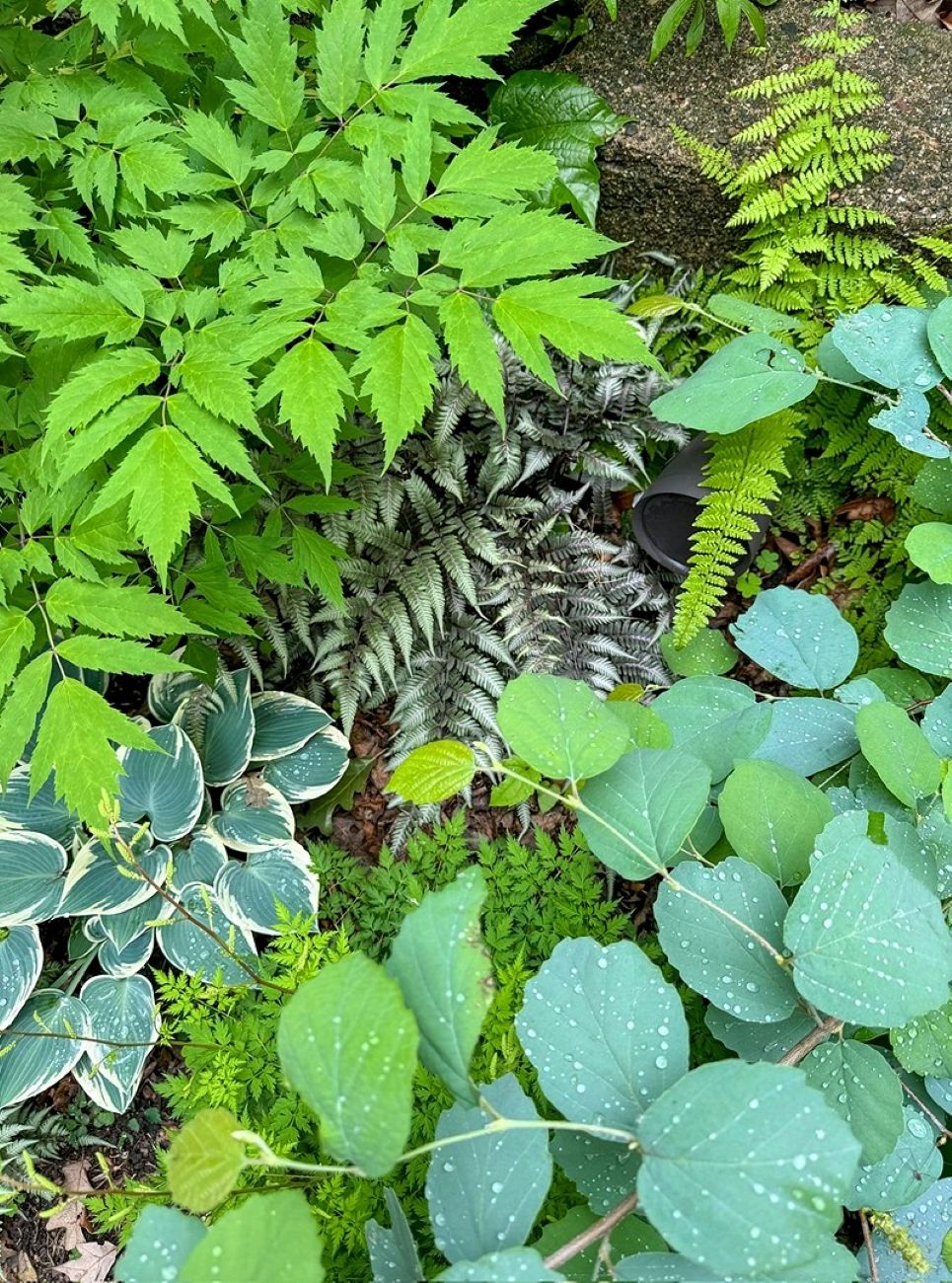
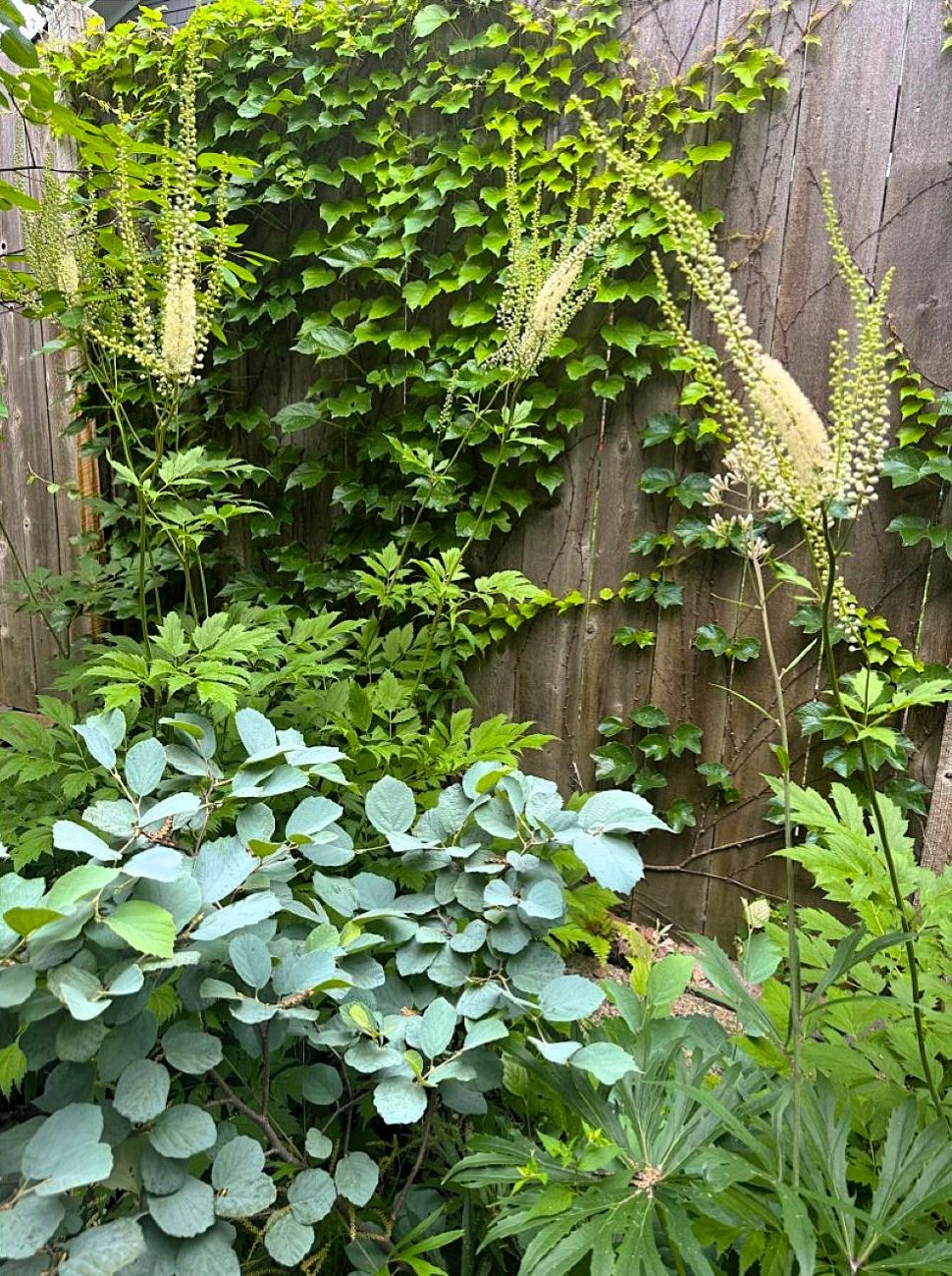
Deeper into the shade garden, another carefully curated grouping showcases the ‘Blue Ivory’ hosta (Hosta ‘Blue Ivory’, Zones 3–9), black cohosh (Actaea racemosa, Zones 3–8), Japanese painted fern (Athyrium niponicum var. pictum, Zones 5–8), ‘Blue Shadow’ fothergilla (Fothergilla × intermedia ‘Blue Shadow’, Zones 5–8), and ‘Guinea Fowl’ goatsbeard (Aruncus ‘Guinea Fowl’, Zones 3–7). Among these, the tall, white candelabra flowers of black cohosh act as a magnet for bumblebees, swaying gently above the lower-growing foliage to introduce vertical dimension and organic movement to the scene. Nearby, the ‘Blue Mist’ dwarf fothergilla (Fothergilla gardenii ‘Blue Mist’, Zones 5–8) and umbrella plants anchor the corners, occasionally sharing space with the subtle blossoms of the Himalayan cobra lily.
Among the most prized specimens in the entire collection is a delicate lady’s slipper orchid (Cypripedium Gidget, Zones 4–7), thriving quietly next to a modest pulmonaria flower.
This comprehensive side-yard transformation offers a refreshing reminder that limited sunlight is not a horticultural limitation, but rather an invitation to explore a different realm of gardening. By leaning into the natural environment and selecting species tailored to shaded conditions, Claire has demonstrated that a compelling, textured retreat does not require full sun—only a willingness to work harmoniously with one’s surroundings.