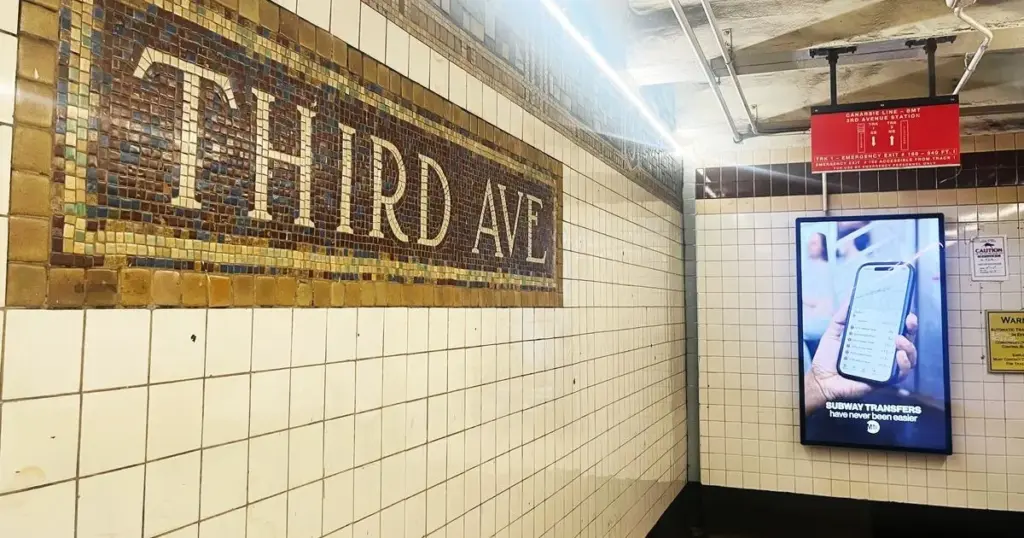
For New York City subway riders, platform congestion, delayed trains, and sluggish commutes are a daily ritual of urban life. Most commuters vent their frustrations by complaining to friends, drafting angry posts on social media, or quietly glaring at stalled train doors. Joshua Wolk, however, decided to take a different approach. The subway-riding software product designer and data enthusiast has crunched the numbers on millions of Metropolitan Transportation Authority trips and arrived at a radical proposal: shut down the L train station at Third Avenue and 14th Street entirely.
Wolk, who lives nearby in Stuyvesant Town and regularly relies on the transit system, established through his data modeling that the Third Avenue stop is, by his calculations, the single least efficient station in the entire New York City subway network. According to his findings, only about five percent of riders actually get on or off the train at that specific location. To make his case to the public and transit officials, he built a dedicated website, stopthestop.com, detailing his findings. Wolk recently spoke about the methodology behind his data crunching, the friction points of older transit infrastructure, and whether he believes a controversial proposal to eliminate an active subway stop has any chance of becoming a reality.
The project began organically out of a routine commuting annoyance. Wolk, whose professional background involves designing software applications and web products, has a well-documented passion for playing with data. His prior side projects have even included turning MTA data into music. But the seed for his transit proposal was planted late one night while he was riding the L train alongside a friend who began complaining about the sluggishness and inconvenience of the Third Avenue stop. That conversation sparked a realization for Wolk that the frustration was not merely a personal grievance, but a systemic bottleneck shared by a massive cross-section of L train passengers.
Expecting his initial hypothesis to be disproven by the numbers, Wolk assumed there must be a compelling operational or historical justification for the station’s continued existence. Instead, his data analysis revealed that the Third Avenue L stop was an extreme outlier in inefficiency.
To arrive at this conclusion, Wolk utilized the MTA’s origin-destination estimates covering a multi-month period from January through August. He routed each individual trip using RAPTOR, a sophisticated transit-routing algorithm, based on the standard GTFS timetable. He ran the simulation through two distinct scenarios: once with the Third Avenue station active, and once with it omitted entirely. He then measured the theoretical time savings for through-passengers against the additional walking time required for riders who normally use Third Avenue to reach adjacent stations like Union Square or First Avenue.
In balancing these metrics, Wolk applied a standard principle from transit economics: counting every additional minute of walking as double a minute spent riding on the train. As he clarifies, this weighting is not about physical speed, but rather serves as a proxy for convenience and user friction, acknowledging that navigating stairs and walking outdoors often feels significantly more burdensome than sitting inside a moving railcar.
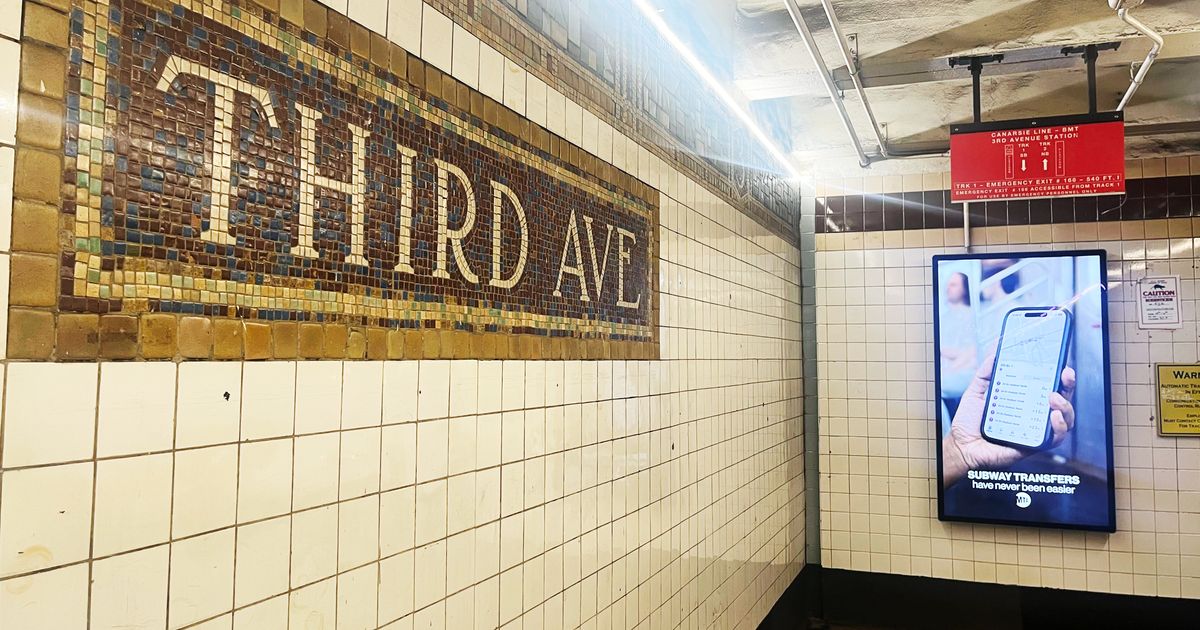
When running the simulations across the broader transit network, Wolk discovered that closing the Third Avenue platform was an extraordinary statistical outlier. According to his model, eliminating the stop would save a staggering 1,824 rider hours every single weekday. By comparison, the next most inefficient station in the system, located at 138th Street and Grand Concourse, yielded roughly 700 fewer hours of potential savings.
Recognizing that transit efficiency can be measured through numerous lenses, Wolk did not rely on a single rigid calculation. He actually tested approximately 40 different permutations to account for variables that are difficult to pin down precisely, such as the exact amount of time a train loses by decelerating, stopping, and accelerating again at Third Avenue compared to bypassing the station entirely. Remarkably, in 39 out of those 40 distinct permutations, the Third Avenue L stop remained a costly operational burden. The only scenario where the station made statistical sense was under an aggressive assumption that a train loses only 20 seconds total during a stop, combined with a heavier penalty valuing walking time at triple the cost of riding. Wolk suggests that a formal pilot program would be the only definitive way to capture the most precise operational numbers.
The proposal has sparked broader conversations about the fundamental design of New York’s mass transit network. Urban planners and transit enthusiasts frequently note that older Manhattan subway lines feature stations that are spaced significantly closer together than modern urban rail systems require, a relic of an era when walking was the primary mode of feeder transportation. While New York City’s extreme population density often justifies frequent stops, Wolk argues that his study provides a data-driven framework to evaluate those trade-offs objectively. Even in a dense metropolis, if the cumulative time lost by thousands of through-passengers waiting on delayed trains vastly exceeds the aggregate convenience provided to a small fraction of boarding passengers, a structural re-evaluation is warranted.
At the same time, critics of station closures point out that raw mathematical models can overlook human variables, such as the accessibility needs of senior citizens or mobility-impaired residents who rely on nearby stops. Wolk acknowledges the validity of these concerns, though he notes a crucial counterpoint regarding the station in question: unlike neighboring Union Square and First Avenue, the Third Avenue L station is not currently wheelchair accessible, lacking the elevator infrastructure found at other Manhattan stops along the line.
The discussion also highlights the curious permanence of subway infrastructure in New York City. Historical precedents exist for closing underperforming stations—such as the old 18th Street stop on the IRT Lexington Avenue Line, which was permanently shuttered in 1948 when platforms at 14th and 23rd streets were extended. However, contemporary transit agencies rarely pursue closures due to the immense political friction, neighborhood pushback, and public perception that service is being reduced rather than improved. Opening a new subway station is notoriously difficult and expensive, which makes the prospect of closing an existing one feel deeply daunting and permanent to transit administrators.
As for whether his proposal will ever move beyond digital simulations and into the realm of official MTA policy, Wolk remains realistic yet hopeful. While he has had no formal contact with the agency regarding the closure, and the MTA has never publicly indicated that it is considering abandoning the stop, Wolk hopes the conversation encourages transit planners to embrace more data-intensive evaluations for future network optimization. Whether or not the Third Avenue L platform ever faces the chopping block, Wolk’s digital thought experiment has successfully injected a data-driven debate into the everyday anxieties of the New York City commute.