We are thoroughly accustomed to viewing luxury rentals through the hyper-sanitized, overexposed lens of brightly lit Zillow listings, where properties are routinely staged with artificial intelligence furniture or draped in trendy bouclé in every available corner. But director Lance Oppenheim and his director of photography, David Bolen, chose a drastically different aesthetic for the high-end rentals featured in You Can See Everything. Shooting on actual film with very little artificial light, the filmmakers crafted a visual landscape that exposes every architectural crack and drifting dust mote. Against this raw backdrop, the homes chosen by Elizabeth Holmes and her partner, Billy Evans, emerge as striking anomalies: the distinct type of high-end real estate that comes into existence when exceptionally wealthy individuals build eccentricities that they ultimately never want to actually inhabit.
In Texas, inside a high-ceilinged starter castle, the documentary captures Holmes’s parents sitting anxiously at a dark, shiny-countertopped wet bar, bracing themselves to send their daughter off to federal prison. Shortly afterward, the home’s backyard—complete with rustic Adirondack chairs and a gravel firepit—serves as an oddly cheerful, disarming setting for Nathan Fielder’s final, deeply awkward questions before Holmes begins her sentence. While the exact address for that particular Texas rental remains unconfirmed, Evans clearly went to great lengths to ensure its obscurity. As he notes in the film, the couple frequently relocated to evade the relentless glare of the paparazzi. Consequently, his name was deliberately kept off deeds, voting records, and corporate registries associated with any Texas residential address. Still, investigative reporting successfully tracked down the two primary Holmes residences where the vast majority of the documentary’s narrative unfolds, save for those scenes filmed at Amanda Seyfried’s picturesque farm.
The first major anchor of the documentary’s real estate tour is located at 2986 Sandy Lane in Del Mar, California. Last advertised for rent at $5,650 per month back in 2015, the property’s last recorded sale price was assessed at $441,110, having been quietly transferred among relatives since 1994.
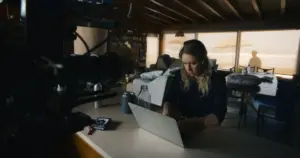
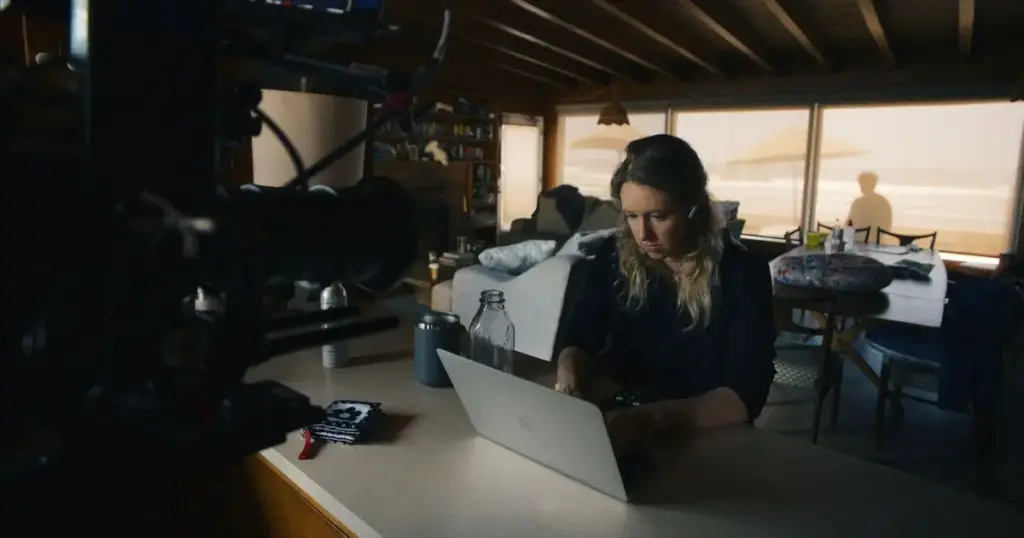
It is a jarring visual experience to watch the founder of a sleek, hyper-funded Silicon Valley startup residing in a dark, low-ceilinged mid-century home walled entirely in honey-colored wood, with the vast majority of her personal belongings packed away in plastic storage bins stacked on a concrete driveway. The house offers four bedrooms and four bathrooms, yet it completely lacks any traditional sense of luxury. Instead, it features white Formica countertops, a basic black microwave, and a memorably dated mauve, stand-up shower. Outside, the exterior paint is visibly peeling. Inside, an ancient, sun-faded poster of Tahiti hangs on the wall. By all appearances, it is a classic, high-traffic beach house worn down by decades of coastal air and sand. Even if Holmes genuinely loves to swim, as she mentions to Fielder, she was likely drawn to the location primarily through Evans. His family developed a prominent group of hotels throughout the San Diego area, and his parents appear to have lived on the exact same street. Furthermore, the property offered a crucial logistical perk for a couple constantly hounded by the media: a private beach and a gated street, according to local real estate sources.
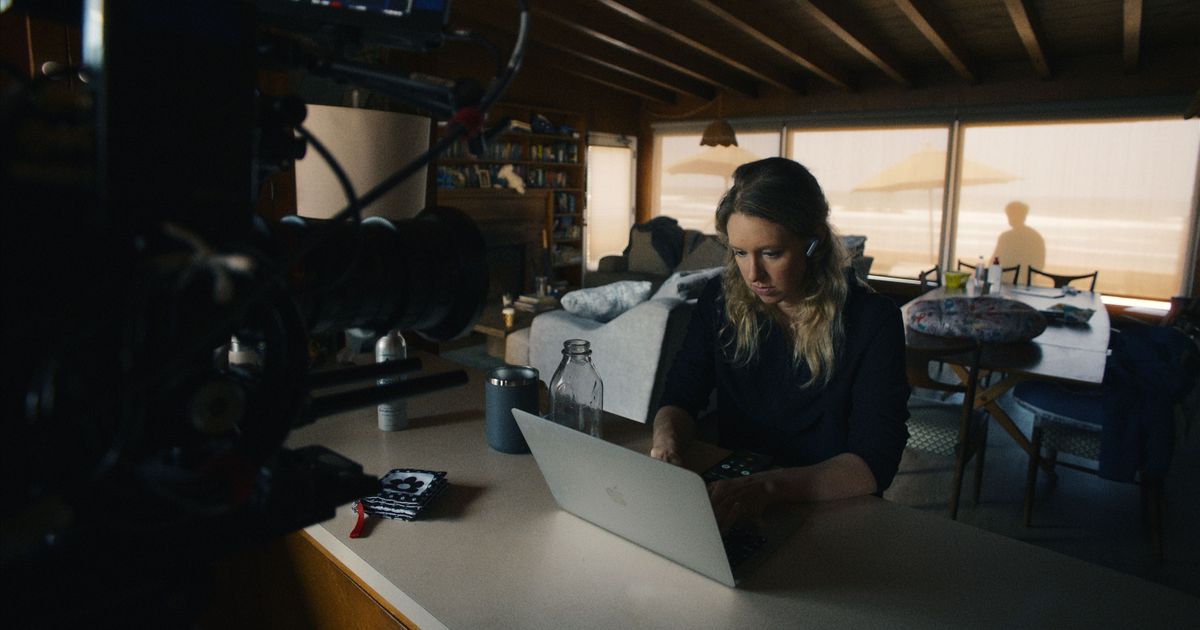
While Fielder notes in the film that the home is a rental, the last publicly advertised rental listing dates back more than a decade to 2015, pointing to the strong possibility that Evans negotiated an off-market deal directly with the owners. Tipsters reportedly informed Substack writer Carson Griffith that the Evans family maintained personal ties with the property owners, and Griffith reported a steep monthly rental figure of $28,000, though the origin of that specific estimate remains opaque. Meanwhile, real estate platforms like Zillow currently estimate the total value of the beachfront house at approximately $8.995 million.
Public property records indicate that the home has been passed down among family members since 1994, when the trust of Frances Hays transferred ownership to Thomas C. Hays and Melinda Hays Bedell. Following a subsequent transfer in 2022, the property is currently owned by three members of the Bedell family. Local archival research unearthed a 2018 Del Mar City Council meeting demonstrating that the Evans family had joined forces with the Hays family to oppose a local ballot measure designed to restrict remodeling efforts on their beachfront properties. Although that measure ultimately passed, the structure itself still looks like it could benefit immensely from a comprehensive, long-overdue renovation.
Moving forward in the timeline, the documentary tracks Holmes to a federal prison in Bryan, Texas, while Billy Evans is filmed living just two hours away in Austin. There, he is shown raising their two young children in a modern residence featuring a talking, deep-fake version of Holmes projected onto a vertical screen positioned directly across from the dining table. A local real estate broker recently shared the address on social media, identifying it as the home featured in the film and highlighting its status on the market with an asking price of $2.25 million. Evans appears to have utilized one of the four bedrooms as a home office—complete with a Winston Churchill poster that is conspicuously absent from the real estate listing photos—situated conveniently close to the WeWork location where he operates his latest business venture, a blood-testing startup allegedly involving laser technology.
The official real estate listing showcases the same barren white walls and minimalist furniture that may well date back to the family’s actual occupancy: the L-shaped sofa where Amanda Seyfried interacts with the children, and the circular dining table where dramatic verbal sparring takes place. Brokerage records linked on major listing sites show that the property struggled to secure a buyer, lingering on and off the market near the same price point since March 2022. Ultimately, the owners appear to have settled for leasing the house to Evans and his family in 2024 after it was publicly marketed for rent at $8,750 per month. An archived leasing advertisement described the property as an unparalleled blend of comfort and convenience where every single detail was meticulously selected. Yet, for a high-profile family seeking refuge, the true, overriding appeal likely stemmed from its gated parking arrangement and solid stone fence, which effectively blocked out prying eyes and cameras.