Good morning!
Welcome to today’s comprehensive look at the international art world, where legal battles over provenance, high-profile museum commissions, significant institutional closures, and major exhibitions intersect. From California courtrooms to the historic facade of New York’s Metropolitan Museum of Art, and from political upheaval in Southeast Asia to premier auction announcements, the cultural landscape continues to experience profound shifts.
The Headlines
Cranach Confusion: Norton Simon Museum Fights Back in Nazi-Looted Art Dispute
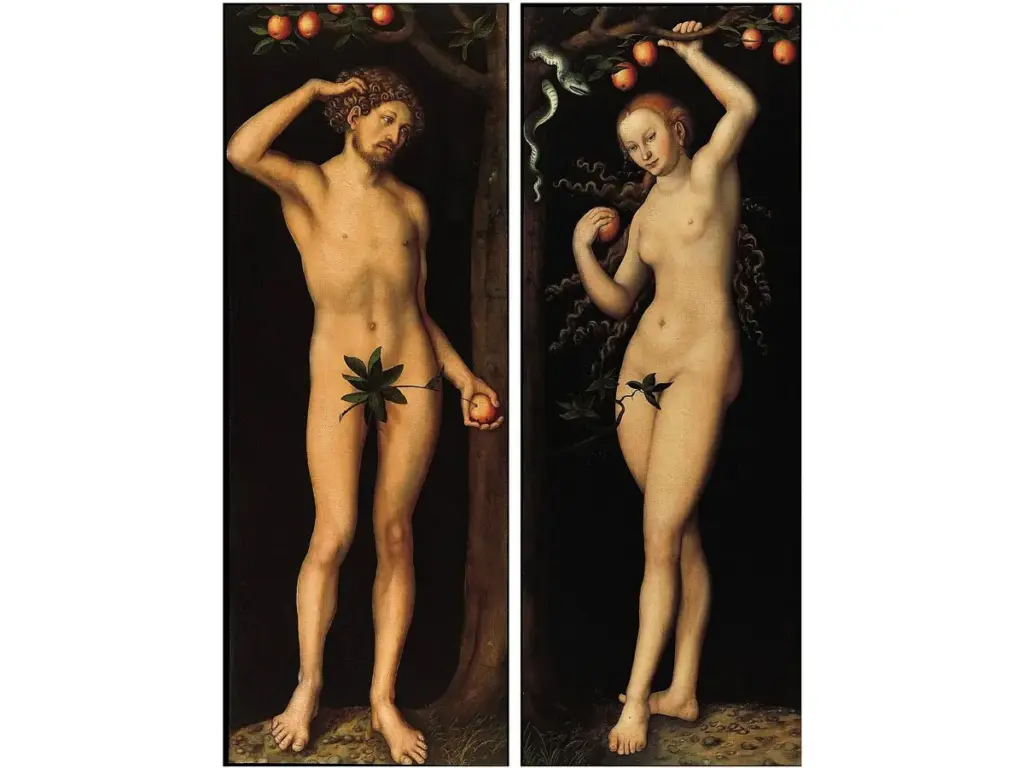
The Norton Simon Museum in Pasadena, California, has intensified its legal defense, officially countersuing the Jewish Federation Los Angeles on Wednesday. This latest legal maneuvering follows a suit filed by the Jewish Federation claiming rightful ownership of a prized Nazi-looted Lucas Cranach the Elder diptych, Adam and Eve, which was crafted around 1530 and currently resides within the museum’s esteemed permanent collection.
According to reports from the Courthouse News Service, the Norton Simon Museum is aggressively arguing that a previous federal lawsuit adjudicated entirely in its favor should legally override the Jewish Federation’s renewed attempt to assert ownership. The claimant’s recent action relies heavily on a relatively new California law designed to allow residents and heirs to revisit previously unsuccessful legal attempts aimed at recuperating art looted by the Nazi regime.
However, the museum’s newly filed complaint firmly pushes back against this legislative avenue, stating that "the finality of the prior von Saher judgment is beyond dispute… this court found on the merits that the museum was the sole owner of the Cranachs." The ongoing dispute highlights the deeply complex intersection of state legislation, federal court precedents, and the agonizingly slow, often contentious process of provenance research and restitution involving cultural property displaced during World War II.
Facing Up: The Metropolitan Museum of Art Announces Major 2027 Commissions
Looking ahead to its future programming, the Metropolitan Museum of Art has officially selected acclaimed artist Danh Vo for its prestigious 2027 Genesis Façade Commission, as reported by ArtAsiaPacific. This forthcoming presentation will mark the fourth iteration installed on the museum’s iconic Fifth Avenue Beaux-Arts facade, a prominent architectural canvas that bridges New York City’s bustling streetscape with the institution’s grand neoclassical interior.
For the commission, the Vietnamese-born conceptual artist plans to exhibit four striking sculptures designed to engage directly with the museum’s public-facing architecture. Explaining the conceptual weight of the project, Vo noted in a statement, "A facade is the place where the museum meets the street, and it is also an expression of its values over time."
Alongside Vo’s selection, the museum announced that Norwegian Congolese artist Sandra Mujinga has been chosen to create a major, site-specific installation for the Met’s soaring 2027 Great Hall Commission. Together, these appointments underscore the museum’s ongoing commitment to presenting ambitious, contemporary interventions by leading international artists within its historic spaces.
The Digest
Beyond the headlines, significant developments are unfolding across the global arts infrastructure, touching upon institutional resilience, historical memory, and the international trade of antiquities and masterpieces.
In Yogyakarta, Indonesia, the Biennale Jogja Foundation has made the difficult announcement that it is permanently closing its operations after 16 years of overseeing the prominent Biennale Jogja. The foundation attributed its closure to an oppressive "political regime" operating amid "chaotic economic and political policies, increasing censorship, and violence against activists and protesters," signaling a deeply troubling climate for independent cultural institutions and free expression in the region.
Meanwhile, in the United States, plans are officially underway to return a restored 1914 Confederate memorial to Arlington National Cemetery. The controversial monument, which was removed three years ago, features a complex and contested sculptural program that includes the historical figure of a Black woman holding the child of a white officer, alongside a depiction of an enslaved person following their owner to war. The prospective re-installation continues to provoke nationwide debate regarding historical commemoration and the evolving interpretation of Civil War memory on federal grounds.
In South America, the long-awaited opening of the Centre Pompidou Paraná in southern Brazil has faced yet another delay. Amid a shifting local political landscape, the ambitious cultural project is now projected to open its doors to the public in 2029, extending a timeline that has already seen multiple administrative hurdles.
On the restitution front, Australia has officially returned a rare, 14,000-year-old carved stone slab to Jordan. Discovered in Wadi Al Hammah, the ancient artifact had been housed in the National Gallery of Australia since 1985 before being repatriated to its country of origin following cooperative provenance and heritage agreements.
In the commercial sector, the international art market is gearing up for a major high-end sale. Carmen Thyssen-Bornemisza, the Spanish Baroness whose family’s world-renowned private collection forms the core of the Thyssen-Bornemisza Museum in Madrid, is sending a stellar 1944 painting of a sailboat at sea by Edward Hopper to the auction block. The work is scheduled to be offered on November 18 at Sotheby’s in New York, carrying an ambitious high estimate of $30 million.
Further expanding the global exhibition calendar, Rubaiya Qatar—a major new quadrennial slated to run from November 21 to April 30 in Doha—has revealed its complete roster of participating artists. The sprawling contemporary art event will feature work by more than 120 international creators, positioning Doha as an increasingly vital hub for contemporary dialogue in the Middle East.
The Kicker: Dealing with Disaster
As acclaimed South African artist William Kentridge sees his latest film premiere at London’s Goodman Gallery, he has opened up about the heavy thematic undercurrents of his work in a revealing interview with Ocula. Titled A Nicely Built City (Never Resists Destruction), the new stop-animation film is presented alongside a comprehensive exhibition of related artworks. The project meditates on the industrial transformation of Johannesburg, exploring the haunting phenomenon of how wilderness inevitably reclaims urban spaces as their industrial centers collapse.
Asked by the publication about his distinct use of humor to balance the heavy political and historical weight of his subjects, Kentridge offered a profound reflection on artistic philosophy. "I don’t think there’s a contradiction between the serious and the light, and how the one illuminates the other," Kentridge responded. "I think the category of the absurd is also important. Tragedy isn’t a good way of dealing with social disaster. Comedy may be closer, but the category of the absurd, which can move between the two, is central."
The conversation also touched upon Kentridge’s deep admiration for Anselm Kiefer’s "fantastic woodcuts" and the "poetic and politically powerful" practice of Alfredo Jaar, offering rare insight into the inner workings of his own rigorous studio process and the intellectual lineages that inform his enduringly influential multimedia art.