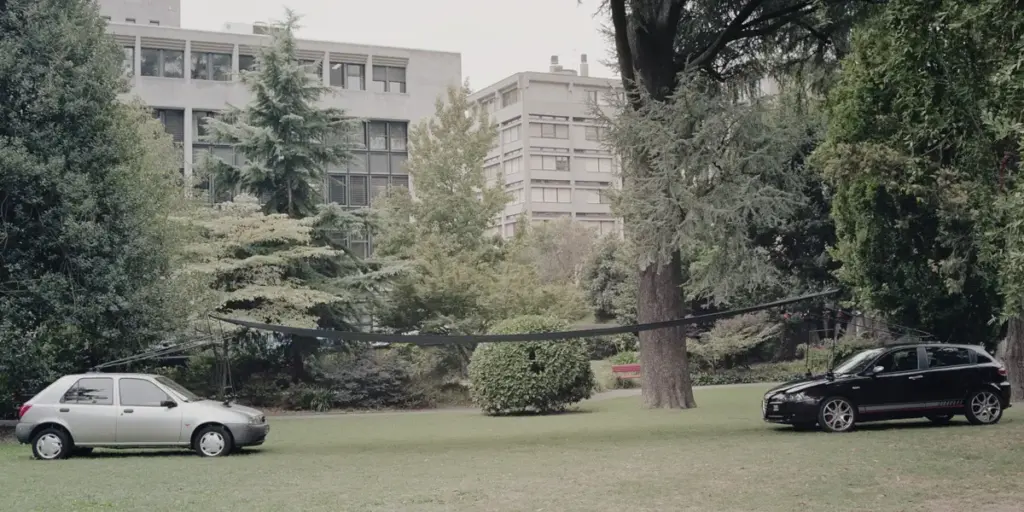
Switzerland’s complex relationship with modern mobility, environmental stewardship, and material consumption has been brought into sharp focus through a thought-provoking new art and architectural installation. Titled It All Remains, the conceptual project created by designer Giona Bierens de Haan offers a profound critique of how society handles the lifecycle of the automobile. By examining the massive volume of vehicles that circulate within the landlocked nation and charting their eventual fate, the installation forces a reckoning with an uncomfortable reality: Switzerland, despite its strict domestic environmental protections, largely outsources the heavy burden of its automotive waste management to nations with far more lenient regulatory frameworks.
The foundation of the project rests on stark, undeniable figures concerning vehicle ownership and turnover within the country. Currently, Switzerland maintains a staggering population of nearly five million registered vehicles circulating on its domestic roads and highways. This translates to an average density of approximately 0.5 cars for every single inhabitant, illustrating a heavy reliance on private automotive transport despite the presence of world-class public transit infrastructure. Every year, this massive fleet naturally cycles through obsolescence, resulting in approximately 200,000 vehicles being permanently removed from service.
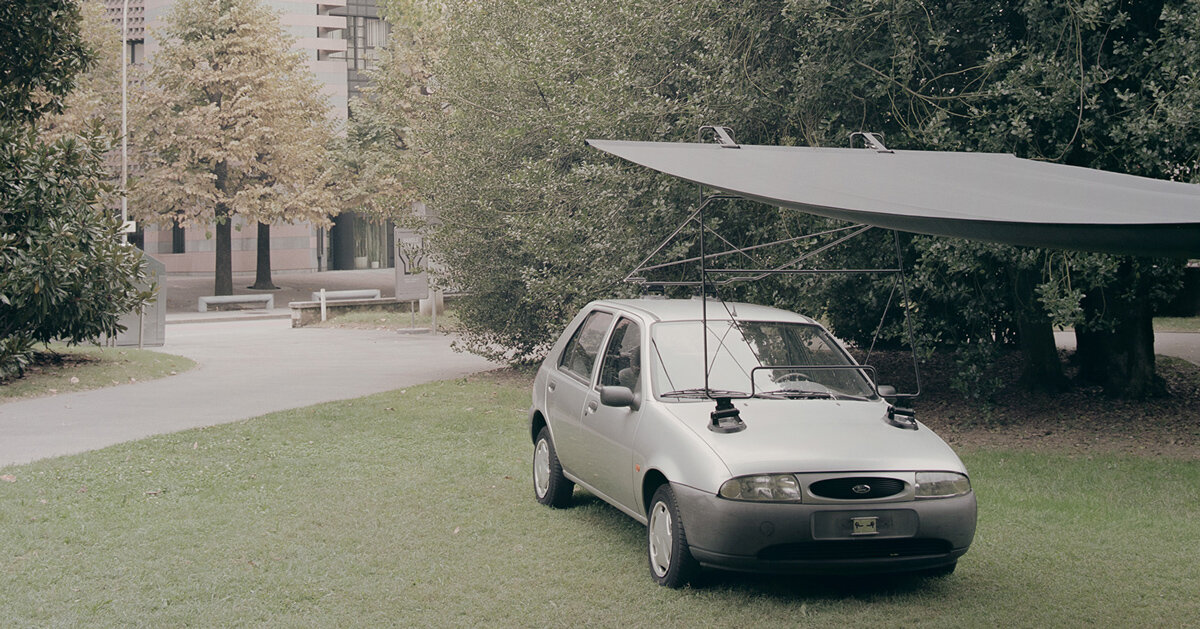
However, the destination of these decommissioned machines reveals a systemic flaw in domestic sustainability practices. Rather than being systematically dismantled, processed, and upcycled within Swiss borders under rigorous environmental oversight, roughly two-thirds of these retired automobiles are exported abroad. Shipped to countries with less stringent environmental regulations, this outward flow of automotive waste allows Switzerland to keep its domestic landscape pristine while transferring the complex ecological and industrial consequences of material disposal to foreign soil.
It All Remains serves as both an artistic statement and a rigorous architectural investigation into this hidden pipeline of automotive disposal. Captured through the lens of architectural photographer Simone Bossi, the installation visualizes an alternative future—one where the concept of waste is entirely dismantled and replaced by a circular economy of material revalorization. As the global economy slowly navigates toward a necessary post-fossil-fuel transition, the automotive industry faces an inevitable horizon of widespread obsolescence. Internal combustion engine vehicles, and eventually older models of all propulsion types, will face retirement on an unprecedented scale. Bierens de Haan’s work asks a critical question: what happens when millions of vehicles become obsolete, and how can their components be integrated into the physical fabric of our cities rather than discarded or shipped away?
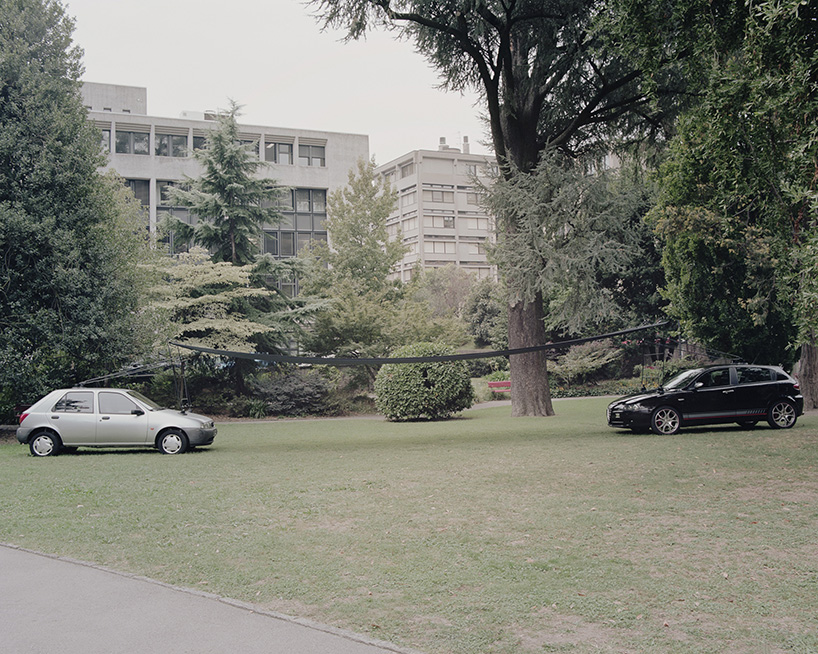
CONVERTING OBSOLETE VEHICLES INTO STRUCTURAL BUILDING BLOCKS
In response to the current paradigm of shipping domestic industrial waste across borders, Giona Bierens de Haan’s conceptual installation proposes a radical local alternative. The project shifts the prevailing cultural and industrial perception of car components, moving them away from the category of systemic waste and redefining them as valuable structural materials and foundational building blocks. Through the medium of spatial design and sculpture, It All Remains demonstrates how the heavy metals, chassis elements, glass, and durable polymers that make up modern automobiles can be reimagined as legitimate elements for future architectural construction.
The installation acts as a direct challenge to the modern reliance on linear supply chains and foreign waste disposal markets. By physically recontextualizing automotive parts within an architectural setting, the project bridges the often-disconnected worlds of car design and building construction. It highlights the vast, underutilized material resources currently locked inside decommissioned vehicles sitting in salvage yards or slated for export. Instead of viewing these cars as the end of a product lifecycle, the installation treats them as raw material mines located right on our doorsteps, waiting to be harvested and repurposed.
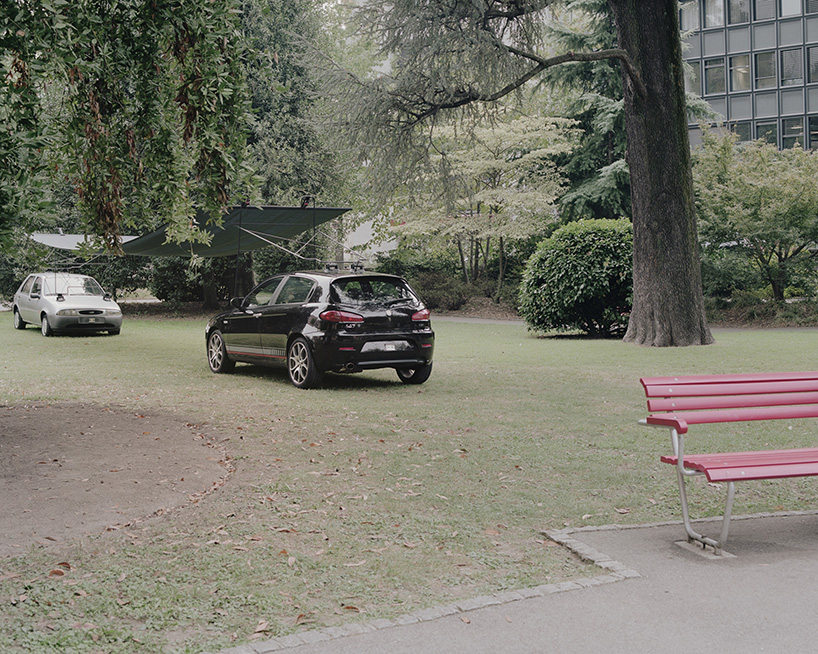
This material revalorization carries profound implications for the future of architecture and urban planning in Switzerland and beyond. As the pressures of climate change mount and the availability of virgin building materials declines, the construction industry is forced to look for alternative sources of structural integrity. Automobiles are engineered to withstand extreme forces, weather conditions, and structural impacts, meaning their components possess exceptional durability, strength, and resilience. By treating these engineered metals and frames as structural components for buildings, designers can tap into an abundant, localized resource stream that is currently being squandered.
Through its striking visual composition and sharp conceptual framework, It All Remains captures the urgent need for a cultural and industrial shift. It exposes the hidden geographic displacement of waste inherent in modern consumer societies and offers a tangible vision of resource sovereignty. By turning the lens toward Switzerland’s 200,000 annual vehicle retirements, Giona Bierens de Haan successfully reinterprets the automobile not as a dying relic of the fossil-fuel era, but as the literal bedrock for the sustainable architecture of tomorrow.