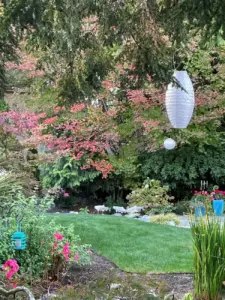
As the growing season draws to a close, garden enthusiasts across the country are finding creative ways to capture the last remaining bursts of color before winter takes hold. Today marks the concluding chapter of our extended visit with New Jersey-based garden designer Ellen Goldfarb, who has spent the week sharing her expert insights into autumn horticulture. While previous segments focused heavily on her inventive fall container designs, this final installment shifts the spotlight away from decorative pots and steps directly into the heart of her productive cutting garden.
Goldfarb’s cutting garden is a masterclass in maximizing limited space through thoughtful planning and opportunistic layout choices. Situated across two sturdy raised beds constructed from reclaimed railroad ties, the garden measures approximately 17 inches in height and 4 feet in width, with lengths stretching to 8 and 10 feet. Positioned with a favorable southern exposure, the plot receives ample sunlight, though this was not always the case.
According to Goldfarb, the thriving cutting space has only been in operation for three seasons. For years, the area remained trapped in full shade until a neighbor made the difficult decision to remove a massive tree located to the east of Goldfarb’s property. While the loss of a mature tree is always a bittersweet moment for nature lovers, the removal instantly unlocked a valuable microclimate for sunlight-loving annuals and perennials.
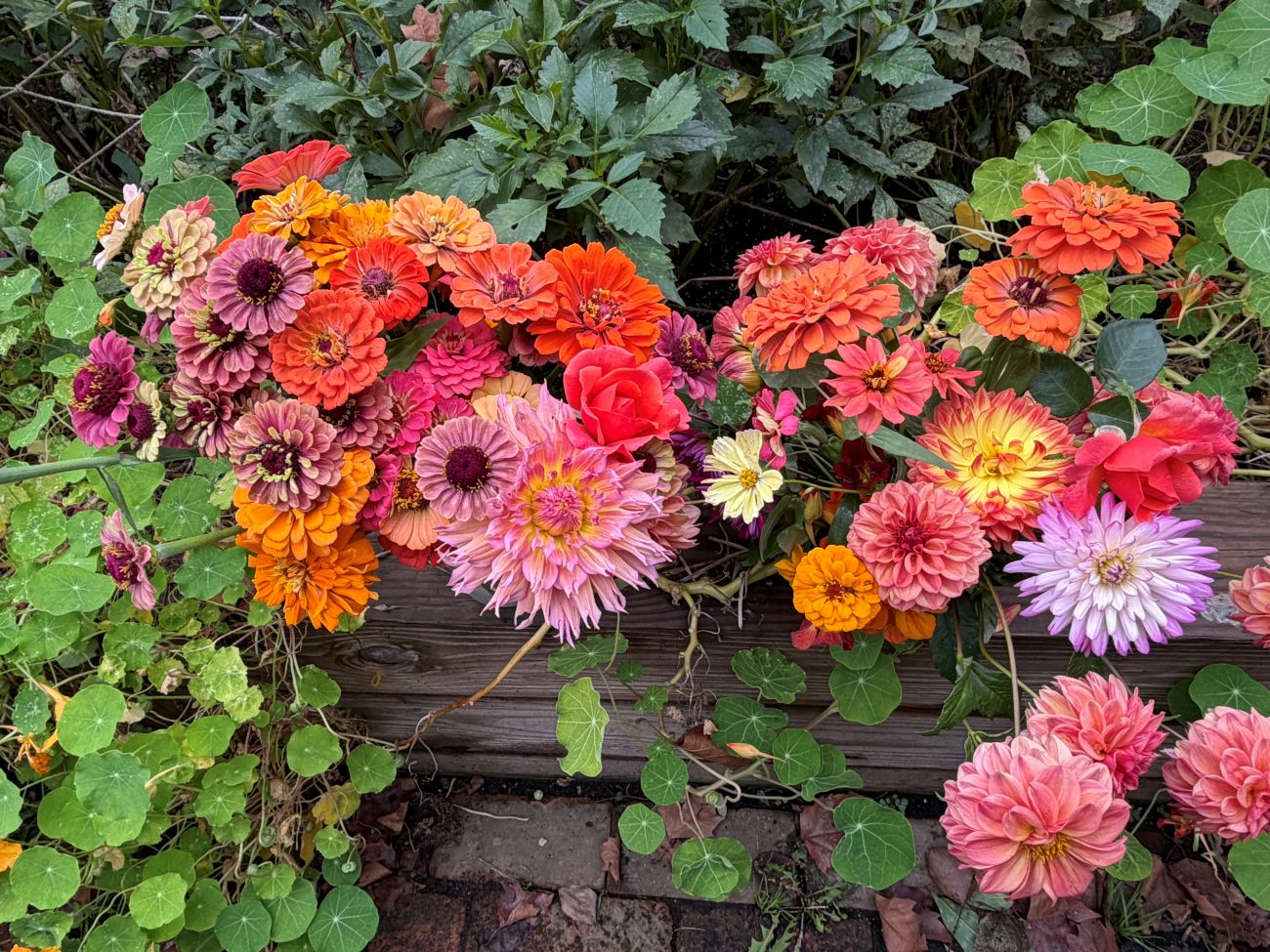
Beyond her primary cutting beds, Goldfarb’s suburban homestead is an impressively productive ecosystem. Her layout features a functional bean tunnel growing annual common beans (Phaseolus vulgaris), an ambitious crop of 21 tomato plants (Solanum lycopersicum), and a thriving fig tree (Ficus carica) well-suited for USDA Hardiness Zones 7 through 10.
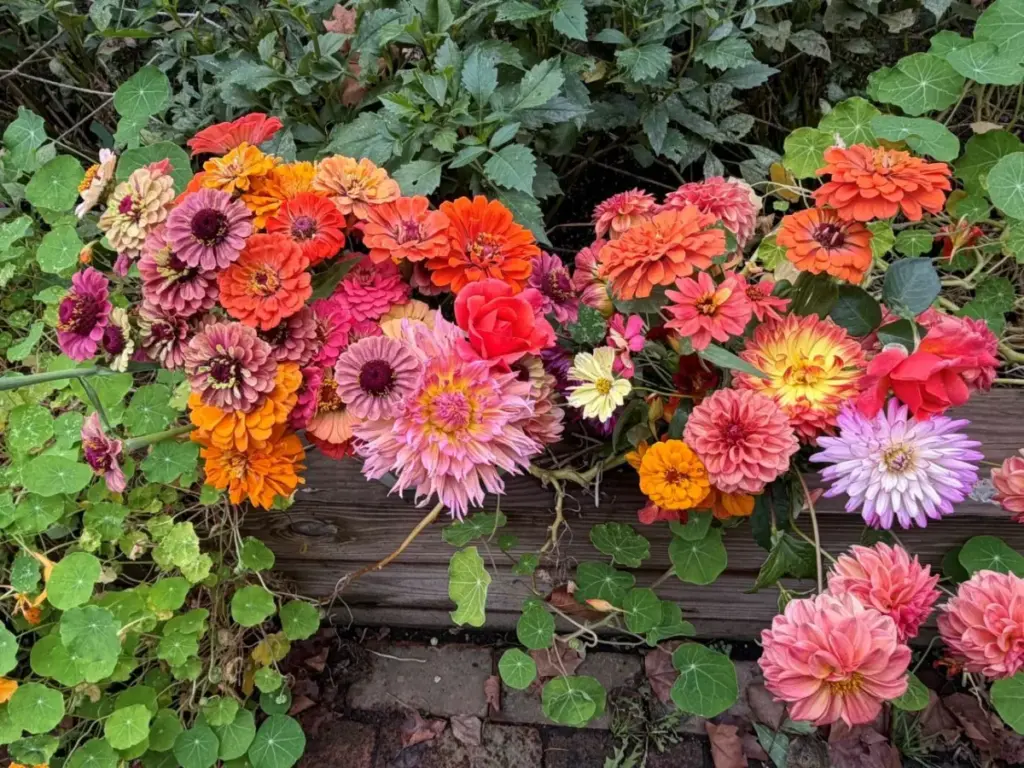
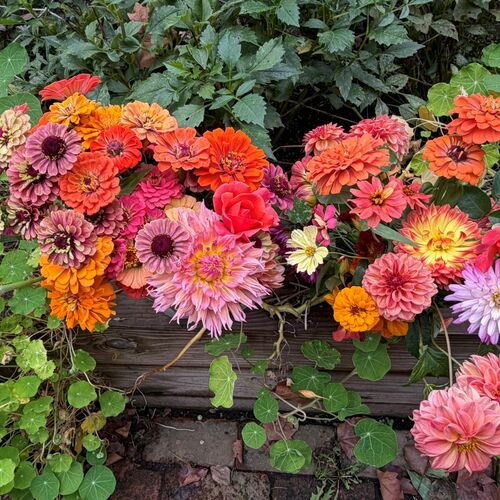
The primary focus of today’s visit, however, centers on the dramatic final harvest brought on by an impending weather shift. Facing the threat of an overnight frost, Goldfarb took swift action in the garden, harvesting every remaining bloom from her prized collection of dahlias (Dahlia cvs., Zones 8–11), colorful zinnias (Zinnia elegans), and classic garden roses (Rosa cvs., Zones 4–9).
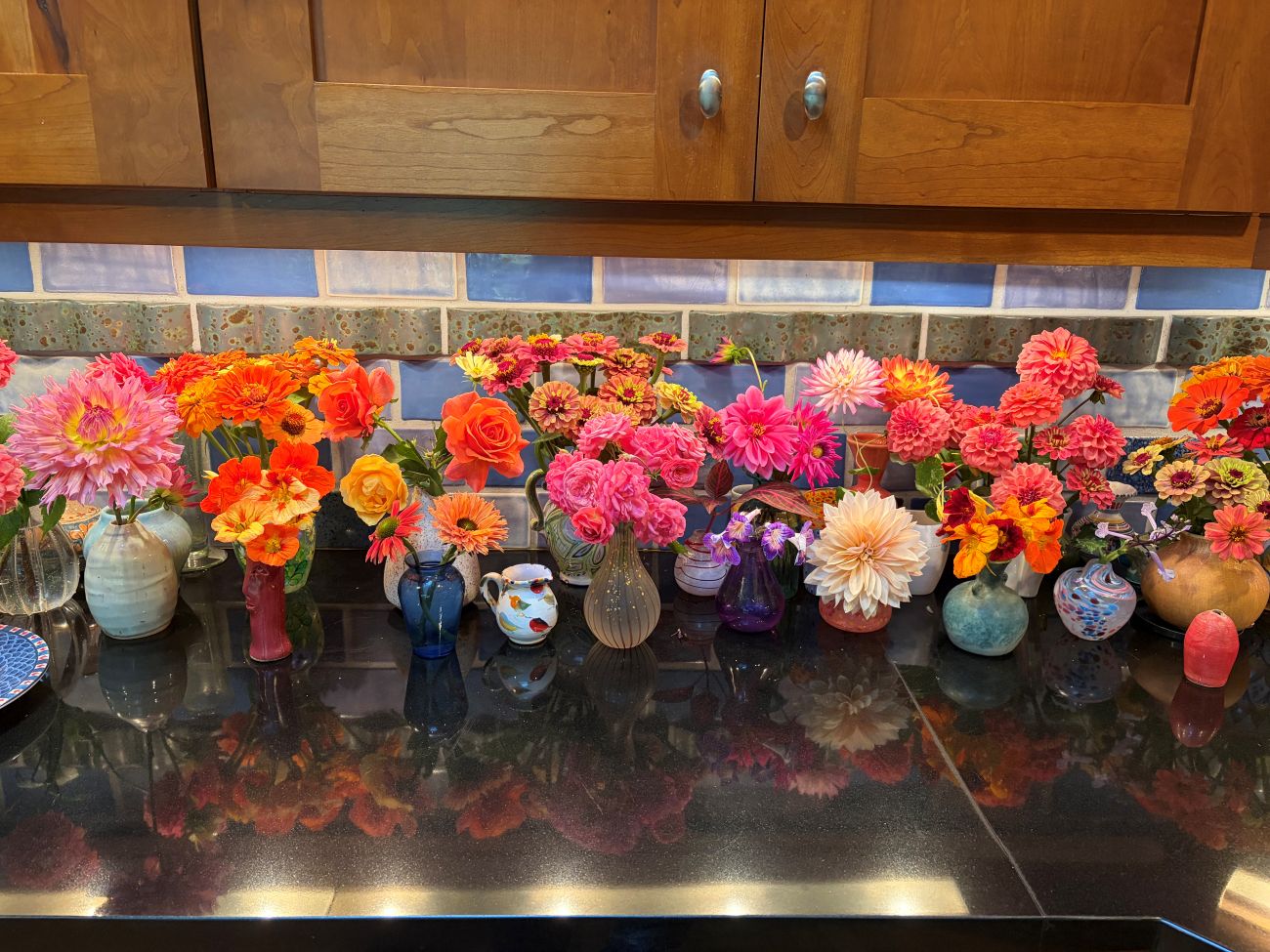
While losing the peak of autumn flowering to a hard frost is always a melancholy moment for any dedicated gardener, the forced harvest yielded a stunning bounty. Goldfarb quickly translated her garden surplus into a series of striking indoor arrangements, displaying the vibrant mix of pink and peach dahlias, brilliant zinnias, and delicate roses across individual vases.
The resulting floral display captures the fiery essence of autumn, blending rich textures and warm color palettes. Alongside the main harvest from the raised beds, Goldfarb incorporated a small purple-flowering stem of cape primrose (Streptocarpus cvs., Zones 10–11) positioned near the front center of the display. Unlike the outdoor annuals and perennials, this tender specimen was not harvested from the cutting garden; rather, it had just been brought indoors from the patio to safely weather the upcoming winter months in a protected environment.

Reflecting on the harvest, gardening experts note that evaluating which plant varieties performed exceptionally well and which fell short is an essential part of the seasonal cycle. Tracking these successes and learning from failures helps cultivators refine their seed and bulb orders for the following year, ensuring an even more resilient and visually rewarding landscape when spring finally returns.
This feature also marks the conclusion of a broader collaborative showcase featuring Ellen Goldfarb and fellow designer Tracy, who together provided readers with an inside look at seasonal container designs and nature-inspired autumn arrangements. Throughout the week, their collective work demonstrated how professional design principles can be adapted for residential spaces, offering inspiration for gardeners looking to maintain visual interest well into the cooler months.