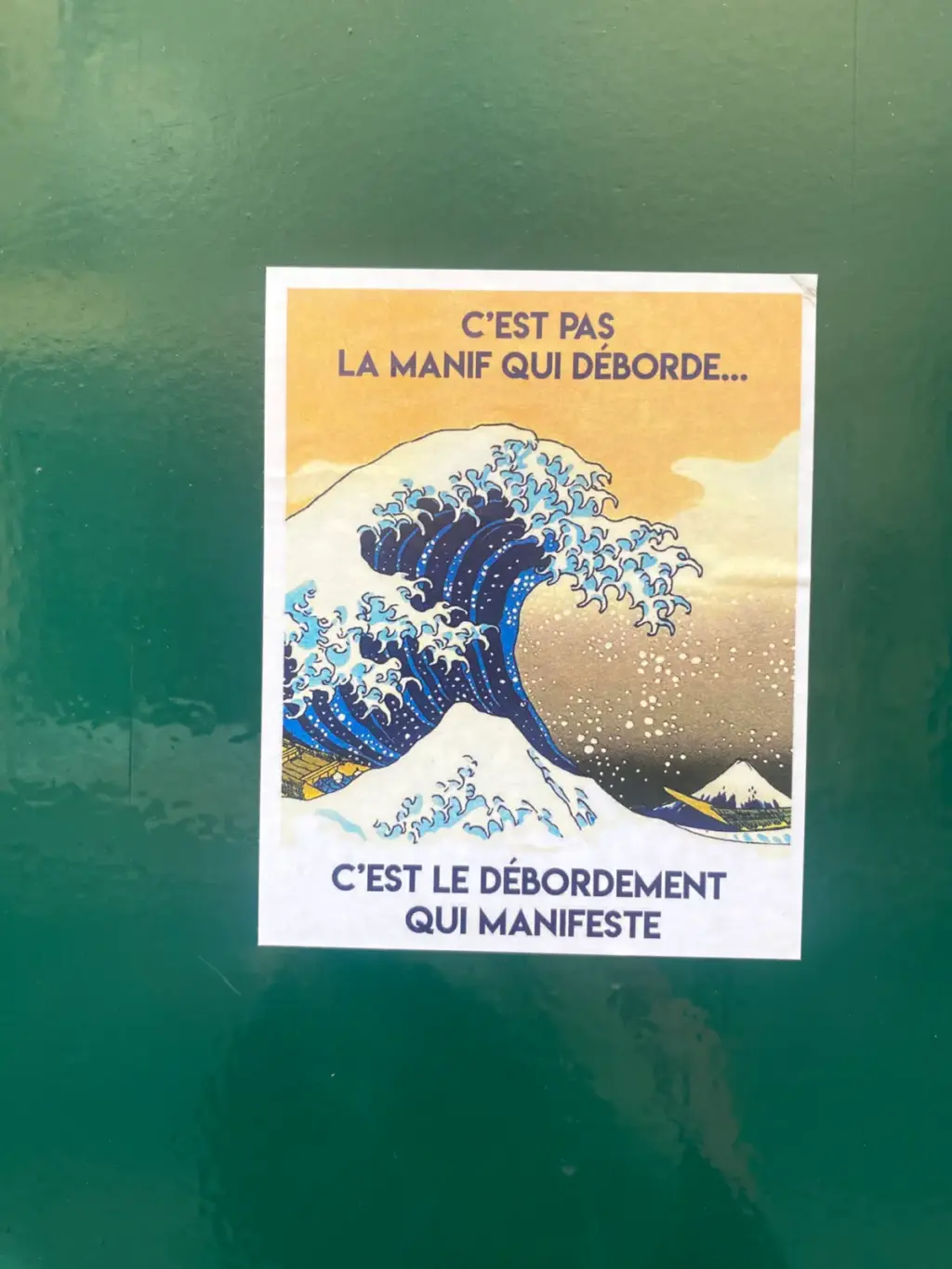
PARIS — "The people in the art world are courageous," a collector remarked at Asia Now, the first of the major Paris art fairs to open its doors on a Monday in October, amid a tumultuous backdrop of widespread social protests. "But I would still like to be back at my hotel before 7 pm, you know, just in case."
For art world regulars, navigating Paris Art Week has increasingly become an exercise in crisis management. In 2022, the event was disrupted by widespread transit strikes and cost-of-living marches. In October 2023, France operated under a high terror alert, with bomb threats temporarily emptying major airports and forcing incoming flights to land in rural fields.
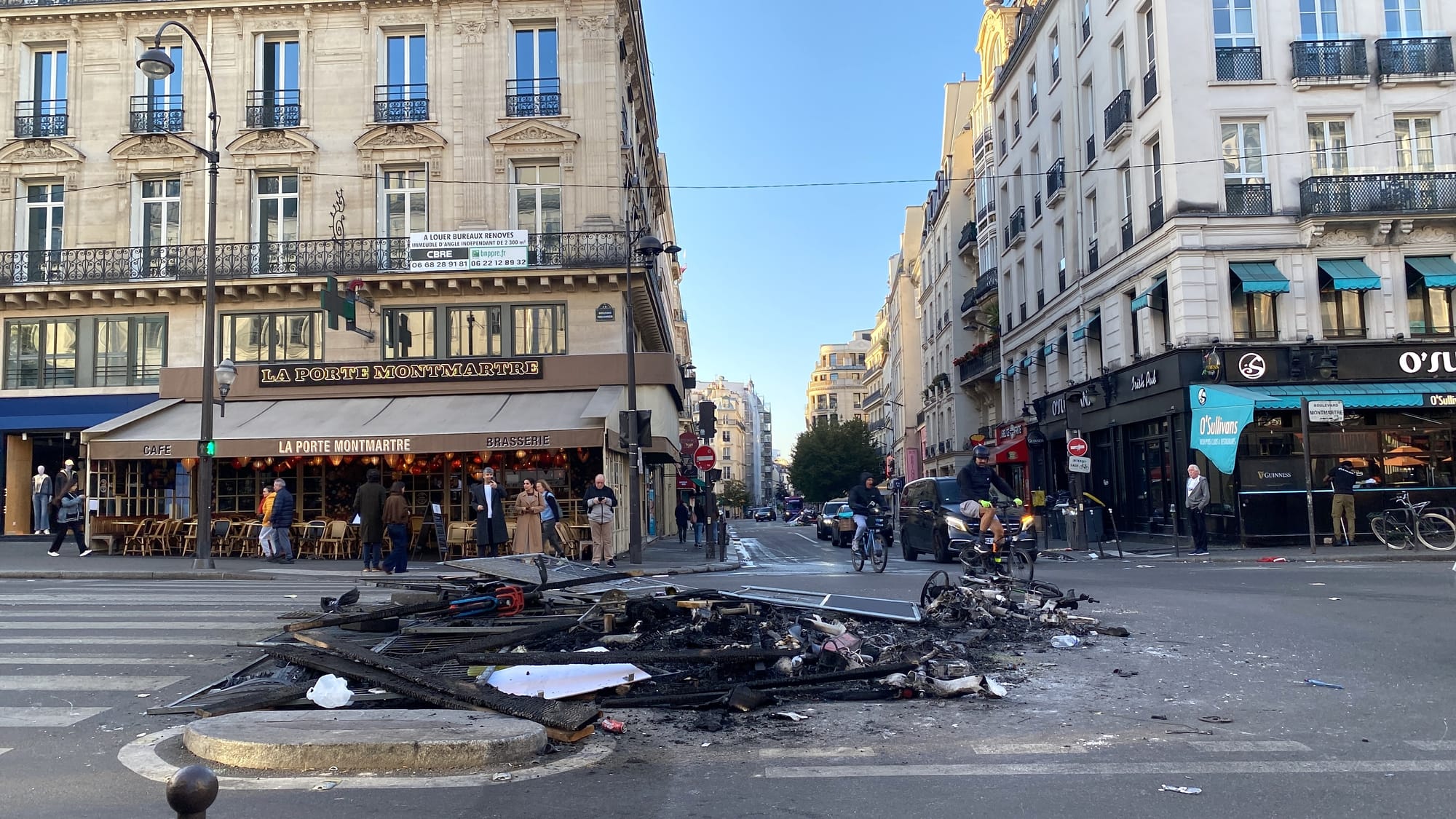
This year, the convergence of high-stakes contemporary art commerce and intense street-level civil unrest reached a surreal crescendo. Arriving at the Gare du Nord station late on Saturday, October 17, visitors were immediately greeted by the acrid scent of burning plastic, the sight of black-clad protesters scattering from tactical police squads, and firefighters working quickly to extinguish localized street fires.
The disruption hit everyday visitors and residents instantly. One local art enthusiast, who had planned an aesthetic weekend of gallery viewings and fair visits with her visiting family—complete with carefully curated outfits—found her neighborhood blocked off near the Boulevard de Sébastopol. Instead of museum exhibits, she and her family encountered a tense game of cat-and-mouse between law enforcement and demonstrators.
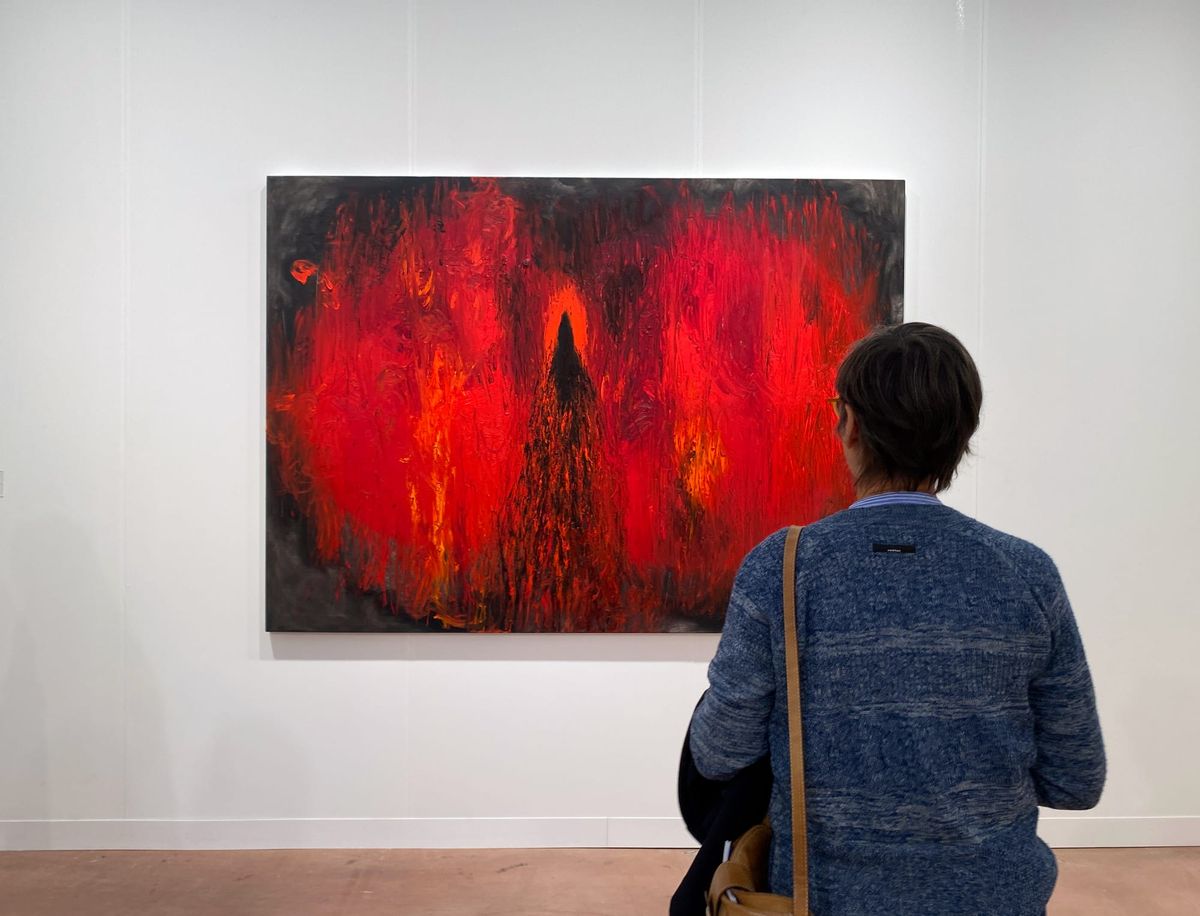
"We had to run!" she recalled. "When the police start hitting, they hit indiscriminately." After hours of navigating the chaos, she and her family finally reached their home around 11 pm, locking the door behind them as the city echoed with sirens.
The Eve of Destruction
"I think the art fairs, in this context, are rather grotesque," said French-Moroccan artist El Mehdi Largo, who opted out of the week’s events entirely. "Then again, art fairs are pretty grotesque in any context."
Seated at a café on rue Poissonnière, with a view of shattered glass and scorched bicycles resembling the melted surfaces of Alberto Burri’s Combustioni wood-burnings, Largo reflected on the disconnect between high-end cultural commerce and deep-seated socioeconomic grievances. While acknowledging that art has historically relied on wealthy bourgeois patronage since the Renaissance, he argued that today’s elite art economy often functions primarily as a mechanism for elite capital mobility and tax strategy. "For the elites, it could be art, or it could be thoroughbred horses; it won’t make any difference," he noted.
The atmosphere across the city in the wake of Saturday’s clashes was a potent mix of excitement, bewilderment, and anticipation of change. Locals and visitors alike documented the street damage on their phones, discussing the unrest at every turn. While small independent businesses were occasionally caught in the crossfire, the vast majority of targeted windows belonged to symbols of corporate and state power: Carrefour supermarkets, major commercial banks, real estate agencies, luxury boutiques, and government buildings.
The protests also drew varied reactions from international residents. A Lebanese art professional who relocated to Paris to escape the bombing in Beirut, and whose university-aged daughter joined the student marches, expressed shock at the severity of the domestic unrest. Noting that even amid severe economic deprivation in Lebanon, communities maintained strict property boundaries due to cultural dignity, she observed, "Here, people are really, really angry."
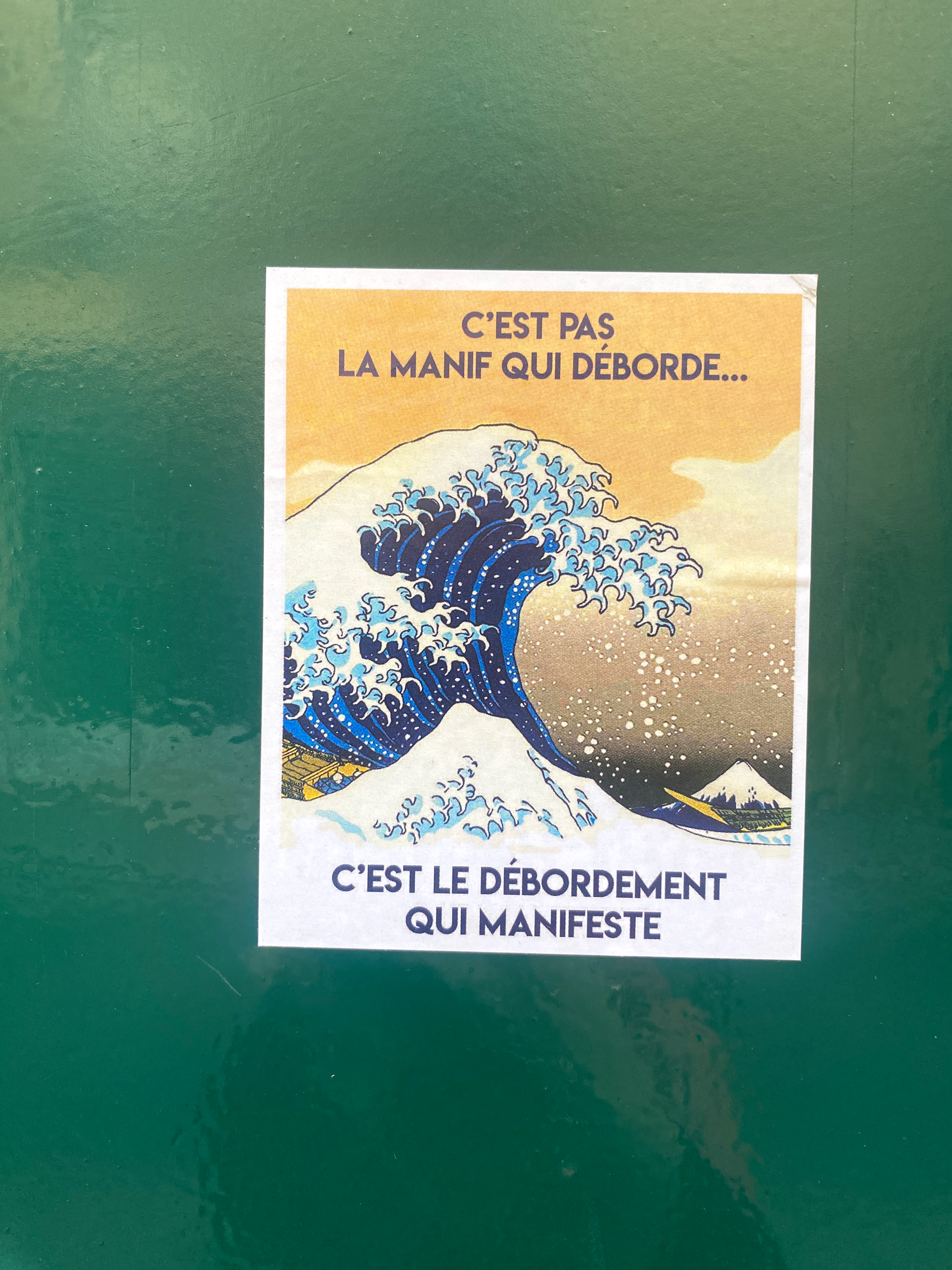
The decentralized nature of the demonstrations manifested in contrasting ways across the urban landscape. While some participants focused on mutual aid, distributing food and basic supplies to the homeless, others engaged in aggressive property destruction. This spectrum was visually reflected in the city’s graffiti and impromptu street art. On a corner near bird-control spikes, a handwritten cardboard sign quoted French philosopher Simone Weil: "Il est donné à très peu d’esprits de découvrir que les choses et les êtres existent" ("Very few minds discover that things and beings exist"). Just blocks away, more direct sentiments, such as "Nique la police" ("Fuck the police"), adorned building facades.
An Italian curator spent that same Saturday securing her gallery space in the Marais ahead of a Sunday opening. Pulling down the iron shutters while crowds banged on doors, tear gas drifted inside, and sounds of running feet and shouting filled the air. Her French partner attempted to reassure her, telling her, "Nothing to worry about, chérie, protests are always like this here!"
Back to Business
Across the city, cultural institutions faced immediate disruptions. On Saturday afternoon, as galleries installed exhibitions for Art Basel Paris, the police prefecture ordered an emergency lockdown of the Grand Palais, temporarily trapping workers and installers inside before reopening the venue the following day.
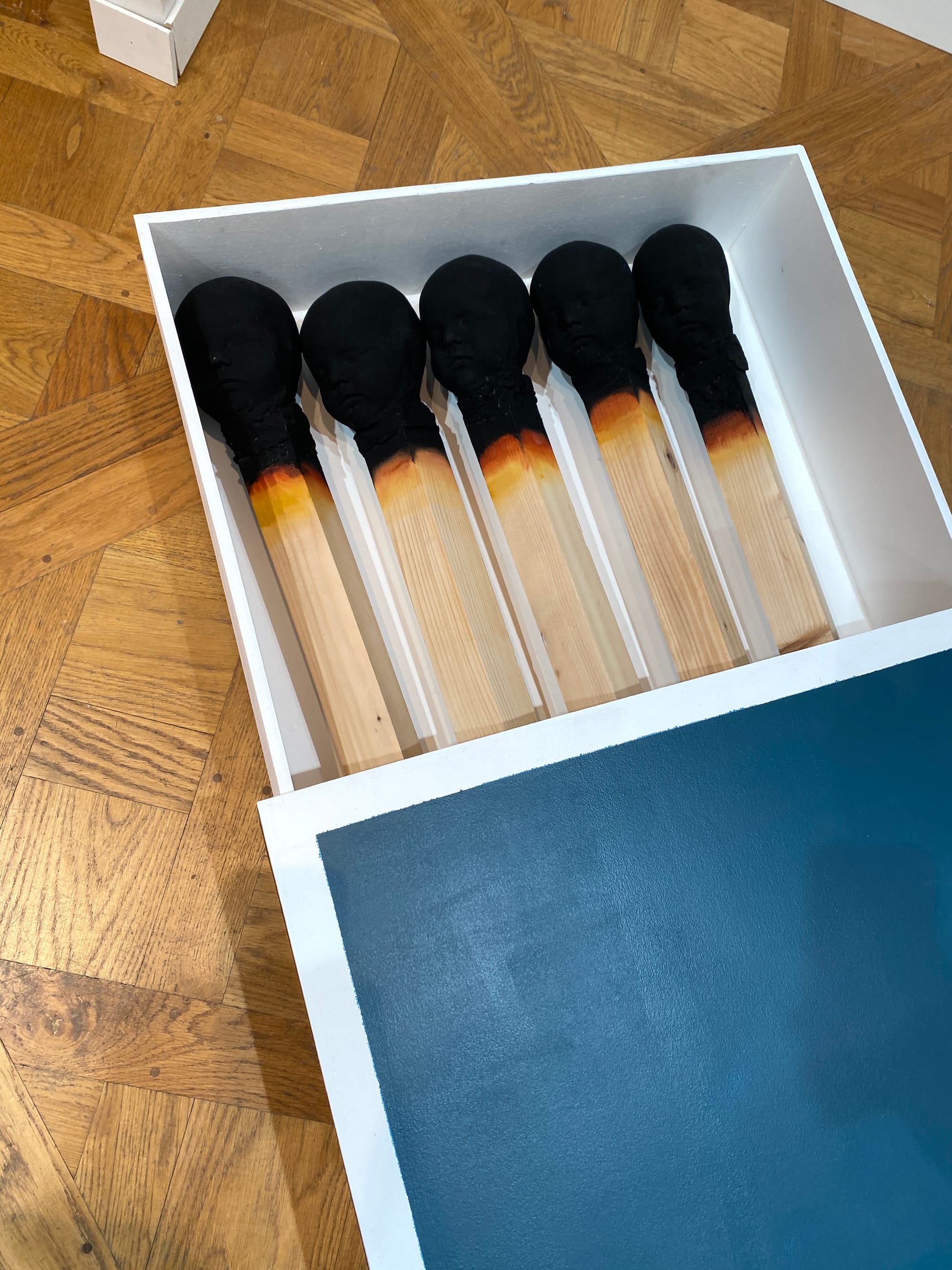
The wider cultural calendar quickly unspooled. On October 15, the French Foreign Ministry postponed a design exhibition by Thierry Lemaire and Harry Nuriev at the Quai d’Orsay, deeming it inappropriate for the social climate. The exhibition was titled PASSAGES. Pas sages, a linguistic play on the French word for "disobedient."
By Sunday, the Jeu de Paume canceled the VIP opening of its Stan Douglas exhibition. On Monday, students from the École du Louvre blocked the entrance to the museum, forcing a closure, while evening demonstrations prompted the École des Beaux-Arts to scrap its Gina Pane opening.
With the interior minister publicly acknowledging that law enforcement had temporarily lost control over the weekend, foreign embassies—including those of China, Germany, and the United States—advised their citizens to avoid protest zones. Authorities implemented an overnight curfew between 11 pm and 6 am spanning the Place de la République and parts of Les Halles, flanking the Marais district.
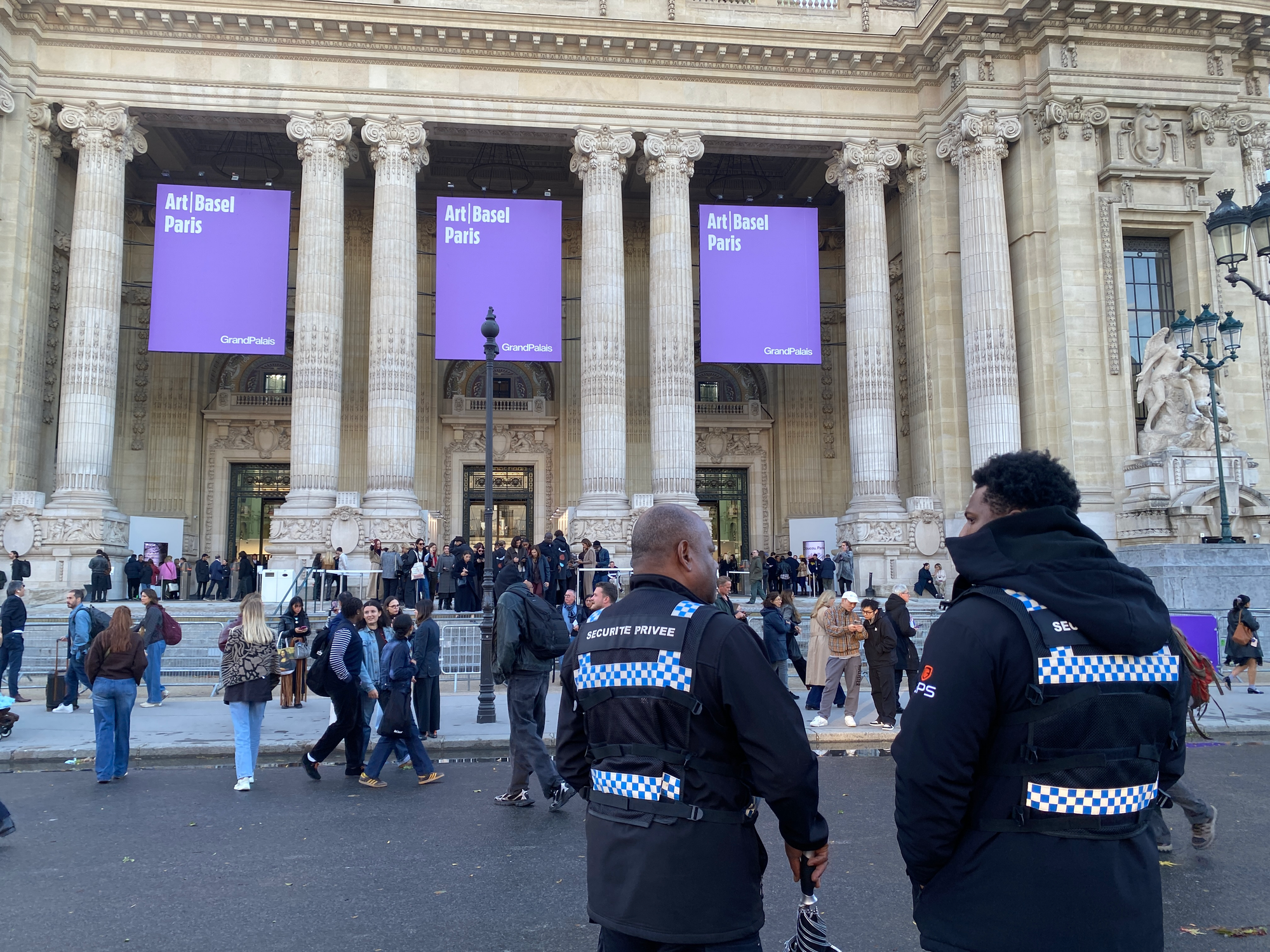
By Tuesday afternoon, however, the ultra-VIP "Avant-Première" preview of Art Basel Paris commenced inside the Grand Palais. The venue was ringed with concrete anti-ram barriers, backed by round-the-clock private security and police patrols. Inside, the market operated with a sense of normalcy, with few attendees discussing the ongoing unrest outside.
"I bet no one is talking about them!" an editor observed while typing on a laptop in a Grand Palais corridor. "They’re too busy selling works for millions of dollars!"
By Wednesday, municipal cleaning crews had cleared away much of the debris near the Grand Palais, painting over graffiti and replacing shattered glass, though heavier structural damage remained visible further east around Bastille and République.
Collector Selim Bouafsoun, visiting from Tunisia to attend the preview, expressed little concern over the climate. Having acquired several pieces, he noted that inside the venue, the environment felt safe and conducive to business. "I come from Tunisia," he said. "We do not get scared by manifestations. Manifestations are a right, and we respect their rights."
Outside on Avenue Winston Churchill, public art installations were directly impacted. Alicja Kwade’s L’élévation des Mondes (2026)—a 14-foot stack of stone spheres intended to evoke the Tower of Babel and the fragility of universal systems—was dismantled on Friday, several days ahead of schedule, as part of a preemptive measure to remove outdoor sculptures before the weekend protests. On Instagram, Kwade wrote, "Protest is good, but why everything has to be smashed and destroyed is beyond… It certainly doesn’t help the cause."
An Incredible Happening
By Thursday afternoon, during a visit to the Offscreen art fair hosted at the Chapelle Saint-Louis de la Salpêtrière, an email notification from Art Basel confirmed that the flagship fair would close its doors two days early, on Friday at 7 pm, to prioritize visitor safety ahead of anticipated weekend demonstrations.
"In any case, the sales have already been made, so the business is done," noted Marina Vinogradova, director of NIKA Project Space in Dubai, which represents Iraqi-Finnish artist Adel Abidin.
Sitting on a bench outside the historic chapel—once an asylum for the mentally ill—conversations about contemporary painting were frequently interrupted by the overhead roar of police helicopters and wailing sirens, accompanied by a long convoy of tactical police vans taking up positions outside.
Reflecting on the juxtaposition of exhibiting at an art fair during civil unrest, Abidin expressed a complex view. "While I condemn the vandalism and the violence, I think it’s inspiring to see that people can protest and have a voice," he said. "I wish I’d had that when I was living in Baghdad." He added that he does not view art as inherently disconnected from social reality. "Art, like every other gesture, is part of something bigger. Making art, like protesting, is a way of challenging what’s happening. They’re not really opposites."
Not everyone in the local creative community shared that idealistic perspective. El Mehdi Largo offered a more cynical assessment of how institutional art absorbs political resistance.
"They instrumentalize our suffering," Largo said. "I’m sure at the fairs you have seen plenty of works dealing with social issues. In the end, they’re only there to decorate. To decorate the conversations of the people who can afford them: ‘Look what I found, look at my sensibility.’"
He paused briefly before offering a final, paradoxical thought. "Honestly, I’m still hopeful there’ll be some smashing. For me, it would be the ultimate art form, an incredible happening: les casseurs walking into the Grand Palais, or in any of these art temples."
Then, catching himself, he added, "But then, of course, this will become the aesthetic of smashing. Damn. There is no way out, is there?"






