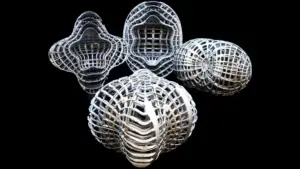
These intricate patterns are known to physicists as pair density waves, or PDWs. First theorized by researchers approximately two decades ago, PDWs have previously been observed alongside conventional superconductivity in a handful of other metallic systems. However, this newly published research, featured in the Proceedings of the National Academy of Sciences, pushes the boundaries of condensed matter physics much further. It provides the first direct, compelling evidence that pair density waves in uranium ditelluride can persist within the material’s "ordinary" phase long after bulk superconductivity has entirely vanished.
"Pair density waves are the Cheshire Cat’s grin of superconductivity," said Eduardo Fradkin, an Illinois Grainger Engineering physics professor and a co-lead of the research project. "They are the vestige that remains once the phase itself has disappeared. In conventional superconductors, Cooper pairs form when the full phase transition occurs, but, in this system, their observation in PDWs above the transition point shows that they are formed beforehand in a different state."
The discovery was made possible by combining state-of-the-art material synthesis with advanced measurement tools. "Thanks to new methods for growing higher-quality samples, we were able to observe spectral signatures that respond to temperature and magnetic fields exactly as pair density waves should," explained Vidya Madhavan, an Illinois Grainger Engineering physics professor and the other project co-lead. "We even showed that the modes persist above the temperature at which superconductivity disappears, a telltale theoretical prediction that has not been convincingly observed before now."
How Unconventional Superconductors Behave
Superconductivity is a remarkable quantum phenomenon that occurs when certain metals are cooled below a critical temperature, allowing them to carry electrical current with absolute zero resistance. In this highly ordered state, the material’s free electrons settle into a collective low-energy quantum state that completely eliminates electrical energy loss.
This behavior, however, creates a fundamental challenge under the laws of quantum mechanics. Electrons belong to a class of subatomic particles known as fermions. The fundamental rules of quantum physics strictly prevent identical fermions from gathering in the same quantum state. Superconductivity manages to bypass this profound restriction through a more complex, cooperative mechanism involving pairs of electrons.
In 1957, legendary Illinois physicists John Bardeen, Leon Cooper, and Robert Schrieffer formulated a comprehensive microscopic theory to explain this behavior, which became universally known as BCS theory. According to their foundational model, individual electrons first become correlated through continuous interactions with the metal’s underlying atomic lattice. Once correlated, one electron binds with another to create what is known as a Cooper pair.
Unlike individual electrons, which are stubborn fermions, Cooper pairs behave as composite bosons. This crucial distinction means that countless Cooper pairs can comfortably occupy the exact same quantum state without experiencing the fierce mutual repulsion that restricts individual fermions. Once paired, these bosons condense together into a macroscopic quantum state, giving rise to zero-resistance superconductivity.
For decades, BCS theory successfully explained virtually all known superconducting phenomena. That paradigm shifted dramatically in 1986 with the discovery of "unconventional" superconductors. These complex materials stubbornly refuse to fit the foundational assumptions of BCS theory, even though their electrons still somehow manage to form Cooper pairs and condense into superconducting states. Understanding the precise microscopic mechanisms governing unconventional superconductors remains one of the most active and intensely pursued frontiers in modern physics research.
The Mystery of Pair Density Waves
Unconventional superconductors frequently host a variety of competing or cooperating electronic phases at temperatures well below their primary superconducting critical temperatures. One prominent example is charge density waves, or CDWs, in which electrons spontaneously organize into a repeating, nonuniform spatial pattern. The resulting state features a periodic variation in electric charge, with certain microscopic regions containing a higher density of electric charge while neighboring regions contain significantly less.
In 2007, Professor Fradkin and his academic collaborators proposed the existence of an even more exotic electronic phase known as a pair density wave. While Cooper pairs are normally distributed uniformly and homogeneously throughout the bulk of a standard superconductor, the researchers hypothesized that these pairs might instead modulate themselves into repeating spatial patterns.
Their theoretical work generated a uniquely daring prediction: pair density waves could theoretically survive at temperatures above the material’s superconducting critical temperature. If true, this meant that Cooper pairs could successfully form even when a material had not yet entered, or had already exited, its primary superconducting phase.
"We were out on a limb when we first suggested it," Fradkin reflected. "It’s a very peculiar state, and, although there have been experimental hints over the years, there has been no direct confirmation of the phase’s existence."
The difficulty in confirming the phase has largely been experimental. "PDWs are tricky to analyze in real materials, because they behave like conventional superconductors in some experiments, and like CDWs in others," noted Julian May-Mann, a former Illinois Grainger Engineering graduate student who contributed significantly to the study’s theoretical analysis. "Confirming the existence of a PDW requires both high-quality experimental data as well as careful theoretical analysis."
Why Uranium Ditelluride Stands Out
Until 2019, uranium ditelluride was widely regarded by the scientific community as an ordinary, unexceptional metal. That perspective changed abruptly when researchers discovered that the material enters an unconventional superconducting phase when cooled below approximately 2 kelvins.
Subsequent investigations led physicists to suspect that uranium ditelluride might belong to a rare class of materials known as triplet-pair superconductors. Unlike the standard electron pairs described by traditional BCS theory—which possess zero net spin—triplet electron pairs maintain parallel spins and carry non-zero magnetic moments.
Historically, the only definitively confirmed example of a triplet-pair macroscopic quantum phase is superfluid helium-3. That complex system was extensively studied by the late Illinois physicist Anthony Leggett, whose pioneering work earned him a Nobel Prize.
"Triplet-pair superconductors with properties analogous to superfluid helium-3 are conjectured to exist, and there are several superconductors believed to be such instances," Fradkin noted. "I would not say that the question is completely settled, but the consensus is that uranium ditelluride is a triplet-pair superconductor."
Uranium ditelluride eventually captured the interest of Madhavan’s experimental research group. Utilizing advanced scanning tunneling microscopy, her team successfully identified charge density waves within the material. However, something about the observed waves defied conventional expectations: external magnetic fields could actively disrupt and destroy them.
"A charge density wave is just a collective electronic state that is modulated in space, so there is no reason for them to respond to magnetic fields, let alone be destroyed by them," Madhavan explained. "We took our data to Professor Fradkin and his students, and we predicted that this could happen if there is also a pair density wave in the system. There aren’t many possible explanations for something like this, and pair density waves are the best one I can think of."
Better Crystals Reveal the Hidden State
To rigorously investigate the possibility of pair density waves, Madhavan’s team first required much cleaner, higher-purity samples of uranium ditelluride. PDWs are notoriously delicate quantum states that demand highly regular, defect-free crystal lattices to properly form and stabilize.
Collaborating researchers supplied exceptionally high-quality samples produced via an innovative molten flux growth method. The experimental team then examined these pristine crystals using a specialized vector magnetic field scanning tunneling microscope. This sophisticated instrument allows scientists to observe how a material’s atomic surface responds to magnetic fields applied simultaneously from multiple, independent directions.
"We couldn’t see pair density waves in our earlier data because of material impurities that obscured our data," Madhavan said. "It would have been like trying to spot a light in a cloud of fog. But we succeeded with the better samples because of our new vector magnetic field equipment. The latter was especially important because uranium ditelluride is anisotropic, so we needed the capability to examine the crystals from many directions."
The technological edge proved decisive for the team. "A key advantage of our experiment was the newly developed vector-magnet equipment, which provides an unusually large magnetic-field range along multiple directions," said Zhen Zhu, an Illinois Grainger Engineering physics postdoctoral research associate who executed the physical experiments. "This capability is particularly well suited to uranium ditelluride, whose superconducting upper critical field is strongly anisotropic. By systematically varying both the magnitude and direction of the field, together with temperature, we could track how these modes evolved and build confidence that the behavior we observed was intrinsic."
Cooper Pairs Persist After Superconductivity Vanishes
Detailed measurements of the material’s charge density waves revealed distinct modes that shifted and responded to temperature and magnetic field strength precisely in the manner predicted for pair density waves. Crucially, magnetic effects were capable of destroying these modes, matching the theoretical predictions generated by the PDW hypothesis.
The most dramatic breakthrough occurred when the researchers raised the thermal energy of the system. Certain electronic modes continued to exist even after the material was heated past its critical temperature, causing the primary bulk superconducting phase to completely vanish.
"There are foundational principles in condensed matter physics that constrain how different phases can appear and disappear when one changes the temperature or applies a magnetic field," May-Mann observed. "Any explanation of the experimental data that only relies on a CDW is at odds with these principles. The PDW-based explanation, on the other hand, provides a satisfactory and consistent explanation."
The researchers acknowledge a notable experimental limitation: scanning tunneling microscopy imaging exclusively measures electronic phenomena occurring at a material’s exposed surface, meaning the experiment cannot directly image the interior bulk of uranium ditelluride. Nevertheless, the team is convinced that these surface findings provide an extraordinarily strong clue, pointing toward new pathways for understanding unconventional superconductivity.
"It is possible for the interior of a material to behave differently than the surface, but these experimental results still give us a very strong hint at what’s happening inside," Fradkin emphasized.
"As an experimentalist, one of the most satisfying things is when several independent measurements begin to tell the same story," Zhu concluded. "Here, the temperature and magnetic-field dependence, together with the improved sample quality, all came together to reveal a remarkably consistent picture of the pair density wave state."
Additional contributions to this research were made by Yudi Huang, Kaiming Liu, Zheyu Wu, Shanta Saha, Johnpierre Paglione, Alexander Eaton, Andrej Cabala, and Michal Vališka. Financial support for the project was provided by the U.S. Department of Energy, Office of Science, Office of Basic Energy Sciences, Materials Sciences and Engineering Division.