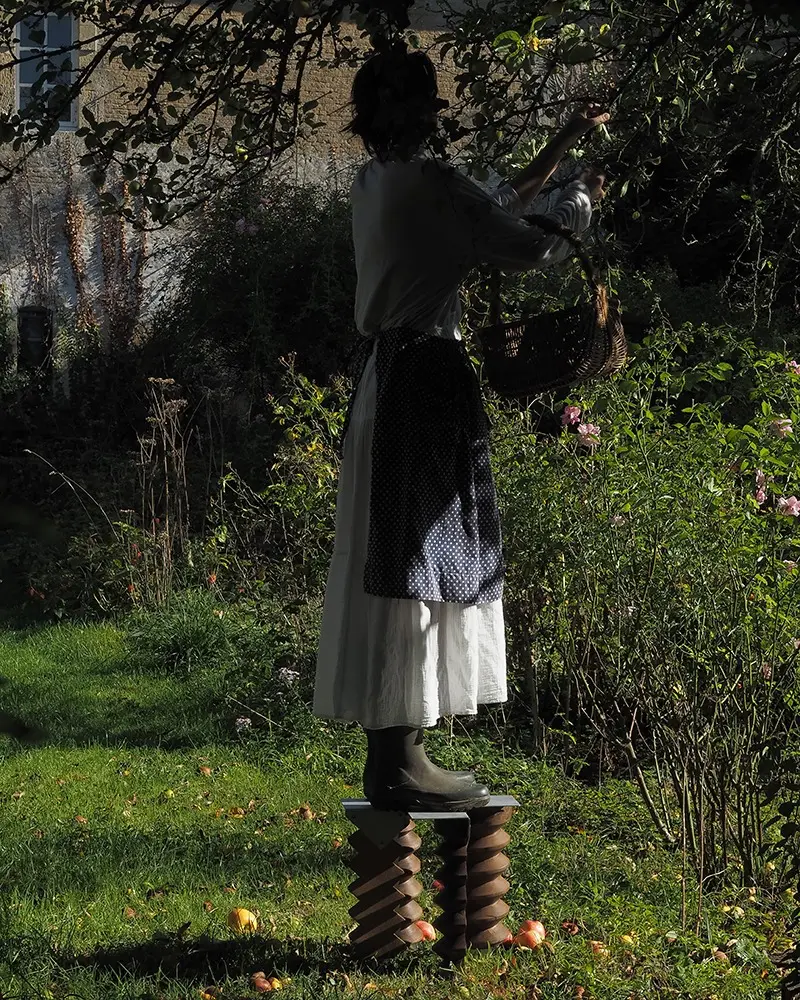
The intersection of agricultural heritage and contemporary collectible design has yielded a striking new creation. Titled LE PRESSOIR, a sculptural stool developed by Studio Jumel in collaboration with creative practitioner Ariane Ronot, breathes new life into a 1930s French cider press. Rooted deeply in the apple-growing and cider-making traditions of Normandy, the design reinterprets a utilitarian object of the past, transforming its weathered components into a sophisticated piece of modern furniture that bridges raw historical narrative with refined aluminum craftsmanship.
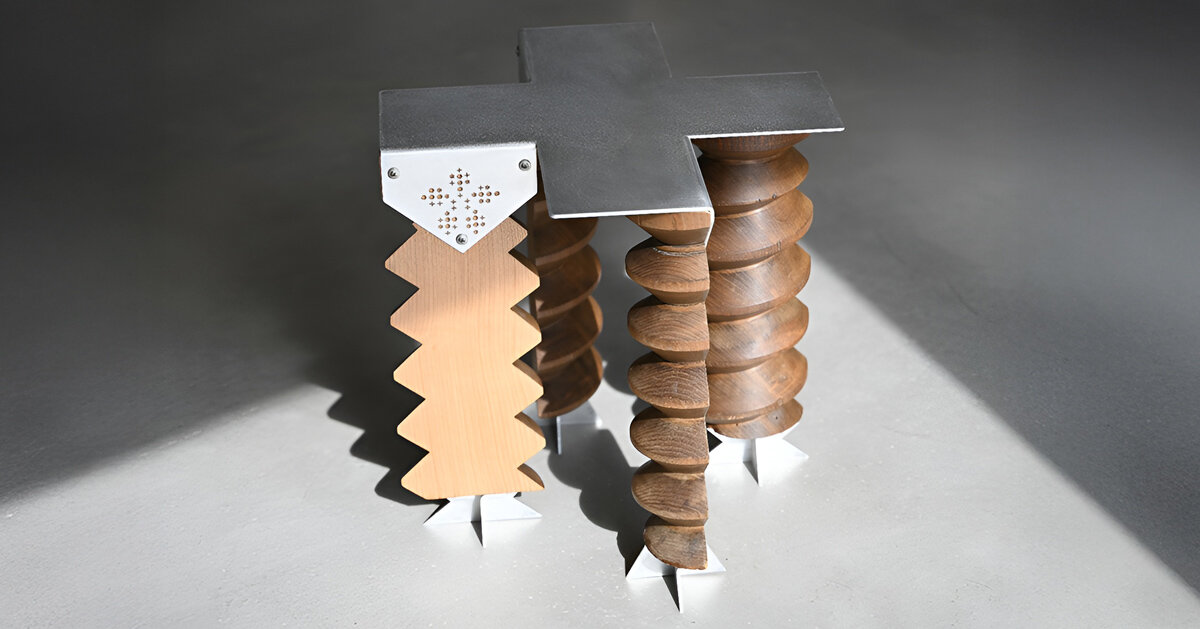
At the heart of the design is the original wooden screw mechanism of the 1930s cider press. Studio Jumel and Ariane Ronot repurpose this heavy timber element to serve as the four legs of the stool. Rather than sanitizing or smoothing over the material’s past, the designers deliberately retain the aged texture, patinas, and physical irregularities accumulated through decades of agricultural use. Every dent, groove, and weathering mark tells a story of rural labor, grounding the contemporary seating object in a tangible sense of place and history.
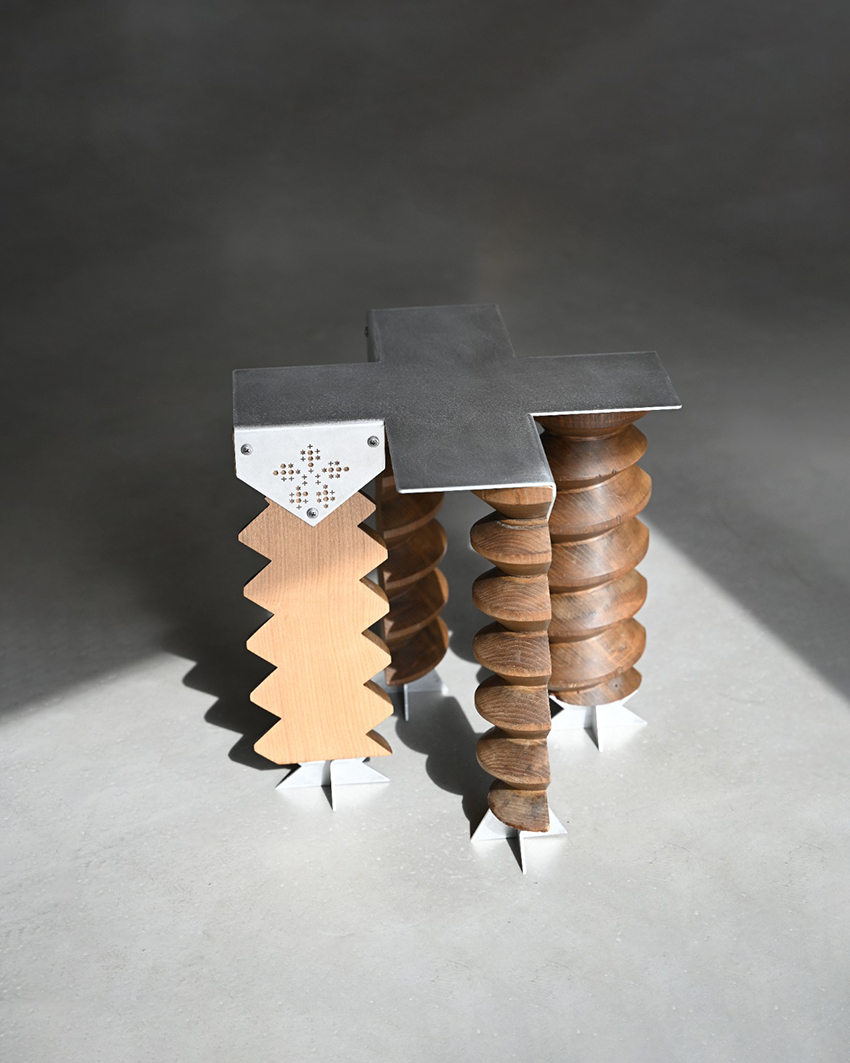
To support and elevate these historic wooden elements, the designers introduced a precision-engineered cross-shaped structure crafted from 3 mm-thick aluminum. This newly fabricated metal component creates a deliberate visual and tactile dialogue, contrasting its sleek, brushed, and vibrated finish against the rustic, time-worn surface of the reclaimed timber. The interplay between old and new highlights the contrasting properties of the materials, allowing the industrial precision of the aluminum to frame and accentuate the organic irregularities of the vintage wood.
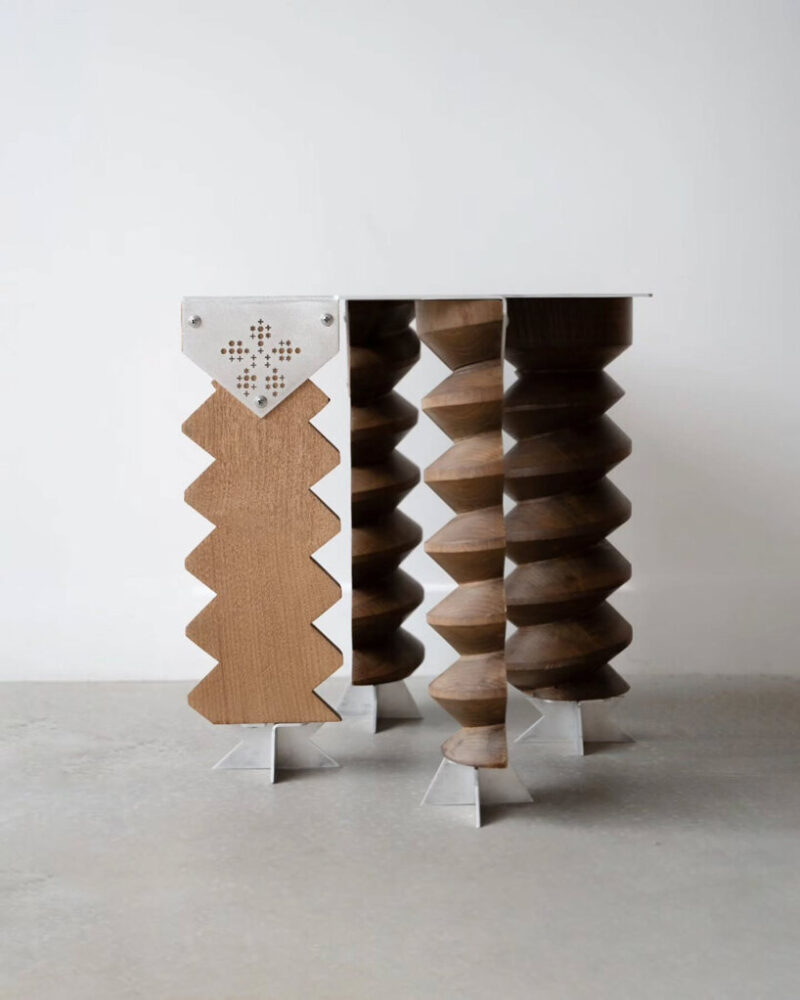
The conceptual detailing of the metalwork extends beyond mere structural support. The openwork form of the aluminum frame is thoughtfully designed to reference apple blossoms, paying subtle homage to the agricultural origins of the primary material. Meanwhile, the seat features a distinct helical profile that directly echoes the geometry of the original wooden screw mechanism from which the legs are derived. Measuring 45 cm in height and 42 cm in both width and depth, LE PRESSOIR balances everyday utility with an arresting sculptural silhouette, successfully securing a functional role for a historic object within the realm of contemporary design.
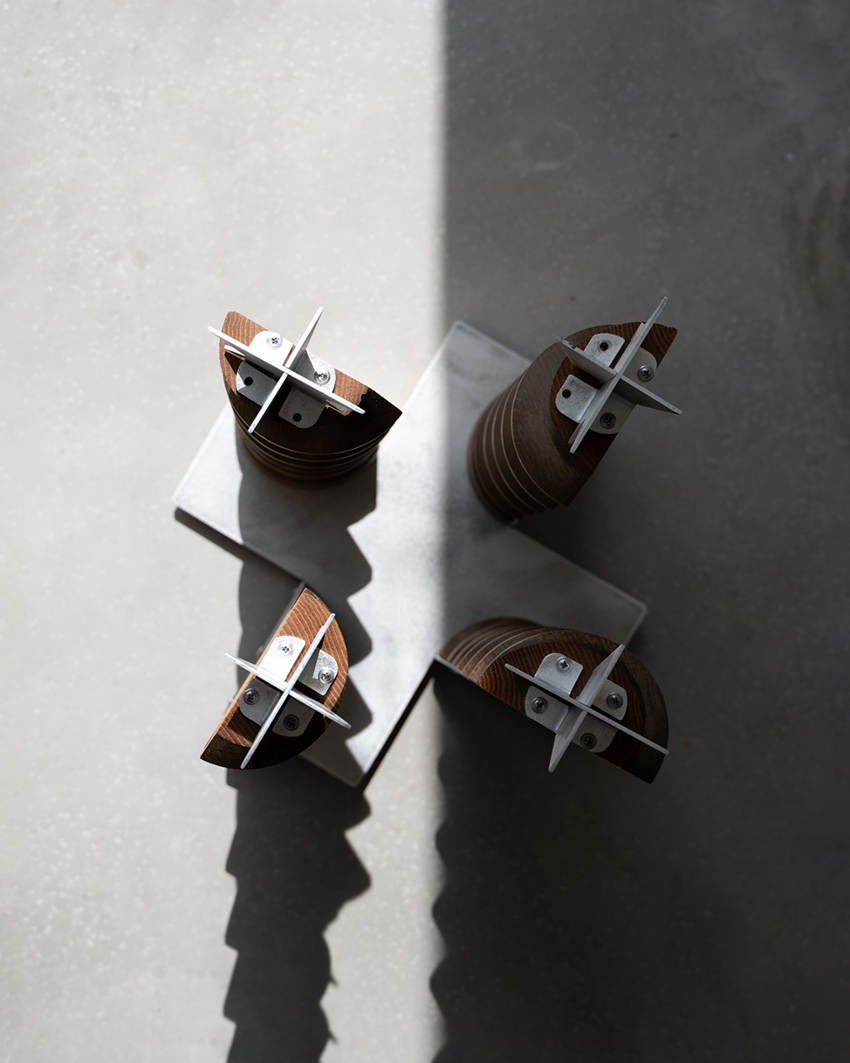
Brushed Aluminum Meets Weathered Timber in LE PRESSOIR Stool
The collaboration between Studio Jumel and Ariane Ronot represents a growing movement within collectible design that looks to industrial salvage and agricultural heritage as a primary source of inspiration and material wealth. By rescuing objects destined for obscurity or obsolescence, designers are able to create pieces that carry deep cultural resonance while reducing the need for virgin raw materials. In LE PRESSOIR, this philosophy is manifested through a meticulous assembly process that unites preserved wooden elements with cutting-edge metal fabrication.
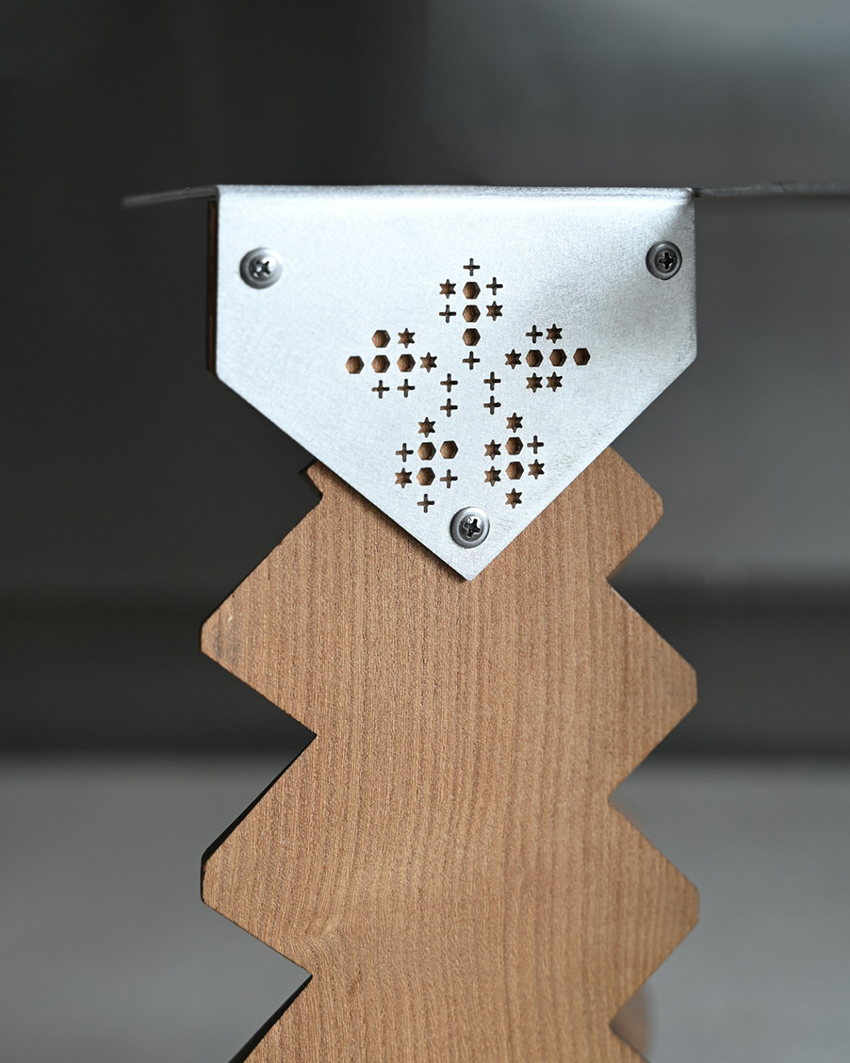
The choice of a brushed and vibrated finish for the 3 mm-thick aluminum components is central to the aesthetic success of the stool. A high-gloss or mirror polish would have created too stark and sterile a contrast with the dark, heavy timber of the 1930s press. Instead, the textured, matte quality of the brushed aluminum harmonizes with the grain and roughness of the reclaimed wood, creating a cohesive visual language where the decades-old timber and the modern metal appear destined to coexist.
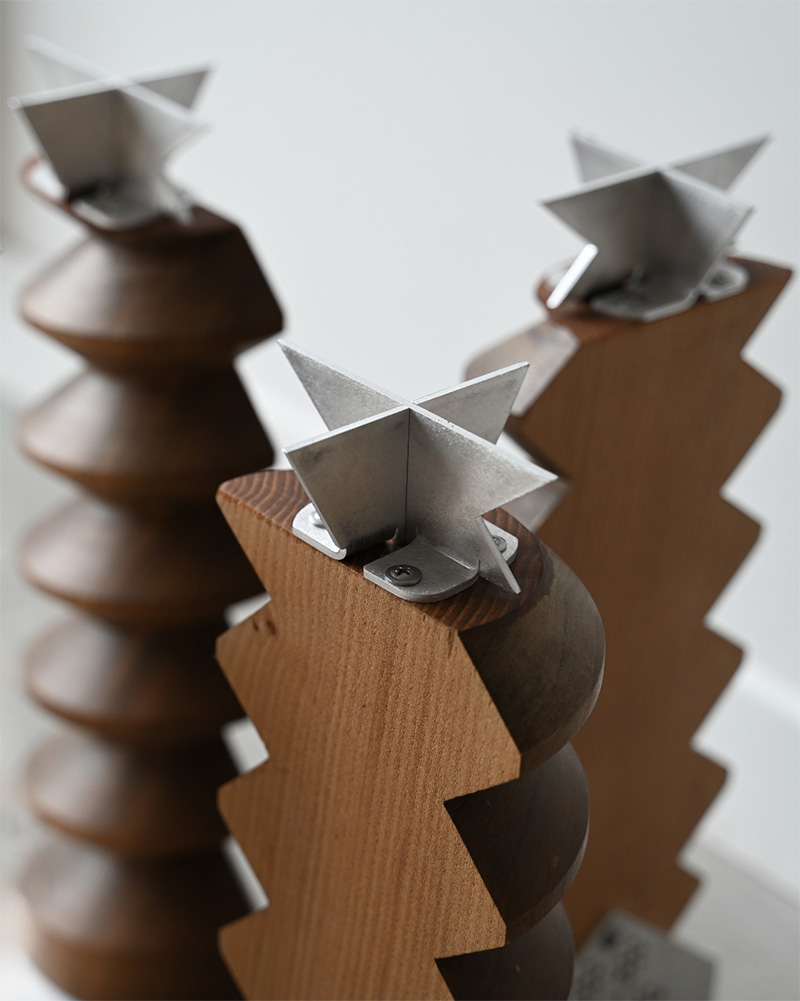
The physical dimensions of the stool—compact yet substantial—allow it to function seamlessly as a standalone sculptural object, an occasional seat, or a statement piece within a curated interior. Yet, its true significance lies in its ability to preserve the physical character of the original agricultural machinery. Rather than erasing the marks of time, Studio Jumel and Ariane Ronot have chosen to celebrate them, ensuring that the history of Normandy’s cider-making legacy lives on through a contemporary lens.