The international art world has breathed a sigh of relief following the swift recovery of two priceless Pierre-Auguste Renoir paintings stolen earlier this autumn from the master’s former home-turned-museum in southern France. However, the dramatic investigation—which relied on microscopic forensic evidence, cross-border surveillance, and rapid police intervention—has also laid bare ongoing vulnerabilities within regional cultural institutions.
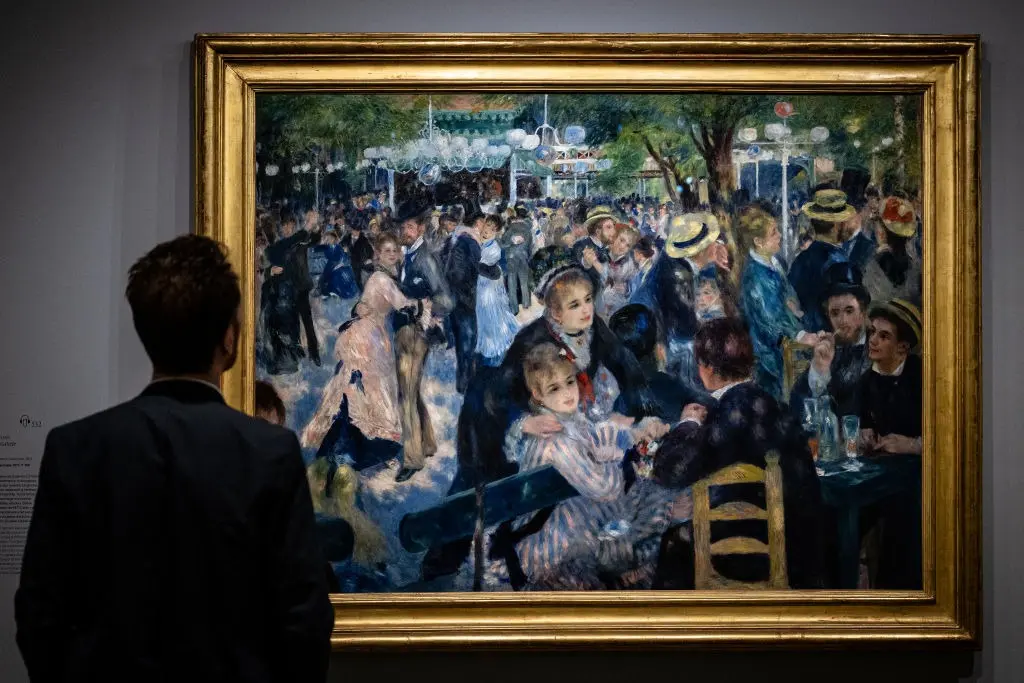
According to Marseille prosecutor Nicolas Bessone, the brazen daylight burglary took place on September 8. The thieves targeted the Renoir museum in Cagnes-sur-Mer, a coastal town where the legendary Impressionist artist spent the final decades of his life painting Mediterranean landscapes and domestic scenes. The perpetrators managed to slip away with two canvases, leaving behind little physical evidence save for a single piece of protective painting cover.
That oversight proved to be their undoing. Investigators recovered the DNA of a 29-year-old individual from the plastic covering, allowing forensic teams to swiftly identify a prime suspect. This crucial biological trace led detectives down a trail that eventually uncovered a second suspect and culminated in a startling admission: the stolen masterpieces had been concealed behind a makeshift false wall inside the home of a third accomplice.
Authorities soon discovered that three of the four individuals connected to the operation were already known to law enforcement for unrelated criminal activities. While the two recovered works were successfully tracked down in record time, they did not escape unscathed. Prosecutor Bessone confirmed to reporters that one of the pieces, titled Portrait of Madame Colonna Romano, suffered a tear during the ordeal and will require professional restoration. Despite the damage, experts have valued the two recovered paintings at approximately $4.7 million combined.
The investigation took an even more alarming turn when detectives tracked the movements of the primary 29-year-old suspect. Investigators learned that he had recently visited the prestigious Maeght Foundation in nearby Saint-Paul-de-Vence, a renowned modern and contemporary art institution. Police intelligence suggested he was scouting the location with the alleged intention of planning a second, larger burglary.
The plot thickened when surveillance teams watched the suspect meet with a fourth individual, a person already flagged by authorities for historical involvement in art theft and forgery. Acting on what Bessone described as a "very strong suspicion that another heist was imminent," law enforcement officials moved in quickly to preemptively disrupt the operation. The two primary suspects accused of executing the Renoir theft have since been formally charged with "theft committed by an organized gang," though both continue to maintain their innocence. Meanwhile, the third accomplice has admitted to receiving and hiding the stolen artworks.
Johnny Depp Enters London’s High-End Art Scene With Halcyon Gallery Showcase
While French authorities were busy wrapping up a high-stakes museum recovery, the art market in London was abuzz with a very different kind of headline involving celebrity crossover. Actor Johnny Depp is officially taking his lifelong passion for visual art to the next level, securing representation with the prestigious, London-based Halcyon Gallery.
The high-profile gallery, which already represents luminaries such as Bob Dylan, Dominic Harris, and Ernesto Cánovas, pulled out all the stops to announce the partnership. Over the weekend, the gallery’s New Bond Street location turned heads by unveiling a larger-than-life facade featuring prominent displays of Depp’s artwork. The exhibition opens to the public today and runs through November 15, marking Depp’s first major institutional-scale gallery exhibition in the United Kingdom.
"Johnny Depp is a defining cultural icon with a unique artistic vision," said Paul Green, president and founder of Halcyon Gallery, emphasizing the depth behind the actor’s creative pursuits. "Known for his unparalleled ability to connect with audiences through the authenticity of his characters, an encounter with Depp, the artist, is equally compelling. Depp has drawn and painted his whole life, and we’re very proud at Halcyon to be hosting his first major exhibition in the UK."
Cultural Digest: Global Museum Updates, Restitutions, and Contemporary Reflections
Beyond the major headlines in France and the UK, several significant developments rippled across the global museum and gallery sector this week.
In North Africa, Morocco has marked a historic milestone by opening a publicly funded museum dedicated entirely to preserving over two,500 years of local Jewish history. Located in the town of Fes, the new cultural institution is the very first of its kind to be established within an Arab-Muslim nation, signaling a major step forward in the public acknowledgment and celebration of the region’s diverse heritage.
In Washington, D.C., maintenance crews have finally begun refilling the Lincoln Memorial Reflecting Pools with water. The pools had been drained following a rushed renovation project ordered during President Trump’s administration, which resulted in the newly painted pool floors peeling away in massive sheets. While the administration has consistently blamed the damage on vandals, the long-overdue restoration work brings relief to tourists and preservationists alike.
Meanwhile, provenance research continues to reshape museum collections across Europe. The University of Amsterdam’s museum has officially returned an ancient third-century BC vase back to Sicily. The restitution comes nine years after Italian authorities first formally requested the artifact’s return, citing its deeply "problematic" provenance and historical removal circumstances.
In the commercial gallery sector, influential Berlin art dealer Matthias Arndt is planting a flag in southern Europe. Arndt has officially opened a new "art salon" in Athens, Greece, drawing parallels between the Greek capital today and Berlin during the vibrant, post-reunification creative boom of the 1990s. According to Arndt, Athens currently possesses a rare "spirit of optimism" and raw creative output that major art hubs like Berlin have slowly lost over the decades.
Up in Spain, acclaimed filmmaker and visual artist Steve McQueen is offering a stark reminder of the social anxieties defining our current historical moment. Coinciding with the opening of his immersive sound installation 66 76 26 at the Guggenheim Bilbao, McQueen reflected on the psychological climate of the West in an interview with El Pais. "We live in an era where we talk about AI, we talk about the fear factor—because there is a lot of fear around us right now, with the rise of fascism in the West," McQueen said. "And for me, what’s interesting at this moment is the idea of love… it becomes fundamental."
Bringing Forgotten Women Sculptors Out of the Shadows
As museums worldwide grapple with historical blind spots, French artist Prune Nourry is preparing to launch a corrective exhibition that targets gender representation within classical art history. Her upcoming show, titled Visionaries, is slated to run from October 20 to January 24 at the Petit Palais museum in Paris.
The conceptual foundation for the exhibition struck Nourry during a walkthrough of the famed Parisian museum roughly two years ago. As she traversed the sculpture galleries, she made a striking realization: while the vast majority of sculpted figures depicted women—typically cast in the passive roles of muses, allegories, or models—only a meager 4 percent of the actual artworks on display had been created by women artists.
Determined to challenge this historical imbalance, Nourry dove into extensive historical research, unearthing the names and biographies of little-known female sculptors from the 19th and early 20th centuries. These pioneering women worked during an era when elite French art schools and academies barred female students from entering their classrooms, forcing them to navigate immense systemic hurdles just to practice their craft.
Using her own contemporary interpretations, Nourry spent over a year and a half sculpting brand-new portrait busts dedicated to these 18 forgotten creators. In the exhibition, these freshly minted tributes will be placed into direct artistic dialogue with Nourry’s broader body of work, which frequently explores themes surrounding women as powerful mythological beings.
Reflecting on the overarching message of the upcoming presentation, Nourry explained that the project is ultimately about expanding our historical lens. The show "is about learning to look in a direction where art history hasn’t looked enough, and also to see through the eyes of those women at that time—to reflect on today, and realize how much we owe them."