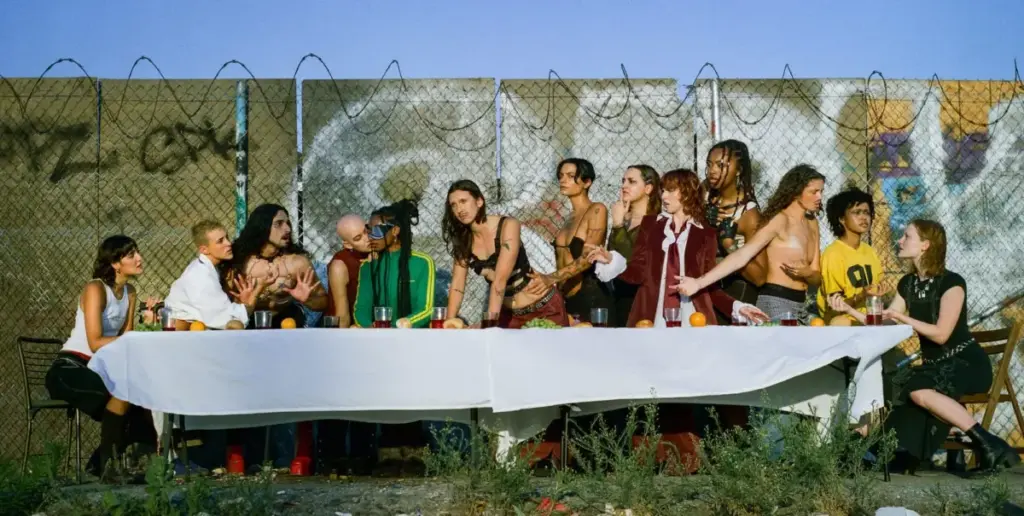
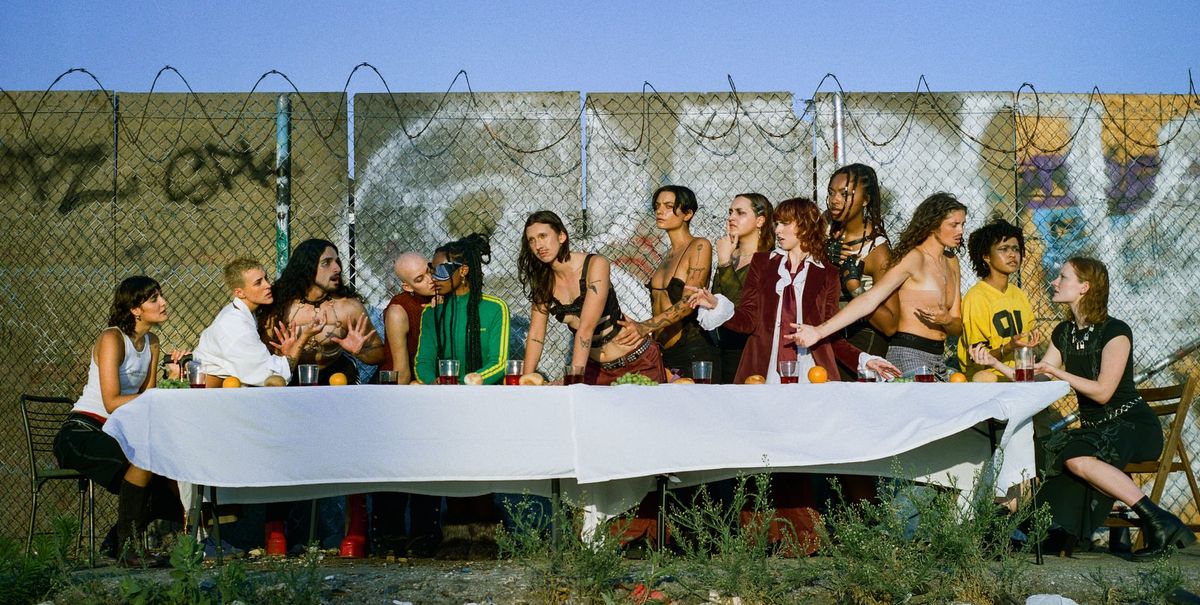
For Los Angeles-based photographer and musician Smiles Meyer, the creation of art is an act of profound and multifaceted transformation, stretching across both creative boundaries and bodily experiences. In 2024, Meyer staged "The First Gathering," a striking visual project in which they meticulously recreated Leonardo da Vinci’s iconic masterpiece, "The Last Supper" (1495–98), substituting the traditional figures with an entirely transgender cast of models.
Meyer’s work places them squarely within a growing and vibrant tradition of contemporary queer and trans artists who visualize marginalized identities through the lens of longstanding religious iconography. By drawing on sacred motifs, artists such as Elizabeth Ohlson Wallin—who previously made waves by recreating iconic biblical scenes including the Last Supper with LGBTQ+ apostles—have long sought to challenge exclusionary religious narratives. For Meyer, this creative trajectory builds significantly upon previous projects, such as the evocative Mary + I cover and nightclub exorcism photography captured for performance artist Maris. Through these daring visual explorations, Meyer actively unpacks and heals from religious trauma, channeling their personal journey into art that fiercely explores, honors, and celebrates trans and queer gender identity.
Long before stepping behind the camera, Meyer identified firmly as an artist, though their earliest creative ambitions were rooted in literature rather than visual media. Growing up in a conservative Catholic environment in San Diego, California, Meyer dreamed of becoming a poet, finding an early and profound affinity for the written word.
"I was first in love with words," Meyer recalled in an interview with Hyperallergic. However, that creative trajectory shifted dramatically around the age of 18 when Meyer came out as queer. In the wake of coming out, they experienced a period of severe depression and subsequently began taking prescribed antidepressant medication.
"With the antidepressants, it felt like it soaked up my sadness but also soaked up any ability to write, which is something that a lot of artists struggle with," Meyer explained, describing the heavy toll that emotional stabilization can sometimes take on creative expression. "It was a year of me feeling creatively constipated."

That creative blockage finally broke in 2018, when Meyer picked up a camera and began experimenting with photography. Initially, their process involved physically cutting up and rearranging pieces of their own printed photographs into mixed-media collages. This hands-on method allowed them to articulate complex narratives and emotional states that felt just beyond the reach of traditional writing. Meyer continued this intensive collage practice until a pivotal moment arrived: they captured a photograph that they felt was simply too good to alter or butcher. That single frame marked a turning point, launching what has now become a nearly decade-long professional photography career defined by striking conceptual depth and a fearless interrogation of identity.
A central pillar of Meyer’s artistic philosophy is the deconstruction of cisgender supremacy and traditional frameworks of divinity. Growing up as a trans person immersed in the strict structures of the Catholic Church left deep impressions, but encountering the theoretical writings of Judith Butler provided Meyer with a crucial intellectual framework. Butler’s work inspired Meyer to deeply consider "how trans people appropriate the power of creation."
According to Meyer, these theoretical frameworks encouraged a radical reframing of spirituality and sacredness. Rather than viewing the divine as an external, authoritarian figure—such as traditional depictions of Jesus or an omnipotent God residing in the sky—Meyer learned to conceptualize divinity as an inherent force that lives within every individual. By casting transgender models in sacred tableaux like "The First Gathering," Meyer translates this philosophical realization into tangible, highly visible art, offering a powerful counter-narrative that reclaims holiness for communities historically marginalized by organized religion.






