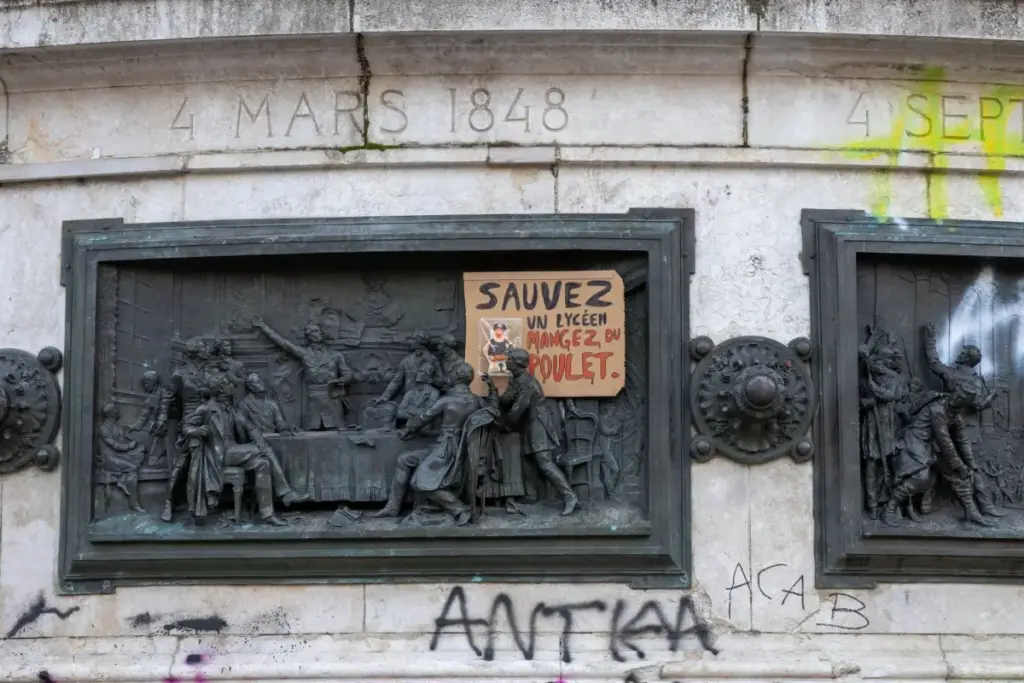
Demonstrators across France are upending the nation’s most revered public landmarks, transforming historic statues and monuments into active participants in a sweeping wave of civil unrest. Channeling the rebellious spirit of the historic May 1968 student uprisings, contemporary youth are targeting public spaces to denounce police violence, chronically under-resourced schools, and a worsening cost-of-living crisis.
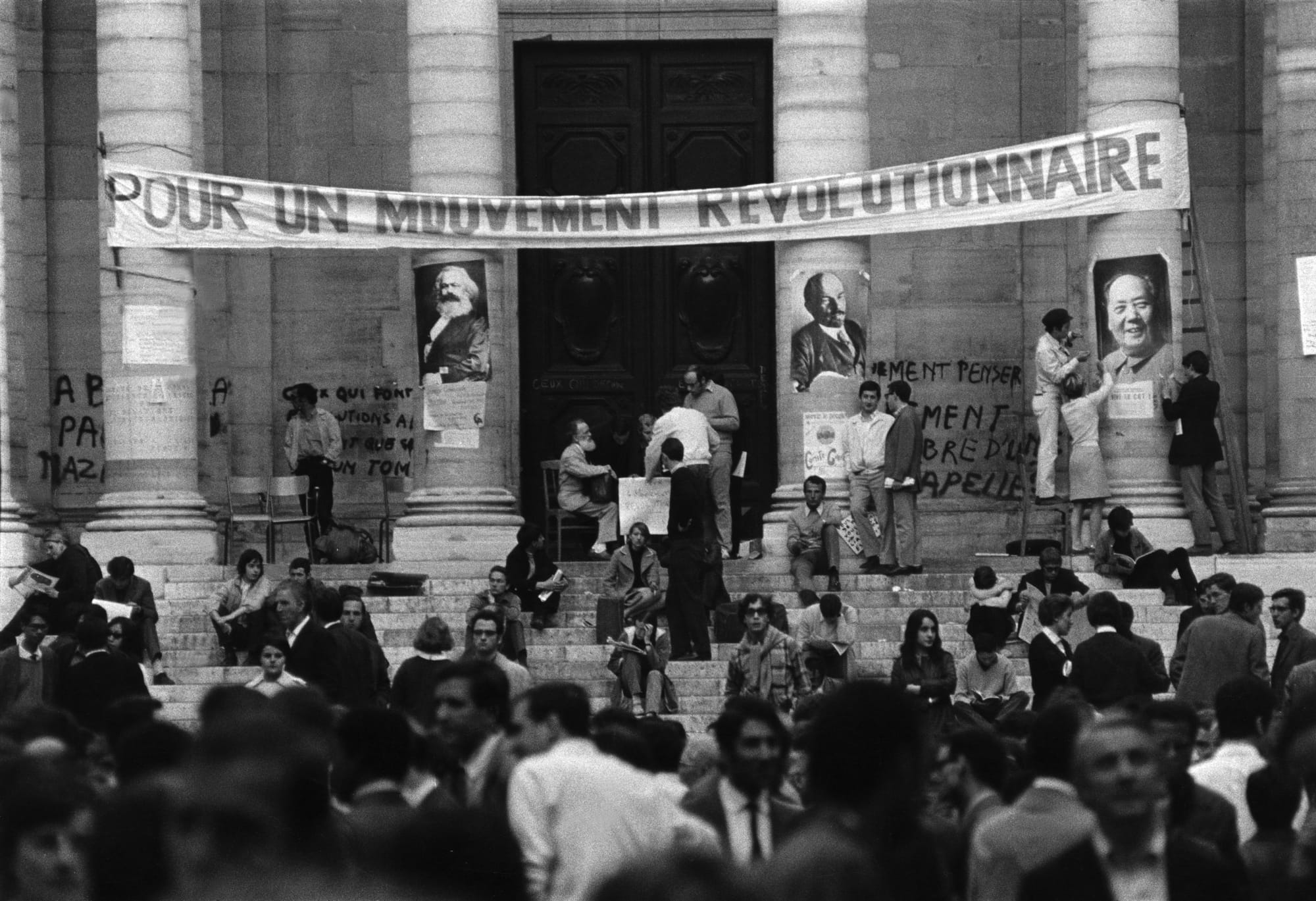
When students in France took to the streets nearly six decades ago to protest the country’s crumbling education system and the Gaullist government, they similarly transformed public monuments into platforms for their cause. Following the May 2 shuttering of Paris Nanterre University—where anti-imperialist students had ignited demonstrations in late March of that year—protesters marched to the Sorbonne. There, they hung massive portraits of Karl Marx, Vladimir Lenin, and Chairman Mao Zedong from the pillars of the 17th-century facade, and lodged red revolutionary flags into the statues of renowned scientist Louis Pasteur and writer Victor Hugo.
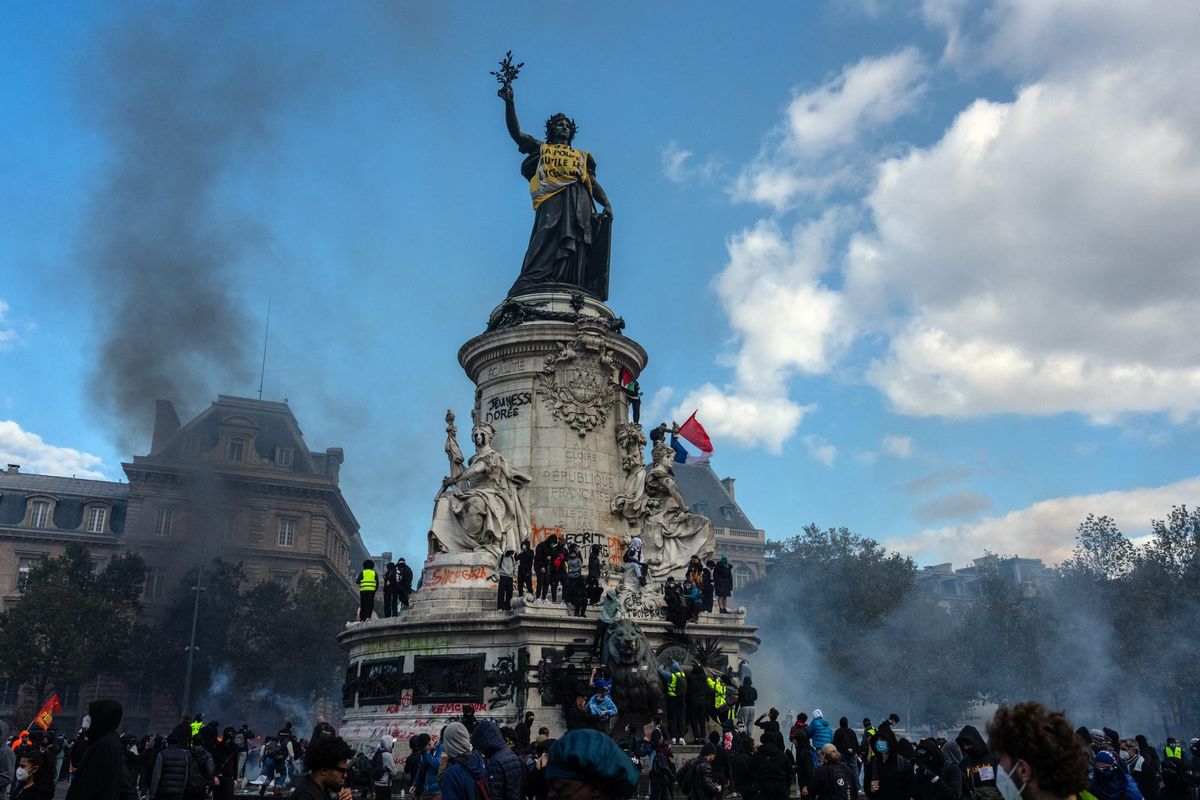
During a massive demonstration on May 13, 1968, which coincided with a national general strike, other protesters climbed atop Léopold Morice’s 1883 bronze masterpiece, the Monument à la République, claiming the sculpture of Marianne—the enduring personification of the French Republic—as a central gathering ground for the movement.
Today, student demonstrators in France are addressing many of the same systemic issues at the heart of May ’68, including neglected schools and an escalating economic strain, while utilizing public statues, cultural monuments, and historic sites as visual focal points for their actions. Earlier this month, protesters draped the Monument à la République in a vast white garment emblazoned with the words, "Neglected high schools, youth sacrificed," issuing a sharp condemnation of poor labor conditions, chronic staff shortages, and grueling hours within the modern public education system.

The unrest has rapidly expanded beyond traditional protest squares into high-profile cultural institutions. On October 19, dozens of students from the École du Louvre, an elite higher education arts institution situated inside the historic Louvre Palace in Paris, blocked the main entrance of the Louvre Museum, forcing temporary closures and drawing international attention. Meanwhile, in Marseille, a separate group of demonstrators broke into City Hall and knocked a bust of Marianne directly to the floor.
Elsewhere, protesters have dressed national statues in garments referencing more recent social movements, forging historical links to France’s long and deeply ingrained tradition of public dissent. On October 17, organizers gave Marianne a striking wardrobe change by outfitting her in a high-visibility yellow vest bearing the message, "2026: The police mutilates high schoolers."

The imagery is a direct reference to the self-described gilets jaunes ("yellow vests") movement that paralyzed parts of France between 2018 and 2020 in protest of rising fuel prices and the unaddressed plights of ordinary citizens. This modern iteration underscores the widening fissures between the civilian public and law enforcement agencies. Since the current wave of demonstrations began, police have overwhelmingly arrested minors and injured hundreds of students. French human rights organizations and legal defense groups have aggressively accused law enforcement of inflicting "war-like injuries" on teenagers. Documentation from various reports reveals that riot officers maimed a 14-year-old boy with a tear gas grenade in a Parisian suburb and beat others with batons, among other violent crowd-control methods.
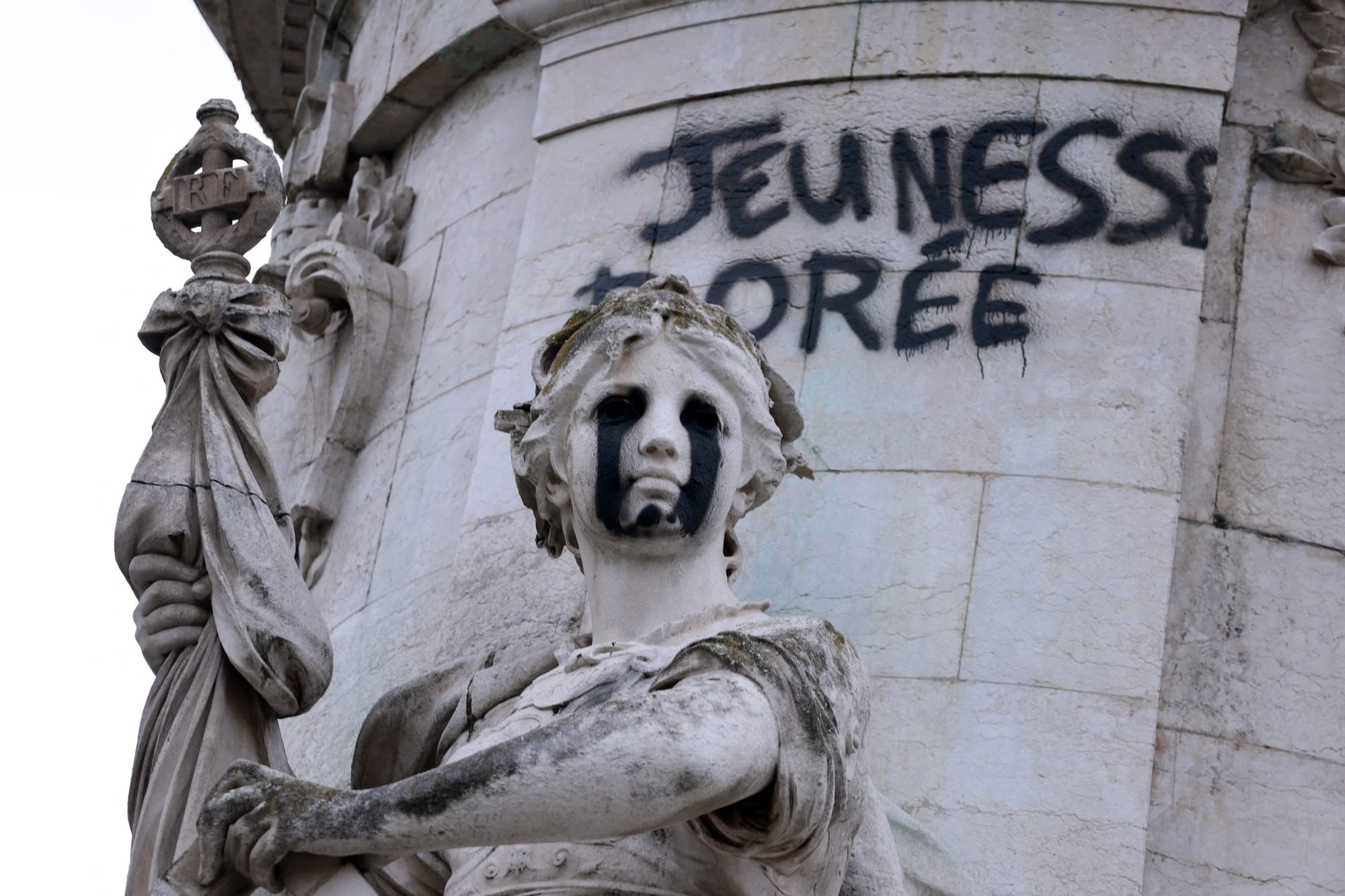
In another powerful visual critique, demonstrators at the Place de la République streaked the eyes of the allegorical maidens representing Liberty, Equality, and Fraternity—the classic personifications of the French Revolution’s foundational slogan and the national motto—with black tears. The gesture suggested that the modern state has grown profoundly detached from the progressive principles and democratic actions fought for during the late 18th-century revolution, a time when civilians boldly toppled the statues of the old monarchic order or replaced them with symbols of popular sovereignty.
The subversion of historical monuments has long served as a crucial tactic in social and political mobilizations worldwide. During the global Black Lives Matter protests, activists similarly brought down or symbolically defaced commemorative statues of colonial and racist historical figures, including Christopher Columbus and King Leopold II. In Richmond, Virginia, a notorious monument honoring Confederate General Robert E. Lee was dramatically reclaimed by protesters who transformed the space through graffiti, performance art, and nighttime projections. At the height of the Black Lives Matter movement in 2020, protesters in France also draped a black cloth over a statue of French military commander and colonial administrator General Joseph Gallieni.
France’s contemporary student activists have also deliberately positioned their domestic struggle as interconnected with broader international human rights movements. In Toulouse, protesters secured a Palestinian flag atop a statue of Joan of Arc while simultaneously wrapping a yellow vest around its base. Authorities promptly removed both the flag and the garment, sparking a fierce online debate regarding how public monuments can and should be utilized in political expression. While conservative critics perceived the demonstration as a desecration of a key symbol of French national identity, supporters recognized the Palestinian flag as a universal bridge connecting distinct but related international human rights struggles.
The tactical use of monuments carries a direct historical precedent. During the May ’68 protests, student activists famously incorporated the visual language and rallying cries of the international anti-Vietnam War movement. On May 13, 1968, photojournalist Jean-Pierre Rey captured an iconic image of a young French woman, Caroline de Bendern, holding a Viet Cong flag during demonstrations in the Latin Quarter. The photograph—which powerfully recalled the figure of Marianne at the center of Eugène Delacroix’s seminal 1830 painting Liberty Leading the People—earned de Bendern the media moniker "Marianne of ’68," successfully updating the visual iconography of the French Revolution for the political conflicts of the late 20th century.
Beyond the tactical reappropriation of public statues, explicit visual and textual references to May ’68 have proliferated across banners, placards, and protest art in recent weeks. Some modern demonstrators have playfully riffed on generational identities with slogans such as "Generation 67 brings you May ’68." Others have deployed history directly as a tactical warning to French authorities, brandishing explicit banners that read, "If you screw us over, we will give you a May ’68."






