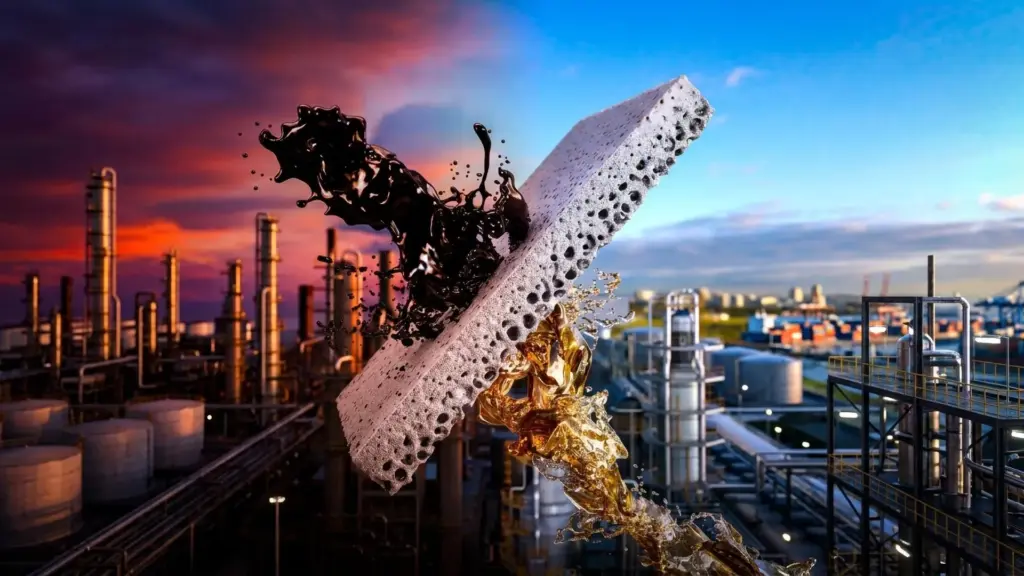
Researchers have developed a remarkably simple and innovative method to separate crude oil without applying heat, a breakthrough that could fundamentally transform one of the most energy-intensive industrial processes in human history. Published in the prestigious scientific journal Nature, this new approach utilizes an inexpensive, uncoated membrane that has the potential to dramatically slash the energy requirements of oil refining while simultaneously lowering operational costs and cutting carbon dioxide emissions on a global scale.
The international research collaboration was led by Professor Dong-Yeun Koh at the Korea Advanced Institute of Science and Technology, commonly known as KAIST, working closely alongside Professor Ryan Lively and his research group at the Georgia Institute of Technology. KAIST President Kwang Hyung Lee announced the successful demonstration of the membrane, which is uniquely capable of separating crude oil fractions at room temperature.
While everyday consumers most commonly associate crude oil with gasoline, diesel, and other transportation fuels, its derivatives are deeply embedded in modern society. Crude oil supplies the essential chemical raw materials required to manufacture plastics, product packaging, synthetic clothing, synthetic rubber, medical devices, and countless other everyday items. Because refining costs ultimately influence the prices of these materials throughout the global supply chain, increasing the overall efficiency of the refining process promises widespread economic and environmental benefits.
Why Traditional Crude Oil Refining Requires So Much Energy
For more than a century, the global petroleum and petrochemical industries have relied almost exclusively on thermal distillation to separate raw crude oil into its usable components. This conventional process requires heating crude oil to extreme temperatures exceeding 350 degrees Celsius. As the oil reaches these high thresholds, various hydrocarbon portions turn into vapor, which are subsequently collected, condensed, and cooled at different levels within towering distillation columns to isolate distinct fractions.
This thermal approach requires an astronomical amount of energy. On a global scale, crude oil distillation consumes approximately 1,100 terawatt-hours of energy annually. To put that staggering figure into perspective, it is roughly equivalent to the combined yearly electricity production of about 130 continuously operating nuclear power plants, with each plant maintaining a generation capacity of roughly one gigawatt.
This massive energy demand makes traditional distillation a leading contributor to both high fuel consumption and greenhouse gas emissions within the heavy industrial sector. In recent years, growing economic pressures, volatile energy markets, and tightening environmental regulations have driven an intense search for alternative technologies that can separate complex hydrocarbon mixtures more efficiently without burning excessive fossil fuels.
Membranes have long emerged as a promising alternative to thermal distillation because they possess the theoretical ability to separate chemical substances based on molecular size and structure without requiring extreme temperatures. However, previous membrane designs have repeatedly encountered significant technical obstacles that hindered their commercial viability.
Traditionally, scientists and engineers assumed that effective molecular separation required a membrane surface covered with an extremely thin, highly specialized polymer or chemical coating. Although these engineered coatings can provide the necessary precision for filtering specific molecules, they are notoriously expensive to produce, difficult to scale up, and prone to developing microscopic structural defects when manufactured on an industrial scale. These persistent limitations have made widespread commercial adoption exceptionally difficult for the petrochemical industry.
A Surprising Discovery Turns Clogged Filters Into an Advantage
The research team from KAIST and Georgia Tech approached this longstanding engineering hurdle from an entirely different perspective. Instead of attempting to synthesize a complicated, multi-layered surface coating, they utilized a completely bare, uncoated membrane constructed from porous polyacrylonitrile, known commonly as PAN. Polyacrylonitrile is an inexpensive, chemically stable polymer that is already widely manufactured and commonly used as a mechanical support material in standard industrial filtration systems.
What happened when real crude oil was passed through the uncoated PAN membrane, however, caught the research team by surprise.
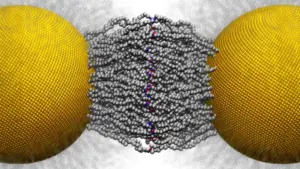
As the complex mixture of crude oil flowed steadily through the porous structure of the polymer, heavier hydrocarbon molecules began to naturally accumulate along the inner walls of the microscopic pores. This gradual buildup of heavy molecules slowly constricted the openings, progressively reducing the size of the pathways until they formed extremely narrow channels measuring less than 2 nanometers across.
In effect, the crude oil itself helped engineer the microscopic pathways needed to sort and separate its own individual components.
These naturally formed nanoscale channels allowed lighter oil fractions—including valuable chemical feedstocks like naphtha, gasoline, and kerosene—to pass through the membrane structure rapidly. Simultaneously, the constricted pathways successfully prevented heavier, bulkier hydrocarbon substances from traveling through the membrane with the same ease.
This discovery was particularly striking to the scientific community because the accumulation of material inside membrane pores, a phenomenon universally known as membrane fouling, is normally considered a severely detrimental problem in filtration engineering. In standard industrial applications, fouling degrades performance, chokes fluid flow, and necessitates frequent chemical cleaning or costly membrane replacement. In this unprecedented case, however, the very same fouling phenomenon transformed the plain membrane into a highly efficient molecular separation tool.
The experimental results exceeded expectations. The uncoated PAN membrane achieved crude oil permeation rates approximately 23 times higher than those reported for previous leading membrane technologies designed for crude oil separation. Furthermore, the membrane maintained stable, continuous operating performance for 28 consecutive days under realistic test conditions.
Reflecting on the breakthrough, Professor Ryan Lively of Georgia Tech noted that one of the primary historical challenges facing membrane systems in this field was their inherently low productivities. He emphasized that the PAN membranes, operating via this surprising self-constricting mechanism, dramatically increase the productivity of the membrane unit to a level that should prompt the global refining industry to seriously consider adopting the technology.
New Membrane Could Cut Oil Refining Energy Use by Nearly a Third
One of the most commercially attractive features of this new technology is that oil refineries would not necessarily need to demolish or replace their existing infrastructure to integrate it.
Instead, the membrane system could be installed as a modular filtration unit designed to process crude oil before it enters conventional thermal distillation equipment. By selectively removing certain fractions beforehand, the system would reduce the overall thermal load and mechanical work required during the subsequent heating and separation stages, all while allowing facilities to continue utilizing much of their established capital equipment.
Detailed computer simulations conducted by the research team suggest that incorporating the membrane into existing refining workflows could yield substantial operational improvements. According to the projections, energy consumption could fall by 31.6%, while direct carbon dioxide emissions could decrease by 37.6 percent. The same computational models also projected a 20.7% reduction in cooling water consumption and a 36% overall decrease in operating costs for the refining facilities.
The potential environmental benefits are considerable if the technology achieves widespread industrial adoption. Researchers estimate that implementing the system throughout South Korea’s domestic refining and petrochemical sectors alone could prevent approximately 10 million tonnes of greenhouse gas emissions each year. That carbon reduction is roughly equivalent to taking four million internal combustion engine vehicles off the road annually.
It is worth noting that these environmental and economic savings represent projections based on rigorous process simulations rather than reductions directly demonstrated across fully operating commercial refineries. Nevertheless, the findings strongly indicate that membrane-based pre-filtration could soon become a practical, cost-effective way to modernize the efficiency of aging industrial facilities.
Applications Beyond Oil Refining
While crude oil separation served as the primary focus and testing ground for the research, the underlying scientific principles and membrane technology could eventually be adapted for use in several other critical industries.
One potential application involves the chemical processing of pyrolysis oil, which is produced when waste plastics are thermally broken down for advanced chemical recycling. Additionally, these specialized membranes could assist in recovering valuable solvents used during modern lithium-ion battery manufacturing, purifying delicate pharmaceutical compounds, and improving the overall energy efficiency of biofuel production facilities.
The broader industrial opportunity lies in leveraging complex liquid mixtures to help form the tiny filtration channels required to separate their constituent parts. This self-assembly approach could ultimately provide a much more affordable, scalable, and versatile alternative to conventional membranes that require expensive, precisely manufactured surface coatings.
Professor Dong-Yeun Koh of KAIST explained that the study reveals a completely new scientific principle wherein a membrane interacts dynamically with a complex chemical mixture and spontaneously forms its own specialized separation channels. He added that collaborating with industrial partners, including securing real crude oil supplied by HD Hyundai Oilbank, allowed the team to validate the technology under rigorous conditions directly relevant to actual industrial operations.
The use of authentic crude oil was a crucial component of the research methodology, as it enabled the investigators to observe how the membrane performed when exposed to the unpredictable, highly complicated mixture of hydrocarbons found in real-world feedstocks.
Before the technology can be deployed commercially on a global scale, the research team plans to focus on improving large-area membrane manufacturing techniques and establishing long-term operational reliability over extended periods of industrial use.
Professor Jae W. Lee of KAIST, who served as a co-corresponding author of the study, emphasized that by advancing large-area membrane modularization and confirming long-term operational durability, the team hopes to broaden the eventual adoption of membrane-based processes across the entire refining and petrochemical landscape.
Dr. Jihoon Choi and Dr. Hyeokjun Seo of KAIST, who served as the study’s co-first authors, stated that their ultimate goal is to precisely control this spontaneous pore-constriction phenomenon and develop it into a versatile membrane platform applicable to every stage of the refining cycle. They also noted plans to expand the technology toward plastic recycling, biofuel purification, and other sustainable chemical processes that support global carbon neutrality goals.
Financial and institutional support for the research was provided by Korea’s Ministry of Science and ICT through the Basic Research Program for Outstanding Early-Career Researchers and the Engineering Research Center Program.