The South Korean art market is showing clear signs of a resilient recovery, according to the 2026 Art Market Survey jointly released by the Ministry of Culture, Sports and Tourism (MCST) and the Korea Arts Management Service (KAMS). After navigating two consecutive years of contraction, the market has demonstrated a 3.8% year-on-year growth, reaching a valuation of approximately USD 500 million (KRW 638.2 billion). While this figure remains 20.9% below the historic peak observed in 2022, the data suggests a fundamental shift in the behavior of collectors and the maturity of the national ecosystem.
The most notable trend in this year’s report is the transition toward a more selective, value-driven market. While the total number of artworks traded saw a decline of 3.1% compared to the previous year, the average value per individual work climbed by 7.1%. This suggests that while the "frenzy" of previous years may have cooled, the appetite for high-quality, investment-grade, and critically significant art remains robust. For Asia’s fourth-largest economy, this indicates that the market is shedding its speculative skin and moving toward a more sustainable, collector-led model.
A Distinctive National Ecosystem
South Korea’s art scene is increasingly defining its own trajectory, characterized by a unique and deeply rooted network of stakeholders. The country’s collector base is diverse, ranging from the traditional influence of "chaebol" families—whose multi-generational commitment to art has fostered a legacy of private museums and world-class collections—to a rising tide of younger entrepreneurs and high-profile figures from the entertainment industry.
While Seoul remains the undisputed nerve center of the art trade, the ecosystem is expanding. Institutional activity has become increasingly decentralized, with notable developments on Jeju Island and a steady, long-term collector base in cities like Busan and Daegu. This geographical dispersion is vital for the development of a mature national market, ensuring that cultural capital is not confined to the capital city but is instead woven into the broader fabric of the country.
A critical pillar supporting this growth is South Korea’s favorable tax environment. By maintaining exemptions on customs duties and import VAT for original artworks—including paintings, sculptures, and prints—the government has successfully fostered an environment of openness to international art. This policy has facilitated a vibrant cross-pollination between local and global talent, a dynamic clearly visible in the current exhibition landscape in Seoul. From Lee Kang-So at the LOTTE Museum of Art and Yoo Youngkuk at the Seoul Museum of Art to international presentations like Georg Baselitz at the Sehwa Museum of Art and Martin Parr at the Photography Seoul Museum of Art, the city’s institutions are successfully balancing historical reverence with contemporary global dialogue. The opening of the Park Seo-Bo Museum, which currently features a poignant dialogue between the late Korean master and artist Huong Dodinh, further highlights the nation’s ability to bridge disparate artistic traditions.
The Impact of International Integration
The arrival of Frieze Seoul in 2022 served as a catalyst for this integration, permanently altering the landscape of the Asian art market. By 2026, the fair had evolved into a massive enterprise, bringing together more than 125 leading galleries from 30 countries. Significantly, the fair has cemented its regional importance, with over 70% of participating galleries now based across the Asia-Pacific region.
The fair’s symbiotic relationship with the local Kiaf fair has also deepened, creating a unified "art week" that benefits the entire Korean gallery scene. With more than 50 exhibitors maintaining permanent spaces in Seoul, the connection between the fair’s temporary excitement and the city’s year-round infrastructure is stronger than ever. The introduction of Frieze House Seoul in late 2025 has provided a permanent year-round hub for collaborative exhibitions, while the return of Design Miami Seoul for its second edition continues to bridge the gap between fine art and functional design, providing a broader platform for Korean creative talent.
A Conversation with Patrick Lee
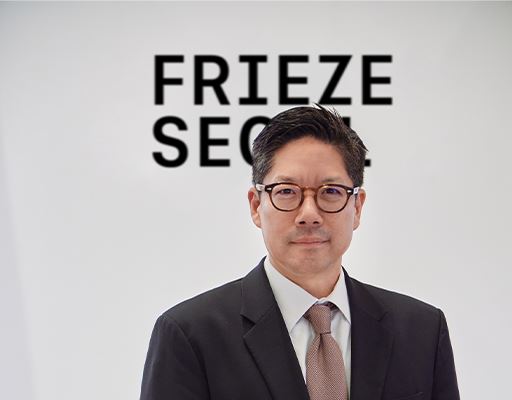
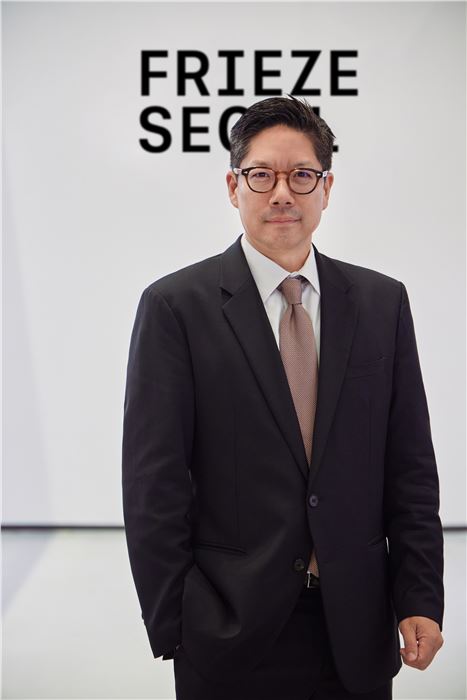
As Frieze Seoul prepares for its fifth edition, the fair’s director, Patrick Lee, notes that the market’s competitive edge lies in its business-friendly atmosphere. "South Korea is a favorable place to transact," Lee explains. "It is easy to remit funds, has strong logistical infrastructure for the art community, and has favorable policies on tax and customs. I expect the business climate to remain this way, continuing to make Korea one of the most straightforward markets in the region to buy and sell in."
When asked about the unique identity of Frieze Seoul in a crowded Asian market, Lee emphasizes "discovery with rigor." Rather than measuring itself against its neighbors, the fair focuses on its own strengths: an Asian-majority ecosystem supported by international scale and a deep curatorial perspective. This year, that rigor is embodied in two new sections: Material Practice and Spotlight.
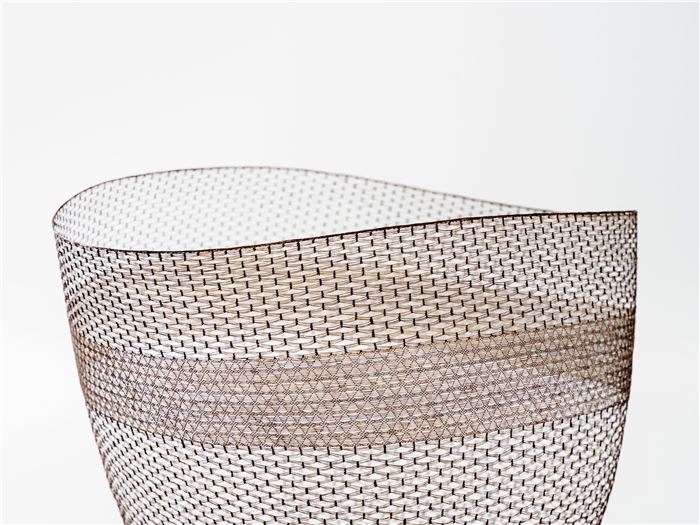
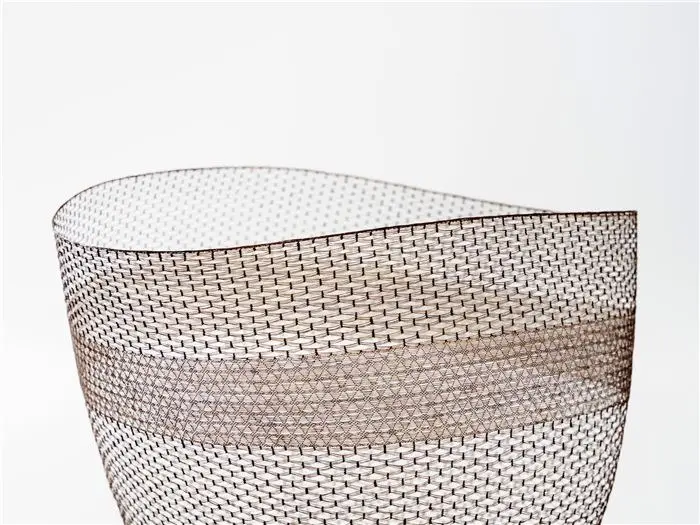
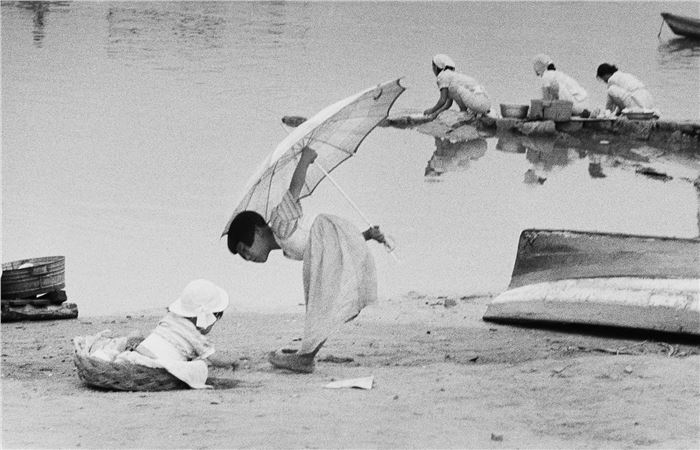
Curated by Hyeyoung Cho, Material Practice explores the blurring lines between contemporary art, craft, and design, featuring artists working in ceramics, textiles, and metal. It is a direct nod to Korea’s profound historical traditions of craftsmanship. Simultaneously, the Spotlight section, curated by Wonseok Koh, focuses on 15 overlooked twentieth-century artists, providing a necessary correction to the Western-centric art-historical canon. Regarding the decision to fold the formerly separate Frieze Masters into the main fair, Lee clarifies that this is a strategic evolution. By integrating historical art into the broader Galleries section, the fair allows dealers to present their programs with greater flexibility, avoiding the rigid constraints that previously limited their ability to contextualize historical works alongside contemporary ones.
Looking Toward the Future
The international recognition of Korean art has reached a fever pitch. Patrick Lee points to a surge in global interest, citing the British Museum’s major exhibition of the Lee Kun Hee Collection, the inclusion of Korean modernism in SFMOMA’s upcoming presentations, and the focus on contemporary Korean artists at institutions like LACMA, the Guggenheim, and the Tate Modern. "What’s particularly exciting is how many different points of entry there are into Korean art internationally right now," Lee notes.
Beyond the fair booths, the "frieze effect" has expanded to encompass the city itself. Initiatives like the Busan Biennale x Frieze Film program, Frieze Music, and the Frieze Seoul Artist Award—this year honoring the collective Yagwang—are designed to connect international visitors with the local cultural community. Even the city streets have become a canvas, with artist Ryan Gander’s project, The Find Seoul, scattering 16,000 collectible coins across districts like Euljiro and Samcheong.
While some observers have used the term "biennalisation" to describe this expansion, Lee remains measured. "The ambition isn’t to become a biennial; it’s to make sure our fair week connects directly with Seoul’s wider cultural ecosystem," he says. As the market moves toward 2027, with plans to transition to a new venue, the focus remains firmly on this integration. Through collaborative programming with Kiaf and a commitment to nurturing both established masters and emerging voices, South Korea is positioning itself not just as a marketplace, but as a permanent, trend-setting platform in the global art discourse.