As the global design industry looks toward what comes next, ceramic tile is taking on an increasingly expansive and sophisticated role in the built environment. Driven by a sophisticated interplay of materiality, advanced craftsmanship, and cutting-edge manufacturing technology, the ceramic sector is redefining how surfaces interact with interior and exterior spaces alike. This evolution was prominently on display at Cersaie 2026, the International Exhibition of Ceramic Tile and Bathroom Furnishings, held in Bologna, Italy.
During the landmark event, more than 70 ceramic tile manufacturers representing the vibrant Spanish sector gathered to introduce their latest collections and explore the primary design forces expected to shape the year ahead. Spain’s formidable presence at the exhibition reflected an industry that successfully balances highly advanced industrial production with a renewed, deeply respectful appreciation for traditional craftsmanship, tactile expression, and material authenticity. As the second-largest exhibiting group following the host country, Spanish manufacturers masterfully showcased how modern technology can dramatically expand the creative potential of ceramic through innovative new surfaces, unconventional formats, and diverse architectural applications.
From warmer, more enveloping color palettes and highly expressive textures to dramatic larger formats and contemporary interpretations of historic materials, the latest collections from exhibiting Spanish brands reveal a comprehensive design language that is simultaneously deeply rooted in heritage and radically forward-looking. Curated insights and emerging trends highlighted by Tile of Spain offer a clear view of the ideas and innovations emerging from Spain’s dynamic ceramic industry, setting the benchmark for global architectural and interior design trends for 2027.
Warmed-up Neutrals
Warm, earthy hues are set to establish the foundational bedrock of ceramic color palettes in 2027, effectively stepping away from the cool whites and stark grays that have long defined contemporary minimalism. Spanish manufacturers are enthusiastically embracing deep creams, rich chestnut browns, and ruddy ochres, which collectively instill spaces with a newfound sense of comfort, warmth, and visual depth. Meanwhile, softened whites, muted grays, and deep blacks are being repurposed not as dominant background forces, but as sophisticated, layered accents rather than stark contrasts.
This pronounced movement toward a warmer color spectrum is anything but subdued. Accenting these earthy bases are rich, saturated moments of deep forest greens and moody ocean blues. These dramatic infusions add vibrant points of interest to earth-toned interior schemes, resulting in environments that feel intensely grounded, highly expressive, and deeply inviting for both residential and commercial spaces.
Design Through the Ages
A powerful wave of nostalgia, paired with an enduring reverence for traditional craftsmanship, is inspiring a renewed interest in the iconic design genres of the past. Mid-century modernism, seventies-inspired geometric and organic forms, striking Art Deco symmetry, and flowing Art Nouveau curves are being thoughtfully reinterpreted through a thoroughly contemporary lens. At the same time, handmade aesthetics continue to gather powerful momentum across the marketplace.
Glazed ceramics, expressive Mediterranean finishes, and Victorian-inspired subway tiles are successfully bringing a rich, artisanal character to sleek modern spaces. Furthermore, natural material references are evolving in sophisticated ways. Designers are exploring cross-cut travertine, intricately veined limestone, and raw-finish wood looks that draw heavy inspiration from the clean, minimalist principles of both Scandinavian and Japanese design traditions.
Supersized Formats
Large-format tile continues its rapid, uninterrupted expansion across a vast array of residential and commercial applications. Within this category, expansive 24-by-48-inch formats are increasingly replacing traditional 12-by-24-inch proportions, offering cleaner lines and significantly fewer grout lines. Simultaneously, gauged porcelain slabs and oversized panels are gaining substantial traction as fabrication and installation expertise becomes increasingly widespread among contractors and tile setters.
This technical maturation opens extraordinary new spatial possibilities for continuous floors, seamless walls, building facades, and durable architectural countertops. Conversely, at the exact opposite end of the size spectrum, small-format tile remains an enduring consumer and designer favorite. The ongoing resurgence of Zellige-inspired aesthetics continues to drive robust interest in compact square formats, intricate mosaics, and highly artisanal compositions that celebrate human touch and slight imperfections.
The Tactile Surface
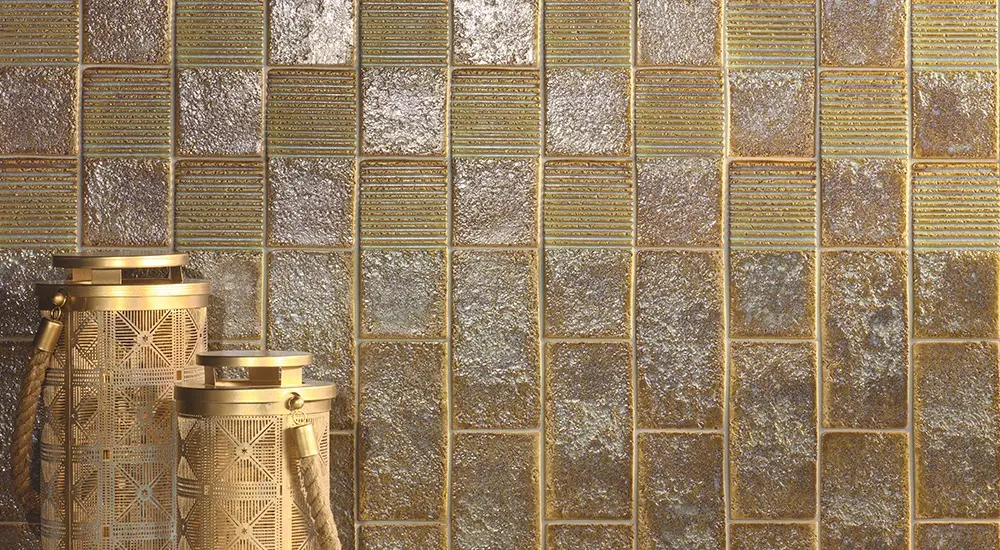
Surface texture is rapidly becoming an essential component of the multisensory experience of ceramic tile. Traditional high-gloss finishes are increasingly giving way to sophisticated matte, honed, and satin surfaces that create a much softer, more nuanced visual language while actively inviting physical touch. Soft-touch glazes and dramatic three-dimensional reliefs—including precision fluting, deep carving, and subtle, undulating rippling—transform standard tile from a flat wall or floor finish into a dynamic, multisensory architectural element.
Moreover, remarkable advances in digital printing and pressing technology are allowing surface textures and intricate graphic details to work in absolute harmony. This technological leap creates remarkably authentic wood and stone looks where the visual pattern and the physical, tactile texture align with stunning precision. Underfoot, specialized micro-textured surfaces add an extra layer of functional performance by significantly enhancing slip resistance without ever compromising the overall aesthetic vision of the space.
Soft Metallics
As ceramic color palettes trend distinctly warmer, the metallic hardware and decorative accents accompanying them are following suit. Burnished and brushed golds, along with rich brass fixtures, are rapidly emerging as the preferred design accents over cooler finishes such as traditional chrome and brushed nickel, appearing prominently across plumbing fixtures, architectural lighting, and bespoke furniture.
Spanish ceramics are brilliantly echoing this broader interior shift through subtle yet striking golden details. These elements range from warm veining integrated into marble-look slabs and metallic chips embedded within modern terrazzo designs to delicate golden grains woven into wood-inspired tile collections. Together, these complementary materials work in concert to establish a cohesive, unified visual language, allowing ceramic surfaces and metallic accents to seamlessly reinforce one another throughout any given architectural space.