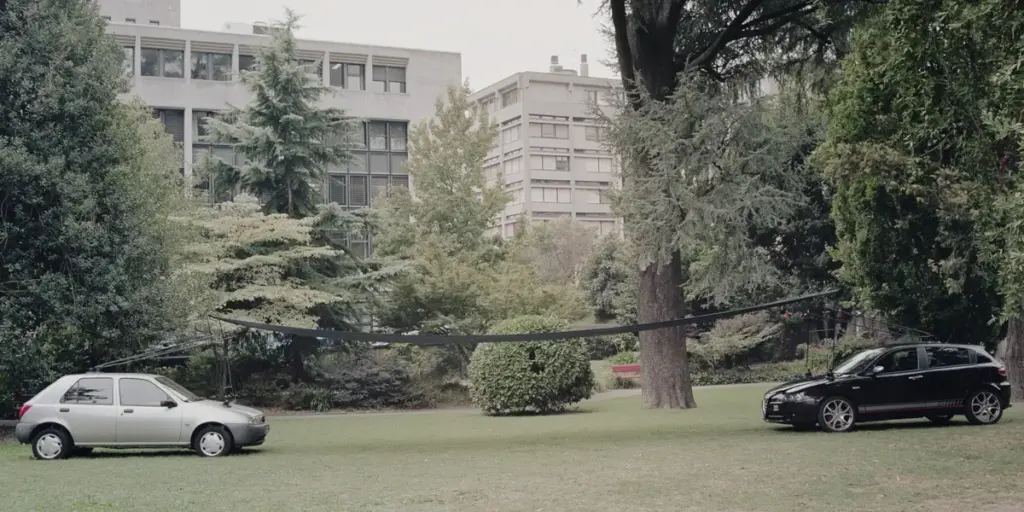
The future of resource management, material reuse, and architectural design in Switzerland is being forced into the spotlight through a striking new art and architectural installation. Conceived by designer Giona Bierens de Haan, the project—fittingly titled It All Remains—takes a critical look at the country’s relationship with its automotive footprint. By examining what happens to vehicles once they reach the end of their operational lifespans, the installation challenges the status quo of how modern society disposes of massive industrial goods. At its core, the project asks a provocative question: why are millions of pounds of high-grade structural materials treated as disposable waste rather than foundational building blocks for the future?
To understand the urgency of Bierens de Haan’s conceptual critique, one must look closely at the sheer scale of Switzerland’s automotive landscape. Current statistics reveal that there are nearly five million registered vehicles circulating domestically across the Alpine nation. This translates to an average of approximately 0.5 cars for every single inhabitant, cementing the private automobile as a deeply entrenched pillar of daily Swiss mobility and infrastructure. However, this vast fleet is in a state of constant renewal and attrition. Annually, approximately 200,000 vehicles are officially removed from service, creating a massive, continuous stream of decommissioned machinery that must be processed, recycled, or discarded.
What happens to these 200,000 retired vehicles each year exposes a significant blind spot in domestic environmental policy and resource stewardship. According to industry data, a staggering two-thirds of these decommissioned automobiles are not recycled or repurposed within Switzerland. Instead, they are exported wholesale to foreign countries—jurisdictions that frequently maintain far less stringent environmental regulations and industrial recycling standards. This practice effectively outsources the environmental burden of automotive waste management, allowing affluent nations to maintain an illusion of cleanliness while exporting the heavy ecological costs of dismantling, processing, and disposing of complex industrial machinery to developing or less-regulated regions.
It All Remains directly targets this reliance on foreign markets for domestic waste management, offering a bold blueprint for local material revalorization instead. Bierens de Haan’s installation acts as both a physical manifestation of a problem and a conceptual laboratory for alternative futures. By keeping the conversation grounded in the realities of Swiss consumption, the project argues that exporting vehicular waste is not only an environmental failing but a profound economic and material missed opportunity. As global supply chains face increasing volatility and the extraction of virgin building materials takes a mounting toll on the planet’s ecosystems, the continuous outflow of high-strength metals, glass, and polymers represents a squandering of valuable urban mining reserves.
CONVERTING OBSOLETE VEHICLES INTO STRUCTURAL BUILDING BLOCKS
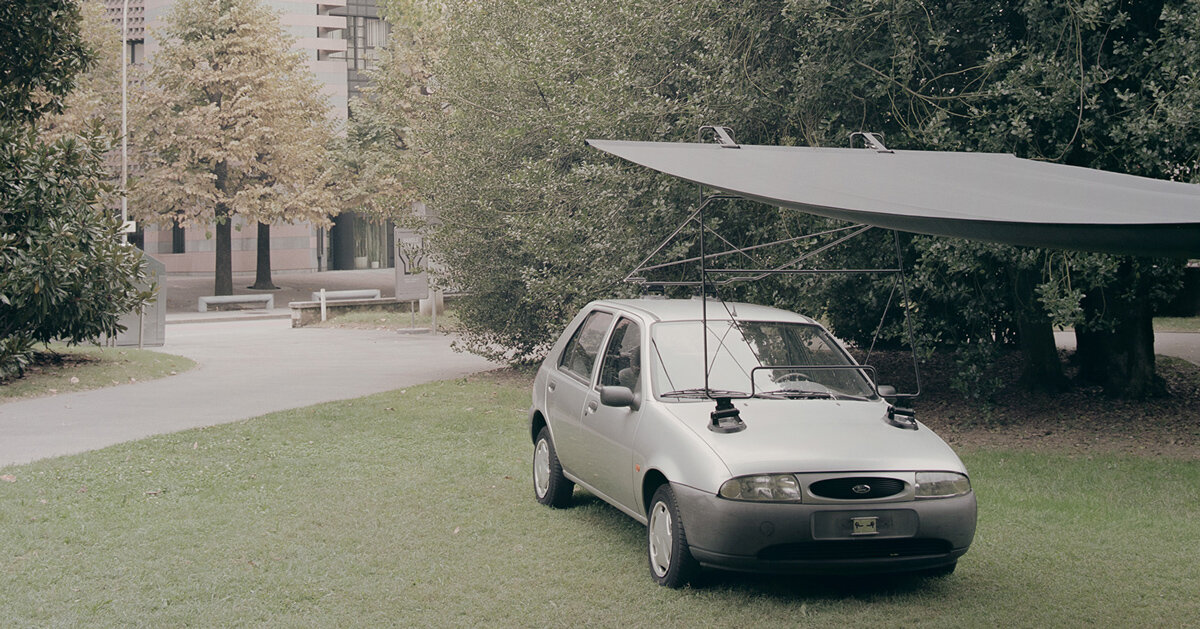
Looking ahead toward an inevitable post-fossil-fuel transition, the installation anticipates a world where traditional internal combustion engine automobiles—and eventually personal automobiles at large—become entirely obsolete. Rather than viewing this massive fleet obsolescence as an apocalyptic industrial crisis or an unmanageable logistical nightmare, the conceptual framework of It All Remains reframes decommissioned cars entirely. Instead of treating them as systemic waste destined for the shredder, the export yard, or the landfill, the project posits that automobiles should be understood as pre-fabricated structural resources and foundational building blocks for future architectural construction.
The installation demonstrates how automotive components—ranging from heavy steel chassis frames and load-bearing pillars to specialized glass and composite panels—possess the mechanical properties and durability required for the built environment. Modern vehicles are engineered to withstand immense kinetic forces, protect human occupants during high-speed collisions, and endure decades of harsh weather and road conditions. Consequently, the materials embedded within a car are often of a higher quality, precision, and durability than standard construction materials. By shifting the perception of car components from systemic waste to structural materials, Bierens de Haan bridges the seemingly disparate worlds of automotive engineering and architectural design.
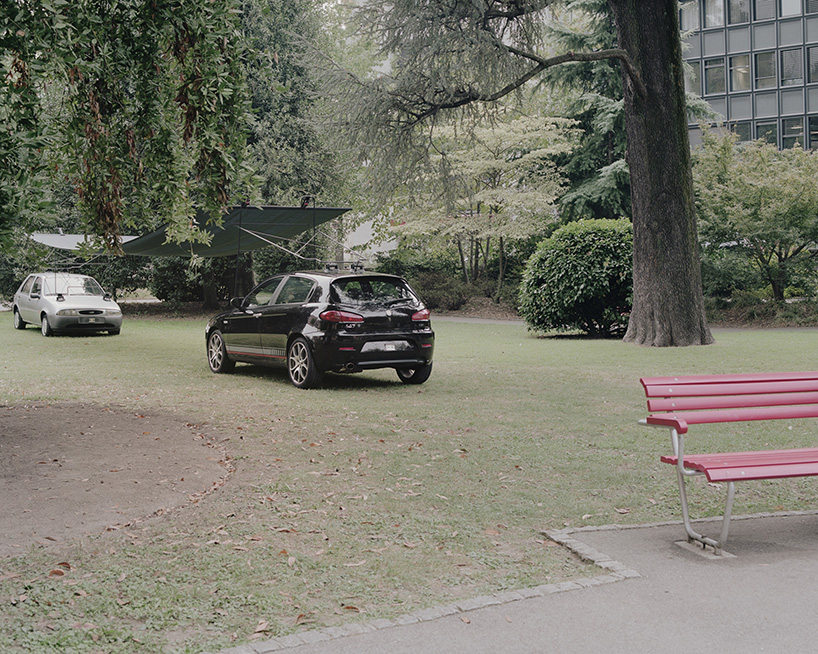
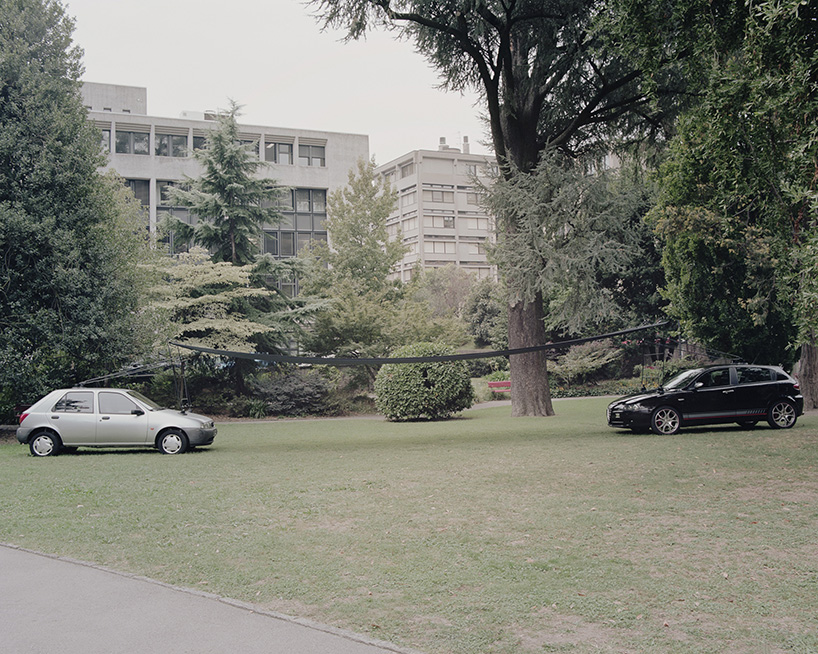
Photographs of the exhibition, captured by Simone Bossi, reveal the raw, poetic potential of this material translation. The installation displays automotive fragments stripped of their familiar consumer contexts, reorganized instead through the rigorous logic of structural composition. Massive metal pressings and vehicular skeletons are stacked, balanced, and integrated in ways that suggest how future architects might source their raw materials not from quarries and timber mills, but from the urban and industrial scrap yards of a transitioning society.
Ultimately, It All Remains serves as a timely critique of current linear economic models that extract, consume, and discard. By localizing the debate and envisioning a circular economy where Swiss automotive waste is harvested for domestic architectural innovation, Giona Bierens de Haan challenges designers, policymakers, and the public to rethink the lifecycle of industrial goods. As Switzerland and the broader global community confront the pressing realities of climate change, resource scarcity, and the phasing out of fossil-fuel infrastructure, projects like this point toward a future where yesterday’s obsolete machinery becomes the physical foundation of tomorrow’s sustainable cities.