The art world has navigated a tumultuous seven days, defined by the intersection of historical restitution, government intervention in the cultural market, and significant leadership shifts. As the industry looks toward the autumn auction season, major developments in Europe and North America are reshaping the discourse around provenance, public policy, and the ethical responsibilities of cultural institutions.
A Landmark Kandinsky Returns to the Market
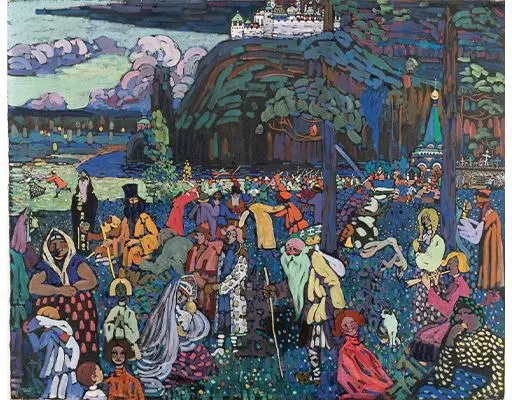
Perhaps the most anticipated event on the upcoming auction calendar is the sale of Wassily Kandinsky’s 1907 masterpiece, The Colorful Life (Das bunte Leben). The painting, a pivotal work in the artist’s early career, was recently returned to the heirs of its original Jewish owners by a German museum following a restitution claim. The decision to return the work highlights the ongoing, complex process of reconciling the provenance of works looted or sold under duress during the Nazi era.
Christie’s has announced that the painting will hit the auction block in October, with expectations that the bidding will exceed $30 million. The Colorful Life is celebrated for its intricate composition and vibrant use of color, marking a transitional moment in Kandinsky’s oeuvre as he moved away from traditional landscapes toward the abstraction that would later define his legacy. The impending sale is expected to be a bellwether for the market’s appetite for high-quality, historically significant modernist works with clear, rectified provenance.
The UK Intervenes to Retain a Rembrandt
While the Kandinsky heads to the auction block, another Dutch master is facing a different kind of restriction. The United Kingdom government has placed a temporary export bar on a Rembrandt painting valued at £71 million (approximately $97 million). The measure, designed to prevent the masterpiece from leaving British shores, grants local institutions a window of opportunity to raise the necessary funds to purchase the work and keep it in a public collection.
Export bars are a standard, albeit high-stakes, tool used by the UK’s Department for Culture, Media and Sport to protect national treasures. By stalling the export, the government aims to encourage private donors, trusts, and museums to pool resources to secure the painting for the nation. The move reflects the ongoing tension between the international mobility of private art collections and the desire of sovereign nations to preserve their cultural heritage.
Cultural Controversy: The Galliano Exhibition
In a significant shift, the Metropolitan Museum of Art in New York has cancelled a planned exhibition celebrating the work of fashion designer John Galliano. The decision followed a wave of public backlash and internal pressure regarding the designer’s history, specifically his 2011 conviction for making antisemitic remarks.
The cancellation underscores the growing sensitivity among major museums regarding the public image and moral standing of the figures they choose to honor with retrospectives. While the Met’s exhibition was intended to highlight Galliano’s technical brilliance and influence on modern fashion, the institution ultimately determined that the controversy surrounding the designer’s past was incompatible with the museum’s current commitment to inclusivity and historical sensitivity.
Shifts in Museums and Public Spaces
The landscape of institutional management and public art has also seen notable disruption this week, marked by the removal of controversial works and the celebration of new acquisitions.
At the Kennedy Center in Washington, D.C., a towering sculpture simply titled Blue—which had been a centerpiece of the campus since 2019—has been removed. The sculpture, which was originally donated by the artist, was earmarked for removal following a change in the center’s leadership. The decision highlights the fragile nature of public art commissions and the extent to which institutional priorities can shift under new governance.
Conversely, the New Orleans Museum of Art (NOMA) has celebrated a major acquisition: Isamu Noguchi’s monumental Mississippi Fountain. Originally commissioned for an office tower near the Mississippi River in collaboration with the renowned architect Gordon Bunshaft, the sculpture is a significant piece of mid-century civic art. Its relocation to NOMA’s Beaux Arts entrance, scheduled for this autumn, ensures that this iconic work remains accessible to the public, preserving a vital link between the city’s architectural history and its modern artistic identity.
In Stockholm, the National Museum has bolstered its collection of Old Masters through the acquisition of a significant altarpiece by the Italian Mannerist painter Lavinia Fontana. Fontana, one of the most successful female artists of the late 16th and early 17th centuries, was known for her exceptional skill in religious and mythological subjects. This acquisition is part of a broader effort by major European museums to rebalance their collections and provide greater visibility to historically significant women artists.
Meanwhile, the Powerhouse Parramatta project in Western Sydney is facing a period of instability. Lisa Havilah has stepped aside from her role as CEO ahead of the museum’s highly anticipated opening. The move comes in the wake of new allegations and during an ongoing investigation into the institution’s governance and procurement practices. The situation has cast a shadow over the project, which is intended to be a flagship cultural hub for Western Sydney.
Awards and Recognition for Emerging Practices
Despite the administrative and market-driven turbulence, the creative sector continues to honor innovation. The Serpentine in London has announced the recipients of its inaugural fellowship program, which focuses on the intersection of art and emerging technologies. Four artists have each been awarded £10,000 grants, intended to support research into how Artificial Intelligence is reshaping cultural production and the ways in which institutions engage with the public. The fellowship represents a forward-looking approach to the challenges posed by AI, emphasizing the need for artists to play a central role in shaping the digital future.
In the realm of sound and visual media, the Japanese composer and visual artist Ryoji Ikeda has been named the winner of the prestigious Nam June Paik Prize. Celebrated for his minimalist, data-driven installations that explore the hidden structures of the physical world, Ikeda has been described by the prize jury as a "visionary." The award, which includes a £27,000 grant, will be formally presented during a ceremony on September 8th. The recognition of Ikeda’s work reaffirms the importance of interdisciplinary practices that bridge the gap between mathematics, sound, and visual art.
As these events continue to unfold, they illustrate an art world that is deeply entangled with the broader cultural, political, and economic currents of the day. Whether through the ethical challenges of provenance, the shifting politics of museum leadership, or the technological frontiers of new media, the art world remains a space of constant negotiation and evolution.