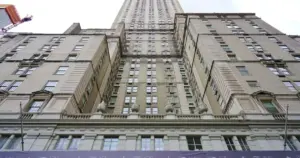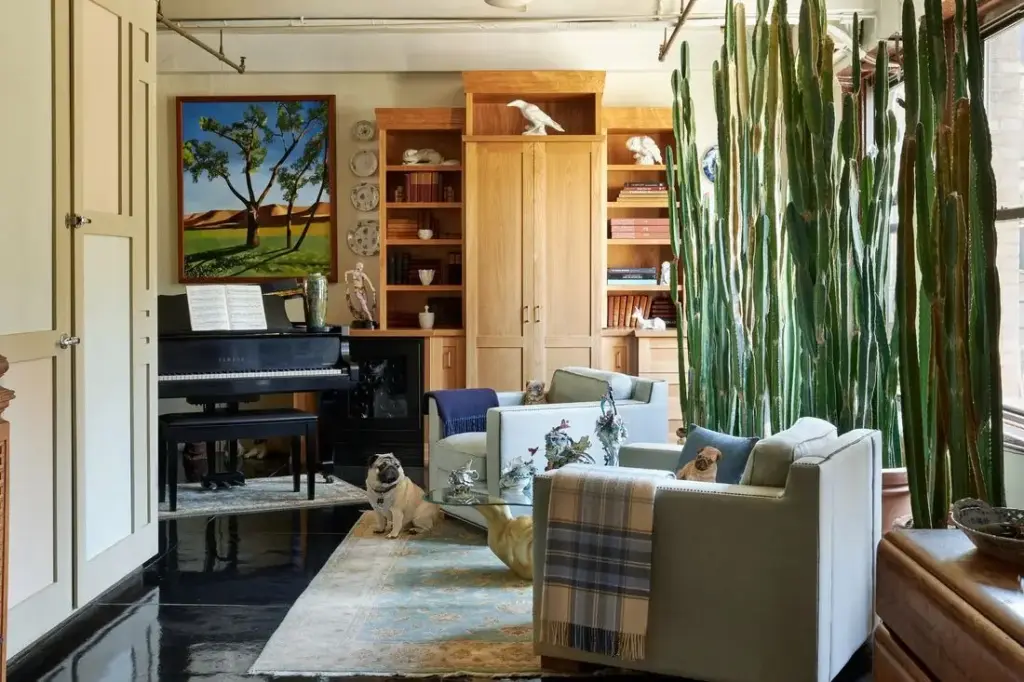
Right across the street from the bustling chaos of Madison Square Garden, tucked thirteen stories above the asphalt of Midtown Manhattan, lies an extraordinary urban sanctuary. What was once a former fur atelier from 1927 has been transformed into a sprawling, 2,000-square-foot loft that completely defies its gritty urban surroundings. Inside this elevated retreat, long-term residents have cultivated a private world of art, family heirlooms, and a towering indoor cactus garden that serves as both living architecture and a natural shield against the city below.
The apartment is home to Stewart Rahtz, a retired modeling-business executive, and his partner, the artist Bill Farmer. The couple has shared the space for nearly fifty years, witnessing the dramatic evolution of the surrounding neighborhood from a notoriously rough stretch of Manhattan into the hyper-visible commercial hub it is today. Yet stepping through the front door immediately transports visitors far away from the flashing lights and crowds of Midtown.
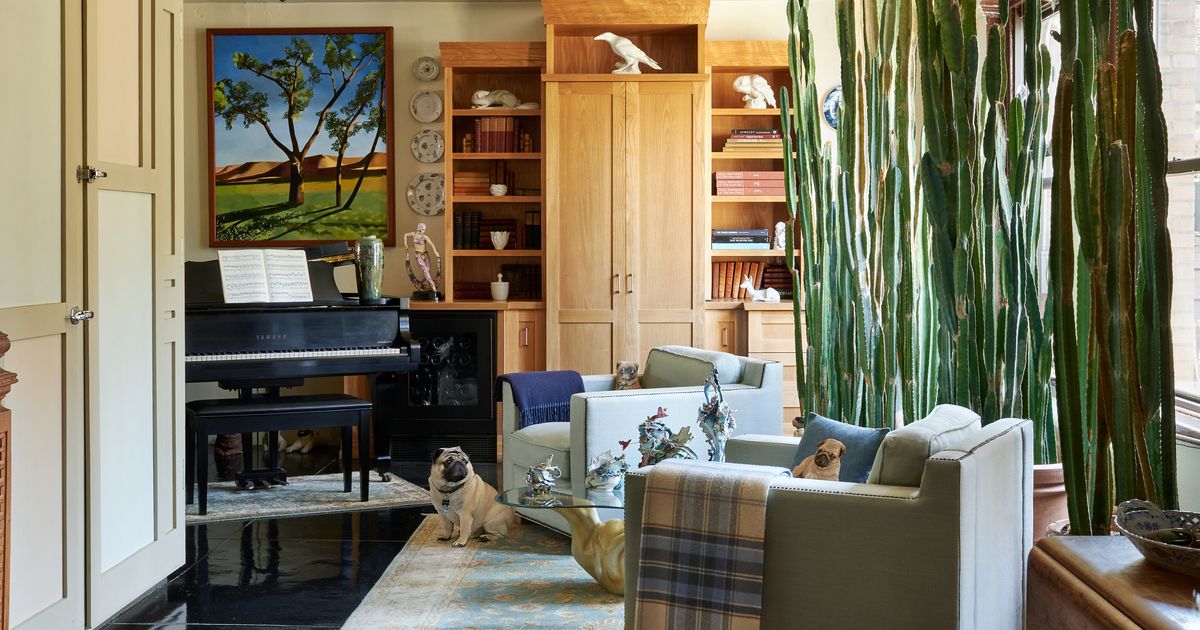
Upon entry, guests are greeted by an unusual and striking sight: a dense wall of giant, spindly cacti that mask the expansive south-facing windows. According to Rahtz, these desert plants were originally brought indoors out of practical necessity rather than strict botanical hobbyism.
"They were meant to provide shade without having to bother with curtains, which we found never worked," Rahtz explains.
What began as a modest six-inch starter plant found on the side of the street has spent decades expanding in the warm Manhattan sunlight. Today, that first cactus reaches all the way to the ceiling, accompanied by a thriving collection of desert flora. "They just grow and grow and grow," Farmer notes. Remarkably, the botanical installation requires very little maintenance. "They get watered twice a year. That’s it," Farmer says, adding that when they finally bloom for a single evening, the fragrance is powerful enough to linger until sunrise.
The journey to securing this unique sanctuary began in 1980, when Farmer spotted a classified listing in the Village Voice. At the time, the 1927 building had a markedly different character. All but one of the commercial furriers that once occupied the structure had been replaced by music studios, and the surrounding blocks were plagued by urban decay, drugs, and street-level crime.
"A lot of drugs, prostitution, and the Guardian Angels on patrol," Farmer recalls of the neighborhood’s rough era.
Securing the lease required a significant financial leap of faith for Farmer, who was nervous about committing every dollar he had to a questionable landlord. Unsure of how to proceed, he sought professional guidance from an unexpected source. "The previous tenant was so shady," Farmer says. "Remember the TV ads for Jacoby & Meyers? They used to promote free consultations, so I went and the lawyer told me, ‘Do it. In 20 years, you will be the envy of every friend you have.’"
Trusting the advice, Farmer and Rahtz took over the space, rolled up their sleeves, and completely gutted the interior. Armed with sledgehammers, they tore down walls, including a heavily insulated vault that had originally been refrigerated to store delicate animal pelts during the building’s furrier days.
In place of cold commercial utility, the couple built a deeply personal interior layered with history, family connections, and decades of global travel. Some of the furniture dates back to Farmer’s family home in Kansas, where his father worked as an oil wildcatter. Other pieces are cherished hand-me-downs from Rahtz’s relatives, including his maternal grandfather, a former vaudevillian who launched his own pioneering movie company in Astoria during the 1910s.
During the height of Rahtz’s career in the fashion industry, the loft was famous for its vibrant summer gatherings. With direct access to a private outdoor terrace, the couple frequently hosted massive parties that spilled out into the open air. "For a while, we were known for these parties," Rahtz says. "We’d fill the tub with vodka and Champagne and have more than 100 people over."
Today, the scale of their entertaining has shifted, with larger gatherings more frequently hosted at their country property in Woodstock. When they are in the city, Farmer and Rahtz balance taking in the local theater scene with traveling the world. Their global adventures are reflected throughout the loft, which is decorated with an eclectic array of Venetian, Sri Lankan, and Burmese masks, puppets, and cultural objects collected along the way.

Every corner of the loft tells a story through art and accumulated objects. The entryway features striking murals painted by artist David Friday, alongside a nude painting by Farmer himself. "He just stayed here one time when we were on vacation, and we came back to this," Farmer explains of Friday’s surprise artistic intervention. The antique bed frame in the space was shipped directly from Portugal, paired with a handmade quilt crafted by Farmer’s mother, Rosemary.
Other artistic touches weave through the rooms. A bathroom mural is embellished with masks and artifacts from their travels, including an elephant from Sri Lanka and a dragon from Bali. A seating area features 1960s swivel armchairs originally upholstered in green vinyl from Farmer’s family home in Kansas, positioned near a doll figure named "Chloe," created by the late Dustin Poché, visual director of the boutique Jeffrey. Farmer notes that his family owns several of Poché’s intricate dolls, which featured completely handmade clothes, bags, shoes, and delicate ceramic faces. Nearby, a painting by Farmer depicts his father’s old basketball team in Missouri, styled deliberately to resemble a vintage tinted photograph.
The main bedroom continues the artistic narrative with a mermaid headboard and ambient lighting crafted by David Friday, paired with a dresser that once belonged to Rahtz’s father.
Outdoors, the private terrace recently underwent a significant refresh earlier this year after city construction workers required access to bring the building’s exterior up to code. The renewed green space now features a tricolored willow tree, a red maple, and a vibrant array of seasonal annual flowers, providing a tranquil outdoor escape high above the unending motion of Midtown Manhattan.