For gardeners across the Northeast, finding plants that offer multi-season interest, handle regional weather shifts, and successfully fill difficult landscape gaps is a continuous pursuit. To help address this need, Joann Vieira, director of public gardens and horticulture at The Trustees of Reservations in Massachusetts, has shared four standout plant selections. Drawing from her extensive professional experience overseeing some of the region’s most treasured historic landscapes, Vieira highlights a curated group of specimens ranging from fragrant spring-blooming shrubs to luminous foliage plants capable of illuminating shady garden corners.
Whether gardeners are looking to update their outdoor spaces, expand their botanical horizons, or simply find rare gems to add to their upcoming shopping lists, these four selections offer a compelling mix of color, texture, and unique historical provenance.
Japanese Spicebush
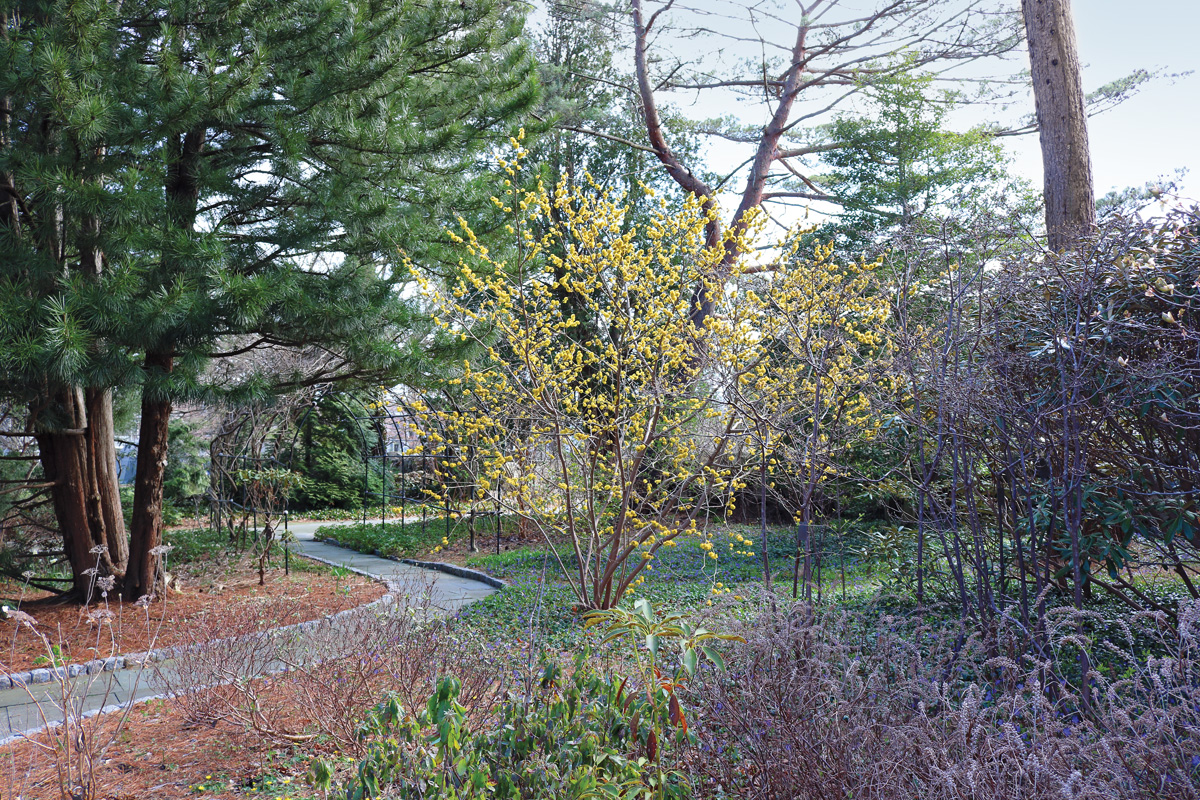
Among the standout recommendations is the Japanese spicebush (Lindera obtusiloba), a remarkable shrub known for putting on an early-season show long before many other landscape plants wake from their winter dormancy. The distinct, round buds of this woody perennial burst open in spring, covering upright and arching branches in an explosion of eye-catching yellow pom-poms.
These sweetly fragrant blossoms emerge prior to the appearance of the foliage, effectively heralding the arrival of warm weather. Notably, its bloom period occurs ahead of traditional landscape favorites like forsythia, overlapping instead with prized early-spring bloomers such as Edgeworthia chrysantha. This timing provides a much-needed injection of color and fragrance precisely when Northeast landscapes are emerging from drab winter conditions.
As the season progresses, the later-unfurling leaves grow to a substantial length of 4 to 6 inches, lending a bold and tropical-like texture to garden beds. In settings where both male and female plants are grown in close proximity, female specimens produce small drupes that transition in color from red to black by late summer. The seasonal cycle concludes with a vibrant display in autumn, when the sassafras-like foliage shifts into a brilliant palette of bright yellow suffused with delicate tones of peach and pink.
‘April Mist’ Rhododendron
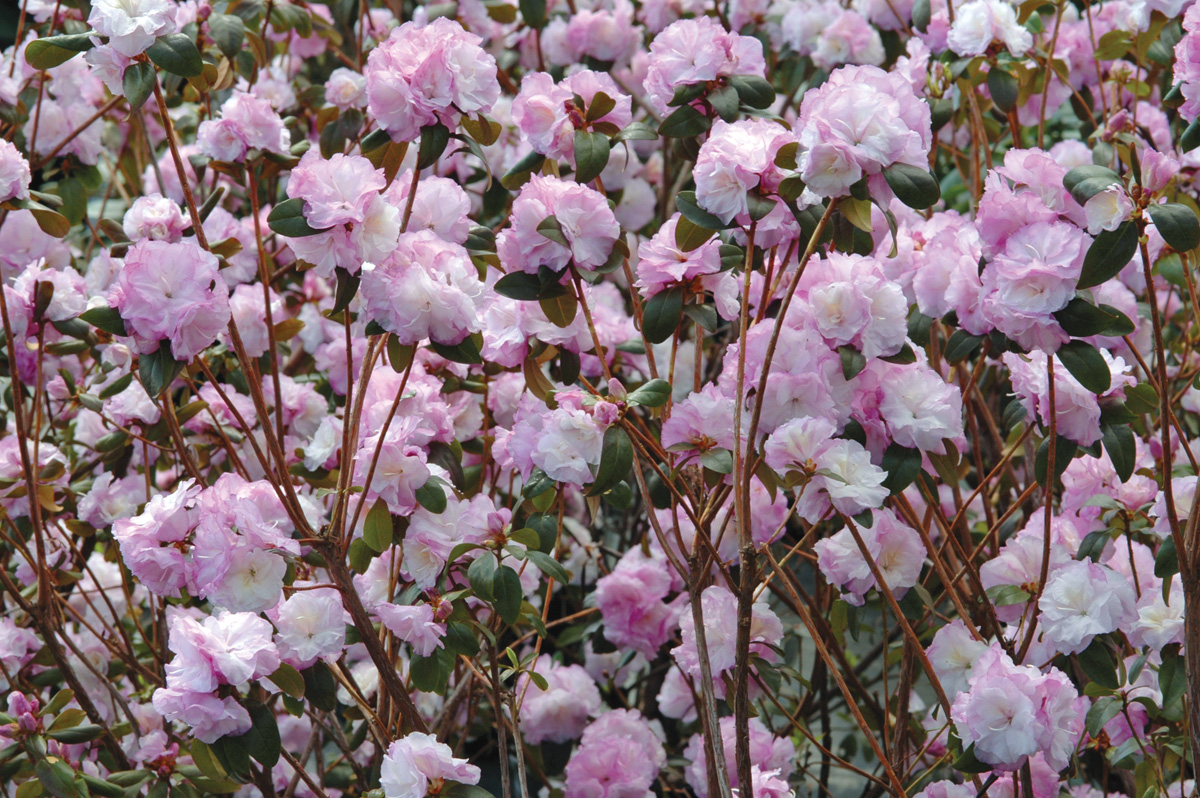
For gardeners seeking an exceptional early-blooming woody plant with a refined scale, the ‘April Mist’ rhododendron offers a compelling option. Selected by the internationally renowned plant breeder Dr. Gustav Mehlquist, this double-flowered treasure produces compact, 1.5-inch-wide blossoms softly shaded in delicate lavender.
The flowers are presented like small, charming bouquets resting gracefully above dense foliage composed of small, dark evergreen leaves. Even when cultivated under optimal environmental conditions, ‘April Mist’ maintains a characteristically slow growth rate, gradually maturing over many years to a manageable height of 4 to 5 feet.
Finding this cultivar in the commercial marketplace can occasionally prove challenging, as it remains a relatively rare specialty plant. Regional horticulturists often stumble upon it unexpectedly during visits to specialized nurseries, frequently capturing the attention of landscape enthusiasts who appreciate its delicate aesthetic and disciplined growth habit.
‘Hussii’ Canadian Hemlock
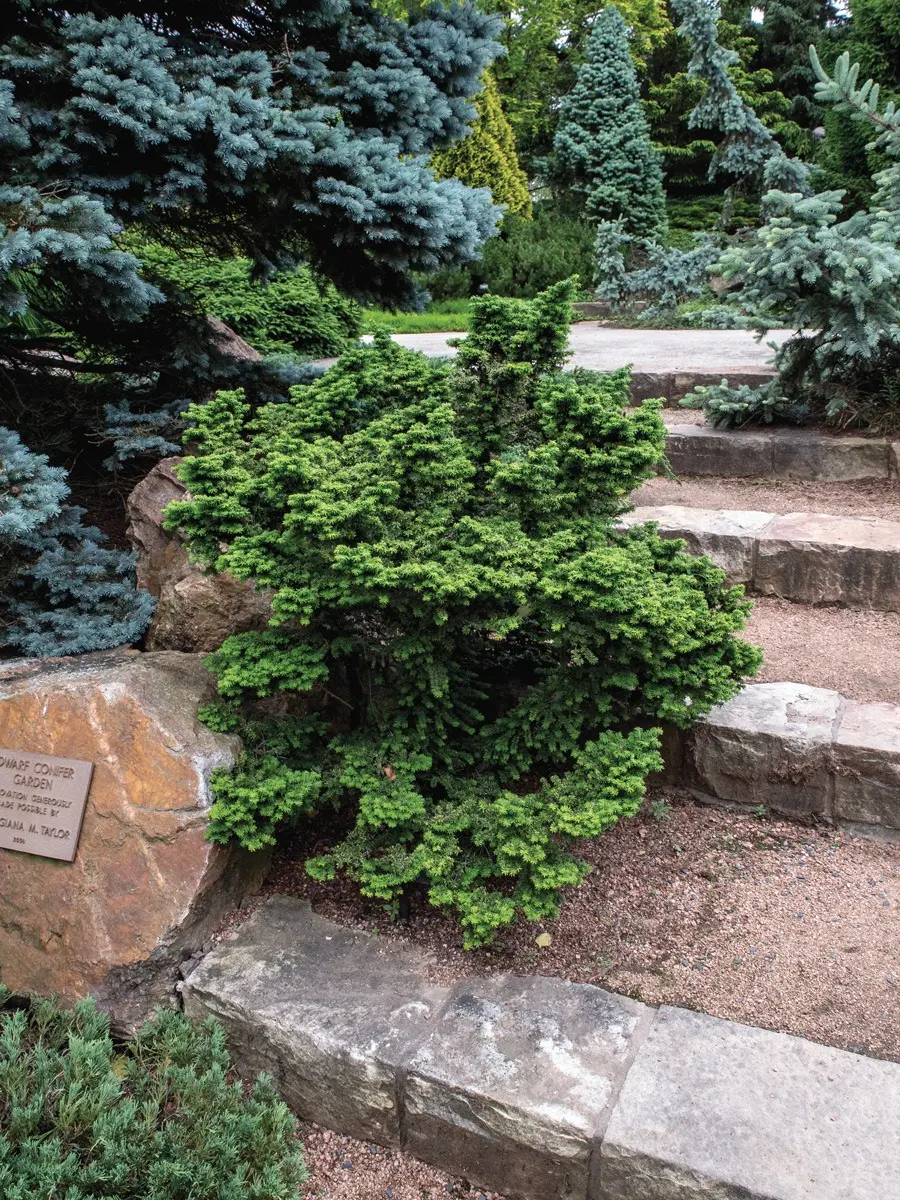
For structural presence in narrow or confined spaces, the ‘Hussii’ cultivar of the Canadian hemlock (Tsuga canadensis) provides a unique architectural element. Originally discovered around 1900 by the accomplished plantsman and landscape architect John Francis Huss, this dwarf evergreen has long been admired by horticulturists. Mature specimens, such as those thriving after more than six decades in the historic gardens at Long Hill in Beverly, Massachusetts, demonstrate the remarkable longevity and distinct character of the plant.
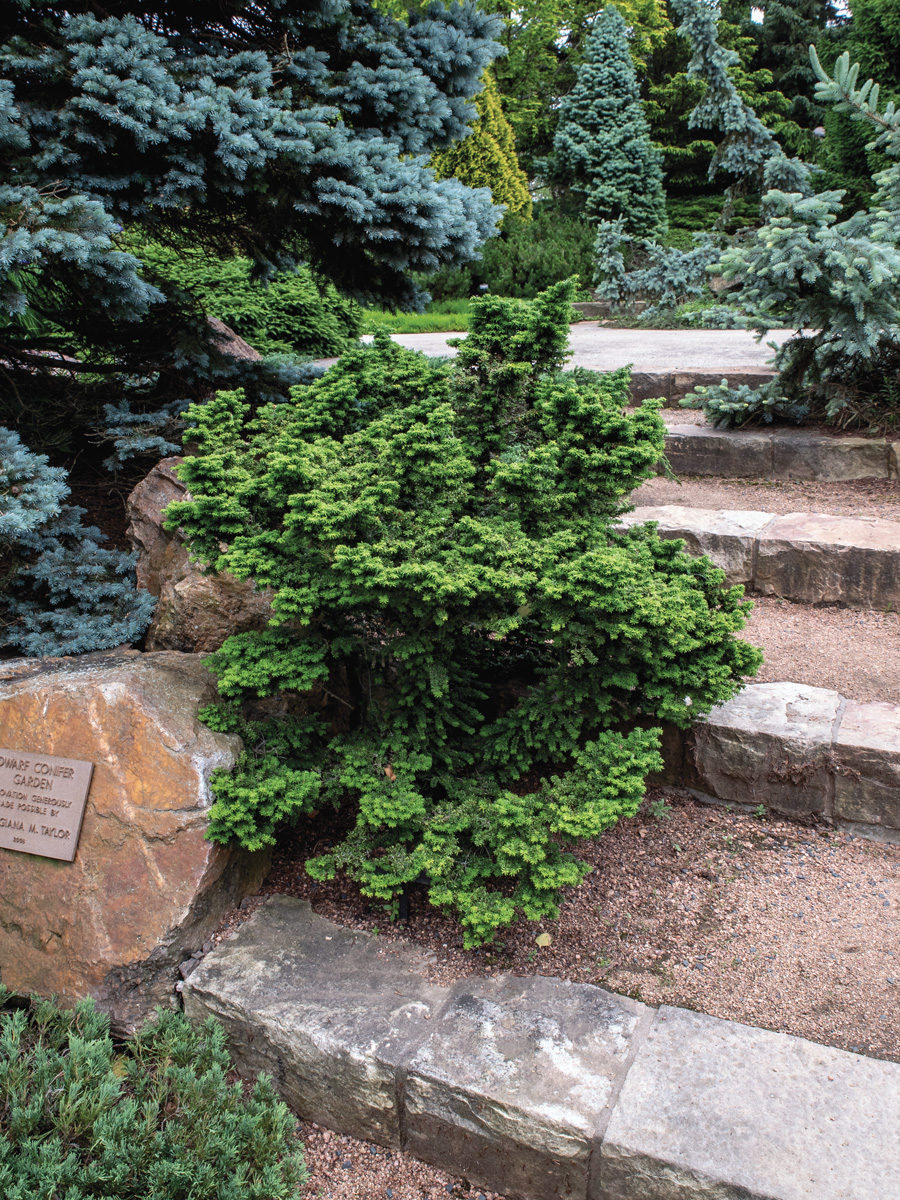
Described as tufted and sculptural in its appearance, ‘Hussii’ grows at a remarkably slow pace, eventually reaching a height of around 40 feet in advanced maturity, though it typically measures only about 5 feet tall after its first decade and roughly 20 feet after forty years. The plant features very short needles held tightly in dense bundles along ascending stems, creating a dense framework when young that gradually opens up as the specimen ages.
Because of its diminutive scale over long periods, the cultivar is frequently utilized in specialized applications such as rock gardens or training as bonsai. An additional practical advantage for Northeast property owners is its capacity to thrive in moderate shade, an environment that naturally slows its growth further while encouraging a more open, graceful habit.
‘Gold Bullion’ Stinking Hellebore
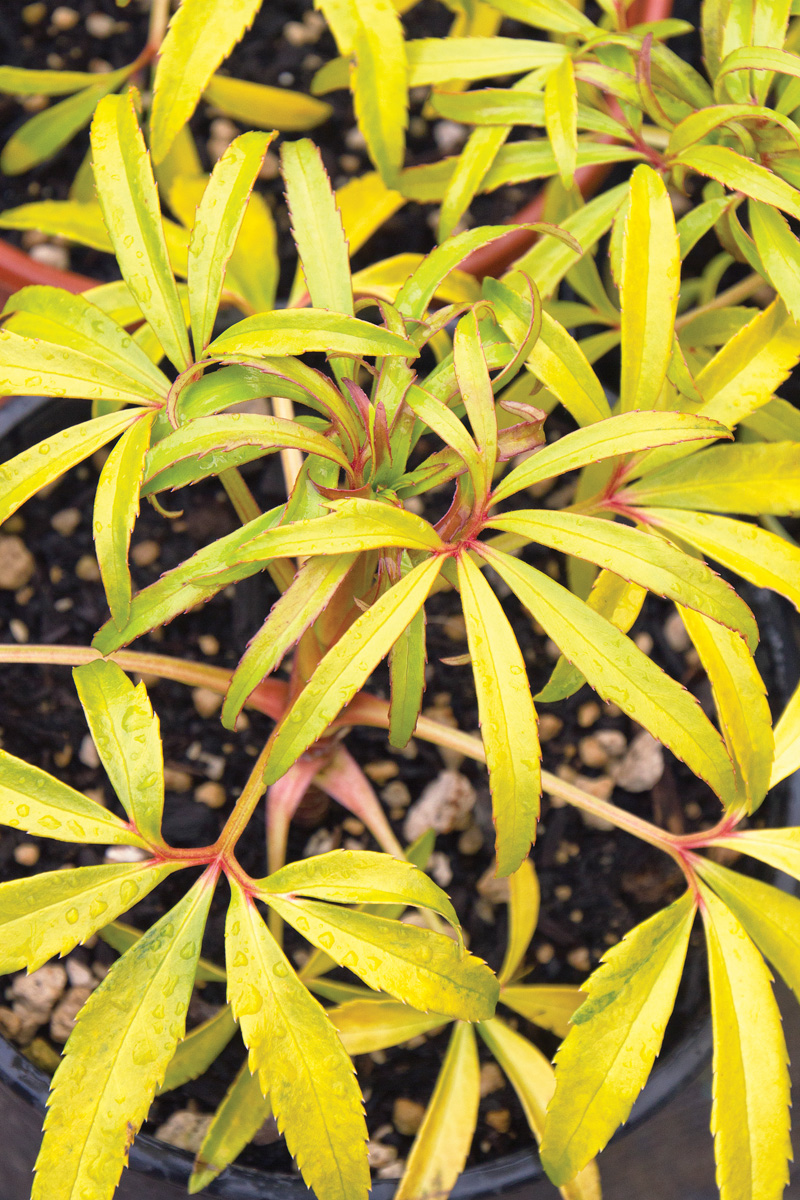
Shady garden spaces often present a design challenge, requiring plants with bright foliage to lift heavy shadows and draw the eye across the landscape. The ‘Gold Bullion’ stinking hellebore (Helleborus foetidus) meets this requirement with its striking, luminous coloration.
The plant adapts well to partial shade or dappled sun conditions, provided it is cultivated in well-drained soil rich in organic matter. Once fully established, it demonstrates impressive resilience, holding up admirably against dry spells and seasonal drought.
In very early spring, bell-like blooms emerge on loose clusters above deeply cleft, evergreen leaves. These flowers generally display a pale green hue tinged with subtle hints of chartreuse, while both the supporting stems and the blossoms themselves are accented by striking splashes of ruby red. The foliage adds a distinct dynamic to the garden bed, with new leaves unfurling in an intense, glowing yellow that gradually softens to a lighter green as the growing season advances. Gardeners who permit the plant’s seeds to ripen naturally on the stalk are often rewarded with self-sown seedlings that faithfully replicate the distinctive traits of the parent plant.