Portraiture has long served as the primary nexus where the worlds of art history and the commercial market intersect. Unlike other genres that might be viewed through the lens of aesthetic detachment, the portrait—a face, a figure, or a captured world—demands a different kind of engagement. It is a genre that asks to be lived with, inviting a sustained dialogue between the viewer and the subject. In the current global art landscape, this traditional practice is undergoing a profound transformation, shifting away from the pursuit of strict physical likeness toward the realms of symbolism, allegory, and a deep, rooted sense of place.
A recent selection of works curated from MutualArt’s partner galleries highlights this evolution, tracking the thread of contemporary figuration from the vibrant streets of Havana to the introspective studios of Seoul. These works, which span five distinct markets and a variety of mediums, serve as a barometer for the accessible end of the gallery-sourced market. With pricing ranging from approximately USD$782 for a 2024 oil painting by Anna Song to USD$8,500 for a 2006 archival print by Pierre Sernet, these pieces offer a compelling entry point for collectors. Crucially, they demonstrate that the most rewarding contemporary figurative art today is that which uses the human form to map broader landscapes of memory, culture, and identity.
The Symbolic Power of the Havana Canvas
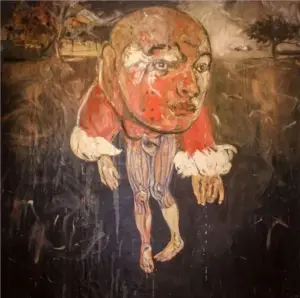
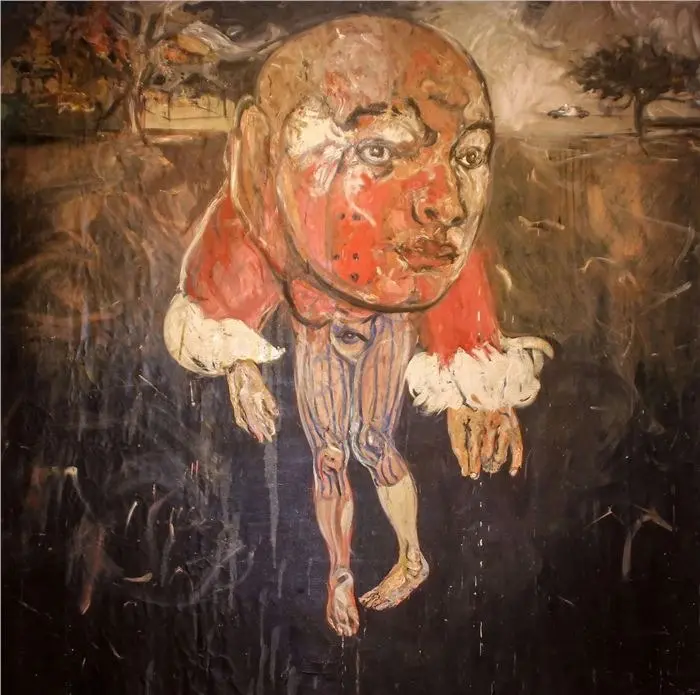
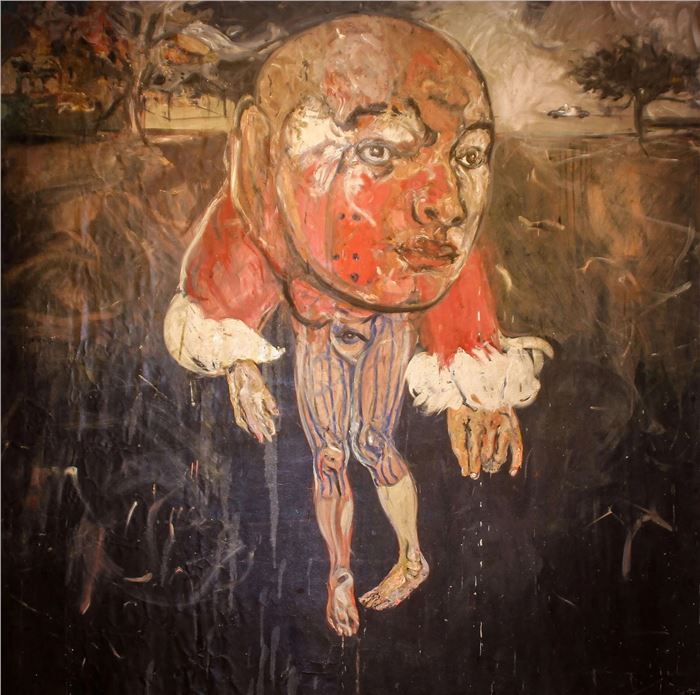
At the heart of this collection is the work of Havana-born painter Carlos Quintana. Represented by the Zapata Gallery, Quintana has been a fixture on the international art circuit since the mid-1980s. His approach to the portrait is characterized by a departure from the literal; his subjects are rarely intended as direct likenesses of individuals. Instead, his figures are vessels, charged with the complex, layered symbolism of Cuban urban and spiritual life. His faces often appear as masks, suspended in a state of transcendence that separates them from the mundane reality of the sitter.
A recent untitled canvas by Quintana serves as a distillation of this long-standing philosophy. The work presents a man’s face, rendered in a startling, saturated red, isolated against a stark black background. The intensity of the image evokes the feeling of a votive icon rather than a commissioned portrait, demanding the viewer’s attention through its raw, emotional power. Perhaps most striking is the scale of the piece. Measuring 194.3 by 194.3 cm (76.5 by 76.5 in), the square canvas functions as an architectural element—a wall-defining statement piece that anchors any space it occupies. As the work ships from Miami, it presents a significant opportunity for collectors looking to engage with a major Cuban figurative work. Given the nature of the artist’s stature and the scale of the piece, it invites a direct, in-depth conversation with the gallery, marking a natural starting point for those looking to deepen their understanding of contemporary Cuban art.
Yoruba Cosmology and the Modern Portrait
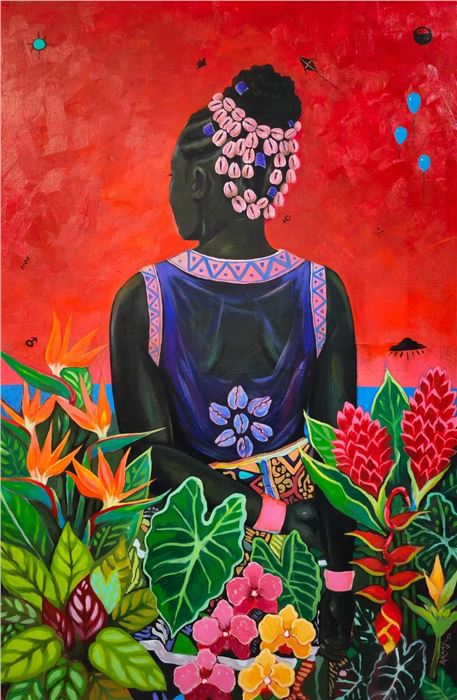
From the Caribbean, the focus shifts to the African continent, specifically through the work of Akanji Bolaji, offered via the EAA Gallery in Lagos. Bolaji’s latest work, titled Orisa: Goddess of fertility, love, and sweet waters, signals a turn toward Yoruba cosmology. By invoking the Orisha Osun—the deity of fertility, love, and the life-giving properties of fresh water—Bolaji moves his work into the realm of the devotional.
In this composition, the goddess is depicted in profile, seated and enveloped by dense, lush tropical flora. The background is a blazing, high-contrast red that forces the figure to the foreground, emphasizing her presence. Bolaji’s style is defined by a flat, decorative confidence, a hallmark of his recent output that serves to elevate the work beyond simple illustration. It is both a devotional image and a contemporary celebration of Black beauty. The painting, priced at USD$1,200, arrives with a certificate of authenticity from the gallery, and for those interested in the artist’s broader practice, the EAA Gallery maintains a selection of his works ranging between USD$1,000 and USD$2,150.
Narrative and the Animal Sitter
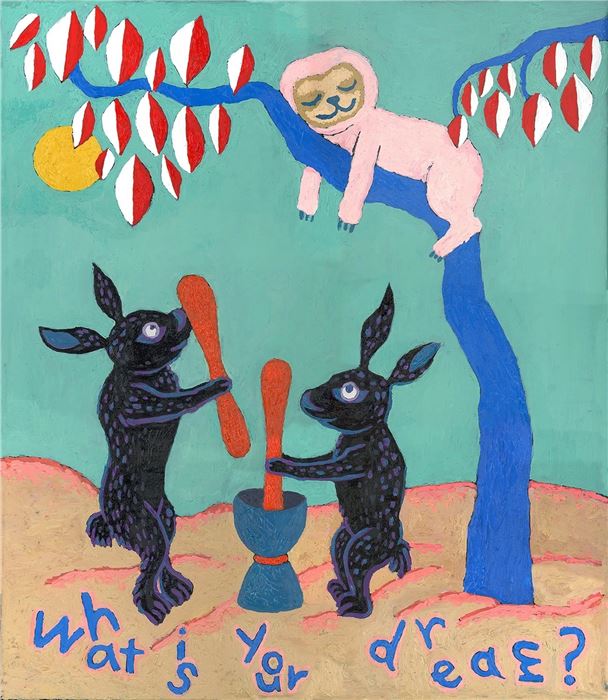
In a significant departure from human-centric portraiture, the South Korean painter Anna Song, represented by Galerie Bruno Massa, introduces the animal as a psychological surrogate. Born in 1984, Song is not only a painter but also an accomplished picture-book author, having received Korea’s prestigious Andersen Award for excellence in published art in 2007. Her background in narrative storytelling is evident in her canvases, where animals are cast as sitters in dreamlike, storybook environments.
Her 2024 oil on canvas, What’s Your Dream?, is a prime example of this synthesis. Featuring two black rabbits and a monkey positioned in a tree, the work functions as a group portrait that invites the viewer to project their own inner lives onto the creatures. It is a playful, yet deeply thoughtful, exploration of the "sitter" in art. Song has gained significant recognition in Korea, including an Excellence Award at the Wepple Gallery Gyomyo Year Competition in early 2023. The work itself is listed at approximately EUR 782 (USD$910), making it one of the most accessible pieces in this curated group. The gallery, which has a storied history—founded in Paris in 2013, expanding to Seoul in 2018, and moving its base to Tbilisi in 2019—continues to champion Song’s work, with prices for her other available pieces ranging from USD$770 to USD$2,100.
The Act of Pairing and the Landscape of Identity
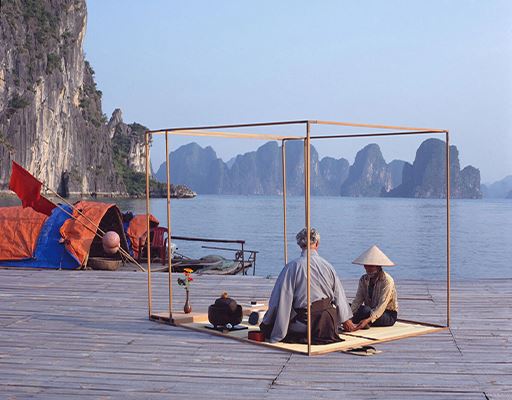
For photographer Pierre Sernet, portraiture is an act of connection and geography. Offered through Arco Gallery in New York, Sernet’s One series approaches the subject through the lens of pairing. Each photograph places two figures side by side within their own specific landscape. In One — Dinh, Halong Bay, Vietnam (2006), the setting—a wooden dock in the iconic bay—is not merely a background but an integral component of the subject’s identity. The work speaks to the relationship between the sitter and their environment, as well as the universal nature of kinship across diverse cultures.
Sernet’s series has traveled through Hawaii, India, China, and Vietnam, documenting the human experience in a way that turns the setting into a component of the likeness. Listed at USD$8,500, the work reflects the artist’s long-term commitment to this global project. It is a sophisticated, archival-grade pigment print that challenges the viewer to consider how we define an individual—not just by their features, but by the world they inhabit.
Human-Scaled Intimacy in Photography
Finally, the selection finds a moment of quiet contemplation in the work of Kelly James, represented by the Stefani Art Gallery in Salem, Oregon. James works in photography with the deliberate, unhurried pace of a classical portrait painter. Her 2025 work, Wifrida, features an older woman seated in a chair before a solid blue wall. The image is direct and devoid of artifice, relying entirely on the sitter’s posture and the emotional weight conveyed by the flat, monochromatic backdrop.
Measuring 41.9 by 40.6 cm (16.5 by 16 in), the print offers a human-scaled counterpoint to the more imposing canvases in the collection. As the Stefani Art Gallery was recently highlighted in a dedicated partner profile, collectors may already be familiar with their commitment to fostering intimate, character-driven works. Wifrida stands as a testament to the power of simplicity, proving that a portrait does not need grand gestures to resonate.
A Global Perspective on the Figure
When viewed collectively, these five works illustrate the breadth of the modern portrait. Whether through the bold, symbolic masks of Carlos Quintana, the cosmological reverence of Akanji Bolaji, the narrative whimsy of Anna Song, the geographic inquiries of Pierre Sernet, or the quiet, photographic stillness of Kelly James, the common thread is a rejection of the portrait as a mere record of appearance. Instead, these artists share a conviction that the figure acts as a repository for memory, culture, and emotion.
For the collector, the market remains remarkably diverse, with entry points that accommodate a wide range of budgets—from under USD$1,000 to the mid-thousands. Each of these works is backed by a gallery partner equipped to provide detailed information on provenance, condition, and shipping. In an art world that is increasingly connected, these portraits serve as a reminder that while the face may be the subject, it is the story behind the face that truly matters. Collectors interested in these works are encouraged to engage directly with the partner galleries through the MutualArt platform to discuss availability and to further explore the narratives behind these evocative pieces.