For decades, the United States has earned global recognition as the source of world-class sparkling wines, rivaling traditional regions with vibrant fruit, exceptional craftsmanship, and distinct regional character. Yet, a sophisticated new chapter is quietly unfolding across American wine country. Producers are increasingly releasing long-aged sparkling wines crafted in the meticulous, time-honored style of the finest French Champagnes.
These exceptional bottles, derived from a single vintage and aged on their dead yeast cells—known as the lees—for a minimum of five years and occasionally stretching to nearly two decades, offer a profound layer of complexity that far surpasses their younger counterparts. No longer merely an experimental one-off project among wineries with French heritage, ultra-aged domestic sparkling wine has emerged as a small but rapidly expanding category. It is capturing the attention of connoisseurs who appreciate the marriage of French winemaking traditions with a distinct American pedigree.
Among the pioneers leading this movement is Domaine Carneros, whose stately French-inspired château at the southern gateway of Napa Valley has long served as a familiar landmark for travelers exploring wine country. Established in 1987 by Champagne’s esteemed Taittinger family, the estate produces Le Rêve, a Napa Valley counterpart to the legendary Taittinger Blanc de Blancs Comtes de Champagne, crafted entirely from Carneros-grown Chardonnay. The current release, the 2018 Domaine Carneros Le Rêve Blanc de Blancs, spent an impressive seven years en tirage, resting undisturbed on its lees following secondary fermentation inside the bottle.
Extended lees aging acts as a foundational pillar in the creation of traditional-method sparkling wine, according to Domaine Carneros CEO Remi Cohen. As the wine matures in contact with the yeast cells, those cells gradually break down and release beneficial compounds that fundamentally enhance both the flavor profile and the physical texture of the wine. This transformative biological process fosters the development of classic sparkling wine characteristics, including notes of shortbread, fresh brioche, and crème fraîche, while imparting a remarkably smooth, creamy mouthfeel and an overarching sense of opulence.
Furthermore, the climatic conditions of the 2018 vintage—marked by cool and remarkably consistent temperatures—allowed for a slow, measured maturation of the fruit. This climate fostered complex flavor development alongside striking structural tension and vibrant acidity, allowing this specific iteration of Le Rêve to additionally express nuanced layers of bright citrus, exotic lychee, and crisp Bartlett pear.

Venturing farther north within the storied confines of Napa Valley, Schramsberg Vineyards has dedicated decades to the pursuit of exceptional sparkling wine. The estate’s journey began in 1965 when founders Jack and Jamie Davies acquired the historic, abandoned property. Today, their son Hugh—who was born that very year and has spent three decades working at Schramsberg, ultimately taking the helm in 2005—continues to push the boundaries of domestic winemaking.
"We have been pushing our envelope of quality as hard as possible for 62 vintages," Hugh Davies reflects. The winery’s latest long-aged release, the 2007 Late Disgorged J. Schram, represents a meticulously composed cuvée of Chardonnay and Pinot Noir sourced from some of Napa Valley’s most premier vineyard sites during a growing season widely celebrated by experts as one of the finest of the entire decade.
Producing a sparkling wine with nearly twenty years of age is still a rarity in the United States compared to the entrenched traditions of Champagne, Davies notes. To achieve the desired depth in this bottling, the winemaking team utilizes traditional barrel and malolactic fermentation in the initial base blend, yielding a richness that echoes its renowned French cousins. Yet, Davies emphasizes that certain defining qualities remain unmistakably Californian.
The elevated natural acidity found in the wine directly reflects the cool North Coast vineyard sites utilized by the estate, delivering an exceptional crispness upon entry and a lingering length on the finish. Additionally, Davies points to the layered, fruit-forward core that persists after nearly two decades as a direct testament to the unique influence of the Pacific terroir.
This dedication to patient aging is not confined to California’s borders; Oregon’s Domaine Willamette stands as a premier example of the Pacific Northwest’s burgeoning prowess in sparkling wine production. This expertise serves as a natural extension of the state’s already preeminent reputation for world-class still Chardonnay and Pinot Noir.
The Domaine Willamette 2017 Extended Tirage Brut marks the winery’s inaugural long-aged release, born from an intentional exploration into how extended cellar patience can yield a richer, more deeply developed sparkling wine. While shorter aging periods traditionally highlight bright, vibrant fruit and youthful freshness, spending seven years in tirage gives the wine ample room to organically build texture, depth, and seamless integration, explains Terry Culton, director of winemaking and vineyards.

The resulting wine offers a more evolved expression of the traditional method, characterized by heightened richness and a broader spectrum of secondary and tertiary character that gracefully complements the wine’s foundational fruit profile. Culton stresses that the winery’s intention is never to merely replicate Champagne, but rather to uphold the exact same uncompromising standards of quality and craftsmanship that have been refined in the French region over centuries. The overarching goal remains to craft a distinctive sparkling wine that authentically reflects the individuality of the estate vineyards, the distinct terroir of the Willamette Valley, and the cool-climate conditions that establish Oregon as an extraordinary place to make sparkling wine.
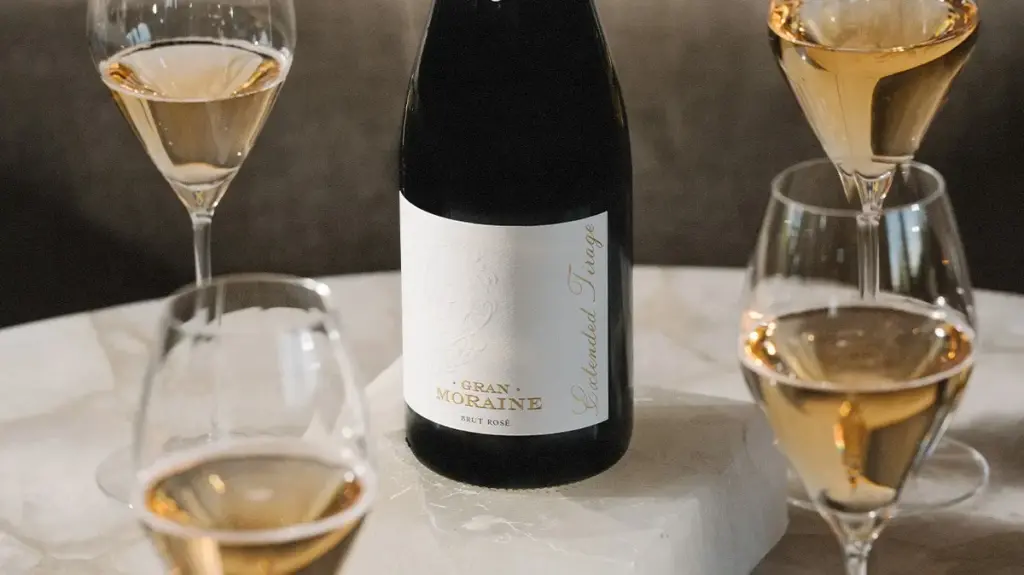
For enthusiasts drawn to pink bubbles, the Gran Moraine Yamhill-Carlton Extended Tirage Brut Rosé Non-Vintage provides an equally compelling study in patience, spending six years maturing on its lees. Winemaker Shane Moore explains that the fruit is deliberately harvested to preserve bright acidity and structural freshness, providing the essential framework required to withstand extended lees aging. Over time, that initial freshness acts as a canvas, allowing profound richness and intricate layers of character to organically emerge.
Describing the subtle shifts in the wine’s profile—marked by a gentle recession of primary fruit notes alongside the development of finer, softer bubbles and more intricate, savory flavors—Moore offers a culinary analogy. He compares the process to letting a soup simmer for an extended duration, where the prominent fruit recedes and a complex array of deeper layers comes forward to take center stage.
The profound complexity unlocked by extended lees aging ultimately renders these styles of sparkling wine exceptionally friendly partners for fine dining. Arthur Hon, a sommelier at New York City wine bar Lei, finds deep appreciation in the 2000 Domaine Carneros Le Rêve Late Disgorged Blanc de Blancs, praising its seductive, velvety texture accompanied by flavors of salted apple taffy, toasted almond, and gentle yet lively citrus accents. Hon suggests pairing the mature bubbly with savory dishes like roast chicken or classic pork Milanese finished with parmesan breadcrumbs. The gentle umami characteristics inherent in roast chicken or a crispy cheese-coated Milanese create a harmonious synergy with both the fruity and savory dimensions of the mature wine.
Similarly, Elaine Kim, wine director at Jory within The Allison Inn & Spa in Newberg, Oregon, favors pouring the Gran Moraine Extended Tirage Brut Rosé Non-Vintage alongside a rich wagyu steak frites. She notes that the wine’s prominent acidity and elegant flavor profile stand up effortlessly to the richness of the dish, striking a balance that feels simultaneously light, refreshing, and deeply satisfying. Both the culinary preparation and the wine deliver a sense of approachable decadence, proving that patience is far more than a mere virtue—it is the transformative ingredient quietly shaping some of America’s finest sparkling wines.