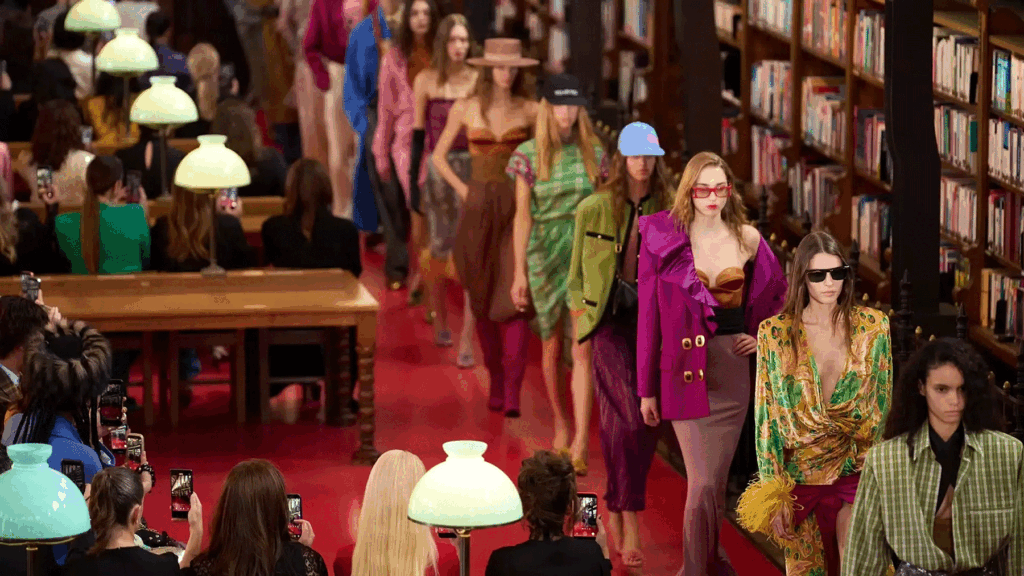
PARIS — In a striking marriage of literature and high fashion, creative director Alessandro Michele staged Valentino’s Spring/Summer 2027 collection at the historic Bibliothèque Sainte-Geneviève in Paris. Titled Antibiblioteca, the runway show served as a profound exploration of accumulation, memory, and potentiality, reframing clothing not merely as a commodity to be consumed, but as an archive of unfulfilled possibilities. In a participatory twist designed to extend the show’s intellectual ethos into the real world, invited guests were asked to bring a book from their personal shelves to be donated to public libraries, bridging the gap between private ownership and civic intellectual life.
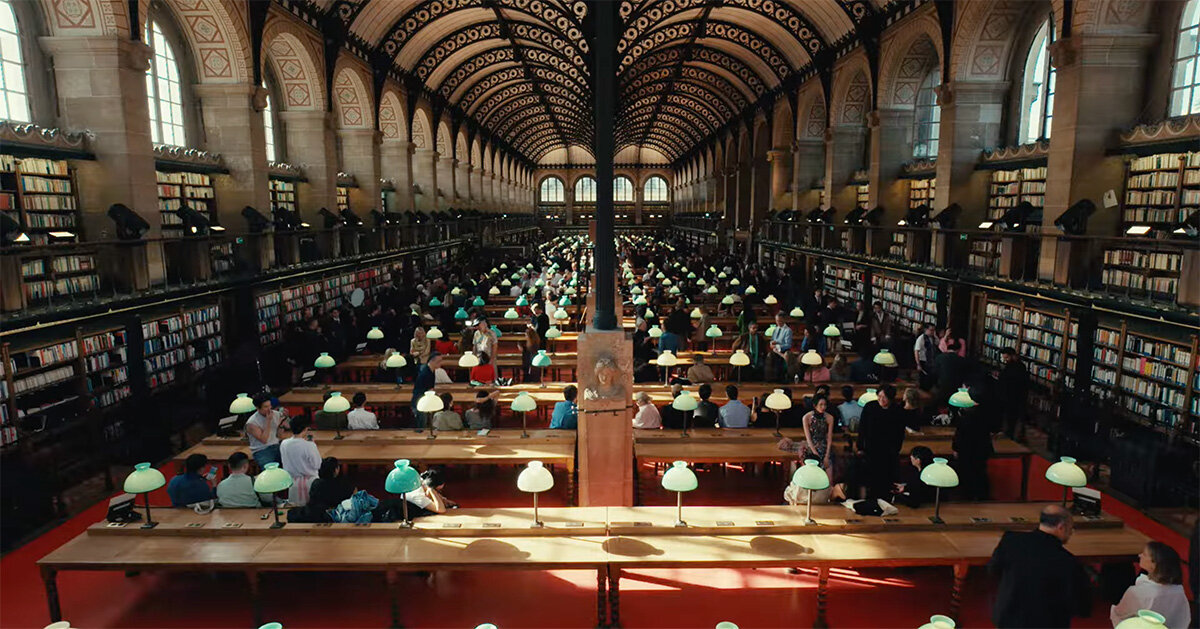
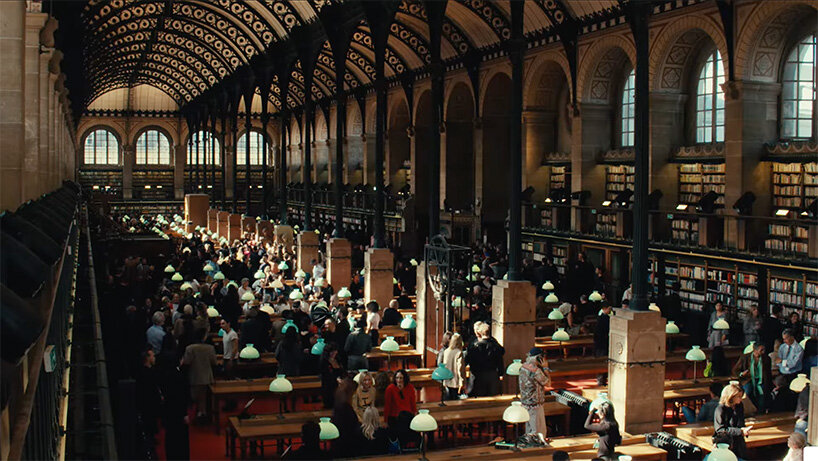
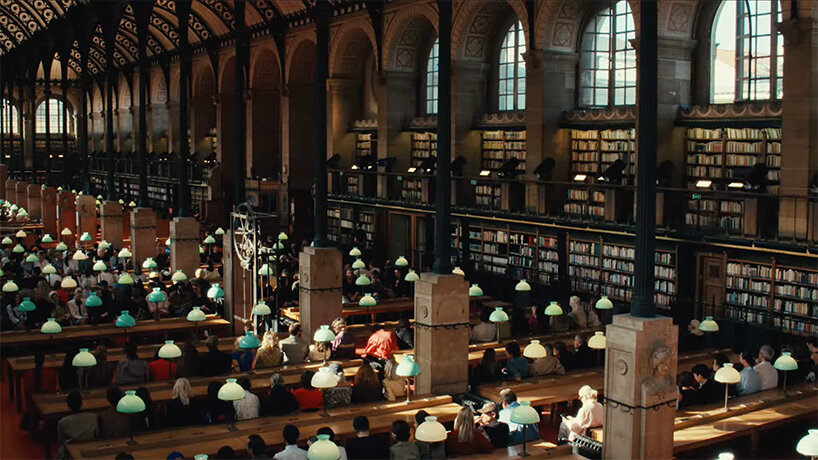
The presentation unfolded against the backdrop of the venerable Parisian library’s long wooden reading tables, iconic green lamps, intricate iron railings, and densely packed bookshelves. Known as a sanctuary dedicated to concentration, memory, and accumulated knowledge, the space provided a contemplative environment that stood in deliberate, poetic contrast to the transient nature of a fashion runway. As models moved between the rows of scholarship, the Italian fashion house’s latest creations passed quietly among the stacks, generating a dialogue between permanence and ephemerality, and establishing the library itself as a co-creator of the visual and conceptual narrative.
The Concept of the Antilibrary and the Value of the Unread
The core philosophical framework of Antibiblioteca draws inspiration from an idea popularized by author Nassim Nicholas Taleb in his book The Black Swan, where he recounts the legendary library of writer Umberto Eco. Taleb describes how Eco’s immense collection of unread books held far greater value for the author than the volumes he had already read. These unread books represented the vast boundaries of the unknown, standing as a physical testament to the limits of human knowledge and the perpetual possibility of future discovery.
Alessandro Michele extends this exact line of reasoning from literature to the realm of fashion. Every seasonal collection produced by a luxury house contains garments destined for vastly different futures. While some pieces will be captured briefly on a runway, others will survive primarily through digital photographs and moving images, and a select few will enter private wardrobes to be worn or preserved. Yet, Michele argues, a garment’s cultural and intellectual significance does not begin or end with its practical utility or commercial consumption.
Just as an unread book is far from useless simply because its pages have not yet been turned, a runway look or an unworn garment retains immense value. It holds the potential to suggest an entirely new silhouette, alter how we perceive the human body, or linger in the collective cultural memory long after the physical fabric has disappeared from view. By framing fashion through this lens, Michele challenges the industry’s conventional metrics of success, which frequently tie a garment’s worth exclusively to its marketability and frequency of wear.
An Invitation to Imagine the Unwritten
The conceptual depth of the Valentino presentation began long before the first model stepped onto the library floor. The physical invitations sent to guests were meticulously designed as a catalogue of imaginary books—volumes featuring provocative, poetic titles for works that do not actually exist in the physical world. These phantom publications could only be imagined by the recipients, instantly setting up the foundational premise of the show: that profound value exists in what has yet to be discovered, read, or realized.
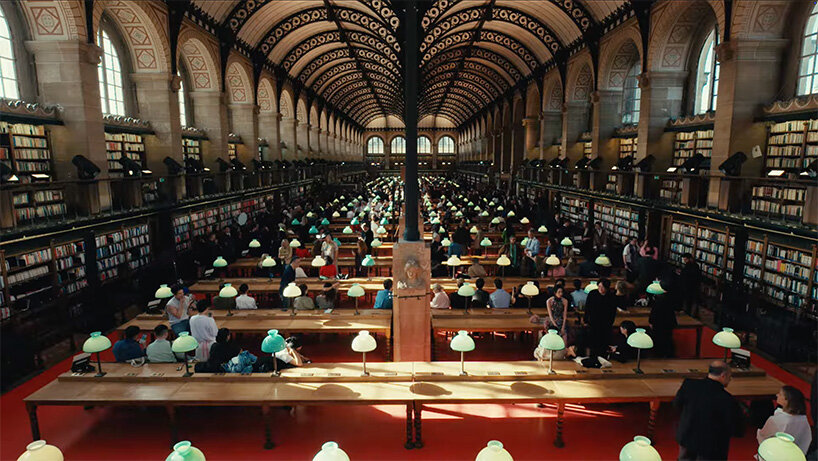
This participatory intellectual exercise extended directly to the attendees themselves. Guests were instructed to bring a physical volume from their own bookshelves, chosen deliberately with the thought that a stranger might eventually pick it up to read in a public library. By turning the elite, often insular world of a Paris Fashion Week runway into an active channel for book donations, the event inverted the traditional hierarchy of fashion shows. Instead of merely extracting attention and capital from its audience, the runway gave back to the community, enriching local public libraries and reinforcing the shared cultural heritage preserved within public literary institutions.
Fashion as a Living Archive
Within the hushed, scholarly atmosphere of the Bibliothèque Sainte-Geneviève, the juxtaposition between the static permanence of the library’s collection and the dynamic movement of Valentino’s garments highlighted fashion’s unique role as an ongoing archive. Clothes, much like books, do not exist in a vacuum. Their forms continually return, mutate, and acquire entirely new meanings as they travel through time and space.
Historical references routinely transform into contemporary design propositions, while a fleeting image from a runway show can circulate globally for years. This temporal fluidity aligns closely with philosopher Giorgio Agamben’s concept of potentiality, a theoretical framework that Michele frequently employs to describe the infinite possibilities that remain open before an idea or an object solidifies into harsh reality.
A fashion show, in this view, functions as a gathering place for clothes that may never populate everyday life, yet it succeeds in showing us what everyday life could potentially look like. There is a distinct sense of optimism in this approach. It suggests that creativity is not strictly bound by utility, and that the spaces between what is worn and what is merely imagined are just as vital as the clothes themselves. As the models navigated the historic reading rooms, stepping softly past centuries of accumulated human thought, Valentino’s Antibiblioteca ultimately offered a quiet meditation on the beauty of the unknown, proving that fashion, at its highest level, can invite us to rethink not only how we dress, but how we encounter the vast library of human possibility.