Acoustic design has traditionally been synonymous with permanent building elements. For generations, architects and engineers have relied on fixed walls, robust roofing systems, suspended ceilings, and specialized insulation layers to govern how sound travels and reverberates within a space. These stationary interventions remain foundational for establishing the baseline acoustic performance of a building, ensuring that sound transmission between rooms is minimized and that interior reverberation times are optimized for human comfort and productivity.
However, contemporary environments—ranging from bustling construction sites and industrial manufacturing plants to evolving creative studios and dynamic corporate offices—reveal a fundamental reality: not all noise sources or spatial configurations are permanent. Construction projects are inherently fluid, evolving day by day as active work zones shift and heavy machinery is brought in, replaced, or relocated. Industrial facilities frequently restructure their floor plans to incorporate new equipment, modifying production lines in ways that render rigid, permanent reconstruction entirely impractical. Similarly, temporary work areas often emerge organically within spaces that were never originally engineered to handle specialized acoustic loads.
Because acoustic conditions are inherently dynamic rather than static, they demand flexible, responsive strategies. This raises a critical design question for modern architects and facility managers: what happens when acoustic control needs to move?
Controlling sound within a built environment does not always mean eliminating it entirely. In the vast majority of practical applications, the primary objective is to reduce sound transmission, contain disruptive noise within a designated working zone, or mitigate its physiological and psychological impact on people living and working in adjacent areas. The core challenge, however, arises when the origin of the noise itself is mobile. Introducing heavy machinery or altering assembly lines in an industrial setting changes the acoustic baseline instantly, yet halting operations to rebuild walls or retrofit permanent architectural barriers is rarely a financially or operationally viable solution.
To address these fluid operational challenges, portable acoustic solutions introduce a radically different methodology. Instead of forcing permanent alterations to the building envelope, these systems bring targeted acoustic control directly to the source of the noise. Temporary barriers, specialized acoustic blankets, flexible curtains, and portable modular enclosures—such as those engineered by Acoustical Surfaces—act as a secondary layer of infrastructure. These elements can be installed, rapidly repositioned, or completely removed in alignment with the shifting demands of a given space. By complementing conventional architectural strategies, these portable systems transform sound control from a rigid, once-and-done structural decision into an adaptable, living element that evolves alongside the space it serves.
How to Design Spaces Intended to Change
Designing spaces that accommodate mobile acoustic systems requires an operational shift in mindset, acknowledging that certain spatial needs are inherently temporary by nature. An industrial intervention or renovation project lasting only a few weeks does not necessitate a permanent, costly modification to a building’s core structure. Likewise, a factory floor that undergoes regular operational reorganizations benefits immensely from acoustic elements that absorb and block sound without obstructing future spatial reconfigurations.
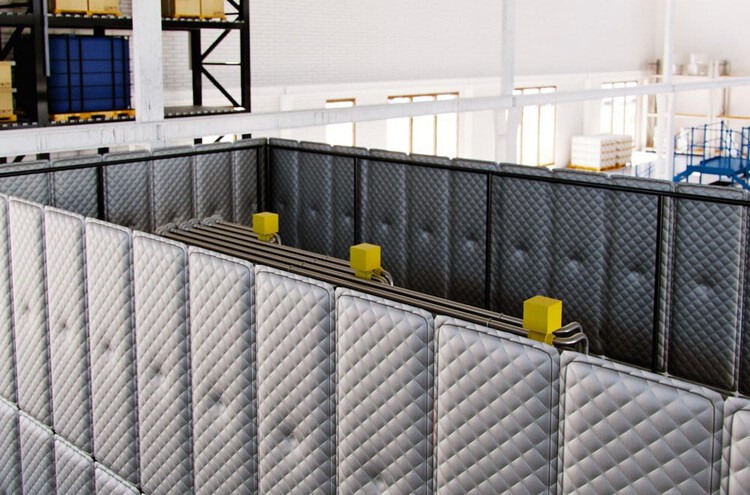
Acoustical Surfaces provides a diverse catalog of flexible solutions, including barriers, blankets, curtains, and modular enclosure systems, which allow facility managers to establish localized acoustic control zones around specific noise-generating equipment or temporarily partition expansive open spaces. Beyond their technical acoustic properties, physical dimensions, or material compositions, these systems empower designers to introduce targeted layers of sound control precisely where and when they are needed.
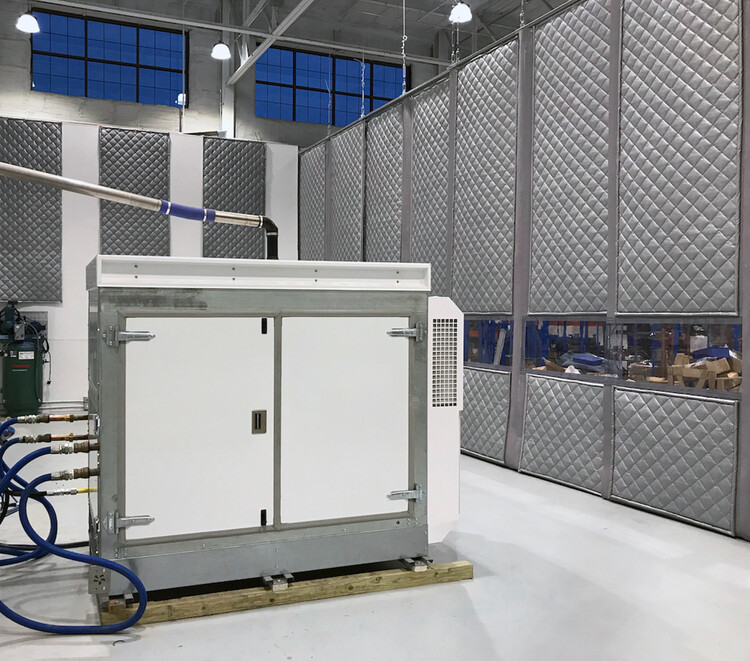
Within this framework, an acoustic curtain can establish a flexible room separation, a freestanding barrier can clearly define a noisy industrial work area, a specialized blanket can wrap around a loud compressor to contain sound transmission at the source, and a portable enclosure can entirely alter the acoustic reality of a localized zone without modifying the architecture that contains it. Understood as temporary architectural envelopes, these elements function as lightweight infrastructure, actively modifying a room’s acoustic performance without demanding a permanent redrawing of its floor plan.
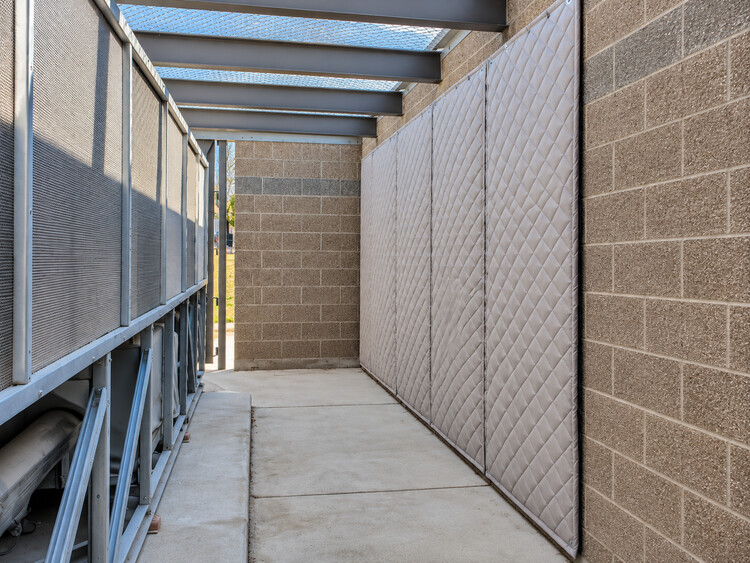
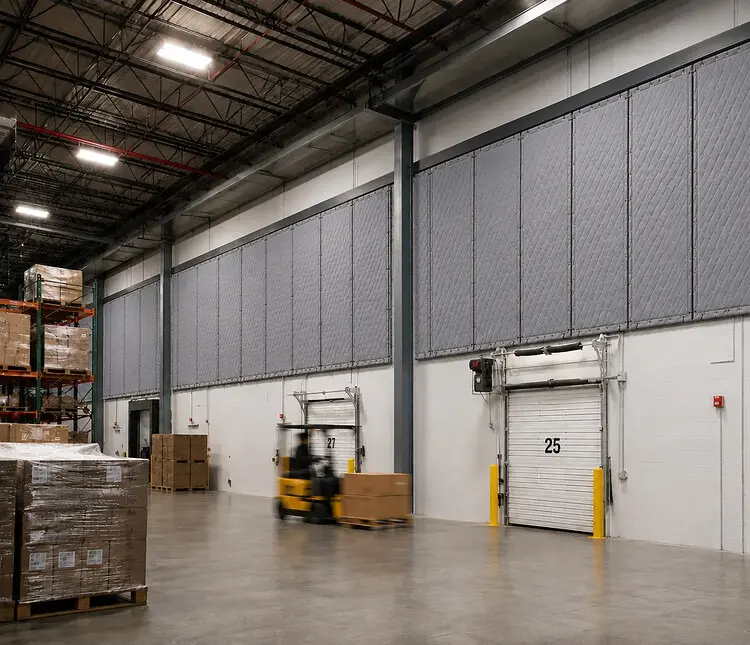
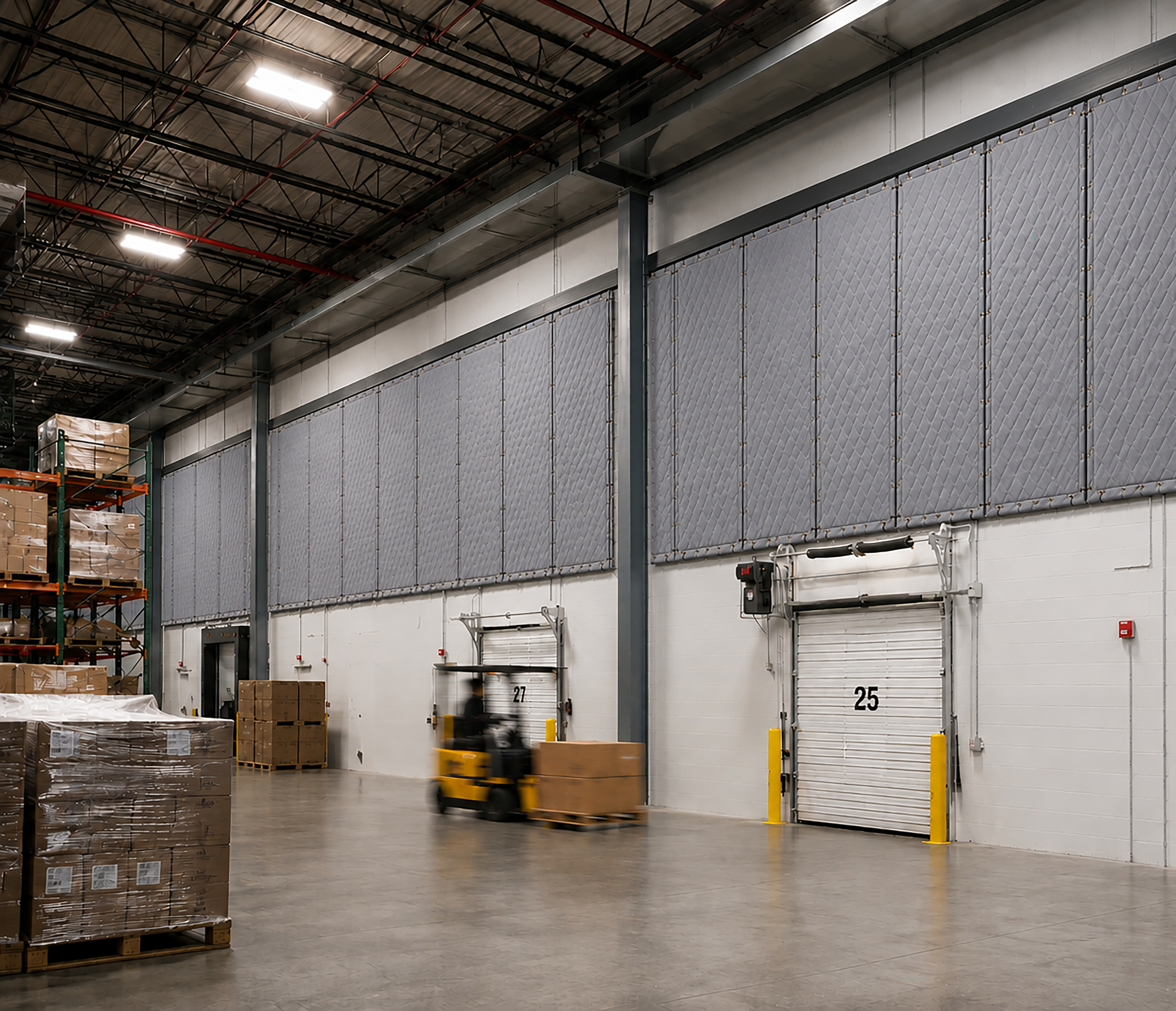
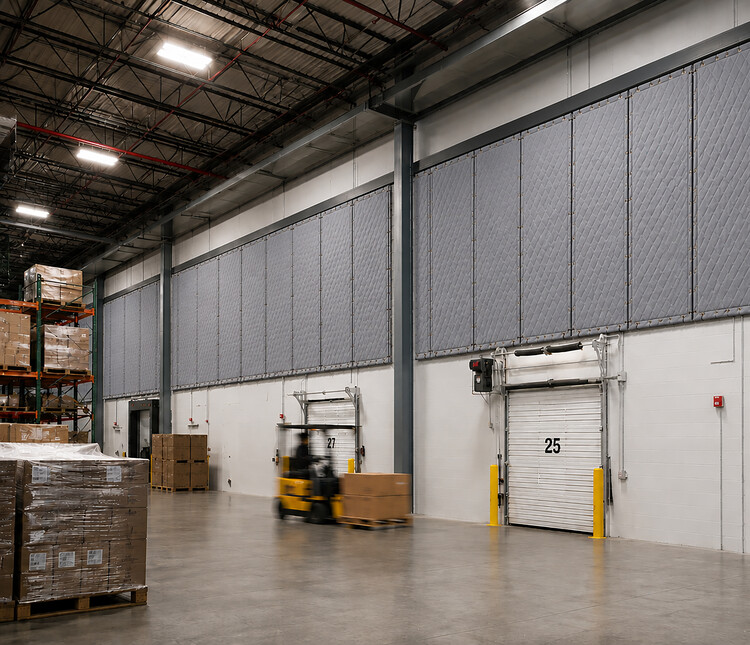
A prominent example of this adaptive approach can be found in Acoustical Surfaces’ Indoor Soundproof Quilted Acoustic Curtains, which skillfully combine sound absorption and sound-blocking capabilities within a flexible, modular format. Custom-engineered to suit unique applications, these curtains typically feature a dense mass-loaded vinyl core—available in densities of one or two pounds per square foot—enclosed securely on both sides by a durable, quilted, sound-absorbing textile facing. Highly durable and engineered for demanding environments, these curtains are resistant to water and harsh chemicals, making them uniquely suited for industrial plants, commercial facilities, and even specialized residential applications where they are routinely deployed to isolate loud machinery, partition busy work areas, or construct movable acoustic barriers that adapt in real time to operational shifts.
How to Design Acoustics Without Compromising Flexibility
The integration of portable acoustic systems extends far beyond heavy industry, reshaping environments as diverse as acting studios, creative production facilities, and corporate workplaces. In these settings, mobile solutions fundamentally alter not only the acoustic experience of a room but also the daily routines and workflows of its users.
At Open Shop Studio, for instance, designers turned to Acoustical Surfaces by installing STOP-25 fiberglass quilted curtain panels to achieve versatile acoustic separation. These specific panels possessed a Sound Transmission Coefficient (STC) rating of 26, effectively absorbing sound waves on both sides to prevent unwanted reflections. By integrating these curtains with an overhead track system and joining the individual panels via secure vertical Velcro seams, the studio gained the remarkable ability to transform a massive open room into multiple smaller, acoustically isolated recording booths, or to open the space entirely depending on the day’s creative requirements.
Corporate office environments present an entirely different set of acoustic challenges, where striking the right balance between open collaboration and speech privacy is paramount. In modern offices, establishing temporary acoustic barriers between desks or team clusters is frequently necessary to optimize daily workflows while safeguarding employee comfort and concentration. At Zamboni’s office, however, management faced a strict constraint: the required acoustic barrier could not be a permanent architectural addition. It had to be lightweight, modular, and easily removable.
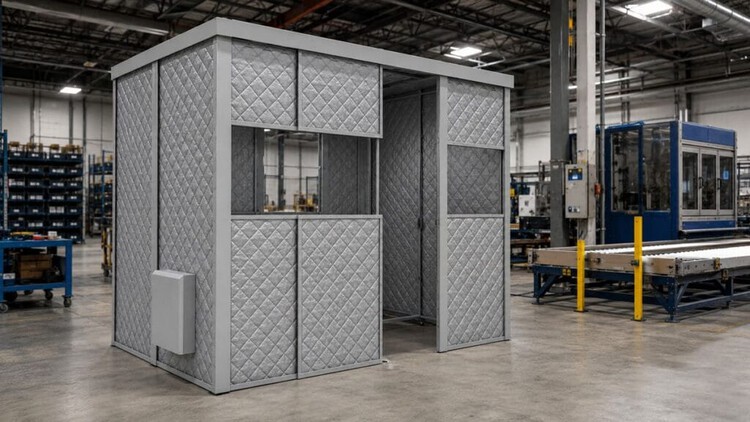
To solve this challenge, the office utilized BSC-25 quilted acoustic curtains mounted within a portable framing system consisting of a one-inch black steel tube frame resting directly on the floor. Filled with a high-density vinyl core measuring an eighth of an inch thick, these screens delivered sound-blocking performance directly comparable to a conventional, permanent wood-stud wall finished with drywall panels on both sides. To ensure maximum acoustic integrity without gaps, the screens were manufactured with the curtain material extending gracefully beyond the structural frame, allowing adjacent panels to overlap and connect seamlessly.
Expanding the traditional scope of architectural acoustics requires acknowledging that modern spatial challenges are rarely static. While fixed walls, heavy insulation, and structural ceilings remain essential for defining a building’s overall acoustic envelope, portable solutions provide a vital toolkit for managing unpredictable, transient conditions that cannot be fully anticipated during initial construction design phases. In response to this operational reality, contemporary architecture increasingly relies not just on elements that remain permanently in place, but on intelligent systems engineered to know precisely when to arrive, where to stand, and when they can be packed away. Through this flexible lens, acoustic control transcends the traditional practice of simply building heavy barriers against sound, evolving into a sophisticated strategy that gracefully accompanies the continuous movement, transformation, and temporality of modern spaces.