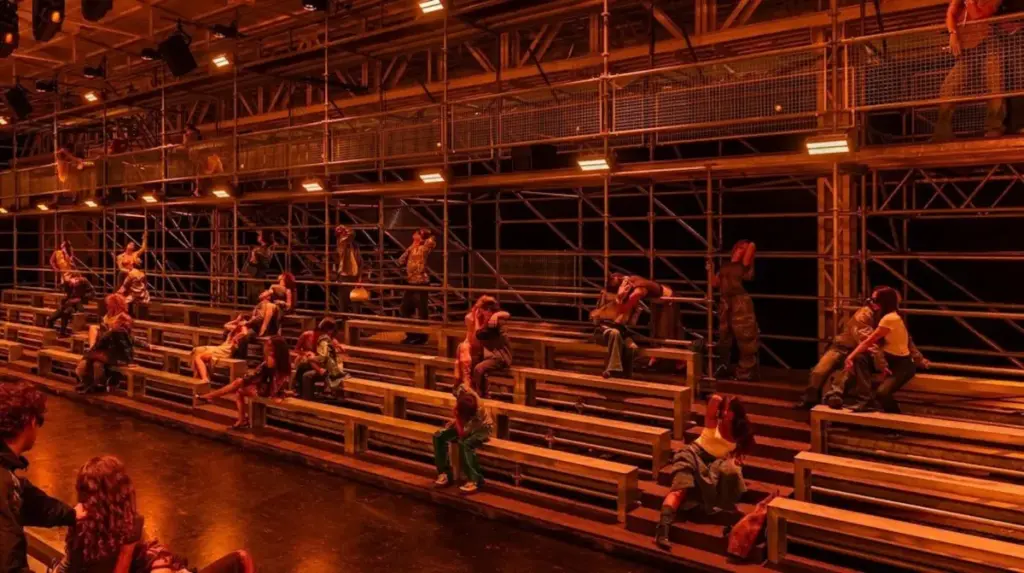
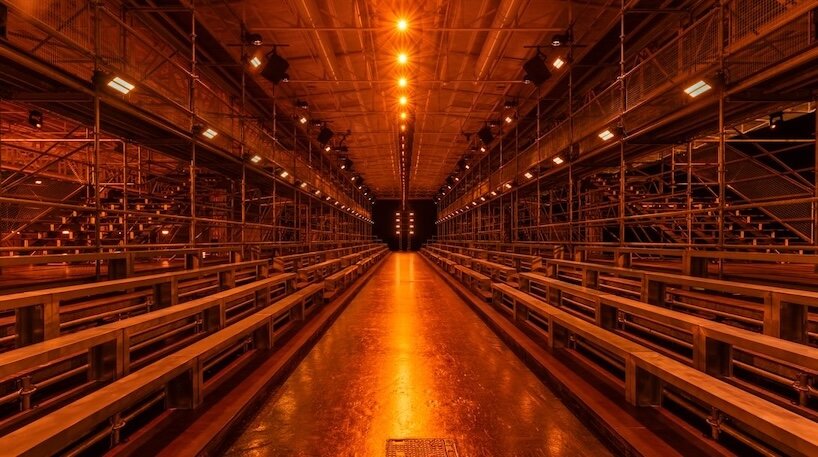
The Spring/Summer 2027 runway presentation for Diesel began not in a traditional fashion week venue, but inside a purpose-built, raw industrial club constructed entirely from scaffolding. Yet, for the guests who streamed into the venue, the architectural spectacle of the space was only the opening act. Conceived by Studio Dennis Vanderbroeck, the venue immediately subverted the conventions of a standard fashion show by placing the audience directly inside an unfolding, unpredictable performance where the traditional boundary between spectator and participant completely dissolved. There was no safe distance to be found from the action, even for those who had arrived expecting nothing more than a front-row seat to watch the latest trends go by.
As the first models appeared on the makeshift layout, a series of carefully choreographed interventions directed by the Marseille-based performance collective (LA)HORDE erupted directly among the crowd. Approximately 200 performers had been seamlessly embedded directly within the seating areas and standing zones alongside the invited guests. These performers engaged not only with one another in erratic, expressive movements but actively drew unsuspecting spectators into transient, spontaneous scenes. The emotional tenor of these interactions shifted fluidly from the strange and unsettling to openly sensual and provocative. Within minutes, the atmosphere became so electric and fluid that it was frequently impossible for attendees to discern who among them had been given a predefined role in the spectacle and who had simply found themselves swept up in one.
The Runway Spills Into the Crowd
The spatial concept engineered for the show drew fascinating design cues from the historical anatomical theatre—a structure historically built specifically for looking and observation—and violently pushed it toward the raw, pulsating heat of a late-night music video or a densely packed, sweat-drenched dance floor. That volatile combination provided the runway show with its underlying psychological tension: while the audience could watch the structured path of the fashion presentation, the architecture and the environment of the room constantly demanded that they look elsewhere, turning their heads toward unexpected movements in the dark corners of the club.
The sensory architecture of the venue was heavily reinforced by dynamic lighting designed by Lightlab Studio and an immersive, driving soundscape crafted by Sen Studio. Together, these elements successfully transformed the temporary structural shell into a living, breathing club with its own relentless momentum.
That raw, unvarnished momentum suited the aesthetic vision of Glenn Martens for what would be his final collection for Diesel. The garments themselves told a story of nocturnal endurance. Denim appeared heavily coated and chemically treated to closely resemble worn leather; chunky knits were abruptly interrupted by dramatic cutaways that exposed the skin beneath; shirts, traditional tailoring, and oversized sweatshirts appeared twisted, peeled back, or partly undone, as if the wearers had been caught halfway through changing or weathering a long night out. On a conventional, brightly lit runway, those intricate garment details might have invited a quiet, analytical look from critics and buyers. In this environment, however, they felt lived-in, appearing as though they belonged to people who were already a few hours deep into an intense night of celebration.
One Last Night Out for Glenn Martens
Over recent seasons, Diesel has repeatedly treated its runway presentations as grand cultural occasions that aggressively extend far beyond the traditional catwalk format. The brand’s past experiments have ranged from massive open-air raves open to the public to citywide scavenger hunts where exclusive looks were locked away inside transparent structures across urban centers. For the Spring/Summer 2027 season, however, the intervention moved decisively indoors, bringing the chaos, energy, and intimacy much closer to the physical bodies of the guests. The embedded performers ensured that the temporary club felt fully occupied and alive long before the audience had even quite worked out what was happening around them.
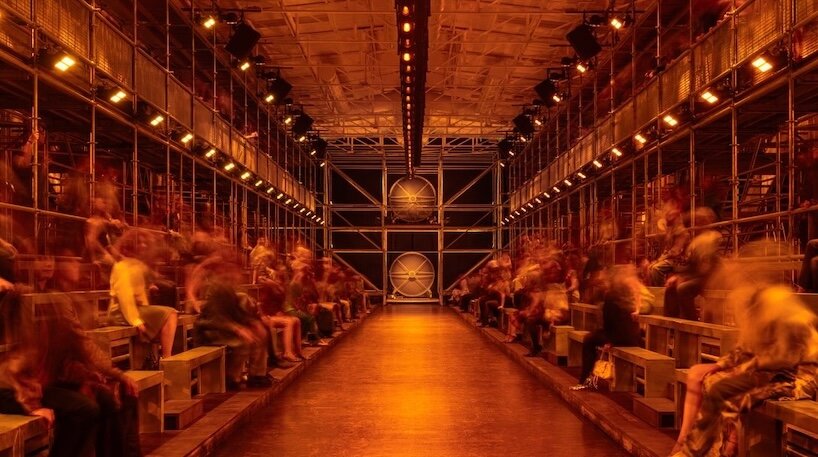
By the time the finale arrived, the traditional distinction between a structured fashion show and an uninhibited party had become wonderfully unhelpful and obsolete. Martens’ departure from the creative helm of the label gave the evening a natural, emotional sense of finality, even if the pulsating energy of the room suggested otherwise. Diesel had successfully constructed a temporary place for its final bow with Martens that looked entirely ready to carry on long after the last guest was supposed to leave and the lights were meant to go down.