The global art market is currently witnessing a period of profound transformation, characterized by historic auction valuations, significant leadership shifts at major cultural institutions, and the recognition of visionary creative talent. As we move through the autumn of 2026, the intersection of high-stakes private collecting and public museum management has created a dynamic landscape that continues to command international attention.
In the Spotlight: The $450 Million Collection Poised to Rewrite History
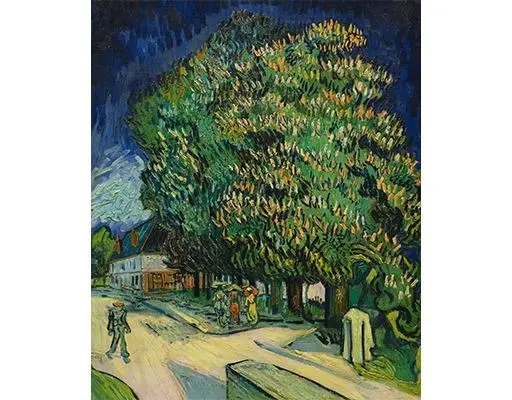
The art world is bracing for what promises to be one of the most significant auctions in recent memory. This fall, Sotheby’s is set to bring to market a extraordinary collection that includes a rare work by Vincent van Gogh. The painting, Châtaigniers en fleurs (1890), which has remained largely absent from the public eye for the past half-century, is the crown jewel of a high-value assembly of works. Industry analysts and auction house experts estimate that this single lot could command a staggering $180 million, a figure that would not only represent a milestone for the Dutch master’s market but potentially set a new global auction record.
The anticipation surrounding the sale is compounded by the collection’s overall caliber, which is valued at approximately $450 million. Beyond the van Gogh, the sale is expected to challenge existing price benchmarks for other titans of modern art, including Paul Cézanne. The sheer scale and rarity of these works, many of which have been held in private hands for decades, suggest that the auction will be a defining moment for the blue-chip art market, signaling continued, if not increasing, demand for historical masterpieces among the world’s most elite collectors.
A Changing Guard at the Museum of Modern Art
In New York, a parallel shift is occurring within the institutional sphere. Ann Temkin, the long-serving and highly influential chief curator of painting and sculpture at the Museum of Modern Art (MoMA), has announced that she will be stepping down from her current post. Temkin, whose tenure has been marked by a rigorous approach to modernism and a commitment to recontextualizing the museum’s foundational collections, will transition to a new role dedicated to the museum’s upcoming 100th-anniversary celebrations.
Her departure marks the end of a transformative era for MoMA’s department of painting and sculpture. Over her years at the helm, Temkin oversaw significant acquisitions and exhibitions that reshaped public understanding of artists ranging from Marcel Duchamp to Jasper Johns. As the museum prepares for its centennial, the search for a successor who can navigate the complexities of contemporary curatorial practice while maintaining the museum’s historical weight remains a focal point for the art world.
Architectural Ambition at the Fondation Beyeler
Across the Atlantic, in Riehen, Switzerland, the Fondation Beyeler is expanding its footprint with a major architectural development. The institution has unveiled plans for three new buildings designed by the acclaimed Swiss architect Peter Zumthor. Known for his Pritzker Prize-winning ability to blend structural minimalism with profound atmospheric sensitivity, Zumthor’s involvement brings a new level of prestige to the foundation. This project adds to a banner period for the architect, who is also responsible for the design of the highly anticipated David Geffen Galleries at the Los Angeles County Museum of Art (LACMA). The new structures at the Fondation Beyeler are expected to further solidify the museum’s reputation as a pilgrimage site for those interested in the intersection of world-class art and contemporary architecture.
Auctions and Market Developments
The market for Old Masters and 19th-century giants remains as competitive as ever. J.M.W. Turner’s celebrated landscape, Rome, From Mount Aventine, is currently embarking on a global tour before it hits the auction block. Often referred to by art historians as the artist’s "Great Love Letter to Rome," the work is a quintessential example of Turner’s mastery of light and atmosphere.
Before the hammer falls at a major auction house in the United Kingdom, the painting is scheduled to visit Hong Kong and New York. This global circuit is a strategic maneuver designed to maximize exposure among international bidders, reflecting the increasingly mobile nature of high-value art transactions. Market experts anticipate that the painting will achieve a record-breaking price, underscoring the enduring appeal of Turner’s work in the secondary market.
Museums and Galleries: From Goya to Global Leadership
The scholarly side of the art world continues to yield exciting discoveries. At the Museo del Prado in Madrid, preparations are underway for a significant 2028 exhibition that is expected to feature a painting widely attributed to Francisco de Goya. While the attribution remains a subject of intense academic scrutiny and speculation, the inclusion of the work in such a prestigious setting highlights the ongoing efforts of major museums to refine the canonical understanding of Spanish masters.
Simultaneously, the regional gallery circuit is finding its own momentum. A gallery currently hosting Turner Prize-nominated works has been described by its director as a "center of the creative universe." This exhibition provides a platform for the finalists of one of the most prestigious contemporary art prizes in the world, offering the public a direct encounter with the avant-garde themes currently dominating the artistic discourse.
Institutional leadership, meanwhile, is seeing a significant influx of fresh perspectives. The Museum of Contemporary Art (MOCA) in Los Angeles has officially appointed Jonathan Abbott as its new director. Abbott, who spent the previous 15 years as the chief executive of the public media organization GBH in Boston, brings a background in media and organizational management to the museum. His transition into the role of director is seen as a strategic move for MOCA, as it seeks to broaden its reach and strengthen its engagement with the public.
Further bolstering this trend of leadership transition, Stephanie Rosenthal has been appointed as the artistic director of the Museum Boijmans Van Beuningen in Rotterdam. Rosenthal, previously the director of the Gropius Bau in Berlin, brings a wealth of international experience, particularly following her work on the opening of the Guggenheim Abu Dhabi. Her appointment is widely regarded as a signal of the museum’s intent to elevate its international profile and artistic ambition.
Recognitions and Awards
The artistic community has also paused to celebrate the contributions of individuals who have redefined their respective fields. The prestigious MacArthur "Genius" Grants were recently awarded to twenty individuals, including four prominent artists: Christine Sun Kim, Rodney McMillian, Vincent Valdez, and Chip Thomas. Each recipient is set to receive $800,000 in unrestricted funding, a grant designed to provide the financial freedom necessary for these artists to pursue their most ambitious projects to date. The inclusion of such diverse voices—from Kim’s exploration of sound and language to Valdez’s socio-political portraiture—reflects the broad spectrum of contemporary practice currently being championed by the MacArthur Foundation.
In Canada, the visual arts landscape celebrated the career of Steven Shearer, who has been named the recipient of the Audain Prize. The $100,000 award, which honors significant achievements in the visual arts within British Columbia, recognizes an artist whose work has consistently blurred the lines between high-art historical references and the vernacular of youth subcultures. Despite his significant influence on the contemporary scene, Shearer has maintained a famously low profile, making the recognition a rare moment of public acclaim for an artist who prefers to let his complex, multifaceted works speak for themselves.
As the art world looks toward the conclusion of 2026, these developments—ranging from the record-shattering potential of the upcoming auction season to the strategic renewal of museum leadership—paint a picture of a sector that is both deeply rooted in historical tradition and vigorously evolving to meet the demands of a globalized, modern audience. The coming months will undoubtedly continue to test the limits of these institutions and the resilience of the market, marking a pivotal chapter in the history of contemporary art.