In an era defined by industrial overconsumption and the staggering volume of waste generated by the global food industry, innovative material solutions are more critical than ever. Offering a radical departure from conventional construction practices, the United Arab Emirates-based studio Datecrete has emerged as the winner of the designboom Special Prize at the Seoul Design Award 2026. The studio’s pioneering approach moves directly against the grain of typical manufacturing by recovering an abundant, localized agricultural byproduct—discarded date pits—and transforming it into an eco-friendly,
high-performance raw material for contemporary design, architecture, and furniture.
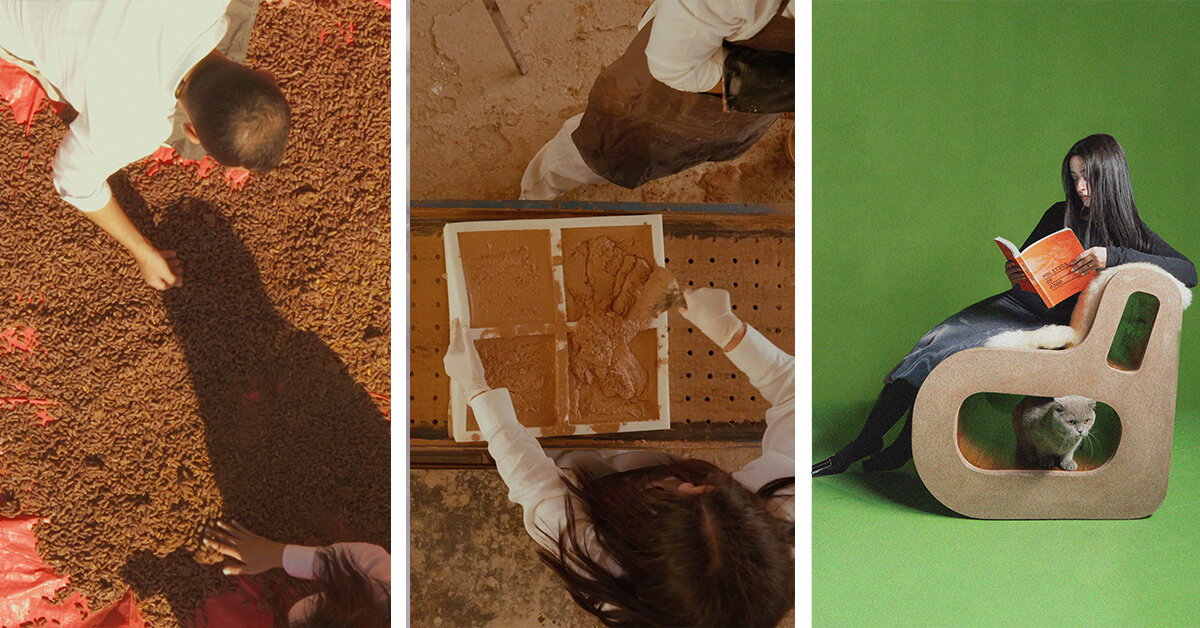
Throughout its development, the project has demonstrated an exceptional ability to think outside the traditional parameters of material science. By successfully combining ecological sustainability, local cultural relevance, aesthetic ambition, and structural functionality, Datecrete presents a compelling model that is both deeply rooted in its regional identity and easily scalable for transfer to other global locations.
A Holistic Approach to Sustainability and Waste Reduction
As designer and technologist John Maeda famously observed, design is fundamentally a solution to a problem. Datecrete has introduced a proposal that tackles two significant environmental challenges simultaneously: the massive generation of organic waste within the agricultural and food sectors, and the heavy reliance on environmentally harmful materials—such as Portland cement, synthetic resins, and petrochemical systems—that currently dominate the construction and furniture production industries.
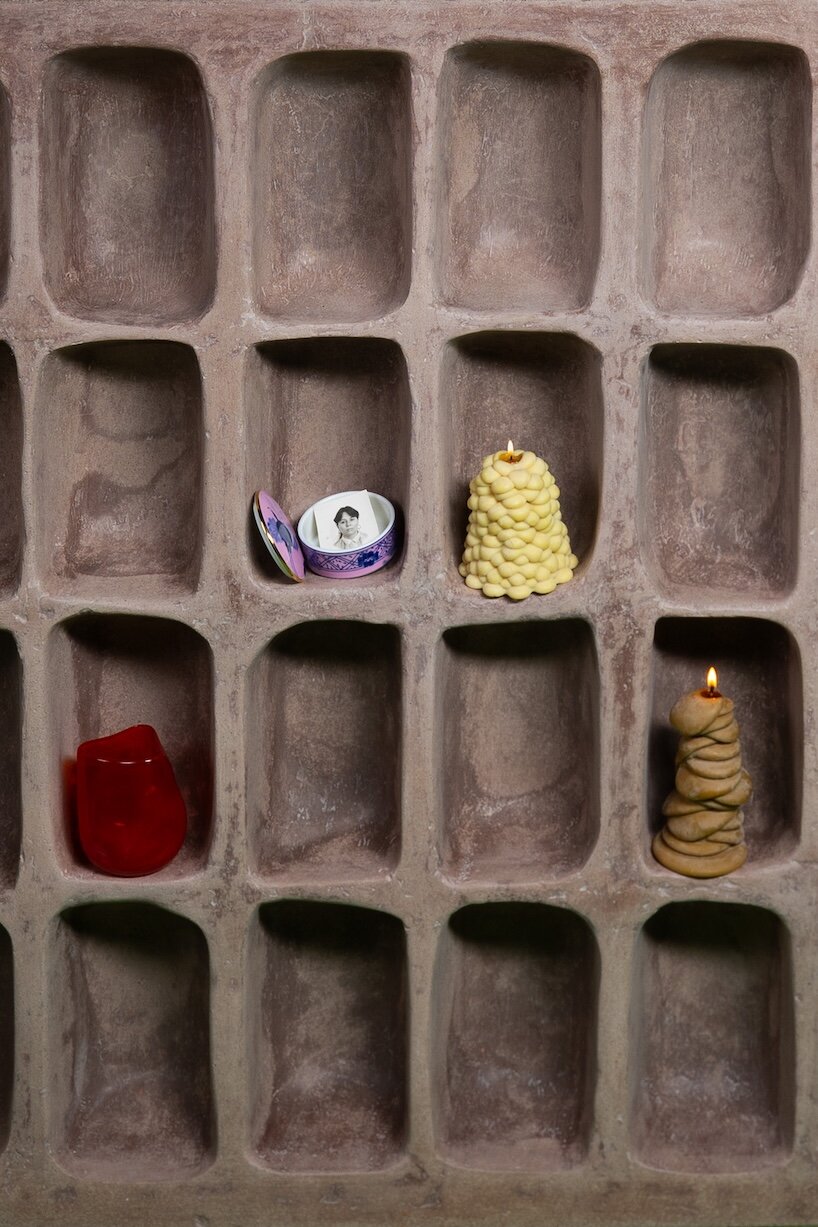
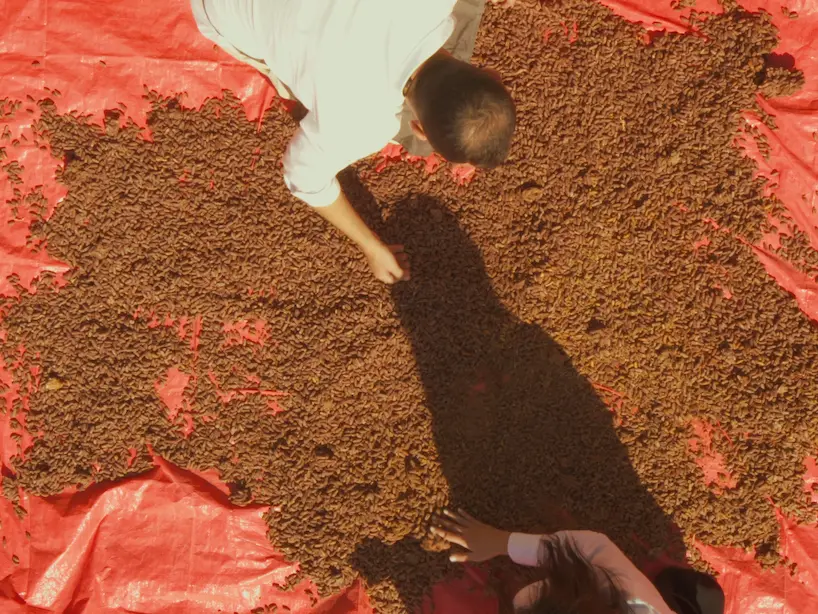
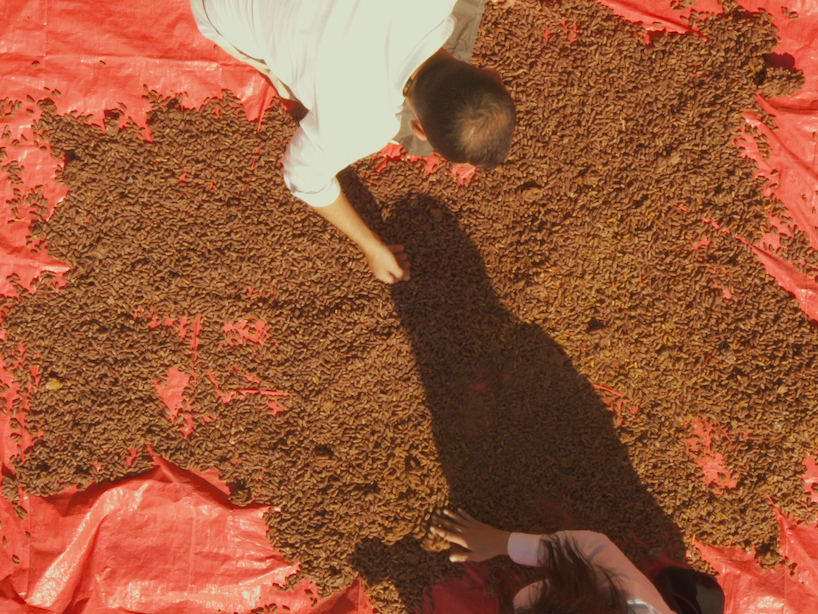
Statistics compiled by Statista from the International Nut & Dried Fruit Council indicate that between 100,000 and 180,000 metric tons of dates are consumed annually in the United Arab Emirates alone. As a dietary staple deeply embedded in Arab cuisine and culture, the widespread cultivation and consumption of dates generate a steady, monumental stream of discarded pits. These small, hard biological components have historically been treated as low-value biomass or discarded entirely, representing a vast, untapped material resource with significant hidden structural and aesthetic potential.
Recognizing this potential, co-founders Sara Farha and Khaled Shalkha established Datecrete Studio & Lab FZC in 2021 to investigate whether these overlooked agricultural residues could be repurposed. Rather than accepting the status quo of linear consumption, the team engineered a comprehensive processing system that converts discarded date pits into an active, primary ingredient for architectural surfaces, interior cladding, furniture, lighting fixtures, and decorative design objects.
Transforming Agricultural Byproducts into Versatile Design Materials
The journey from a discarded food waste product to a refined architectural medium involves a meticulous multi-step production pipeline. The process begins with the systematic collection, cleaning, dehydration, precision grading, and specialized processing of the date pits. Once prepared, the crushed or processed biomass is combined with a patent-proven natural binder system developed by the studio. This innovative matrix allows the mixture to be cast into custom molds without relying on traditional cement, toxic resins, or petrochemical binders.
In formulating this system, the founders drew inspiration from regional vernacular building knowledge and ancestral techniques that predate the widespread adoption of modern Portland cement, seamlessly merging traditional wisdom with cutting-edge contemporary materials research.
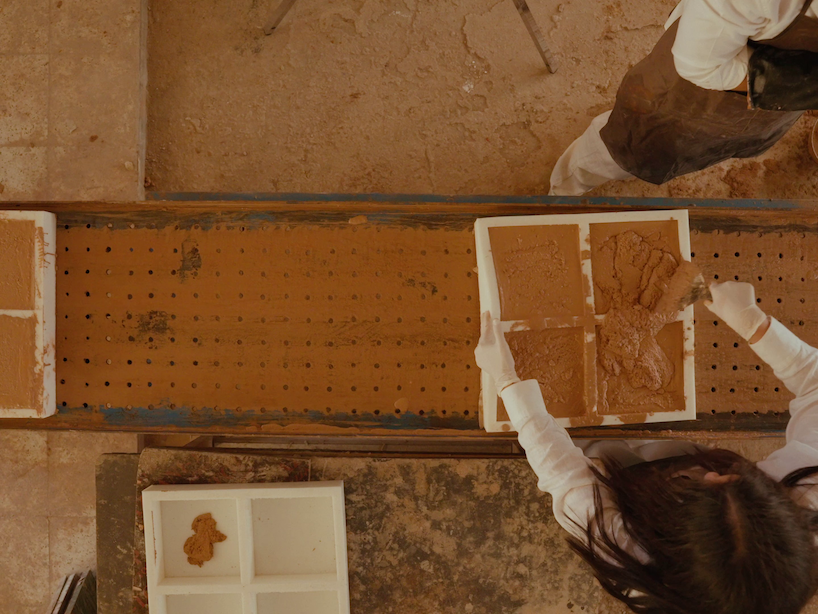
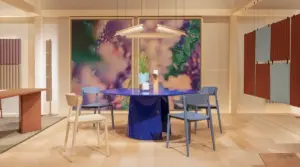
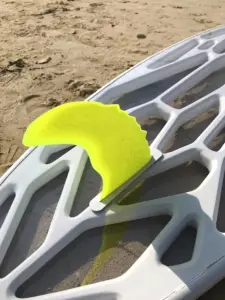
Once the cast material undergoes its curing phase, individual pieces are subjected to careful sanding, polishing, and surface finishing tailored to their intended final application. Datecrete’s overarching objective is not merely to manufacture a single commercial product, but rather to establish an entirely new raw material platform capable of giving rise to thousands of unique design iterations. From durable floor tiles and wall cladding to bespoke furniture pieces and decorative objects, the material demonstrates remarkable versatility across multiple design scales.
The resulting aesthetic successfully reconnects with its historical origins in both substance and form. The organic, contemporary silhouettes crafted by the studio forge a harmonious bridge between past and present. On one side stands a material derived from a resilient, century-old tree deeply rooted in the history and ecology of the region; on the other stands a sophisticated production system and refined design objects tailored for modern architectural spaces.
Scaling Up: From Laboratory Research to International Pavilions
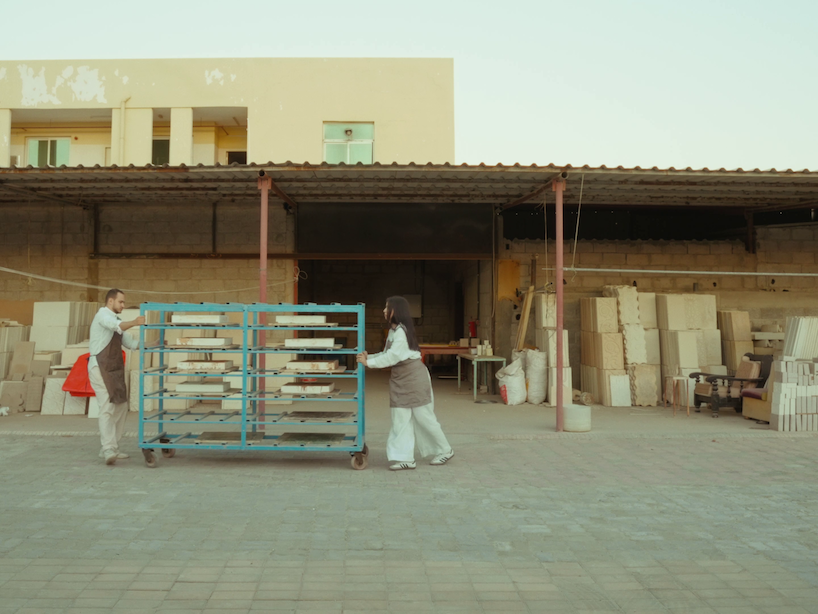
What began in 2021 as rigorous laboratory research and prototyping quickly accelerated into commercial and architectural application. After four years of intensive testing, material trials, and iterative prototyping, Datecrete achieved a major milestone in 2025 with its first large-scale architectural implementation. A striking 35 metric tons of Datecrete paving material were installed in the landscape surrounding the UAE Pavilion at Expo 2025 Osaka, showcasing the material’s structural viability and durability on an international stage.
The refined state of the material today is the direct result of continuous collaboration between the co-founders, materials researchers, independent makers, visionary architects, demanding clients, and international production partners. Datecrete’s finished products retain a distinct visual and tactile connection to their biological origins, while practical lessons learned from each completed installation are systematically fed back into the production loop. This feedback mechanism allows the team to continuously refine their material formulation, casting techniques, finishing methods, installation processes, and overall performance standards, optimizing the system for future architectural projects.
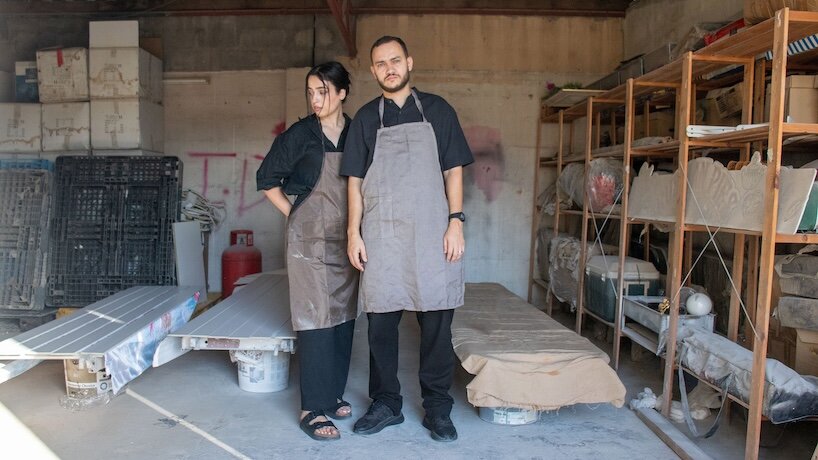
Looking ahead, Farha and Shalkha have articulated a clear long-term vision to expand beyond bespoke, small-scale commissions. Their primary focus moving forward centers on large-scale architectural interventions, specifically the mass production of sustainable tiles, interior and exterior cladding systems, and modular building components. Furthermore, the foundational principles of the Datecrete system are not strictly bound to geographic regions where dates are consumed in large quantities. The underlying technological framework can theoretically be adapted to utilize other lignocellulosic agricultural byproducts found abundantly around the world, opening up exciting possibilities for localized material innovation across diverse global landscapes.
Recognition at the Seoul Design Award 2026
Datecrete’s compelling integration of ecological responsibility, material science, and cultural storytelling earned it the prestigious designboom Special Prize at the Seoul Design Award 2026. The award committee recognized how the project embodies the core values of the prize: being intentionally curious through its profound investigation into undervalued local waste streams; playing disruptively by transforming discarded matter into sophisticated architectural surfaces, furniture, and objects that challenge conventional perceptions; and remaining fearlessly meaningful by offering a viable, cement-free alternative that unites modern innovation with regional heritage and sustainable resource management.