As the vibrant energy of summer gives way to crisp autumn air, the Midwest landscape is undergoing a dramatic seasonal transformation. The stifling heat of July and August is now a distant memory, replaced by brisk fall temperatures and a stunning display of changing foliage that heralds the inevitable return of winter. For gardeners and outdoor enthusiasts across colder climates, the shifting season signals the winding down of the traditional growing year, yet it also opens up an entirely new chapter for creative expression in landscape design.
While perennial beds and summer annuals begin to fade, the opportunity to maintain rich, dynamic color in the outdoor living space remains wide open through the art of seasonal container gardening. Few practitioners elevate this craft quite like Howard, a seasoned Chicago-based container designer who has spent nearly four decades mastering the nuances of seasonal displays. Known for his ability to capture the essence of every season, Howard has previously shared his distinctive spring container creations and imaginative Halloween installations with enthusiasts across the region. Today, he returns with a magnificent new collection of autumn containers designed for a residential project in Glencoe, Illinois, located squarely in USDA Hardiness Zone 6a.
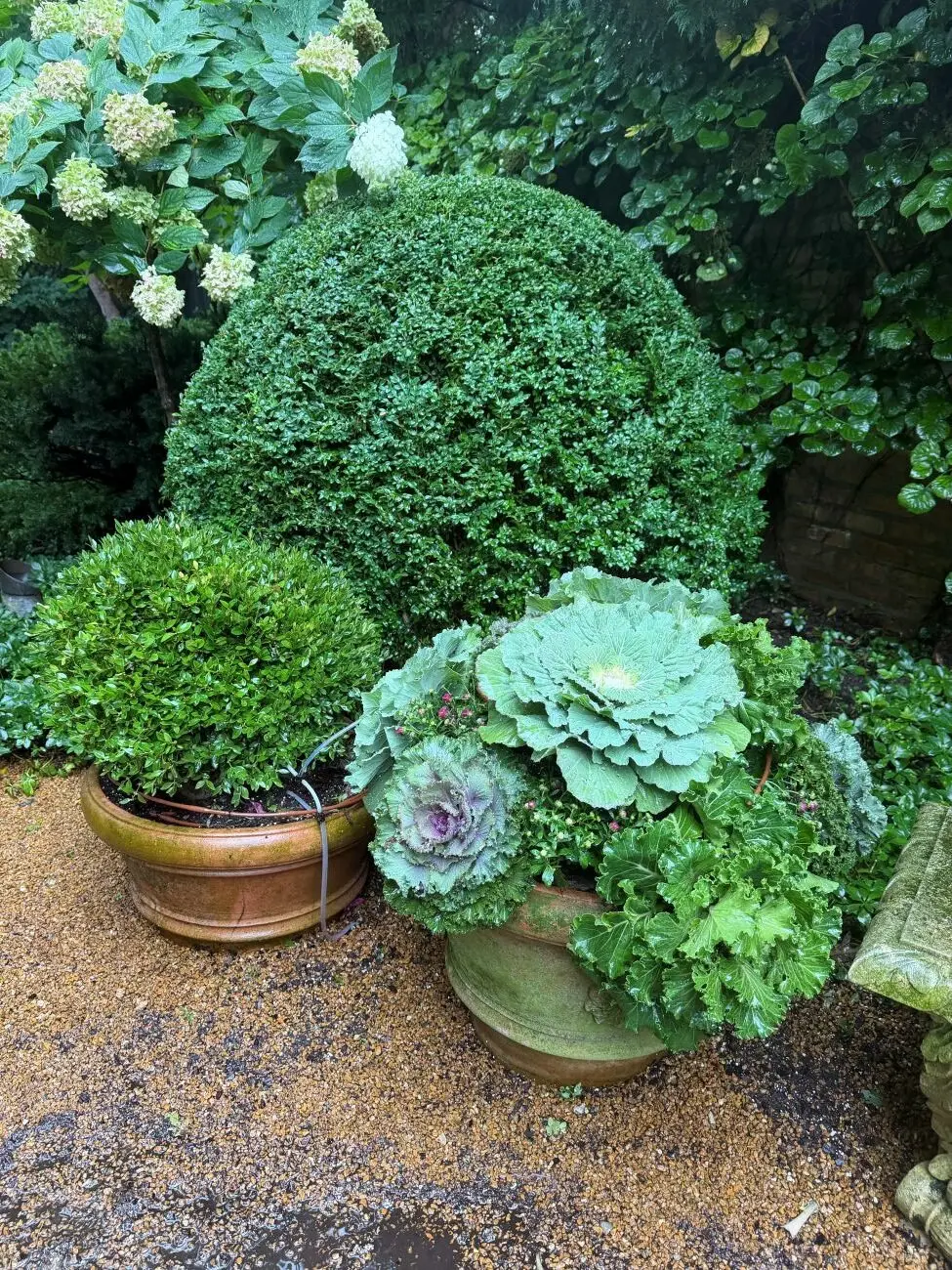
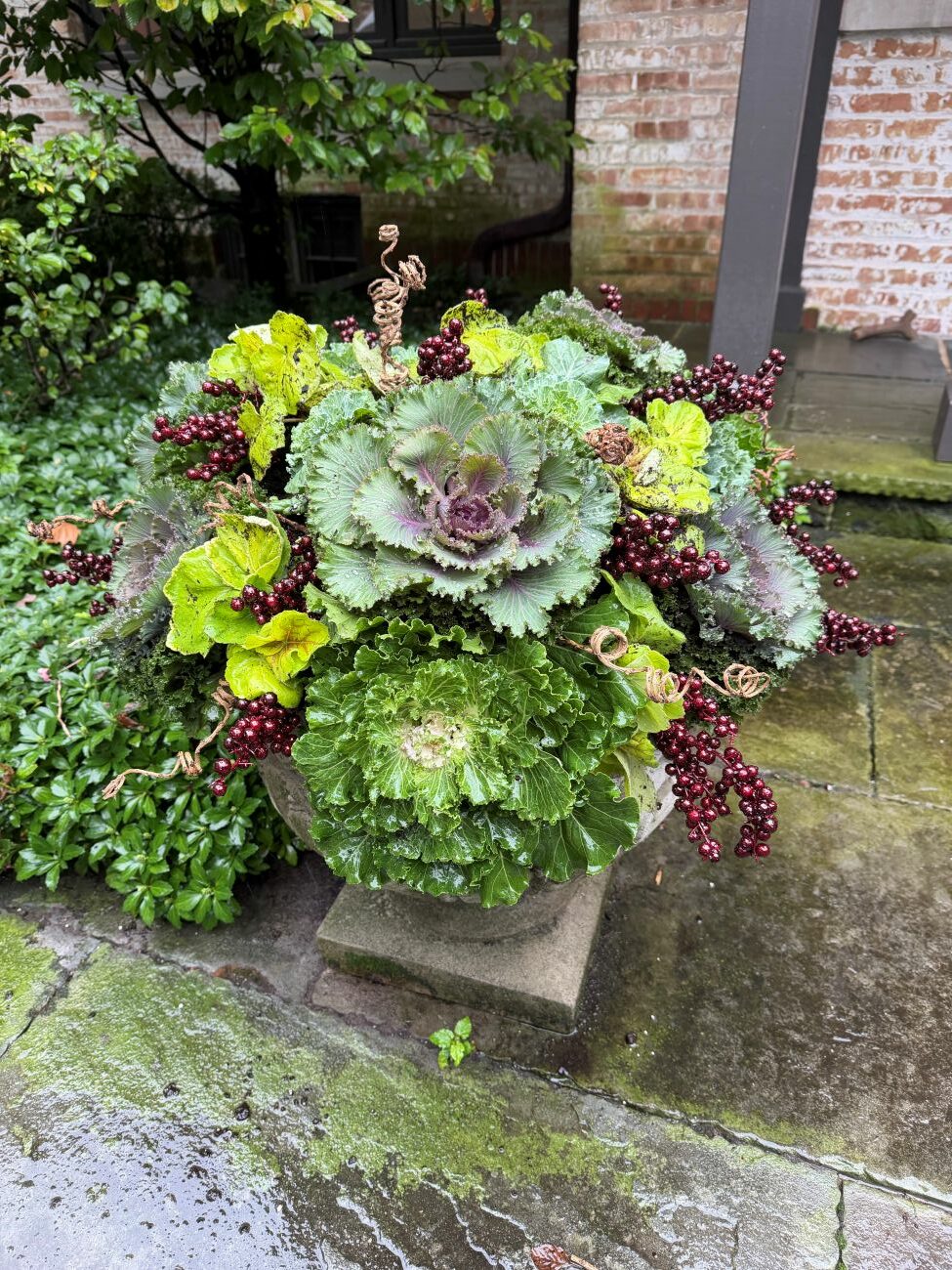
The newly unveiled project showcases a masterclass in texture, color theory, and structural plant placement. At the heart of several prominent arrangements are robust displays of ornamental cabbage and kale (Brassica oleracea cvs.), serving as the dependable backbone of the autumn designs. Their heavily ruffled, deeply textured leaves provide an immediate sense of seasonal substance that standard annuals simply cannot match. However, it is the meticulous attention to secondary and accent elements that elevates these containers from simple garden center assemblies to high-end landscape artistry.
In one striking urn arrangement, clusters of deep burgundy berries emerge as the undisputed focal point of the composition. These rich, dark tones draw the eye, while twisting, woody stems introduce an element of architectural whimsy and organic movement that ties the entire visual narrative together. Set against a backdrop of chartreuse greenery and the sturdy architecture of the surrounding property, the combination achieves a sophisticated balance of wild, natural form and controlled elegance.
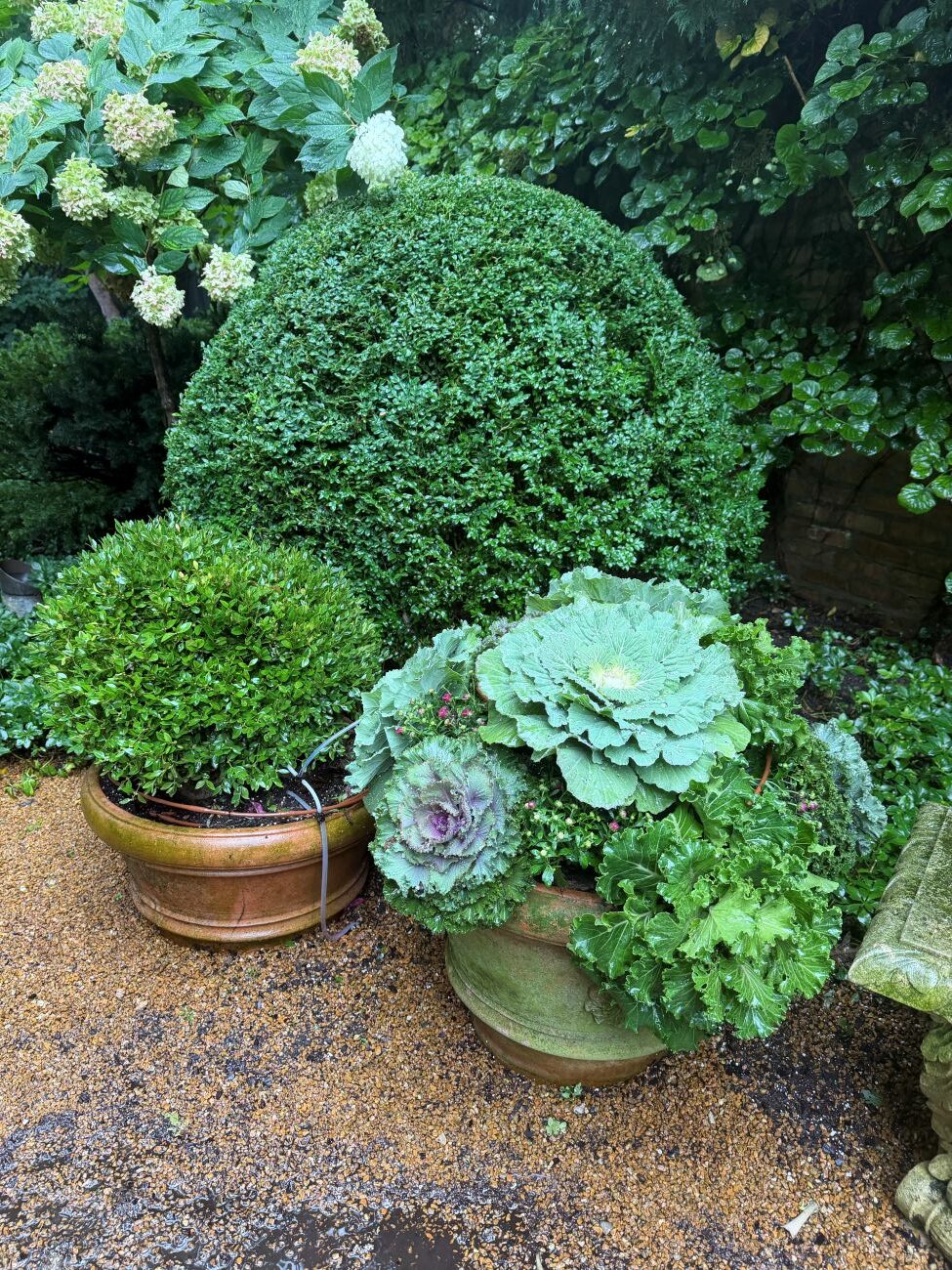
The placement of these containers is just as deliberate as their botanical contents. At the Glencoe site, earthy terracotta planters and weathered rectangular boxes are positioned strategically to complement the natural stonework of the hardscaping and architecture. In one formal section of the garden, clipped boxwood topiaries (Buxus sempervirens, Zones 5–8) frame the arrangements, their dense, dark green evergreen foliage serving as a quiet foil that allows the ruffled, colorful leaves of the ornamental cabbage and kale to truly pop. This thoughtful integration demonstrates how well-executed container design can amplify the existing permanent landscape, elevating small corners and entryways into intentional focal points.
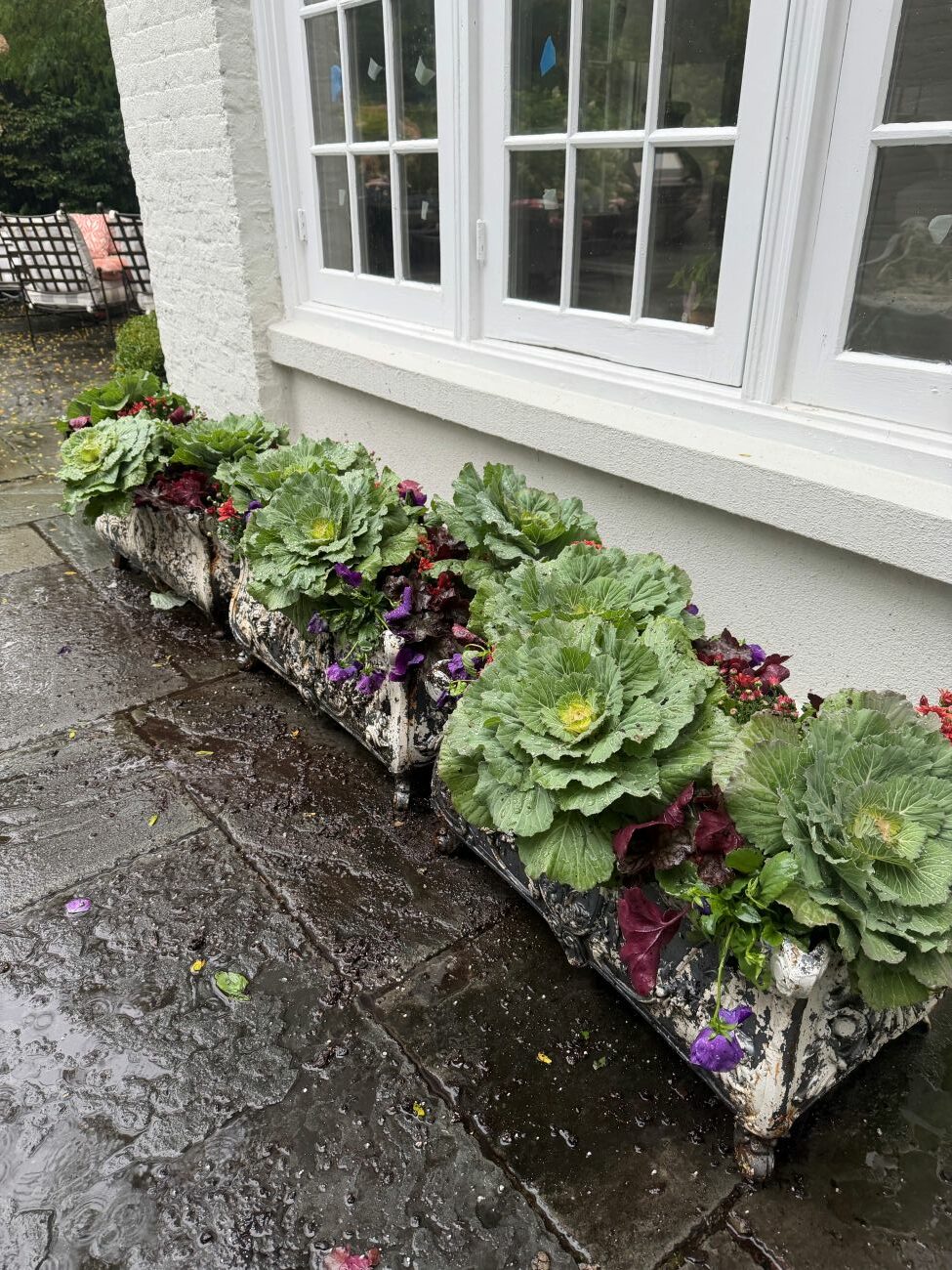
Further highlighting Howard’s design methodology is the clever use of grouping. In another area of the property, multiple weathered rectangular containers are clustered tightly together to create the visual impact of a single, expansive planter box. Rather than scattering individual pots haphazardly across the patio, concentrating the vessels maximizes their visual weight and presence against the surrounding stonework and fading garden beds.
Throughout the various compositions, a cohesive color palette emerges. Deep purples, rich burgundies, and earthy greens reappear in different forms—sometimes through the foliage of the plants themselves, other times through autumn flowers like purple pansies or accent branches loaded with berries. This strategic repetition of color creates a unified design language across the entire property without resulting in monotonous duplication, proving that thematic consistency can be maintained while allowing individual containers to retain their unique character.
Even amid the professional polish of the final installations, the reality of the gardening process remains charmingly grounded. Photographs from the installation day capture the inevitable mess of creative work, with spare pots and discarded plant tags scattered casually across the ground as the designer fine-tunes each composition. It serves as a gentle reminder that the pristine beauty of a finished garden is often born from a thoroughly hands-on, soil-wrestling endeavor.
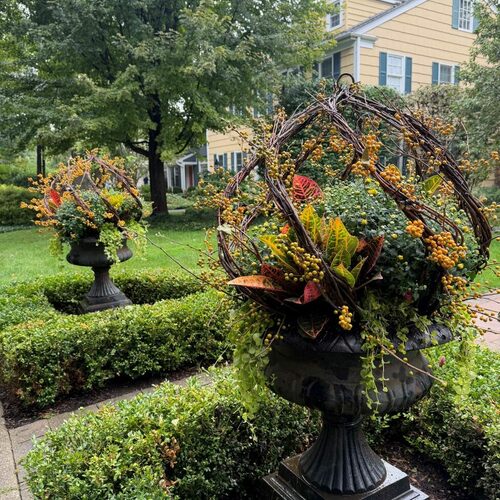
On a separate property within the same neighborhood, captured on a characteristically rainy autumn day, Howard delivered yet another tour-de-force arrangement that pushed the visual boundaries of fall container design. This particular installation leaned heavily into sculptural drama, utilizing arching, twisting woody vines threaded with luminous golden berries that cascaded gracefully over the edges of a grand garden urn. Combined with the vibrant, variegated foliage of tropical crotons, the arrangement offered a masterclass in contrasting textures and unexpected color pairings. Against the muted, damp backdrop of an autumn downpour, the golden hues and rich foliage radiated warmth, offering a masterclass in how an entryway installation can warmly welcome visitors despite darkening skies and falling temperatures.
For gardeners seeking to expand their own horticultural horizons, these seasonal displays offer a wealth of inspiration. Whether through the bold textures of brassicas, the structural elegance of evergreen boxwoods, or the artistic use of branches and berries, Howard’s work in Glencoe underscores the enduring potential of containers to keep the landscape vibrant long after the traditional summer growing season has drawn to a close.