For millions of homeowners and amateur builders embarking on home improvement initiatives, the success or failure of a project often hinges on a remarkably small detail: choosing the correct screw size and type. While seemingly straightforward to the seasoned professional, navigating the vast hardware aisle can quickly become an exercise in confusion for the uninitiated. Understanding the nuances of fasteners—ranging from standard wood screws to specialized self-tapping and machine variants—remains a critical hurdle in modern domestic construction and repair.
Industry experts and long-time project planners have long emphasized that selecting the appropriate hardware goes far beyond mere structural integrity; it dictates how smoothly a build progresses and how polished the final aesthetic appears. With dozens of distinct sizes, materials, and specialized applications available on the market, recognizing the specific demands of a project is paramount. Some fasteners are versatile enough to span multiple materials, while others are engineered with laser-like precision for distinct building, construction, and home improvement tasks.

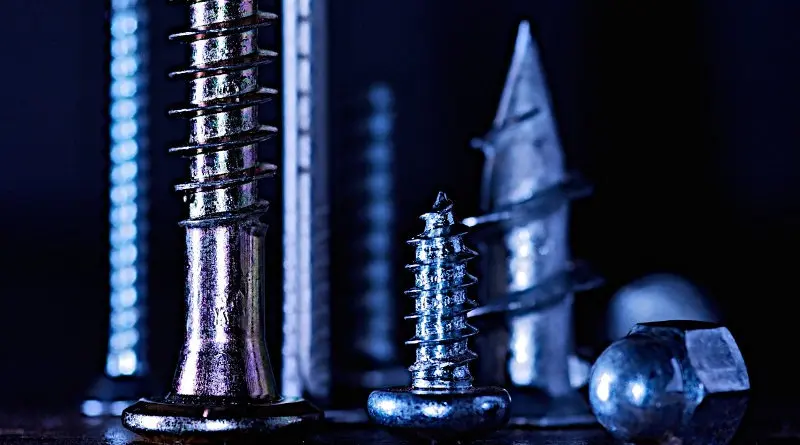
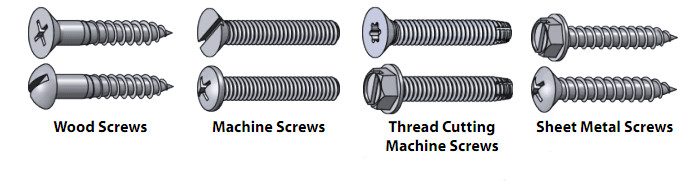
At the foundational level of woodworking and joinery, wood screws remain the primary choice for attaching pieces of timber together. Unlike their metal or masonry counterparts, wood screws are typically manufactured to be thinner and possess a higher degree of flexibility. This deliberate design choice allows the fastener to bend slightly in response to the natural expansion and contraction of timber caused by shifts in temperature and humidity. Furthermore, wood screws are commonly defined by their deep threads, which bite aggressively into the fibers of the timber to prevent the hardware from being easily ripped out under load. For projects involving dense hardwoods, manufacturers often incorporate a double or twin thread design, providing the extra mechanical advantage needed to slice cleanly into the tougher material without splitting the wood.
Transitioning to metalwork, metal screws present an entirely different set of mechanical challenges. These fasteners usually feature a tighter and smaller thread profile than wood screws, enabling them to cut into metallic substrates much more slowly and with greater precision. When dealing with sheet metal applications, such as roofing installations or corrugated iron cladding, builders almost invariably rely on self-tapping screws. These specialized items feature blade-like cutting edges incorporated directly into the tip of the screw, allowing them to carve their own pilot holes into the metal without requiring the installer to pre-drill the material beforehand. Often manufactured with hexagonal washer heads for compatibility with socket drivers, self-tapping screws can also be sourced with traditional slotted and Phillips heads depending on user preference and accessibility constraints.
Masonry applications demand yet another specialized approach. Standard masonry screws share a visual and structural similarity to wood screws, but they are distinguished by a noticeably thicker shaft and a slightly tighter thread pitch. For more demanding installations—such as driving fixings directly into solid concrete—builders turn to frame fixings or heavy-duty anchor bolts. These heavy-wear components are characterized by exceptionally thick shafts relative to their relatively small, widely spaced threads, providing the immense shear strength required to secure fixtures to stone, brick, and concrete substrates.
In scenarios where security and tamper resistance are paramount, specialized hardware steps to the forefront. Security screws, frequently referred to as clutch or one-way screws, are deliberately manufactured to resist unscrewing using standard hand tools. The unique geometry of a security screw head allows the fastener to rotate freely in only one direction, effectively locking it into place once tightened. This design renders them exceptionally popular for securing high-value exterior installations, such as perimeter security cameras mounted to external walls. Additionally, property owners frequently utilize them to anchor window security grills, frustrating potential intruders who might otherwise attempt to dismantle the hardware to gain unauthorized entry.
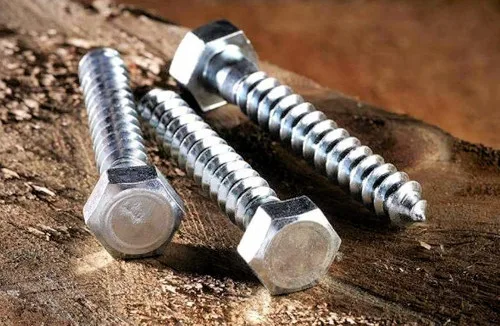
Heavy-duty construction and landscaping projects introduce the coach screw, also widely known as a lag screw or coach bolt. These robust fixings are engineered to withstand immense structural loads, making them the preferred choice when heavy pieces of timber must be locked securely together. Landscape designers frequently rely on coach screws when constructing retaining walls utilizing railway sleepers, where lateral earth pressure demands exceptional holding power. Due to their wide, thick threads and heavy-duty steel construction, coach screws almost universally feature large hexagonal heads, necessitating the use of a spanner or socket driver to achieve the required torque.
Machine screws represent yet another category, visually resembling bolts with narrow, non-tapered shafts. Because they lack the pointed tip found on wood or sheet metal screws, machine screws are designed to be paired either with a matching nut or driven into a pre-tapped hole where internal threads have already been cut into the component. Frequently deployed to fasten metal components together, they also play a crucial role in hollow-wall installations; for instance, toggle fixings designed for plasterboard commonly incorporate a machine screw as their primary tensioning element. For specialized environments, self-tapping machine screws manufactured from stainless steel are also widely available.
Beyond the broad categories of application, the internal mechanics of a fastener are heavily influenced by its threading. Wood screws and related fasteners are frequently categorized as either single or twin threaded. A single-thread screw features one continuous spiral thread wrapping around the shaft from tip to head. These are typically the most cost-effective option on the market and perform admirably when driven into softer timber species. In contrast, twin-thread screws incorporate two distinct thread spirals running parallel to each other on opposite sides of the shaft. Because these individual thread spirals feature wider spacing along the shaft, twin-threaded screws drive into material much faster than their single-thread counterparts, while also offering enhanced pull-out resistance once fully seated.
The exterior appearance and functional profile of a fastener are further defined by the variety of screw heads available to builders. While a vast array of specialized heads exists, several standard profiles dominate general home improvement projects. Countersunk heads are the standard choice for general joinery where the installer requires the top of the screw to sit completely flush with the surrounding material. Raised countersunk heads are typically selected for fine ironmongery or when decorative screw caps will be applied to achieve a cleaner, more finished visual appearance.
For delicate applications involving thin materials, different geometries are required. Dome heads are frequently utilized when mounting mirrors or securing plastic sheets and panels, often paired with a decorative dome or a snap-on plastic cover to hide the metal underneath. Round or button heads serve a similar purpose, generally chosen for fixing sheet materials that are simply too thin to accommodate a countersunk recess. Meanwhile, bugle heads are engineered specifically for use with plasterboard and fibreboard; their extended, gentle taper distributes clamping pressure over a much broader surface area, preventing the fastener from tearing through the fragile face paper of the drywall.
Complementing the diverse range of head shapes is an equally wide selection of drive styles, which dictate the interface between the tool and the fastener. The traditional cross-head, or Phillips drive, remains the ubiquitous standard for the majority of consumer-grade screws. Closely related is the Frearson drive, which shares a similar cross-shape but requires a specialized Frearson driver for proper installation without cam-out. Slotted drives feature a single straight groove and represent one of the oldest fastening interfaces, while combination drives offer a hybrid slot-and-Phillips configuration to accommodate multiple tool types.
More demanding industrial and specialized applications often favor alternative drive geometries. Socket or hex drives feature a hexagonal internal recess designed for use with an Allen key, allowing for high torque application in tight spaces. Square drives, also known as Robertson drives, utilize a square internal pocket that minimizes tool slippage. Similarly, star drives—widely recognized by their trade name Torx—utilize a six-pointed star pattern specifically engineered to virtually eliminate cam-out and prevent the stripping of screw heads under heavy torque loads. Finally, one-way security drives permit initial installation using a standard slotted screwdriver while completely preventing subsequent removal unless specialized extraction tools are deployed.
Ultimately, the successful execution of any construction, repair, or creative DIY endeavor relies heavily on recognizing how these individual components—from thread design and head geometry to drive style—interact with the materials at hand. By carefully matching the hardware to the specific mechanical demands of the project, builders can ensure structural longevity, aesthetic precision, and lasting quality in their work.