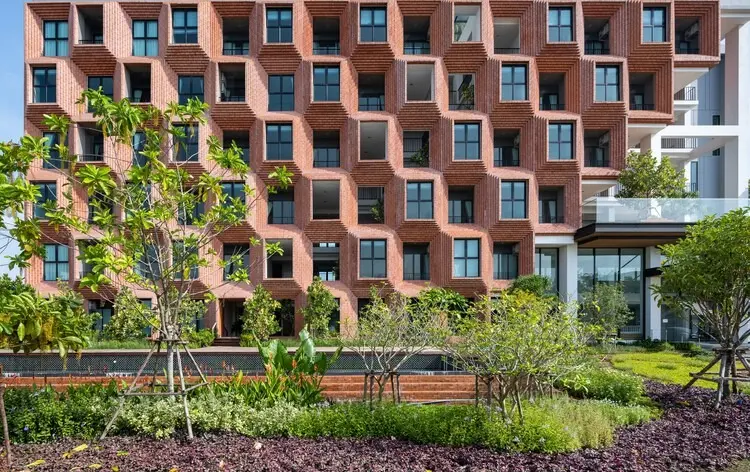
Architecture studio EKAR has completed Pusayapuri Housing, a residential project that weaves contemporary design with the deep, often overlooked historical layers of U Thong, one of Thailand’s most ancient and forgotten cities. Unlike its more famous historical counterparts such as Sukhothai and Ayutthaya, U Thong holds some of the oldest civilisations in Thailand, yet it retains almost no tangible architectural evidence to remind modern generations of its profound heritage.
The physical legacy of U Thong is remarkably subtle. Instead of grand standing monuments or intact palaces, the historical record of the area consists primarily of the weathered bases of collapsed pagodas scattered quietly across the landscape, alongside tiny, ancient beads unearthed from the soil. For nearly a century, the local residents of U Thong have taken it upon themselves to collect these precious fragments. Driven by a deep sense of community and preservation, they once united to establish a local museum to showcase these findings. However, the sheer scarcity of physical artifacts made it difficult to fully construct or tell the comprehensive story of the ancient city’s glorious past through traditional exhibition means alone.
It is within this unique context of historical invisibility and archaeological subtlety that EKAR approached the design of Pusayapuri Housing. The architectural firm sought to create a residential environment that does not merely sit upon the land, but rather engages in a quiet dialogue with the layers of history embedded beneath the soil. By acknowledging the fragmented nature of U Thong’s heritage, the architects developed a spatial language that respects the quiet dignity of the site. Rather than imposing an overwhelming modern structure that ignores its surroundings, the project reflects a nuanced understanding of place, memory, and community living.
The design philosophy behind Pusayapuri Housing bridges the gap between past and present through careful spatial organisation and material choices. The project captures the essence of U Thong’s understated character, translating the fragmented archaeological record into architectural gestures that invite residents and visitors alike to reflect on the depth of the land they inhabit. The residential spaces are crafted to foster a sense of connection—both among the community members living within the housing development and with the broader historical narrative of the region.

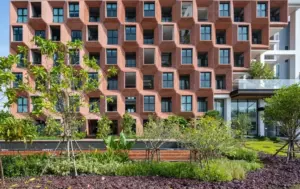
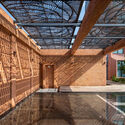
Through exterior and interior photography captured by Rungkit Chareonwat, the architectural expression of Pusayapuri Housing reveals a harmonious balance between raw structural elements and refined living spaces. The interplay of light, shadow, and open air creates an atmosphere of contemplation and tranquility. Balconies and facades are thoughtfully integrated to frame views of the surrounding landscape, allowing the natural environment to become an active participant in the daily lives of the occupants.
The completion of Pusayapuri Housing highlights a growing awareness among contemporary Thai architects of the importance of context-driven design. By rooting a modern residential project in the subtle historical context of U Thong, EKAR demonstrates how architecture can serve as a vessel for memory in places where physical monuments have long since vanished. The project stands as a testament to the enduring spirit of U Thong, offering a fresh perspective on how contemporary housing can honour the invisible heritage of the land it occupies while providing functional, elegant spaces for modern living.