The Headlines
Untangling a Pissarro’s Past
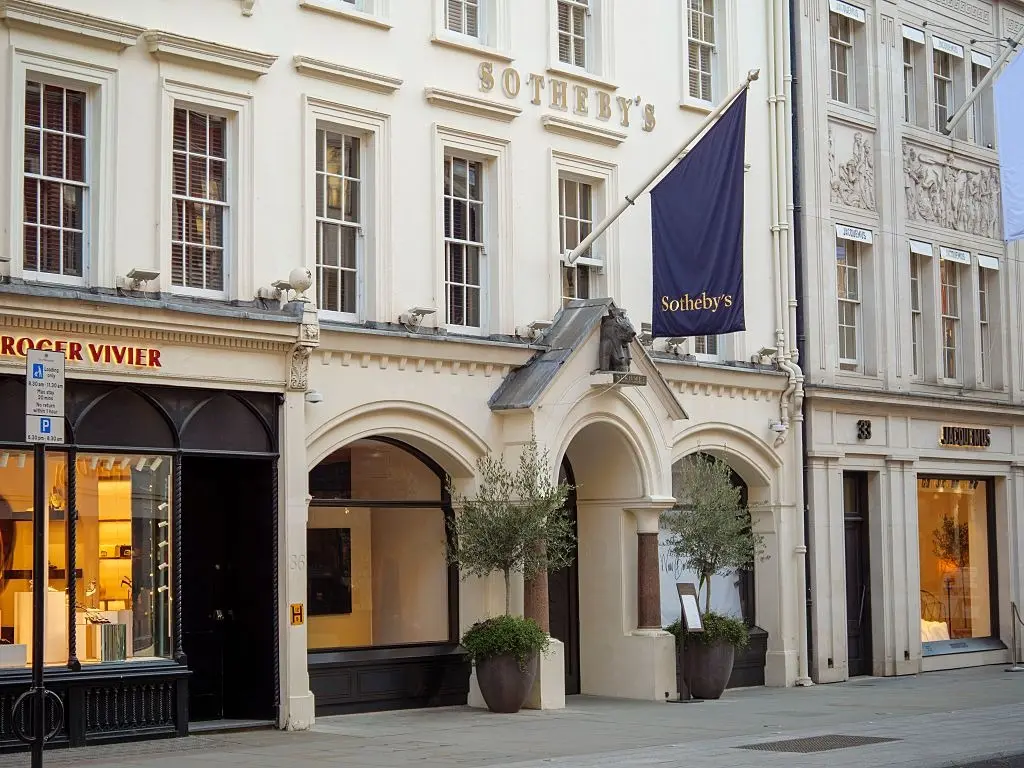
Descendants of Jewish collector Salomon Flavian are locked in a complex legal battle in a Paris court, demanding the annulment of the sale of a 1902 painting by Camille Pissarro. The work, titled Darse de pêche et bassin Duquesne (Fishing Dock and Duquesne Basin), was sold at Sotheby’s in London on June 25, 2024. The plaintiffs assert that the Impressionist masterpiece was wrongfully looted by the Nazis during World War II.
However, the case has encountered several procedural and legal thickets. Sotheby’s defense team has asserted that two other relatives of Flavian—who are not among the current plaintiffs—had previously signed away their ownership claims to the painting. This prior settlement was reportedly arranged through the Toronto-based Mondex Corporation, a firm specializing in recovering Nazi-looted art. Other members of the Flavian family who were not party to the settlement maintain they were completely unaware of the agreement until after the Sotheby’s sale had already taken place.
Adding to the confusion, Mondex has reportedly claimed in court proceedings that the painting was never actually looted by Nazis. Legal experts note a stark contradiction in this stance, as it remains unclear why Mondex would broker a financial settlement with heirs prior to a major auction if the family had no legitimate legal claim stemming from Nazi spoliation.
Furthermore, the courtroom battle itself is facing jurisdictional challenges. Lawyers for Sotheby’s have argued that the case should not even be heard in Paris, pointing out that the auction took place in London and that the parties involved share virtually no legal or commercial relationship with France. The French court must now untangle questions of international jurisdiction, the validity of prior settlements brokered by third-party corporations, and the enduring legacy of wartime art theft.
Glass Half Broken
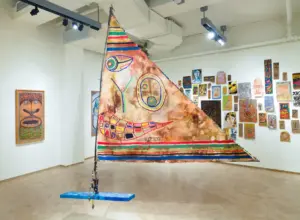
In a historic milestone for the Philippines, 77-year-old artist Imelda Cajipe Endaya has become the first woman to receive the prestigious Order of National Artists of the Philippines for Visual Arts, an honor established in 1972. Spanning decades of dedication, Endaya’s multifaceted practice encompasses paintings, prints, and expansive installations that critically examine the social struggles inherent to her native country. Her works tackle urgent themes such as gender inequality, labor exploitation, migration, and the complex impacts of globalization.
Upon receiving the distinction, Endaya reflected on the long-overdue recognition for female creators within the nation’s cultural sphere. "People say I have just broken a glass ceiling," Endaya said in a statement. "There should be more successful women artists after me." Her recognition marks a significant turning point for gender representation in Philippine arts and culture, celebrating a career dedicated to giving visual form to the struggles and resilience of ordinary citizens, particularly women.
The Digest
German culture minister Wolfram Weimer has issued a stern warning regarding federal funding for the arts in Berlin. Weimer stated that a federal plan to inject €2.9 billion ($3.3 billion) into Berlin’s vibrant arts scene over the next decade must not become "the financier of a cultural policy that threatens to systematically exclude Jewish artists." He further warned that government subsidies could be withheld or withdrawn entirely if cultural institutions fail to uphold principles of inclusivity and free expression.
In the Philippines, a newly formed coalition comprising artists, writers, designers, and other cultural creatives has organized public protests against the planned construction of a United States-led artificial intelligence manufacturing hub known as Pax Silica. The coalition expresses deep concern over the socio-economic, environmental, and cultural impacts of the massive technological development on local communities.
Meanwhile, in San Francisco, the closure of traditional art schools has prompted independent, artist-led initiatives to step into the educational void. Among these grassroots efforts is a free summer program called Present Company, operating as an "experiment in arts education" at the West Marin Headlands Center for the Arts. Additionally, the Mission District’s Southern Exposure nonprofit has launched new educational programs that are entirely free of charge and provide financial stipends to participating students, offering a vital lifeline to the next generation of creative practitioners.
In South America, hundreds of arts and culture workers took to the streets earlier this week to protest the Colombian government’s controversial proposal to slash its national cultural budget by 30 percent. Demonstrators argue that the sweeping cuts would cripple local arts institutions, diminish public access to cultural programming, and threaten the livelihoods of thousands of artists and heritage workers across the country.
In Switzerland, the renowned Fondation Beyeler has officially unveiled a major architectural expansion designed by Atelier Peter Zumthor. The project introduces three distinct new structures—a dedicated gallery building, a cultural space, and an office building—alongside approximately 108,000 square feet of newly landscaped gardens and verdant public spaces, seamlessly integrating contemporary architecture with the natural environment.
The Kicker
Spirited Away
Paris is preparing to welcome a brand-new contemporary art center next month named Le Large. Located just outside the city center on the Île Seguin—an island on the Seine River—the venue steps into a daunting historical shadow marked by decades of failed real estate developments and stalled cultural ventures. For much of the 20th century, the island served as the sprawling headquarters of the Renault car-making empire. Since the company’s departure in 1992, however, successive attempts to redevelop the industrial wasteland have repeatedly floundered.
While many art world observers remember billionaire collector François Pinault’s high-profile, ultimately abandoned attempt to build a major museum on the island, his project was merely one among a long string of initiatives that failed to materialize. The persistent bad luck surrounding the location earned the narrow strip of land the gloomy moniker of the "cursed island."
Taking no chances with the ghosts of real estate past, Le Large founder, collector, and real estate developer Laurent Dumas took an unconventional approach to preparing the site. Before launching the center, Dumas reportedly brought in a Native American leader, followed by a shaman, and finally a voodoo priest healer to cleanse the island and chase away any lingering negative energy. "I’m extremely sensitive to spirit forces," Dumas candidly told Le Monde.
The art center’s true test arrives on October 17, when Le Large opens its doors to the public with its inaugural exhibition, titled Moteur imaginaire and curated by Cecilia Alemani. Only time will tell whether the artistic vision—or the spiritual cleansings—will finally break the island’s curse.